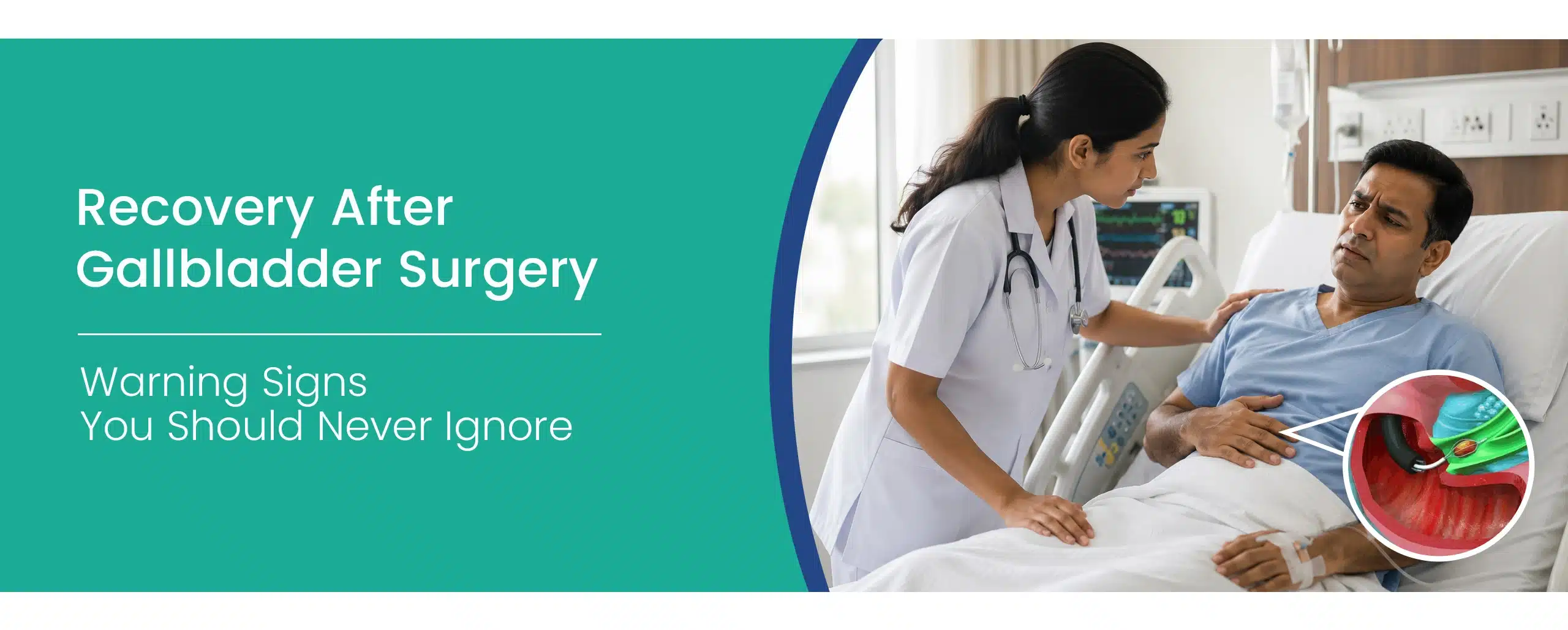
Most people feel relieved after gallbladder surgery is done.
The stones are gone. The pain is gone. You’re home, resting, and everyone tells you you’ll be fine in a week or two.
And most of the time, that’s true.
But recovery after gallbladder surgery is not the same for everyone. Some people sail through it. Others hit unexpected complications at day 5, day 10, or even day 20 and don’t realize something is wrong because nobody told them what to watch for.
What actually happens during gallbladder surgery?
Before we talk about recovery after gallbladder surgery, it helps to understand what your body just went through.
The gallbladder is a small organ tucked under your liver. Its job is to store bile, a digestive fluid made by the liver. When gallstones block bile flow, the pain can be severe, sometimes mistaken for a heart attack.
Surgery removes the gallbladder entirely. There are two common approaches:
| Type | Description | Recovery Time |
| Laparoscopic | 3–4 small incisions, camera-guided | 1–2 weeks |
| Open Surgery | One large incision in abdomen | 4–6 weeks |
| Robotic-Assisted | Precision laparoscopic variant | 1–2 weeks |
Most patients today get laparoscopic surgery. It’s faster, less painful, and means a shorter recovery after gallbladder surgery. But the internal healing timeline is still longer than most people expect.
Your liver doesn’t stop making bile just because the gallbladder is gone. It now drips bile directly into your small intestine. Your digestive system takes weeks, sometimes months, to fully adjust to this.
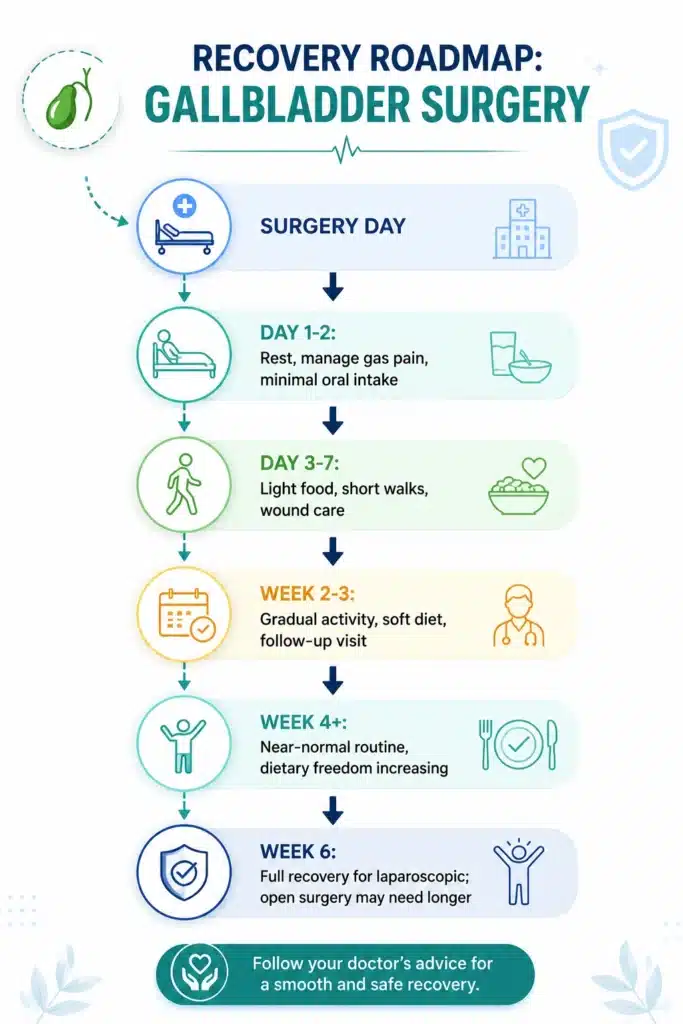
The normal recovery timeline: What to expect day by day
Understanding what’s normal is the first step. A lot of patients panic unnecessarily. Others ignore real warning signs because they assume everything is “just part of recovery.”
First 24–48 Hours
- Mild nausea after anesthesia, completely normal.
- Shoulder or neck pain: This is gas pain from CO₂ used during laparoscopy; it travels up and resolves in 1–2 days.
- Fatigue and drowsiness: your body is healing.
- Slight soreness around incision sites.
- Minimal appetite.
Days 3–7
- Pain around incisions decreasing.
- Gas and bloating slowly improving.
- You can begin light walking; this actually speeds recovery after gallbladder surgery.
- Appetite gradually returning.
- Some loose stools or diarrhea is normal as your digestion adjusts.
Week 2–4
- Return to desk work (if no heavy lifting required).
- Most patients feel 70–80% normal.
- Diet restrictions easing.
- Energy levels improving steadily.
Week 4–6 (Open Surgery Patients)
- Most physical restrictions are lifting.
- Full internal healing continues.
- Regular follow-up at your hospital is important.
10 warning signs during recovery you should never ignore
Recovery after gallbladder surgery has a predictable pattern. When something falls outside that pattern, it usually means something needs attention. Here are the warning signs that require immediate medical evaluation.
1. Fever above 38.5°C (101°F)
A low-grade temperature in the first 48 hours is expected.
But a fever that rises, persists, or comes back after going away is a red flag.
- It could signal a wound infection.
- It could indicate bile leakage into the abdomen.
- It could mean an internal collection of fluid or an abscess.
Do not take a fever during recovery after gallbladder surgery lightly. Call your surgeon or go to the hospital.
2. Severe or worsening abdominal pain
Some soreness around incision sites is normal.
What is not normal:
- Pain that is getting worse instead of better.
- New, sudden sharp pain in the abdomen.
- Pain that spreads across the belly rather than staying localized.
This could indicate bile leakage, an internal bleed, or injury to nearby structures like the bile duct.
Patients at a good multispecialty hospital in Noida would have imaging available immediately to diagnose this.
3. Yellowing of skin or eyes (Jaundice)
If you notice your skin or the whites of your eyes turning yellow, this is an urgent warning sign.
Jaundice after gallbladder surgery usually means the following:
- A retained gallstone in the common bile duct.
- Bile duct injury during surgery.
- Narrowing or blockage of the bile duct.
This is not something to wait out. Jaundice during recovery after gallbladder surgery needs same-day evaluation.
4. Dark urine or pale/clay-colored stools
These two together almost always point to a bile duct problem.
- Dark (tea-colored) urine = bile entering the bloodstream.
- Pale, grey, or clay-colored stools = bile not reaching the intestine.
This combination, especially alongside jaundice, needs immediate attention. The best gallbladder surgeon in Noida will order liver function tests and imaging on the same visit.
5. Persistent nausea and vomiting
Some nausea in the first 24–48 hours is expected after anesthesia.
But if nausea continues beyond day 3 or worsens, especially with vomiting, it’s a problem.
Possible causes:
- Delayed gastric emptying.
- Bile reflux.
- Internal complication requiring attention.
Do not simply manage with antacids and hope it passes. Report it during your recovery after gallbladder surgery follow-up or sooner if it’s severe.
6. Redness, swelling, or discharge from wound sites
Check your incision sites daily. Normal healing means the following:
- Mild bruising that fades.
- Slight tenderness that is reduced.
Signs of wound infection:
- Redness spreading outward from the wound.
- Warmth or swelling around the incision.
- Pus or cloudy discharge.
- Wound edges separating.
Wound infections during recovery after gallbladder surgery are treatable, but only if caught early. Delayed treatment can deepen the infection.
7. Shortness of breath or chest pain
This one surprises a lot of patients. What does chest pain have to do with gallbladder surgery?
After any surgery, there is a risk of deep vein thrombosis (blood clot in the leg) or pulmonary embolism (clot traveling to the lungs). This risk is higher if:
- You’re less mobile post-surgery.
- You have a history of clotting disorders.
- You’re older or overweight.
Symptoms include:
- Sudden shortness of breath.
- Chest pain (especially on breathing in).
- Rapid heart rate.
- Leg swelling or calf pain.
This is a medical emergency. Go to the nearest emergency room immediately. In Noida, the best hospital in Noida with emergency care can manage this within minutes.
8. Inability to pass gas or stool for more than 3 days
Some sluggishness in the digestive system is expected post-surgery.
But if you cannot pass gas or stool for more than 2–3 days, it could signal the following:
- Post-operative ileus (temporary paralysis of the intestine).
- Adhesion formation.
- Internal blockage.
This is one of the less-discussed complications during recovery after gallbladder surgery. Patients often dismiss it, thinking it’s just constipation. Report it.
9. Diarrhea that lasts more than 2 weeks
Some loose stools in the first week are normal. Your digestive system is adjusting to the new bile flow pattern.
But persistent diarrhea, more than 3 loose stools per day for over two weeks, suggests the following:
- Post-cholecystectomy syndrome.
- Bile salt malabsorption.
- Dietary triggers not yet identified.
This is manageable with the right treatment but needs assessment. Recovery after gallbladder surgery includes your digestive health, not just your wound.
10. Swelling in the legs or sudden high heart rate
Both of these can signal complications in circulation after surgery.
- Swollen, painful legs = possible deep vein thrombosis.
- Sudden racing heart = could signal infection, internal bleeding, or dehydration.
Neither is normal. Neither should be watched and waited on.
Warning signs summary table
| Warning Sign | When It Appears | Likely Cause | Action Needed |
| Fever above 38.5°C | Day 2 onward | Infection, bile leak | Call doctor immediately |
| Severe worsening pain | Any time | Bile leak, internal bleed | Emergency evaluation |
| Jaundice | Day 3–14 | Bile duct injury or stone | Same-day evaluation |
| Dark urine + pale stools | Day 3–14 | Bile duct blockage | Same-day blood tests + imaging |
| Persistent nausea/vomiting | After day 3 | Multiple causes | Report at follow-up or sooner |
| Wound redness + discharge | Day 3–10 | Wound infection | Doctor visit within 24 hours |
| Chest pain + breathlessness | Any time | PE or clot | Emergency, go immediately |
| No bowel movement (3+ days) | Day 2–5 | Ileus or obstruction | Call your surgeon |
| Diarrhea (2+ weeks) | Week 2 onward | Bile salt malabsorption | Scheduled consultation |
| Leg swelling + high heart rate | Any time | DVT, dehydration | Emergency evaluation |
Diet during recovery after gallbladder surgery
What you eat directly affects how smooth your recovery after gallbladder surgery will be.
First week: Keep it simple
- Clear liquids on day 1 (water, coconut water, dal ka paani).
- Soft, bland foods by day 2–3 (khichdi, curd rice, boiled vegetables).
- Avoid fat completely in the first 5–7 days.
- Small, frequent meals, 5–6 times a day.
Week 2–4: Gradual expansion
| Eat more | Avoid completely |
| Boiled / steamed vegetables | Fried foods (pakoras, puri, samosa) |
| Curd, buttermilk | Heavy cream, full-fat paneer |
| Lean protein (dal, eggs, chicken) | Spicy curries and pickles |
| Fruits (banana, papaya, apple) | Raw onion, cabbage, broccoli in excess |
| Rice, oats, idli | Carbonated drinks, alcohol |
Month 2 onward
Most patients can return to a near-normal diet. But some people remain sensitive to fatty foods for months. This is normal. Recovery after gallbladder surgery is also a digestive adjustment process.
Post-cholecystectomy syndrome: When symptoms don’t go away
Some patients continue to experience pain, bloating, or digestive discomfort months after surgery. This is called Post-Cholecystectomy Syndrome (PCS).
It affects approximately 10–15% of patients.
Causes include:
- Retained bile duct stone.
- Bile duct injury or narrowing.
- Bile reflux into the stomach.
- Irritable bowel syndrome triggered by altered bile flow.
- Sphincter of Oddi dysfunction.
PCS is real and treatable. It’s not “in your head.” If you’re months into your recovery after gallbladder surgery and still unwell, see a gastroenterologist or your operating surgeon.
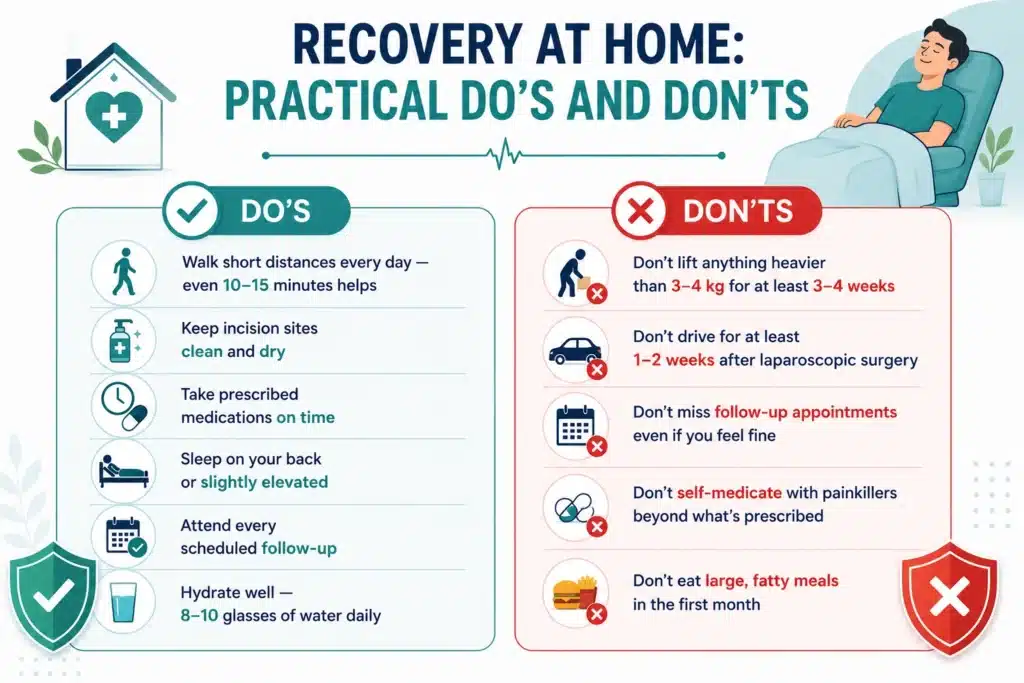
Recovery at home: Practical do’s and don’ts
When to choose the right hospital for gallbladder surgery in noida
Good recovery after gallbladder surgery often begins before surgery, with choosing the right place.
For patients in Noida, the quality of surgical care, post-operative monitoring, and follow-up systems makes a real difference in how smooth recovery is.
Rama Hospital is one of the leading names when it comes to gallbladder surgery in Noida. As a trusted multispecialty hospital in Noida, it offers the following:
- Experienced laparoscopic and general surgeons.
- Advanced diagnostic imaging for post-operative complications.
- Dedicated recovery and follow-up protocols.
- Emergency care infrastructure for any post-surgery complication.
- Patient counseling on diet, activity, and what to watch for.
Choosing the best hospital in Noida for your gallbladder surgery means having a team that supports you not just in the OT but through every day of recovery.
If you’re looking for the best gallbladder surgeon in Noida, the surgical team at Rama Hospital brings years of experience in minimally invasive procedures, with a focus on safe outcomes and faster recovery.
Frequently Asked Questions (FAQs)
Q1. I had laparoscopic surgery 5 days ago, and I’m still feeling pain. Is that normal?
Yes, mild pain around the incision sites for 5–7 days is normal during recovery after gallbladder surgery. What’s not normal is pain that keeps getting worse, spreads to other areas, or is accompanied by fever. If your pain is increasing instead of gradually improving, contact your doctor promptly.
Q2. I have had yellow eyes since yesterday. Can I wait to see if it goes away?
No, do not wait. During recovery after gallbladder surgery, yellowing of the eyes (jaundice) requires same-day medical evaluation. It may indicate a retained stone or bile duct injury, and early diagnosis and treatment during recovery after gallbladder surgery are essential for the best outcomes.
Q3. I had my surgery 10 days ago, and I’m still having loose stools 3–4 times a day. Should I be worried?
During recovery after gallbladder surgery, some loose stools in the first 1–2 weeks are normal. Your liver now releases bile directly into the intestine, and the digestive system needs time to adjust. However, if you experience three or more loose motions per day that persist beyond two weeks, consult your doctor about possible bile salt malabsorption and appropriate management options.
Q4. Can I eat dal chawal and curd after gallbladder surgery?
Yes. During recovery after gallbladder surgery, foods like khichdi, dal chawal, and curd rice are excellent choices. They are easy to digest, low in fat, and gentle on the digestive system. For a smoother recovery after gallbladder surgery, avoid heavy tadka, fried foods, and ghee during the first 2–3 weeks.
Q5. My wound looks okay, but I have a low-grade fever (99–100°F). What should I do?
During recovery after gallbladder surgery, a low-grade fever in the first 48 hours is common. However, any fever that develops afterward, even if mild, should be reported. Keep track of your temperature, and if it rises above 38.5°C or returns after subsiding, contact your surgeon the same day.
Q6. I feel fine physically, but I’m extremely tired even two weeks after surgery. Is this normal?
Yes. Fatigue is one of the most underestimated aspects of recovery after gallbladder surgery. During recovery after gallbladder surgery, your body continues healing internally even when the external wounds appear to be healing well. Light walking can help improve energy levels, but adequate rest is equally important. If fatigue becomes severe or progressively worsens during recovery after gallbladder surgery, consult your doctor and consider blood tests to rule out anemia, infection, or other complications.
Q7. I had gallbladder surgery 3 months ago, and I still get pain after oily food. Will this ever go away?
For most people, yes. Recovery after gallbladder surgery involves an adjustment period, and the digestive system typically takes 3–6 months to adapt to functioning without a gallbladder. Some people may remain sensitive to fatty foods for longer. Keeping a food diary can help identify personal triggers. If the pain is significant or persistent during recovery after gallbladder surgery, consult a gastroenterologist.
Q8. When can I join work after gallbladder surgery?
For desk jobs, most people return to work within 1–2 weeks after laparoscopic surgery. Recovery after gallbladder surgery varies from person to person, but those with physically demanding jobs or heavy lifting responsibilities typically need 4–6 weeks before returning to work. Always follow your surgeon’s specific guidance based on your recovery progress.
Q9. Is it safe to travel by train or car 2 weeks after surgery?
Recovery after gallbladder surgery usually allows short trips (under 2 hours) in a comfortable position after about 2 weeks, especially following laparoscopic surgery. To support a smooth recovery after gallbladder surgery, avoid bumpy roads, long journeys without breaks, or air travel during the first 2 weeks unless your surgeon has given clearance.
Q10. Where should I go for gallbladder surgery follow-up in Noida?
For patients in Noida and nearby areas, Rama Hospital provides comprehensive follow-up care for patients in recovery after gallbladder surgery. As a trusted multispecialty hospital in Noida, they have the imaging, lab, and surgical expertise to address any complication quickly.
Conclusion
Recovery after gallbladder surgery is mostly straightforward. Most people do well. Most people are back to their routines within 2–4 weeks.
But the minority of patients who face complications often face them because they didn’t know what to watch for.
Now you do.
Know the warning signs. Trust your body when something feels off. And don’t let anyone, including yourself, convince you to “wait and see” when the signs are clearly saying otherwise.
If you’re looking for gallbladder surgery in Noida or need expert post-operative care, the team at Rama Hospital, one of the most trusted names in gallbladder surgery in Noida, is equipped to guide you through every step of your recovery after gallbladder surgery.
Your recovery matters. Take it seriously.
Recovery after gallbladder surgery is smoother with the right medical support. For consultations and post-operative care, contact Rama Hospital, a leading multi-specialty hospital in Noida with experienced surgical teams and advanced treatment facilities.