
Your kidneys are quietly doing one of the most important jobs in your body. Every minute, they filter about half a liter of blood, clear out toxins, regulate fluids, and keep your blood pressure in check. Most people don’t think about them until something goes wrong.
And when something does go wrong, there are two very different paths it can take: acute vs chronic kidney disease. Both are serious. But they are not the same thing. They don’t feel the same, they don’t develop the same way, and they don’t get treated the same way.
Understanding acute vs chronic kidney disease could be the difference between catching a problem early and letting it quietly damage your kidneys for years.
What is acute kidney disease?
Acute kidney injury (AKI) happens suddenly. Your kidneys stop working properly within hours or days. It’s fast, it’s intense, and it’s often triggered by a specific event.
The word “acute” doesn’t mean “minor.” It means rapid. AKI can be life-threatening if not treated in time. The kidneys may lose most of their filtering ability within 48 to 72 hours.
The good news? Acute kidney injury is often reversible if caught early and treated correctly.
What is chronic kidney disease?
Chronic kidney disease (CKD) is the slow, silent thief. It develops over months, sometimes years. There’s no dramatic moment when it begins. By the time most people notice symptoms, significant damage has already happened.
CKD is measured in five stages. Stage 1 means mild kidney damage with near-normal function. Stage 5 means kidney failure, where dialysis or a transplant becomes necessary.
Unlike AKI, long-term kidney damage from CKD is largely irreversible. You can slow it down. You can manage it. But you cannot undo years of chronic kidney inflammation or diabetic kidney disease with a short course of treatment.
Acute vs Chronic kidney disease: side-by-side comparison
Here’s the clearest way to understand the difference:
| Feature | Acute Kidney Injury (AKI) | Chronic Kidney Disease (CKD) |
| Onset | Sudden (hours to days) | Gradual (months to years) |
| Reversibility | Often reversible with treatment | Mostly irreversible |
| Duration | Short-term (< 3 months) | Long-term (> 3 months) |
| Cause | Usually a specific event | Ongoing conditions like diabetes or BP |
| Detection | Emergency situation, easier to detect | Often asymptomatic in early stages |
| Treatment focus | Treat the underlying cause, restore function | Slow progression, manage complications |
| Risk of dialysis | Temporary, if severe | Permanent, in advanced stage |
Acute kidney injury symptoms: what to watch for
Acute renal injury warning signs tend to appear suddenly. If you or someone you know experiences these, don’t wait.
- Sudden decrease in urine output, little or no urination, or very dark urine.
- Swelling in legs, ankles, or around the eyes due to fluid buildup.
- Sudden fatigue that feels unusual or overwhelming.
- Shortness of breath when fluid builds up around the lungs.
- Confusion and nausea: toxins building up in the blood affect brain function.
- Pain in the lower back or sides (not always present).
- Irregular heartbeat in severe cases.
The thing about acute kidney injury symptoms is that they often overlap with other conditions. Many people mistake early AKI for dehydration, viral fever, or general weakness. That’s dangerous. If any combination of the above symptoms appears without a clear explanation, kidney function should be tested immediately.
Chronic kidney disease symptoms: the quiet warning signs
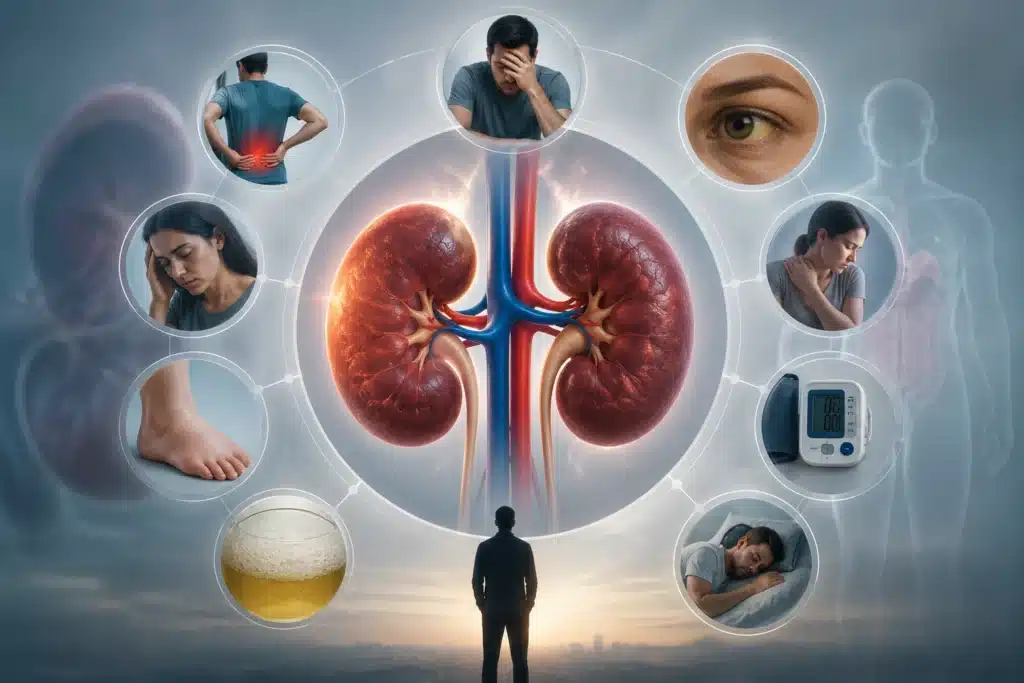
CKD is tricky. Chronic kidney disease symptoms don’t usually appear until the disease has already progressed to Stage 3 or beyond. This is why so many people are diagnosed late.
Watch for these signs, especially if you have diabetes or high blood pressure:
- Frequent urination at night, kidneys struggling to concentrate urine.
- Persistent fatigue that doesn’t improve with rest.
- Foamy urine, a sign of protein leaking into the urine (proteinuria).
- High blood pressure that’s hard to control even with medication.
- Swelling in ankles and feet, especially by evening.
- Loss of appetite and a metallic taste in the mouth.
- Dry, itchy skin.
- Difficulty concentrating or “brain fog.”
If you have diabetes or high blood pressure or kidney damage as a known risk factor, don’t wait for symptoms. Get a kidney function test every year.
AKI Causes: What triggers acute kidney injury?
In many cases, removing the trigger and supporting the kidneys is enough to restore function. But time matters a great deal.
AKI is almost always caused by a sudden stress on the kidneys. The most common triggers include:
- Severe dehydration: from vomiting, diarrhea, excessive sweating, or poor fluid intake.
- Infection causing kidney damage: particularly severe urinary tract infections or systemic infections/
- Medication-induced kidney injury: NSAIDs like ibuprofen, certain antibiotics, contrast dyes used in scans, and some blood pressure medications can harm kidney cells.
- Blood loss kidney failure: trauma, surgery, or internal bleeding reduces blood supply to the kidneys.
- Sepsis-induced kidney injury: sepsis is one of the leading causes of AKI in hospitalized patients; the body-wide inflammation response can shut down kidney function rapidly.
- Kidney blockages from stones or tumors.
- Rhabdomyolysis: breakdown of muscle tissue (can happen after crush injuries or extreme exertion).
CKD causes: What leads to chronic kidney disease?
In India, diabetes, kidney disease, and high blood pressure-related kidney damage together account for over 60% of CKD cases. Both are largely preventable or manageable with early intervention.
Unlike AKI, CKD is driven by conditions that slowly damage the kidneys over years.
- Diabetes kidney disease: the single largest cause of CKD globally. High blood sugar damages the kidney’s filtering units (nephrons) over time.
- High blood pressure kidney damage: uncontrolled hypertension puts chronic strain on kidney blood vessels.
- Chronic kidney inflammation: conditions like glomerulonephritis cause repeated inflammation that scars kidney tissue.
- Polycystic kidney disease: a genetic condition where fluid-filled cysts replace healthy kidney tissue.
- Recurrent kidney infections (chronic pyelonephritis).
- Long-term use of painkillers or certain herbal medicines.
- Obesity and metabolic syndrome.
- Autoimmune diseases like lupus.
Can acute kidney injury become chronic kidney disease?
And this is one of the most important things to understand.
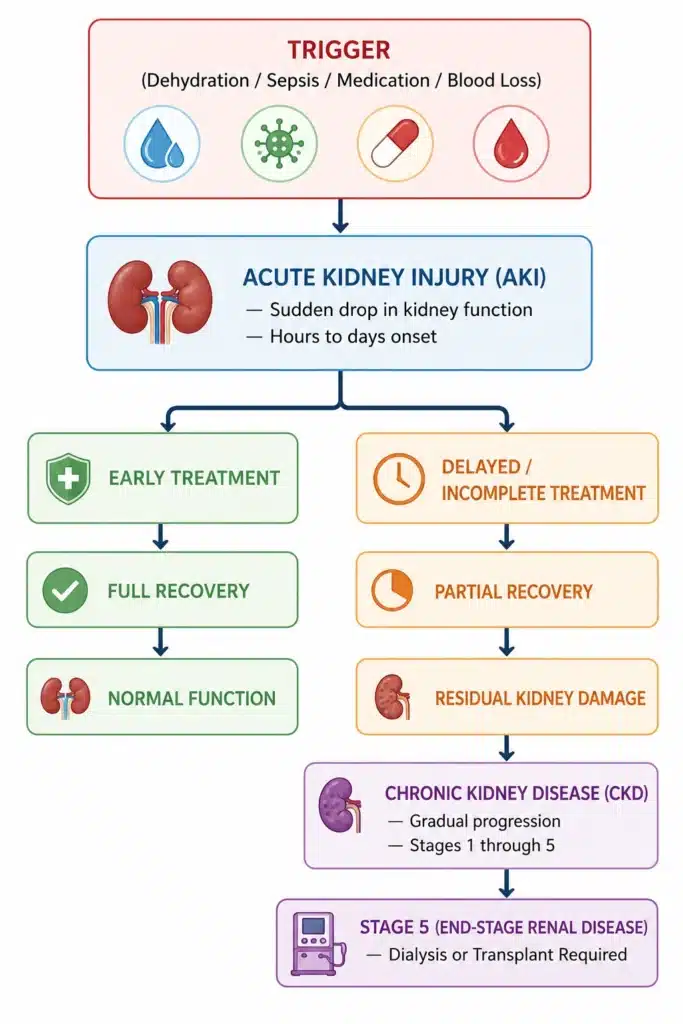
There is a real and documented link between AKI and CKD. A single severe episode of acute kidney injury can cause permanent scarring and reduce kidney reserve. Multiple episodes make the risk significantly higher.
Can acute kidney injury become chronic kidney disease? The answer is it can if:
- AKI was severe or prolonged.
- The underlying cause wasn’t fully addressed.
- Recovery was incomplete.
- The person already had diabetes, high BP, or existing kidney disease.
This is why follow-up after AKI is so important. Kidney function should be monitored for at least three months after an acute episode. The transition from AKI to CKD is not inevitable, but it’s also not rare.
How acute kidney injury progresses to CKD: A flow diagram
The path from AKI to CKD is not automatic. Early treatment and proper monitoring can interrupt this chain.
Diagnosis: How are AKI and CKD identified?
Both conditions are diagnosed through blood and urine tests, but the interpretation differs.
| Test | AKI Finding | CKD Finding |
| Serum Creatinine | Rapid rise over 48–72 hours | Persistently elevated over months |
| eGFR (kidney function) | Sudden drop below normal | Gradually declining below 60 for 3+ months |
| Urine Output | Oliguria (< 400ml/day) or anuria | May be normal or increased early on |
| Urinalysis | Blood, casts, protein | Protein (foamy urine), sometimes blood |
| Urine Protein | May be present acutely | Persistent proteinuria is a hallmark |
| Kidney Ultrasound | Usually normal or swollen | Small, scarred kidneys in advanced stages |
| Kidney Biopsy | Rarely needed | Sometimes needed to identify cause |
Treatment: acute vs chronic kidney disease
Treating AKI
- Remove the trigger: stop the offending medication, treat the infection, and restore fluids.
- IV fluids if dehydrated.
- Dialysis if toxins build up dangerously or fluid cannot be managed.
- Close monitoring of blood electrolytes, especially potassium.
- Treat underlying sepsis aggressively.
- Most patients recover within days to weeks if treated promptly.
Treating CKD
- Control blood sugar (for diabetes and kidney disease).
- Manage blood pressure strictly (target < 130/80 mmHg).
- Protein restriction in diet in later stages.
- Anemia management (CKD reduces erythropoietin production).
- Phosphorus and potassium dietary control.
- Medications: ACE inhibitors, ARBs, SGLT2 inhibitors (now recommended for CKD patients with diabetes).
- Dialysis in Stage 5, Dialysis center in Noida at Rama Hospital offers both hemodialysis and peritoneal dialysis.
- Kidney transplant evaluation for eligible patients.
When should you see a nephrologist?
Early specialist review changes outcomes significantly. CKD caught at Stage 1 or 2 can be managed very effectively. CKD caught at Stage 4 or 5 has far fewer options.
See a nephrologist in Noida or near you if:
- Your creatinine levels are rising.
- Your eGFR has dropped below 60 and stayed there for more than 3 months.
- You have foamy urine, persistent swelling, or unexplained fatigue.
- You have diabetes or high BP and have never had a kidney function test.
- You have recovered from AKI and need post-episode monitoring.
- You’re on long-term medications that may affect kidney function.
Kidney disease treatment in Noida
If you or a family member is dealing with any form of kidney disease, getting the right specialist care in the right environment matters.
Whether it’s a sudden acute vs chronic kidney disease or a long-term condition, having a trusted team makes a real difference.
Rama Hospital offers comprehensive kidney disease treatment in Noida, including:
- Expert nephrologist in Noida for consultations for both AKI and CKD.
- State-of-the-art dialysis center in Noida for patients requiring renal replacement therapy.
- Advanced diagnostic facilities for early-stage kidney disease detection.
- Multidisciplinary care involving nephrologists, dietitians, and diabetes specialists.
- Personalized CKD management plans that address the root cause, not just symptoms.
Frequently Asked Questions
Q1. My doctor told me my creatinine is high. Does that mean I have kidney disease?
A high creatinine level alone does not confirm kidney disease. Doctors evaluate it along with your eGFR, urine tests, symptoms, and medical history to understand the underlying cause. A single high reading may be temporary and caused by dehydration, a high-protein meal, intense exercise, or muscle breakdown. However, consistently elevated creatinine levels over time are more concerning and may indicate kidney damage. Understanding the difference between acute vs chronic kidney disease is also important, as acute kidney injury may be reversible with prompt treatment, while chronic kidney disease develops gradually and requires long-term management. If your creatinine levels remain high, consult a nephrologist for a complete evaluation and accurate diagnosis.
Q2. Can kidney disease be cured?
Acute kidney injury can often be fully reversed if treated early, while chronic kidney disease is usually a lifelong condition that cannot be cured. This is one of the biggest differences in acute vs chronic kidney disease. Although chronic kidney disease cannot be reversed, early diagnosis, the right treatment, and healthy lifestyle changes can slow its progression and help protect kidney function for longer. That’s why recognizing the condition early is so important.
Q3. I had a kidney infection last year. Could it have damaged my kidneys permanently?
A single kidney infection in an otherwise healthy person is unlikely to cause permanent damage if treated promptly. However, repeated infections or infections that are left untreated can cause kidney scarring and gradually reduce kidney function over time. In some cases, this ongoing damage may contribute to chronic kidney disease. Understanding acute vs chronic kidney disease is important, as acute kidney injury can often be reversed with timely treatment, while chronic kidney disease develops slowly and usually requires long-term management. If you’ve had multiple kidney infections, it’s a good idea to get a kidney function test and an ultrasound to check for any lasting damage.
Q4. I’m diabetic, and my urine looks foamy. Should I be worried?
Yes. Foamy urine in a person with diabetes can be an early warning sign of diabetic nephropathy, a type of kidney disease caused by long-term high blood sugar. It usually means protein is leaking into the urine, which is one of the earliest signs of kidney damage. Don’t ignore it—consult a doctor and get a urine microalbumin test as soon as possible. It’s also important to understand the difference between acute vs chronic kidney disease, as early diagnosis helps determine the right treatment and can slow the progression of chronic kidney damage.
Q5. My father’s kidneys were failing, and he had to start dialysis. Is this inherited?
Most kidney diseases are not directly inherited, except for conditions like polycystic kidney disease (PKD) and a few rare genetic disorders. However, if your parents or close family members have diabetes, high blood pressure, or kidney disease, your risk of developing kidney problems is higher.
It is also important to understand the difference between acute vs chronic kidney disease. Acute kidney disease develops suddenly and may be reversible with timely treatment, while chronic kidney disease progresses gradually over months or years and often requires long-term management.
Q6. How long can someone live with chronic kidney disease without dialysis?
It depends on the stage and the underlying cause. Understanding acute vs chronic kidney disease is important, as acute kidney disease may be reversible with timely treatment, while chronic kidney disease usually progresses over time. With proper treatment and regular follow-ups, many people can slow the progression and maintain a good quality of life for years.
Q7. Can I reverse kidney damage by drinking more water?
Not if the damage has already happened. Staying well-hydrated helps prevent kidney stress and certain types of kidney stones, but it doesn’t undo established CKD or repair scarred kidney tissue. It’s a helpful preventive measure, not a treatment.
Q8. What foods should I avoid if I have kidney disease?
This depends on your stage and lab values. Common restrictions include high-potassium foods (bananas, tomatoes, and potatoes); high-phosphorus foods (dairy, nuts, and whole grains); and high-protein foods in later stages. Always follow a diet plan designed by a renal dietitian based on your specific reports.
Conclusion
Acute vs chronic kidney disease are two different conditions with different causes, timelines, and treatment approaches. AKI is sudden and often reversible. CKD is gradual, progressive, and lifelong.
What they share is this: both respond better to early intervention than to late-stage management.
If something feels off, get tested. A simple blood and urine test can tell you what’s happening inside your kidneys. And if results are abnormal, see a specialist sooner rather than later.
Kidney disease treatment in Noida is accessible and effective when started at the right time. The team at Rama Hospital is equipped to guide patients from diagnosis through long-term management with compassion, precision, and experience.
Your kidneys work hard for you. Give them the attention they deserve.