Pancreatic duct stenting is a specialized endoscopic procedure used to treat problems in the pancreatic duct. The pancreatic duct is a narrow tube that carries digestive enzymes from the pancreas to the small intestine. When this duct becomes narrowed, blocked, or disrupted due to disease, injury, or surgery, it can cause severe pain, recurrent pancreatitis, fluid collections, or digestive problems.
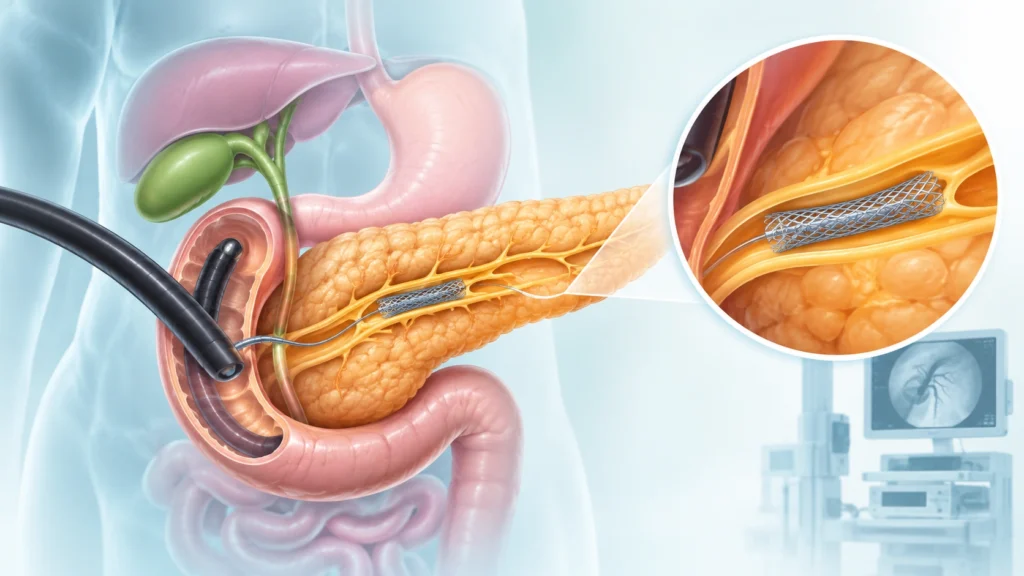
In pancreatic duct stenting, a small tube called a stent is placed inside the pancreatic duct through an endoscope. This stent helps keep the duct open, allows pancreatic juice to flow normally, reduces pressure, and promotes healing. The procedure is usually done as part of an advanced endoscopy called ERCP, which stands for Endoscopic Retrograde Cholangiopancreatography.
This treatment is commonly used in patients with chronic pancreatitis, pancreatic duct strictures, duct leaks after surgery or injury, pancreatic stones, or certain complications of pancreatic disease. It is a minimally invasive option that can relieve symptoms, reduce hospital stays, and improve quality of life when performed by experienced gastroenterologists.
What is Pancreatic Duct Stenting?
Pancreatic duct stenting is a procedure in which a small plastic or metal tube is placed inside the pancreatic duct to keep it open and allow normal drainage of pancreatic fluid. The stent acts like a support that prevents the duct from collapsing or getting blocked.
The procedure is usually done during ERCP, where a flexible endoscope is passed through the mouth, down the food pipe, through the stomach, and into the small intestine. From there, the doctor can access the opening of the pancreatic duct and place the stent under X-ray guidance.
The stent may be temporary or long-term depending on the condition being treated. Some stents are designed to fall out on their own after a few weeks or months. Others may need to be removed or replaced during a follow-up procedure.
Why is Pancreatic Duct Stenting Done?
Pancreatic duct stenting is done to treat specific problems in the pancreatic duct that cause pain, inflammation, or complications.
Common reasons for pancreatic duct stenting
- Narrowing of the pancreatic duct, also called a stricture.
- Blockage due to pancreatic stones or protein plugs.
- Leak or disruption of the pancreatic duct after surgery, injury, or severe pancreatitis.
- Chronic pancreatitis with recurrent pain and duct abnormalities.
- Fluid collections such as pseudocysts connected to the pancreatic duct.
- Prevention of pancreatitis after certain ERCP procedures in high-risk patients.
- Support for healing after pancreatic duct injury.
Goals of the procedure
- To restore normal flow of pancreatic juice.
- To reduce pressure inside the pancreatic duct.
- To relieve pain and improve digestion.
- To promote healing of leaks or injuries.
- To prevent recurrent episodes of pancreatitis.
- To avoid or delay the need for surgery in selected patients.
How is the Procedure Performed?
Pancreatic duct stenting is performed by a gastroenterologist with advanced training in endoscopy. It is usually done under sedation or anesthesia so the patient is comfortable and does not feel pain during the procedure.
Pre-procedure preparation
- Fasting for several hours before the procedure.
- Review of medical history, allergies, and current medicines.
- Blood tests to check clotting, kidney function, and overall health.
- Imaging such as CT, MRI, or previous ERCP films if available.
- Discussion of risks, benefits, and alternatives with the patient and family.
- Adjustment of blood thinners or other medicines as advised.
During the procedure
- The patient is given sedation or anesthesia through an IV line.
- A flexible endoscope is passed through the mouth into the stomach and then into the small intestine.
- The opening of the pancreatic duct is identified.
- A thin guide wire is passed into the pancreatic duct under X-ray guidance.
- A contrast dye may be injected to visualize the duct clearly.
- The stricture, stone, or leak is assessed.
- A stent of appropriate size and type is placed across the problem area.
- The position of the stent is confirmed with X-ray images.
- The endoscope is gently removed.
After the procedure
- The patient is moved to a recovery area for monitoring.
- Vital signs, pain, and any symptoms are observed for a few hours.
- Most patients can go home the same day or after one night in the hospital.
- Instructions are given about diet, medicines, activity, and warning signs.
Types of Pancreatic Stents
Different types of stents may be used depending on the condition and treatment plan.
Plastic stents
- Commonly used for short-term drainage.
- Available in different lengths and diameters.
- May need to be replaced or removed after a few weeks or months.
- Often used for strictures, leaks, or post-ERCP prophylaxis.
Metal stents
- Used in selected cases where longer-term drainage is needed.
- May be partially covered or uncovered depending on the situation.
- Less commonly used in the pancreatic duct compared to plastic stents.
- Decision depends on the underlying disease and anatomy.
Temporary versus long-term stents
- Temporary stents are used to support healing and are removed later.
- Long-term stents may be used in chronic conditions where surgery is not an option.
- The choice depends on the diagnosis, response to treatment, and risk of complications.
Benefits of Pancreatic Duct Stenting
Pancreatic duct stenting offers several benefits when used in appropriate patients.
Symptom relief
- Reduction in abdominal pain related to pancreatic duct obstruction.
- Improvement in digestion and nutrient absorption.
- Decrease in nausea, vomiting, or bloating in selected cases.
- Better quality of life due to reduced symptoms.
Disease management
- Healing of pancreatic duct leaks and disruptions.
- Drainage of fluid collections connected to the duct.
- Reduction in frequency of acute pancreatitis episodes.
- Delay or avoidance of surgery in some patients with chronic pancreatitis.
- Support for duct healing after injury or complex procedures.
Practical advantages
- Minimally invasive compared to open surgery.
- Shorter hospital stay in many cases.
- Faster recovery and return to normal activities.
- Can be repeated or adjusted if needed.
Risks and Possible Complications
Like any medical procedure, pancreatic duct stenting carries some risks. Most patients do well, but it is important to be aware of possible complications.
Common risks
- Post-ERCP pancreatitis, which is inflammation of the pancreas after the procedure.
- Bleeding from the duct or surrounding area.
- Infection in the pancreas or nearby structures.
- Perforation or injury to the duct or intestine in rare cases.
- Migration of the stent, where it moves out of position.
- Blockage of the stent over time due to debris or protein plugs.
- Discomfort or pain after the procedure.
Less common risks
- Allergic reaction to contrast dye or medicines.
- Breathing or heart problems related to sedation.
- Need for additional procedures if the stent does not work as expected.
- Rare injury to nearby organs.
Why risk management matters
- Careful patient selection reduces unnecessary procedures.
- Experienced endoscopists lower the risk of complications.
- Proper pre-procedure evaluation helps identify high-risk patients.
- Close monitoring after the procedure allows early detection of problems.
Recovery After Pancreatic Duct Stenting
Recovery is usually quick, but it depends on the reason for stenting and the patient’s overall health.
Immediate recovery
- Monitoring in the recovery area for a few hours.
- Observation for pain, nausea, vomiting, or fever.
- Gradual introduction of fluids and then soft food as tolerated.
- Pain relief medicines if needed.
First few days at home
- Rest for the first day and avoid heavy activity.
- Start with light, easily digestible meals.
- Avoid alcohol and very oily or spicy food initially.
- Take prescribed medicines such as pain relievers, antibiotics, or pancreatic enzymes if advised.
- Watch for warning signs such as severe pain, fever, vomiting, or jaundice.
Return to normal activities
- Many patients can resume normal routine within a day or two.
- Avoid strenuous exercise for a few days as advised.
- Follow-up appointment is scheduled to review recovery and plan stent management.
Diet and Lifestyle After the Procedure
Diet and lifestyle play an important role in recovery and long-term pancreatic health.
Diet recommendations
- Start with clear fluids and then progress to soft, bland food.
- Eat small, frequent meals rather than large heavy meals.
- Avoid very fatty, fried, or spicy food in the initial days.
- Limit or avoid alcohol completely, especially in pancreatitis.
- Stay well hydrated with water and oral fluids.
- Follow specific diet advice if there is associated diabetes or malabsorption.
Lifestyle measures
- Stop smoking to reduce pancreatic and overall health risks.
- Maintain a healthy weight.
- Follow prescribed enzyme supplements if digestion is affected.
- Take all medicines as directed by the doctor.
- Attend all follow-up appointments for stent check or removal.
Follow-up and Stent Management
Follow-up is an essential part of pancreatic duct stenting because stents are not meant to stay forever in most cases.
Follow-up plan
- A follow-up visit is scheduled within a few weeks to months.
- Imaging or repeat ERCP may be planned to assess the duct and stent.
- The stent may be removed, exchanged, or left in place depending on the situation.
- Symptoms and quality of life are reviewed at each visit.
Stent removal or exchange
- Plastic stents are often removed or replaced after a few weeks to months.
- Some stents are designed to fall out on their own and pass in the stool.
- Long-term stents may need periodic exchange to prevent blockage.
- The timing depends on the underlying condition and response to treatment.
Long-term monitoring
- Regular check-ups for patients with chronic pancreatitis.
- Monitoring for pain, weight loss, digestion, and blood sugar.
- Imaging as needed to assess the pancreatic duct and surrounding areas.
- Coordination with surgeons or other specialists if additional treatment is needed.
When Should You Seek Medical Help?
Most patients recover smoothly, but some symptoms need prompt medical attention.
- Persistent or worsening abdominal pain.
- Fever or chills.
- Nausea or vomiting that does not improve.
- Yellowing of eyes or skin.
- Dark urine or pale stools.
- Loss of appetite or significant weight loss.
- New or worsening digestive problems.
Why Choose Rama Hospital for Pancreatic Duct Stenting?
Pancreatic duct stenting is an advanced procedure that requires specialized equipment, imaging support, and experienced endoscopists. A hospital with a dedicated gastroenterology and endoscopy unit can provide safe and effective care.
- Accurate diagnosis with advanced imaging and endoscopic ultrasound if needed.
- Experienced gastroenterologists trained in complex ERCP and pancreatic procedures.
- Availability of intensive care support if complications occur.
- Coordinated care with surgeons, radiologists, and physicians.
- Structured follow-up for stent management and long-term pancreatic health.
Frequently Asked Questions (FAQs)
Is pancreatic duct stenting painful?
The procedure is done under sedation or anesthesia, so patients do not feel pain during it. Some discomfort or mild pain may be felt afterward, which is usually manageable with medicines.
How long does the stent stay in place?
The duration depends on the reason for stenting. Some stents are removed after a few weeks, while others may stay for several months. A few stents are designed to fall out on their own.
Can the stent move or get blocked?
Yes, stents can sometimes migrate or get blocked over time. This is why follow-up is important. If needed, the stent can be repositioned, removed, or replaced.
Will I need surgery after stenting?
Not always. Many patients are managed successfully with stenting alone. Surgery is considered if stenting is not enough or if there are complex pancreatic problems that need operative treatment.
Can I eat normally after the procedure?
Most patients can resume a normal diet gradually after the procedure. Initially, light and easily digestible food is recommended. Long-term diet depends on the underlying pancreatic condition.
Is pancreatic duct stenting safe?
It is generally safe when performed by experienced specialists, but like any procedure, it has some risks. Careful patient selection and monitoring help minimize complications.
What happens if the stent is not removed on time?
If a stent is left in place longer than recommended, it can get blocked, cause infection, or lead to duct changes. That is why following the advised removal or exchange schedule is very important.
Conclusion
Pancreatic duct stenting is an important minimally invasive treatment for patients with pancreatic duct strictures, leaks, stones, or other duct-related problems. It helps restore normal drainage, reduce pain, promote healing, and prevent complications in many cases of pancreatic disease.
The success of this procedure depends on proper patient selection, skilled endoscopic technique, and careful follow-up for stent management. For patients with recurrent pancreatitis, persistent abdominal pain, or known pancreatic duct abnormalities, evaluation by a gastroenterologist can make a major difference. With the right care, pancreatic duct stenting can significantly improve symptoms and quality of life.
Rama Hospital can provide comprehensive evaluation, advanced ERCP with pancreatic duct stenting, and structured follow-up care to support safe and effective treatment for pancreatic duct disorders.