
A sudden burning sensation when you pee. Feeling like you need to use the bathroom again just minutes after going. A constant pressure in your lower abdomen. Or urine that suddenly looks cloudy or smells different.
These can all be signs of a urinary tract infection (UTI).
But what does a this actually feel like? And how can you tell whether your symptoms are due to a UTI or another urinary problem?
A UTI can affect different parts of the urinary system, including the bladder, urethra and kidneys. Most UTIs involve the lower urinary tract, particularly the bladder and urethra. Common symptoms include burning during urination, frequent or urgent urination, passing small amounts of urine and discomfort in the lower abdomen or pelvic area.
Knowing the typical symptoms can help you recognise a possible UTI early and know when it is time to seek medical care.
What Does a UTI Feel Like?
For many people, this feels like something is suddenly wrong with the normal process of urination.
You may notice a burning or stinging sensation when you pee, even though you are not passing much urine. You may also feel an unusually strong urge to urinate, but only a small amount comes out.
Some people describe it as bladder pressure, discomfort below the belly button or a feeling that they have not completely emptied their bladder.
The exact symptoms can vary depending on which part of the urinary tract is affected.
Common feelings associated with a UTI include:
- Burning or pain while urinating
- A frequent need to urinate
- A strong, sudden urge to pee
- Passing only small amounts of urine
- Pressure or discomfort in the lower abdomen
- Cloudy or strong-smelling urine
- Blood in the urine in some cases
These symptoms are particularly common with a bladder infection, also called cystitis.
7 Common UTI Symptoms You Should Know
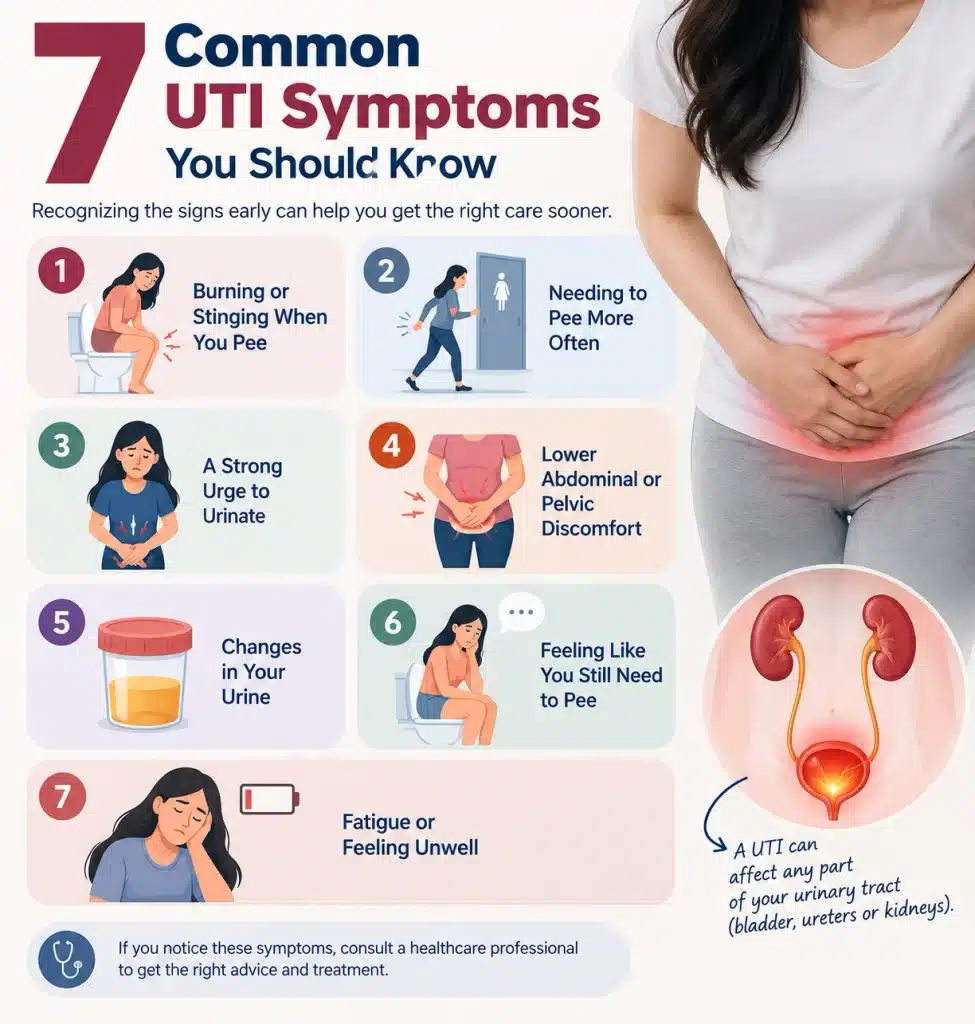
1. Burning or Stinging When You Pee
One of the most recognisable symptoms is a burning or stinging sensation during urination.
You may notice the discomfort as soon as you start urinating, while you are passing urine or immediately afterwards. Medically, painful urination is called dysuria.
However, burning while urinating does not always mean you have a UTI. Other conditions, including some sexually transmitted infections, bladder conditions and irritation, can also cause painful urination.
If the burning persists or occurs along with other urinary symptoms, it is worth getting evaluated.
2. Needing to Pee More Often
You may suddenly find yourself going to the bathroom much more often than usual.
The important clue is that you may feel an urgent need to urinate even when your bladder contains very little urine. You may go to the bathroom, pass only a small amount and then feel like you need to go again shortly afterwards.
Frequent urination and a strong, persistent urge to urinate are common signs of a UTI.
3. A Strong Urge to Urinate
This can make the urge to urinate feel unusually intense or difficult to ignore.
You might feel: “I have to go right now.”
But when you reach the bathroom, you may pass only a small amount of urine.
This happens because inflammation and irritation in the bladder can create a persistent sensation of needing to empty it.
4. Lower Abdominal or Pelvic Discomfort
This affecting the bladder can cause discomfort or pressure in the lower abdomen.
You may feel:
- Pressure below the belly button
- Aching around the bladder area
- Pelvic discomfort
- Lower abdominal pain
This discomfort may occur along with frequent or painful urination.
5. Changes in Your Urine
Your urine may look or smell different when you have a UTI.
Possible changes include:
- Cloudy urine
- Strong-smelling urine
- Blood in the urine
- A darker or unusual appearance
However, urine appearance alone cannot confirm a UTI. Other conditions, foods, medications and dehydration can also affect urine colour or smell.
If you notice blood in your urine, particularly when it is accompanied by pain or other urinary symptoms, you should seek medical advice.
6. Feeling Like You Still Need to Pee
Another common experience is the feeling that your bladder has not completely emptied.
You may urinate and then, almost immediately, feel that you need to go again.
This combination of urgency, frequency and passing small amounts of urine is a common pattern with bladder infections.
7. Fatigue or Feeling Unwell
A simple bladder infection may mainly cause urinary symptoms.
But if an infection moves higher into the urinary tract and affects the kidneys, you may develop more serious symptoms such as fever, chills, nausea, vomiting or pain in your back or side.
These symptoms should not be ignored.
What Does a UTI Feel Like in Women?
These are more common in women, partly because the female urethra is shorter and located closer to the anus, making it easier for bacteria to enter the urinary tract.
A woman with a UTI may experience:
- Burning while urinating
- Frequent urination
- Sudden urinary urgency
- Lower abdominal discomfort
- Cloudy or strong-smelling urine
- Blood in the urine
- Pelvic pressure
However, vaginal symptoms such as unusual discharge, itching or irritation may point toward another condition rather than a simple UTI.
If you are unsure about the cause of your symptoms, a medical evaluation can help distinguish between a UTI and other conditions.
What Does a UTI Feel Like in Men?
Men can also develop this, although bladder infections are less common in men than in women.
Symptoms may include:
- Burning or pain during urination
- Frequent urination
- Strong urinary urgency
- Lower abdominal discomfort
- Cloudy or bloody urine
- Pain in the side or lower back
Painful urination in men can also have causes other than a UTI, including urethritis and certain prostate conditions.
For this reason, persistent urinary symptoms in men should be evaluated by a healthcare professional.
Where Does UTI Pain Usually Occur?
The location of pain can provide clues about which part of the urinary tract may be involved. A UTI that has reached the kidneys can cause back or side pain along with fever, chills, nausea or vomiting.
| Possible location | What you may feel |
| Urethra | Burning or pain while urinating |
| Lower abdomen/bladder area | Pressure, discomfort or pain |
| Pelvic area | Pressure or aching |
| Back or side | Pain that may suggest kidney involvement |
Can a this Cause Back Pain?
It can, particularly when the infection has spread to the kidneys.
A lower urinary tract infection typically causes symptoms such as burning urination, urgency, frequency and lower abdominal discomfort.
But back or side pain combined with fever, chills, nausea or vomiting can be a warning sign of a kidney infection and requires prompt medical attention.
Do not assume that severe back pain is simply a normal UTI symptom.
UTI Symptoms vs Other Urinary Problems
Not every episode of burning urination or frequent urination is caused by a UTI.
Similar symptoms can occur with other urinary or reproductive health conditions. This is why symptoms alone may not be enough to determine the exact cause.
If symptoms continue, become severe or keep returning, consult a doctor rather than repeatedly treating yourself without a diagnosis.
| Symptom | Possible causes |
| Burning while urinating | UTI, urethritis, irritation and other conditions |
| Frequent urination | UTI, bladder conditions, diabetes and other causes |
| Blood in urine | UTI, kidney stones and other urinary conditions |
| Lower abdominal pain | UTI, bladder conditions and other causes |
| Back or side pain | Kidney infection, kidney stones and other conditions |
How Is UTI Diagnosed?

A healthcare professional may assess your symptoms, medical history and physical examination findings before deciding whether testing is needed.
Common tests can include:
Urinalysis
A urine sample can be examined for signs that may indicate infection, such as white blood cells or other markers.
Urine Culture
A urine culture can help identify bacteria responsible for an infection and can help guide antibiotic treatment when appropriate.
Additional investigations may sometimes be recommended if infections are recurrent, symptoms do not improve or another urinary problem is suspected.
How Is a UTI Treated?
Treatment depends on the type and severity of the infection and the individual patient’s circumstances.
Bacterial urinary tract infection are commonly treated with antibiotics prescribed by a healthcare professional. The choice of antibiotic can depend on factors such as the suspected or identified bacteria and the patient’s medical history.
It is important not to start leftover antibiotics or someone else’s medication on your own.
Taking an inappropriate antibiotic can delay effective treatment and contribute to antibiotic resistance.
If you have been prescribed an antibiotic, take it exactly as directed by your doctor.
Can a UTI Go Away on Its Own?
Some mild urinary symptoms may improve without treatment, but you should not assume that a suspected urinary tract infection will always disappear on its own.
Untreated infections can sometimes spread from the bladder to the kidneys. Most bacterial urinary tract infection require appropriate medical evaluation and, when indicated, antibiotic treatment.
If you have urinary symptoms, particularly if they are persistent or getting worse, speak with a healthcare professional.
How Can You Reduce the Risk of UTIs?
You cannot prevent every UTI, but some habits may help reduce the risk.
Simple measures include:
- Drink adequate fluids according to your healthcare needs.
- Avoid holding urine for unnecessarily long periods.
- Maintain good personal hygiene.
- Empty your bladder regularly.
- Discuss recurrent UTIs with a healthcare professional.
People who repeatedly develop UTIs may need an evaluation for factors that could be contributing to the infections.
Frequently Asked Questions About UTI Symptoms
1. What does a UTI feel like?
A UTI commonly feels like burning or pain when urinating, frequent trips to the bathroom, a strong urge to pee and discomfort in the lower abdomen. Some people also notice cloudy, strong-smelling or bloody urine.
2. What is the first sign of a UTI?
For many people, an early sign is burning or discomfort during urination, often accompanied by a frequent or urgent need to urinate. Symptoms can vary from person to person.
3. Can you have a UTI without burning when you pee?
Yes. Not everyone experiences the same symptoms. Some people may mainly notice urinary frequency, urgency, lower abdominal discomfort or changes in their urine.
4. How do you know if you have a UTI?
Symptoms can suggest a UTI, but they do not always confirm one. A doctor may recommend urine testing, such as urinalysis or urine culture, depending on your symptoms and medical history.
5. Can a UTI cause back pain?
A UTI can cause back or side pain if the infection involves the kidneys. Back pain with fever, chills, nausea or vomiting requires prompt medical attention because it may indicate a kidney infection.
6. When should I see a doctor for UTI symptoms?
You should seek medical advice for persistent urinary symptoms, blood in the urine or recurrent infections. Seek prompt care if symptoms include fever, chills, vomiting or significant back or side pain.
Conclusion
Burning while urinating, constant urinary urgency or repeated trips to the bathroom should not always be dismissed as a minor problem.
If you are experiencing symptoms of a urinary tract infection, getting evaluated early can help identify the cause and guide appropriate treatment.
For patients looking for UTI treatment in Noida, a consultation with a qualified urologist can help determine whether your symptoms are due to a UTI or another urinary condition.
At Rama Hospital Noida, patients can consult the urology team for evaluation of urinary symptoms, recurrent urinary infections and other urinary tract concerns.
If your symptoms are persistent, recurrent or accompanied by fever, vomiting, blood in the urine or back/side pain, seek medical attention promptly.