
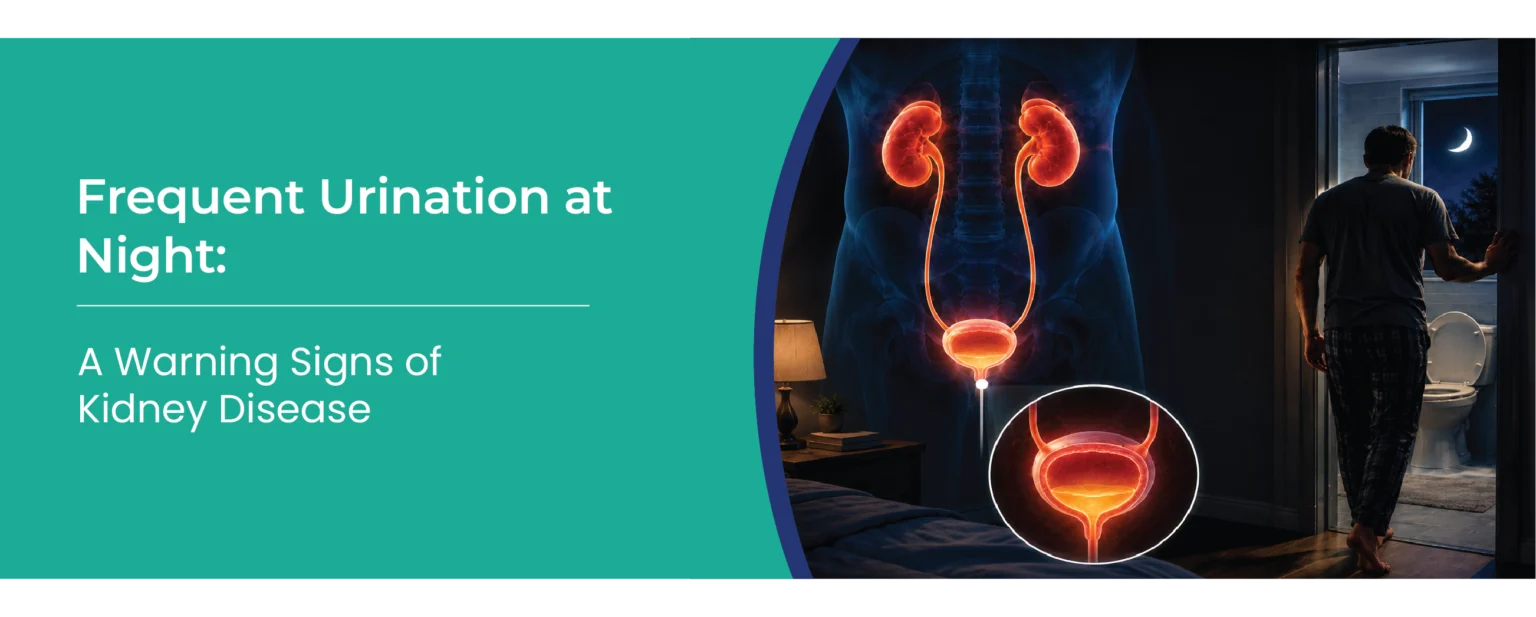
Most people wake up once, maybe twice, during the night. That is normal.
But if you are getting up three, four, or even five times every night just to use the bathroom, your body is trying to tell you something. And that something might be more serious than you think.
Frequent urination at night, medically called “nocturia,” is one of the earliest and most overlooked symptoms of kidney disease. Not a bladder problem. Not just aging. Not dehydration. It could be your kidneys quietly losing their ability to do their job.
This article explains what frequent urination at night really means, why it happens, when to worry, and what to do next.
What is frequent urination at night?
Frequent urination at night means waking up from sleep more than once to urinate. Once is often fine. Twice is borderline. Three or more times, that is when you should start paying attention.
The medical term is nocturia. It is not the same as urinary incontinence or an overactive bladder, though those can overlap.
Nocturia affects millions of people across India and is rising, especially among adults over 40.
Quick Facts:
- Normal urine output at night: 1 trip to the bathroom (or none).
- Nocturia is defined as 2 or more trips per night.
- Age group most affected: Adults 40 and above.
- Often dismissed as “just aging” or “I drank too much water.”
- Actually could be an early sign of kidney disease, diabetes, heart failure, or hypertension.
Why frequent urination at night happens
The kidneys normally concentrate urine at night. This is why healthy people sleep through the night without needing the bathroom repeatedly. The kidney signals the body to produce less, more concentrated urine so you can rest.
When the kidneys are damaged, even mildly, they lose this concentrating ability. The result: your body keeps producing dilute urine in large volumes, even at night. You wake up. Again and again.
This is not about how much water you drank before bed. This is a functional problem with the kidney itself.
Is frequent urination at night a sign of kidney disease?
Yes, and this question deserves a direct answer.
Is frequent urination at night a sign of kidney disease? In many cases, absolutely. It is one of the earliest functional changes that happens when kidney health declines.
Here is how it works:
| What Happens in the Kidney | What You Experience |
| Kidneys lose concentrating ability | Dilute urine produced day and night |
| Fluid regulation becomes impaired | The volume of urine increases at night |
| GFR (kidney filtration rate) drops | More frequent urination at night even with normal fluid intake |
| Hormonal balance shifts | The body cannot suppress nighttime urine production |
Many patients with early chronic kidney disease report that frequent urination at night was the first symptom they noticed, months or even years before they got a diagnosis.
What are the other kidney disease symptoms frequent urination appears with?
Kidney disease symptoms do not always come loudly. They sneak in slowly, often dismissed as tiredness, aging, or stress.
Kidney disease symptoms, frequent urination, tend to appear alongside the following:
- Puffiness around the eyes, especially in the morning.
- Swelling in the feet and ankles and fluid retention are kidney failure warning signs.
- Fatigue that does not go away: Kidneys regulate red blood cells; damage causes anemia and exhaustion.
- Foamy or frothy urine and protein leaking into urine are red flags.
- High blood pressure that is hard to control: kidneys regulate blood pressure.
- Loss of appetite and nausea: waste buildup in the blood affects digestion.
- Decreased urine output: in later stages, the body produces less urine.
- Back or side pain, a dull ache near the kidneys.
- Itchy skin: Toxin buildup causes skin changes.
- Difficulty concentrating and brain fog from poor kidney filtration.
If you have frequent urination at night plus even two or three of these, see a nephrologist. Do not wait.
Chronic kidney disease symptoms: A stage-by-stage view
Chronic kidney disease symptoms vary depending on how far the disease has progressed. The disease is divided into five stages based on GFR (Glomerular Filtration Rate), how well the kidneys are filtering.
| Stage | GFR (mL/min) | What You May Notice |
| Stage 1 | 90+ | Usually no symptoms; frequent urination at night may begin |
| Stage 2 | 60–89 | Mild fatigue, slightly foamy urine, borderline BP rise |
| Stage 3 | 30–59 | Noticeable swelling, increasing frequent urination at night, back pain |
| Stage 4 | 15–29 | Nausea, severe fatigue, loss of appetite, decreased urine output |
| Stage 5 | Below 15 | Kidney failure; dialysis or transplant needed |
The painful truth: most people do not feel significant symptoms until Stage 3 or 4. By then, up to 60% of kidney function may already be lost.
This is why frequent urination at night matters so much. It shows up in Stage 1 and Stage 2, when you still have time to act.
Is nocturia dangerous?
The short answer is that nocturia itself is a symptom, not a disease. But what causes it can absolutely be dangerous.
Is nocturia dangerous when it is linked to the following:
- Chronic kidney disease: yes, it signals kidney damage that will worsen without treatment.
- Uncontrolled diabetes: yes, high blood sugar causes excessive urination day and night.
- Heart failure: yes, fluid accumulates during the day and is released at night when lying down.
- Hypertension: yes, high blood pressure damages kidneys over time.
- Sleep apnea: yes, disrupted breathing causes hormonal changes that trigger nighttime urination.
Beyond the underlying cause, nocturia itself carries risks:
- Sleep deprivation and poor sleep quality
- Increased risk of falls in elderly patients (especially dangerous)
- Mental health impact, anxiety, irritability, depression from chronic sleep disruption
- Reduced immune function from poor sleep
So yes, is nocturia dangerous? When left unexplained and untreated, it absolutely can be.
Kidney failure warning signs you should never ignore
Kidney failure warning signs are often missed because they mimic common complaints. Here is what you must watch for:
Kidney failure warning signs: act immediately if you notice the following:
- Urine output suddenly dropping significantly.
- Severe swelling in legs, face, or abdomen.
- Difficulty breathing or shortness of breath at rest.
- Chest pain or pressure.
- Confusion or difficulty thinking clearly.
- Seizures (in advanced cases).
- Extreme fatigue with no clear cause.
- Vomiting or persistent nausea.
- Muscle cramps, especially at night.
- Frequent urination at night followed by decreased urination during the day.
The combination of frequent urination at night and then decreasing daytime urination is particularly alarming. It often means kidney function is declining rapidly.
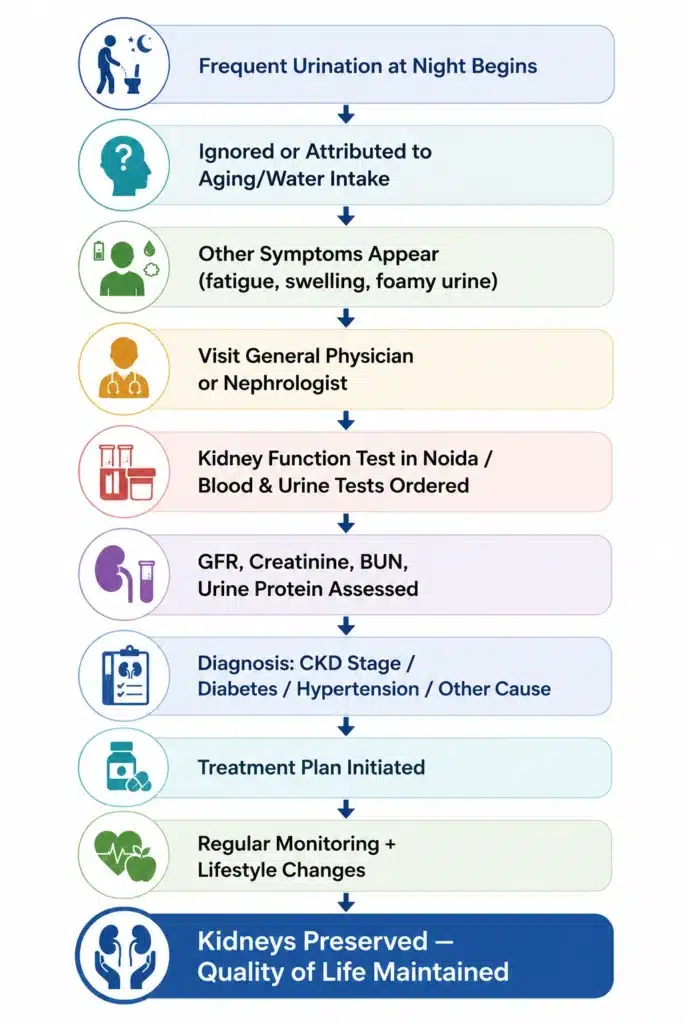
The patient journey: from symptom to diagnosis
Understanding what happens, step by step, helps patients know exactly what to do.
The earlier you enter this journey, the better the outcome. Frequent urination at night is your earliest entry point.
What conditions cause frequent urination at night?
Frequent urination at night is a symptom, not a standalone disease. The causes range from simple to serious.
The distinction matters because kidney disease symptoms, frequent urination, will not improve with bladder treatments. You need to treat the kidney.
Kidney-related causes:
- Chronic kidney disease (most important).
- Polycystic kidney disease.
- Glomerulonephritis (kidney inflammation).
- Diabetic nephropathy (kidney damage from diabetes).
Metabolic causes:
- Type 2 diabetes: high blood sugar causes osmotic diuresis (excessive urination).
- Diabetes insipidus: a rare hormonal condition.
Cardiovascular causes:
- Heart failure: fluid redistributes when lying flat, producing nighttime urine.
- High blood pressure (both a cause and consequence of kidney disease).
Hormonal causes:
- Low ADH (anti-diuretic hormone): the hormone that suppresses nighttime urine.
- Hyperaldosteronism.
Other causes:
- Sleep apnea.
- Urinary tract infections (UTIs).
- Enlarged prostate in men (BPH).
- Bladder issues (overactive bladder).
- Certain medications (diuretics, lithium).
How is nocturia from kidney disease diagnosed?

A proper evaluation for frequent urination at night related to kidney disease includes:
Blood Tests:
- Serum creatinine: measures kidney waste filtration.
- Blood Urea Nitrogen (BUN): another waste marker.
- eGFR (estimated Glomerular Filtration Rate): the gold standard for kidney function.
- Electrolytes: sodium and potassium imbalances signal kidney stress.
- Hemoglobin: anemia check.
Urine Tests:
- Urine routine and microscopy
- 24-hour urine protein detects protein leaks.
- Urine osmolality tests kidneys’ concentrating ability (directly relevant to nocturia).
- Urine microalbumin, early marker of diabetic kidney disease.
Imaging:
- Kidney ultrasound: checks size, structure, cysts, and obstruction.
- Doppler ultrasound: blood flow assessment.
A kidney function test in Noida at a reputed facility like Rama Hospital covers all of these. Early testing gives you the full picture and time to act.
Kidney disease treatment: what to expect
If kidney disease is the cause of your frequent urination at night, treatment focuses on slowing the progression, managing symptoms, and protecting remaining kidney function.
Kidney disease treatment in Noida typically includes the following:
Medications:
- ACE inhibitors or ARBs reduce protein leak and protect kidneys.
- SGLT2 inhibitors, a newer class that slows CKD progression (especially in diabetic patients).
- Phosphate binders and erythropoiesis-stimulating agents for anemia.
- Blood pressure medications (critical, hypertension accelerates kidney damage)
- Diuretics for fluid management.
Diet and Lifestyle:
- Low-sodium diet reduces fluid retention and BP.
- Controlled protein intake in later CKD stages
- Potassium and phosphorus restriction based on blood levels
- Fluid management, sometimes restricted, sometimes encouraged, depending on stage.
- Quit smoking; smoking reduces blood flow to kidneys.
- Regular gentle exercise improves BP, blood sugar, and cardiovascular health.
Monitoring:
- Regular kidney function tests every 3–6 months.
- Blood pressure monitoring at home.
- Diabetes management (if applicable).
- Annual urine microalbumin tests.
Advanced Treatment (Later Stages):
- Dialysis (hemodialysis or peritoneal dialysis).
- Kidney transplant evaluation.
Starting kidney disease treatment in Noida early, when symptoms like frequent urination at night first appear, can delay or prevent dialysis for years. That is not an exaggeration.
When to see a nephrologist in Noida
Many patients make the mistake of seeing a urologist first. Urologists treat bladder, prostate, and urinary tract issues. A nephrologist treats kidney disease specifically.
See a nephrologist in Noida if:
- Frequent urination at night has been happening for more than 2–3 weeks without a clear reason.
- You have diabetes or high blood pressure and notice increased nighttime urination.
- Your urine looks foamy, tea-colored, or cloudy.
- You have unexplained swelling in the face, feet, or legs.
- Your blood pressure is not responding well to medication.
- A routine blood test shows elevated creatinine or reduced eGFR.
- You have a family history of kidney disease or polycystic kidney disease.
- You are above 50 and experiencing multiple chronic kidney disease symptoms.
A nephrologist in Noida at Rama Hospital can evaluate your kidney health comprehensively, order the right tests, and create a personalized management plan.
Do not self-diagnose. Do not delay.
Lifestyle changes that protect your kidneys
Even if you have early kidney disease, lifestyle changes make a real difference. These are not optional suggestions; they are part of treatment.
Daily habits that protect kidney function:
- Drink water consistently about 8–10 glasses a day unless your doctor advises otherwise.
- Eat less salt and reduce packaged, processed, and restaurant food significantly.
- Control blood sugar; HbA1c below 7% is the target for diabetic patients.
- Keep blood pressure below 130/80 mmHg with medication and diet.
- Do not take herbal or Ayurvedic supplements without medical approval; many contain nephrotoxic compounds.
- Exercise 30 minutes most days; walking is enough.
- Avoid alcohol and quit smoking completely.
Frequently Asked Questions
Q: I wake up 2–3 times at night to urinate. Should I be worried?
Yes, you should get evaluated. Waking up 2 or more times per night to urinate is not normal, especially if it is new or getting worse. It could be your kidneys, blood sugar, blood pressure, or prostate (in men). Do not assume it is just aging.
Q: I was told my creatinine is slightly high. Is that serious?
Even mildly elevated creatinine is a signal that kidney filtration is not working at full capacity. It does not automatically mean kidney failure, but it needs follow-up. Get an eGFR test done and see a nephrologist in Noida for proper assessment.
Q: My urine looks foamy sometimes. Is that related to frequent urination at night?
Both foamy urine and frequent urination at night can point to the same problem: kidney damage causing protein to leak into urine. Foamy urine is a red flag. Get a urine protein test done immediately.
Q: I have diabetes. Is my frequent urination at night a sugar problem or a kidney problem?
It could be both or either. Uncontrolled blood sugar causes excess urination. But diabetic kidney disease (diabetic nephropathy) is extremely common and causes nocturia independently. You need both blood sugar monitoring and a kidney function test in Noida.
Q: Can frequent urination at night be fixed without medication?
Possibly in mild cases with lifestyle changes, but only if the underlying cause is identified first. If it is kidney disease, medication is almost always required. Self-managing with water restriction or avoiding fluids at night is not a solution and can actually be harmful.
Q: How often should I get a kidney function test if I have BP or diabetes?
At minimum once a year. If you already have elevated creatinine or reduced GFR, every 3–6 months. Your nephrologist in Noida will guide the frequency based on your stage and risk.
Q: Is kidney disease reversible?
Certain causes, like kidney infections or drug-induced injury, are reversible if caught early. Chronic kidney disease from long-standing diabetes or hypertension is not reversible, but its progression can be significantly slowed with proper treatment. Early detection is everything.
Q: My elderly mother wakes up 4–5 times at night. Is this just old age?
Age does increase nocturia risk, but 4–5 times per night is not something to simply accept. In older adults, this can signal kidney disease, heart failure, or diabetes, all of which are treatable. Get a proper evaluation at Rama Hospital.
Q: Can stress cause frequent urination at night?
Stress and anxiety can increase urinary frequency during the day, but if it is primarily at night and happening consistently, stress alone is not a sufficient explanation. Kidney or metabolic causes are more likely.
Q: What is the difference between a urologist and a nephrologist?
A urologist treats structural and mechanical problems, kidney stones, prostate issues, bladder infections, and urinary blockages. A nephrologist treats kidney disease as a medical condition, CKD, glomerulonephritis, and kidney damage from diabetes or BP. For frequent urination at night related to kidney disease, you need a nephrologist.
Conclusion
Frequent urination at night is not just inconvenient. It is not just an aging quirk. It is your kidneys signaling that something is off.
The good news: if caught early, kidney disease is manageable. Progression can be slowed. Dialysis can be delayed, sometimes by decades.
The risk: waiting. Because kidney disease does not hurt until it is already far along.
If you are waking up multiple times every night, if your urine looks different, if your feet are swollen, or if your blood pressure is climbing, these are not separate problems. They may all be telling the same story.
Get a kidney function test in Noida. See a nephrologist in Noida. Do it at Rama Hospital, where kidney care is taken seriously.
Your sleep matters. Your kidneys matter more.