Gallbladder stone are more common than most people realize. In India, nearly 4 to 7 crore people are estimated to have gallbladder stone disease, and a large chunk of them are getting diagnosed between their 30s and 50s. Yet, the moment someone gets diagnosed, the first question is almost always the same: “What should I eat now?”
What is the gallbladder, and why does diet affect it?
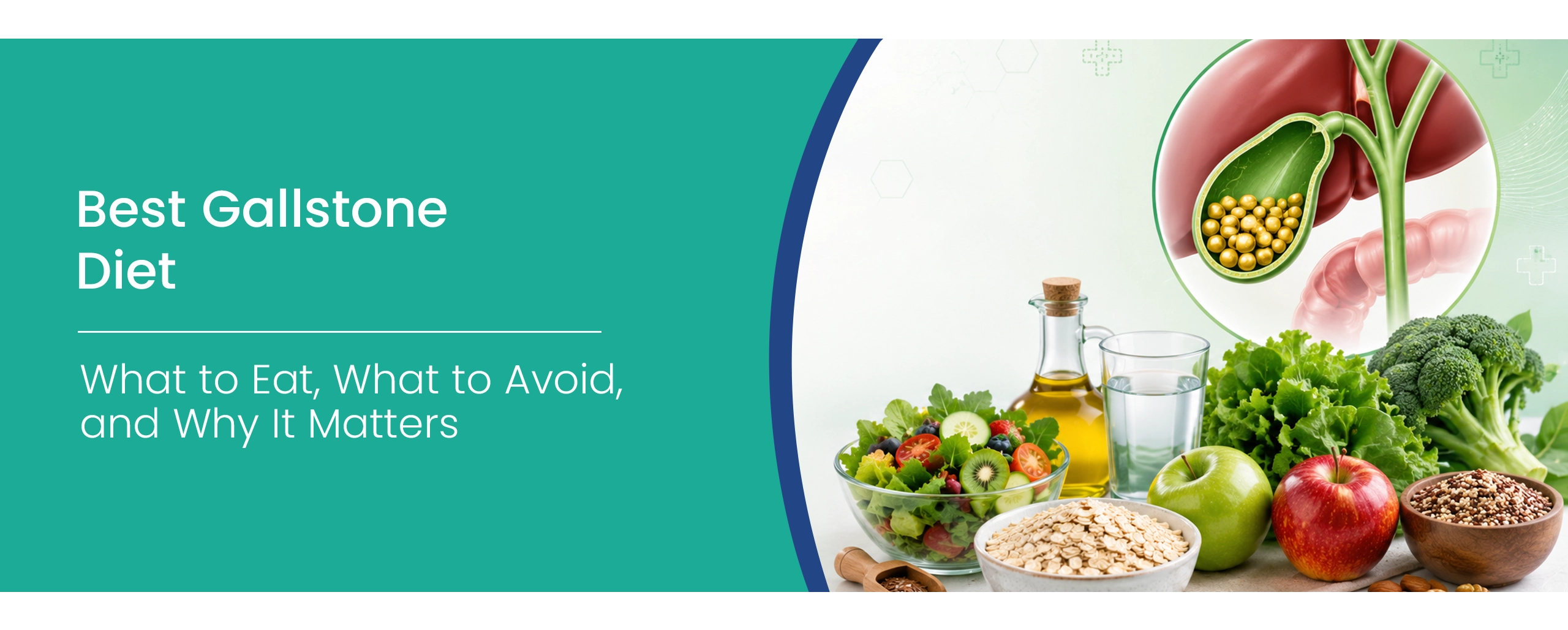
The gallbladder is a small pouch sitting just under your liver. It stores bile, a digestive fluid made by the liver that helps you break down fats. When you eat fatty food, the gallbladder squeezes bile into your small intestine.
The problem starts when bile becomes too concentrated. Cholesterol or bilirubin in the bile can crystallize and form stones. High-fat, high-cholesterol, and low-fiber diets are the primary dietary drivers of this process.
The core principles of a gallbladder-friendly diet
You are not trying to eliminate fat entirely. You are trying to replace the wrong fats with the right ones and reduce the overall load on your gallbladder.
A friendly diet follows four key rules:
- Low in saturated fat: reduces the workload on the gallbladder.
- High in fiber: helps control cholesterol and bile concentration.
- Moderate in healthy fats: supports bile flow without overloading the system.
- Rich in antioxidants: reduces inflammation and bile duct irritation.
Foods to eat on a gallbladder stone diet
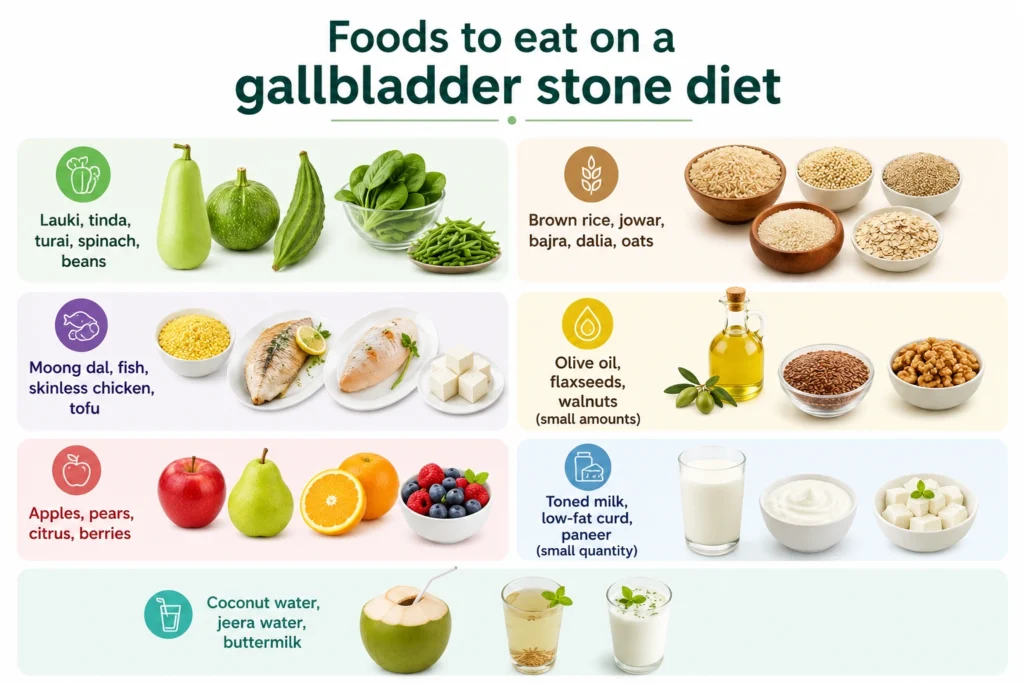
A consistent stone diet includes generous portions of vegetables and whole grains at every meal.
| Food Category | Examples | Why It Helps |
| High-fibre vegetables | Lauki, tinda, turai, spinach, beans | Reduces cholesterol absorption |
| Whole grains | Bro wn rice, jowar, bajra, dalia, oats | Fibre slows bile concentration |
| Lean proteins | Moong dal, fish, skinless chicken, tofu | Easy on the gallbladder |
| Healthy fats | Olive oil, flaxseeds, walnuts (small amounts) | Stimulates healthy bile flow |
| Fruits | Apples, pears, citrus, berries | Pectin reduces stone risk |
| Low-fat dairy | Toned milk, low-fat curd, paneer (small quantity) | Calcium without excess fat |
| Water and fluids | Coconut water, jeera water, buttermilk | Keeps bile diluted |
Foods to avoid with gallbladder problems
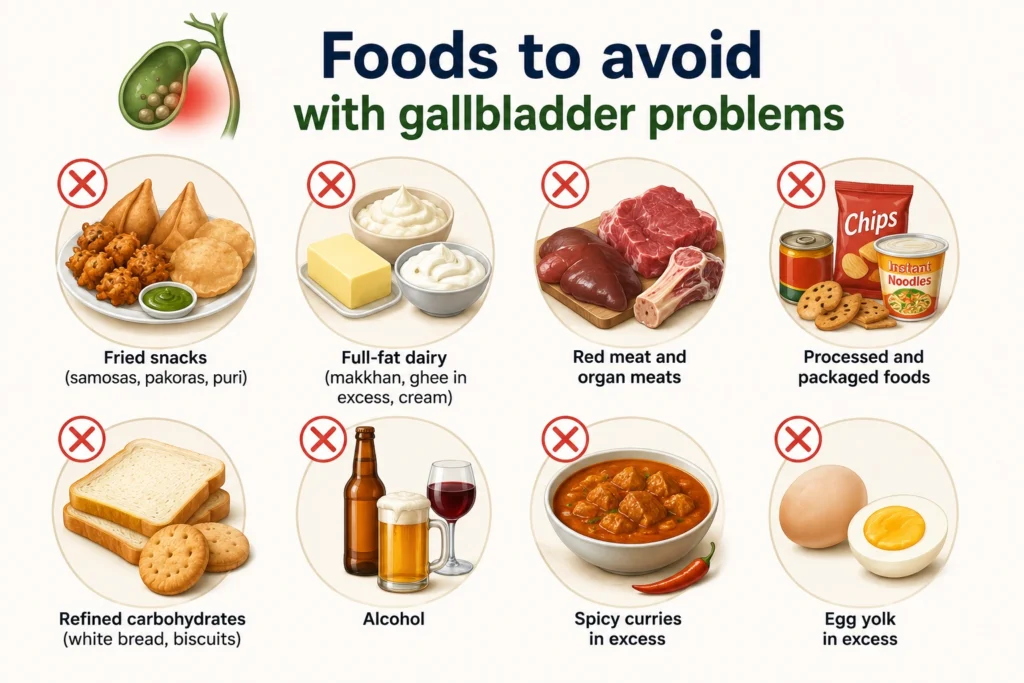
The gallbladder helps digest fat, so meals that are rich, oily, or overly processed put extra strain on it. When bile flow is already compromised by stones or inflammation, these foods can intensify pain, bloating, nausea, and indigestion.
These foods to avoid with problems are the primary triggers behind stone pain episodes. Even one heavy meal can cause a gallbladder attack that lands you in emergency care.
| Foods to Avoid | Why They Are Harmful |
| Fried snacks (samosas, pakoras, puri) | High in saturated fat, triggers contractions |
| Full-fat dairy (makkhan, ghee in excess, cream) | Overloads the bile system |
| Red meat and organ meats | High cholesterol content |
| Processed and packaged foods | Hidden trans fats and sodium |
| Refined carbohydrates (white bread, biscuits) | Increases triglycerides |
| Alcohol | Disrupts bile production and liver function |
| Spicy curries in excess | Can trigger spasms |
| Egg yolk in excess | High cholesterol content |
A simple one-day gallbladder stone diet plan
Here is a practical stone diet plan you can follow:
Morning (7 AM)
- 1 glass warm jeera water or plain warm water with lemon.
- 2 egg whites or a small bowl of soaked moong sprouts.
- If hunger is low, add 2–3 soaked almonds.
Breakfast (8:30 AM)
- Oats upma with vegetables or 2 multigrain rotis with dal.
- Other options: veg poha, dalia, idli with sambar, or brown bread with low-fat paneer.
- 1 cup toned milk tea with very little sugar, or herbal tea if tea triggers discomfort.
Mid-Morning (11 AM)
- 1 fruit: apple, pear, guava, papaya, or banana in small quantity.
- 1 tsp flaxseeds or a small handful of walnuts, only if they suit digestion.
- Coconut water or lemon water can be added for hydration.
Lunch (1 PM)
- 2 rotis made from wheat or jowar, or small portion of brown rice.
- 1 bowl dal, sambhar, or moong dal khichdi.
- Light vegetable sabzi with minimal oil, plus cucumber-tomato salad.
- Low-fat curd or buttermilk if tolerated.
Evening (4 PM)
- Roasted chana, murmura chaat, or a light fruit bowl.
- Green tea or herbal tea.
- If hungry, add vegetable soup or sprouts salad instead of fried snacks.
Dinner (7:30 PM)
- Moong dal khichdi with vegetables or vegetable soup with 1 roti.
- Steamed or lightly stir-fried vegetables.
- Keep dinner lighter than lunch and avoid heavy, oily foods late at night.
Key rule: This one-day gallbladder stone diet plan focuses on easy-to-digest, low-fat meals that may help reduce discomfort and support digestion. It includes simple Indian food options, light snacks, and practical swaps you can follow at home
How a gallbladder stone diet works: a simple flow
Following a gallbladder-friendly diet daily can help manage cholelithiasis and disrupt the cycle of stone formation at its source.

Special dietary considerations for gallbladder stone patients in India
Indian diets are diverse and flavorful, but they also include several foods and eating patterns that can easily trigger gallbladder pain. For gallbladder stone patients, the goal is not to avoid all traditional foods, but to make smarter choices, reduce heavy fats, and manage portion size carefully.
Ghee
Ghee does not always need to be eliminated completely, but it should be used in moderation. For many patients, a small amount such as 1 teaspoon per meal may be manageable, while regular excess can worsen symptoms and digestive discomfort.
Street Food
Street foods like chaat, vada pav, bhelpuri, samosas, and rolls are common triggers for gallbladder flare-ups. They are often prepared in reused oil, loaded with fat, and may contain spicy or fried ingredients that are harder to digest.
Fasting
Many Indian patients observe religious fasts, but long fasting periods can sometimes cause bile to stagnate and increase discomfort. If fasting is necessary, it is better to stay hydrated and break the fast with light, easy-to-digest foods rather than heavy fried meals.
Festival Eating
Festival foods such as Diwali sweets, Holi thandai, and Eid sewaiyaan are part of cultural celebrations, but they should be eaten in strict moderation. One rich festive meal can be enough to trigger pain, bloating, or a gallbladder attack in sensitive patients.
Practical Advice for Indian Meals
A gallbladder-friendly Indian diet works best when meals are simple, freshly cooked, and low in oil. Instead of deep-fried or heavily enriched dishes, choose roti, dal, khichdi, steamed vegetables, curd, and fruit in sensible portions.
The key is balance, not complete restriction. With a few adjustments, most patients can continue enjoying Indian food without putting too much strain on the gallbladder.
When diet is not enough: recognising when you need surgery
A stone diet is a powerful tool for symptom management and prevention. But it is not a cure for all cases.
You likely need to consult a surgeon if
- You experience severe pain in the upper right abdomen lasting more than 30 minutes.
- Pain radiates to your back or right shoulder.
- You have fever with abdominal pain (possible infection).
- You feel nauseous after almost every meal.
- Ultrasound shows large stones or a blocked bile duct.
- You have had multiple stone attacks.
For patients in Noida and NCR, Rama Hospital is a well-regarded option for gallbladder care. If you are looking for the best gallbladder surgeon in Noida or a reliable gastro surgery hospital in Noida, consulting a specialist at a trusted facility makes a significant difference in outcomes. Rama Hospital is known for its experienced gastroenterology and surgical team and is considered among the best hospitals in Noida for digestive health concerns, including laparoscopic cholecystectomy (gallbladder removal surgery). If you are exploring gallbladder stone treatment in Noida, getting a thorough consultation early prevents complications.
Frequently Asked Questions (FAQs)
Q: What are the first signs of gallbladder problems?
The most common signs are pain in the upper right abdomen, nausea, bloating, and discomfort after fatty meals. Some people also get vomiting or pain that spreads to the back or right shoulder.
Q: What causes gallbladder pain?
Gallbladder pain often happens when gallstones block bile flow or when the becomes inflamed. Fatty meals can make symptoms more noticeable because the gallbladder has to work harder.
Q: What is the best diet after gallbladder removal?
After surgery, many people do best with low-fat meals, more fibre, and smaller portions at first. Most people gradually return to a normal diet, but some need longer-term adjustments if symptoms continue.
Q: How long do I need to follow a gallbladder diet after surgery?
There is no single fixed timeline; some people only need changes for a few weeks, while others need longer if diarrhoea or bloating persists. A gradual return to normal eating is usually safer than reintroducing fatty foods too quickly.
Q: Does a low-fat diet prevent gallbladder stone?
A healthy diet may help lower risk, but the evidence is stronger for overall diet quality than for one strict diet rule. A balanced pattern with fibre, lean protein, and healthy fats is more defensible than extreme restriction.
Q: Can gallbladder problems go away on their own?
Mild symptoms may settle temporarily, but gallstones or inflammation usually do not disappear just because diet changes. Diet can help reduce symptoms, but it does not remove existing stones.
Conclusion
The cholelithiasis diet is not about punishment; it is about protection. Small, consistent changes in what you eat can help manage cholelithiasis (gallbladder stone), prevent years of pain, reduce the risk of hospitalization, and give your a better chance of functioning well.
Start today. Swap the fried snacks for roasted ones. Add one extra serving of vegetables. Drink more water. Eat smaller meals more frequently.
And if symptoms persist, or if you are looking for expert guidance on the best laparoscopic surgery hospital in Noida, reach out to the specialists at Rama Hospital, a trusted name in digestive health and one of the leading gastro surgery hospitals in Noida. A proper diagnosis, paired with the right friendly diet, is always better than waiting until the pain forces the decision.