If you have piles, you may have heard someone recommend a sitz bath for relief from pain, itching or burning. It sounds simple: sit in warm water for a few minutes and let the affected area soak.
But does a sitz bath actually treat piles?
It can help relieve some symptoms, but it does not remove or permanently cure hemorrhoids. A warm bath can soothe irritated tissues, relax the muscles around the anus and provide temporary relief from discomfort. It is best considered a supportive part of piles care rather than a standalone treatment.
For people with mild symptoms, it may be useful alongside measures such as increasing dietary fibre, drinking enough fluids and avoiding straining during bowel movements. If bleeding, pain or swelling continues or keeps returning, however, medical evaluation is important.
What Is a Sitz Bath?
A sitz bath for piles is a shallow warm-water bath in which you soak the area around the anus, buttocks and perineum.
You do not need to take a full bath. A specially designed sitz bath basin can be placed over a toilet, or you can use a clean bathtub with enough warm water to cover the affected area.
The warmth can help relax the anal sphincter and increase blood flow to the tissues around the anus. This may help reduce discomfort associated with hemorrhoids and other anorectal conditions.
A sitz bath may also be recommended for conditions such as anal fissures and for comfort after certain anorectal procedures.
In simple terms: A bath is a warm-water soak used to calm and soothe the area around the anus.
It is simple, generally well tolerated and can be done at home.
Does a Sitz Bath Really Help Piles?
Yes, a bath can help with symptom relief, but it is not a cure for piles.
Warm water may help relax the muscles around the anus and soothe irritated tissues. This can make symptoms such as discomfort, itching and burning easier to manage. Cleveland Clinic recommends warm baths as one of the home measures that may help people with hemorrhoids.
However, it is important to understand the difference between relieving symptoms and treating the underlying hemorrhoid.
For example, if constipation and repeated straining are contributing to your piles, a sitz bath may make you feel more comfortable, but it will not correct the constipation itself.
Similarly, if you have persistent bleeding, a prolapsed hemorrhoid or a large painful hemorrhoid, you may need treatment recommended by a doctor.
A simple way to remember it: Sitz bath = symptom relief
Medical treatment = addresses the underlying problem when necessary
What Are the Benefits of a Sitz Bath for Piles?
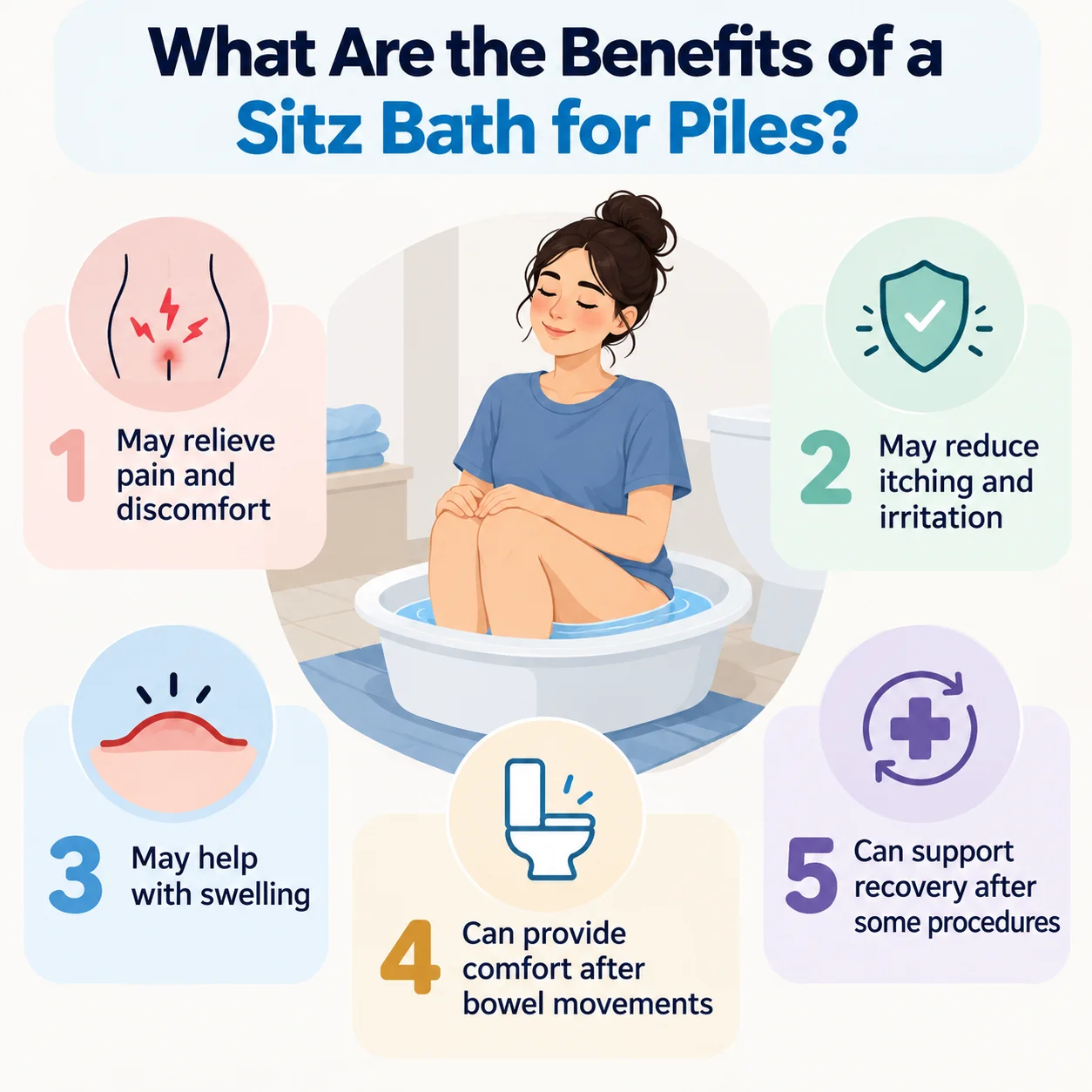
A warm sitz bath may be useful when piles are causing local irritation or discomfort.
1. May relieve pain and discomfort
Warm water can have a soothing effect on irritated tissues around the anus. It may also help relax the anal muscles, which can make sitting or passing stool more comfortable.
2. May reduce itching and irritation
The affected area can become irritated because of swelling, frequent wiping or moisture. A gentle warm-water soak may provide temporary relief.
3. May help with swelling
A bath may help soothe the tissues around an irritated hemorrhoid and reduce the feeling of local discomfort.
4. Can provide comfort after bowel movements
Some people find a warm bath particularly soothing after passing stool, especially when hemorrhoids are painful or irritated.
5. Can support recovery after some procedures
Doctors may recommend sitz baths after certain anorectal procedures to help with local comfort and hygiene during recovery. The exact instructions should come from your treating doctor.
How to Take a Sitz Bath for Piles
You don’t need complicated equipment to take a bath. A clean bathtub or a purpose-made sitz bath basin can be used.
Follow these simple steps:
- Clean the bathtub or sitz bath basin before use.
- Fill it with comfortably warm water, not very hot water.
- Sit in the water so that the affected anal area is gently immersed.
- Stay there for around 10 to 20 minutes.
- Afterward, gently pat the area dry with a clean, soft towel.
- Avoid rubbing the skin.
- Clean and dry the basin properly after use.
Warm sitz baths are commonly recommended for around 10–20 minutes. Cleveland Clinic lists a warm bath for this duration among home measures for hemorrhoid symptoms.
How often should you take a sitz bath?
The frequency can depend on your symptoms and your doctor’s advice. Some people use a sitz bath once or several times a day, particularly after a bowel movement when symptoms are uncomfortable.
If you have recently undergone a procedure for piles, follow the specific instructions provided by your surgeon.
Should You Add Salt or Other Ingredients to a Sitz Bath?
You may see online recommendations to add salt, antiseptics, essential oils or other ingredients to the water.
Plain warm water is usually sufficient for a sitz bath.
Adding unnecessary products may irritate sensitive skin around the anus. For example, Cleveland Clinic advises against remedies such as apple cider vinegar for hemorrhoid relief because they can irritate or burn the skin.
Unless your doctor specifically recommends an additive, warm, clean water is the safer simple option.
How Hot Should the Water Be?
The water should feel comfortably warm, not hot.
Very hot water can irritate or burn the sensitive skin around the anus and may make symptoms worse.
A good rule is: If the water feels too hot for your skin, it is too hot for a sitz bath.
You do not need extremely hot water to get the soothing effect.
What Else Can Help With Piles?
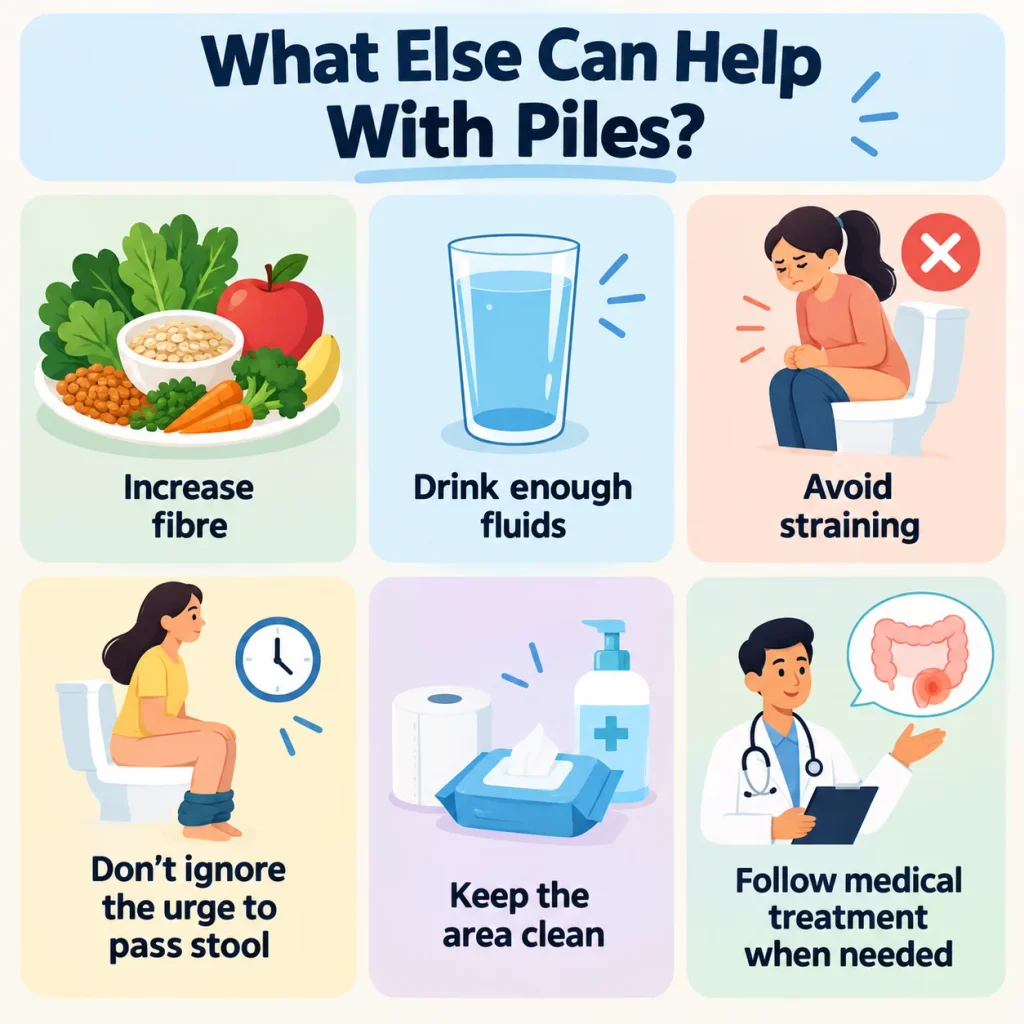
A sitz bath works best as part of a broader approach to piles care.
Depending on your condition, your doctor may recommend:
Increase fibre
Fibre can help make stools softer and easier to pass, reducing straining. Good sources include fruits, vegetables, whole grains, nuts and other fibre-rich foods.
Drink enough fluids
Adequate fluid intake can support softer stools and help prevent constipation.
Avoid straining
Sitting and pushing hard during bowel movements can increase pressure on hemorrhoids.
Don’t ignore the urge to pass stool
Regular bowel habits can help reduce constipation and prolonged straining.
Keep the area clean
Gentle cleaning with water can help prevent additional irritation. Avoid aggressive rubbing.
Follow medical treatment when needed
If home measures are not enough, a doctor may recommend medications or procedures depending on the type and severity of hemorrhoids. Treatment options can include procedures such as rubber band ligation and, for selected patients, surgery.
When Is a Sitz Bath Not Enough?
A common mistake is to assume that every symptom around the anus is simply piles.
Rectal bleeding, pain or a lump should not automatically be self-diagnosed as hemorrhoids.
You should consider seeing a doctor if:
- Bleeding keeps happening
- Pain is severe or worsening
- Symptoms do not improve with home care
- A lump remains outside the anus
- You have recurrent piles
- Symptoms interfere with daily activities or sleep
- You are unsure whether the problem is piles or another condition
Sitz Bath vs Piles Treatment: What’s the Difference?
The right approach depends on your symptoms, the type of hemorrhoid and its severity.
| Sitz Bath | Medical Treatment |
| Provides symptom relief | Addresses the hemorrhoid when treatment is required |
| Helps soothe irritation | Depends on the type and severity of piles |
| Can reduce discomfort | May include medicines or procedures |
| Can be done at home | Requires medical assessment when indicated |
| Does not permanently remove piles | Some procedures can treat problematic hemorrhoids |
Can You Take a Sitz Bath After Piles Surgery?
A sitz bath may be recommended after certain hemorrhoid procedures or surgery to help with local comfort and hygiene.
However, don’t assume that every patient should follow the same routine after surgery. Always follow your surgeon’s post-procedure instructions.
Your surgeon may give you specific instructions regarding:
- When to start
- How frequently to take it
- How long to soak
- How to clean the area
- What products, if any, can be used in the water
Is a Sitz Bath Safe for Everyone?
For most people, a properly performed warm-water sitz bath is a simple supportive measure.
If you have severe pain, significant bleeding, fever, pus or another concerning symptom, don’t rely on a sitz bath alone. Seek medical advice.
However, take care to:
- Use clean equipment
- Use comfortably warm water
- Avoid very hot water
- Avoid harsh soaps or fragrances
- Pat the area dry instead of rubbing
- Stop if the skin becomes more irritated
Frequently Asked Questions (FAQs)
1. Is a sitz bath good for piles?
Yes. A warm sitz bath may help relieve symptoms such as pain, irritation and itching associated with piles. However, it does not permanently cure hemorrhoids and should be considered supportive care.
2. How long should I sit in a sitz bath for piles?
A warm sitz bath is commonly taken for around 10–20 minutes. Your doctor may recommend a different duration depending on your symptoms or whether you have recently undergone a procedure.
3. Can a sitz bath shrink piles?
A sitz bath may reduce discomfort and soothe irritation, but it should not be considered a treatment that directly removes or permanently shrinks hemorrhoids. Persistent or advanced piles may require medical treatment.
4. Should I use hot or cold water for piles?
For a sitz bath, use comfortably warm water, not very hot water. Very hot water can irritate or burn sensitive skin.
5. Can I take a sitz bath every day?
Many people use warm sitz baths regularly for symptom relief. The exact frequency depends on your symptoms and medical situation. If you are recovering from piles surgery or a procedure, follow your surgeon’s instructions.
6. Does a sitz bath cure piles permanently?
No. A sitz bath can help manage symptoms but does not permanently cure hemorrhoids. If piles are persistent, recurrent or severe, a doctor can determine whether further treatment is needed.
7. When should I see a doctor for piles?
See a doctor if you have persistent or heavy bleeding, severe or worsening pain, recurrent symptoms, a persistent lump, or symptoms that do not improve with home care. Rectal bleeding should not automatically be assumed to be caused by piles.
Conclusion
A sitz bath for piles is a simple way to soothe discomfort at home. The warm water may relax the anal muscles and provide temporary relief from pain, itching, burning and irritation.
But it is important to keep expectations realistic:
A sitz bath can help you feel better. It does not necessarily make the underlying piles go away.
If your symptoms are mild, combining a sitz bath with adequate fibre, fluids and healthy bowel habits may help. If bleeding, pain, swelling or prolapse continues or keeps coming back, a medical evaluation is the safer next step.
If you are looking for piles treatment in Noida, a general surgeon can evaluate your symptoms, identify the type and severity of hemorrhoids and recommend the appropriate treatment instead of relying only on home remedies.