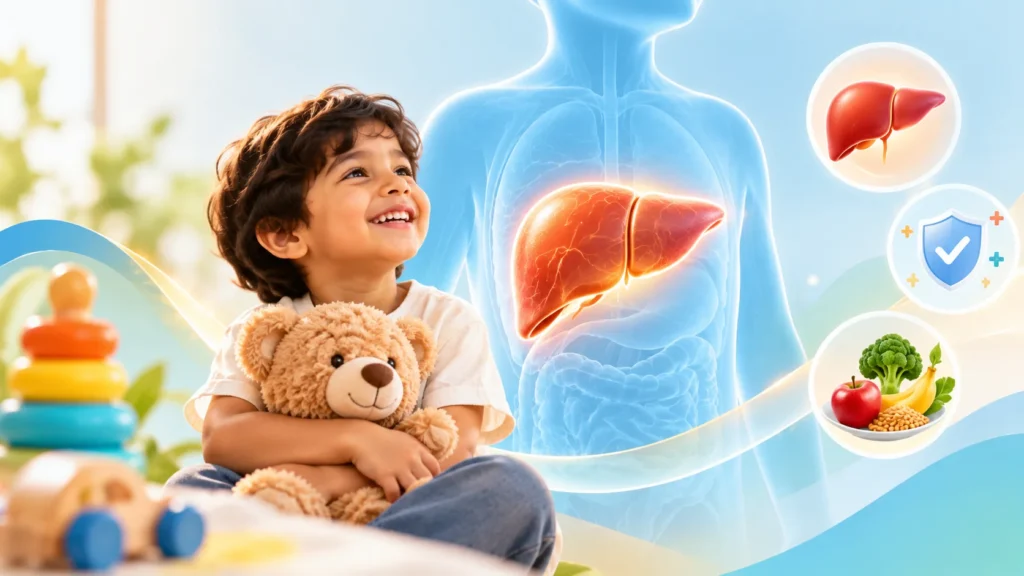
Pediatric hepatology is the branch of medicine that focuses on liver, gallbladder, and bile duct problems in children. The liver is one of the most important organs in the body. It helps digest food, removes toxins, makes proteins, stores energy, and supports immunity. When the liver is not working properly, it can affect a child’s growth, development, nutrition, and overall health.
Liver diseases in children are different from those in adults. Some conditions are present from birth, while others develop later due to infection, metabolic problems, autoimmune disease, or other causes. Early recognition and treatment are critical because a child’s liver has a remarkable ability to recover if supported in time. However, delayed diagnosis can lead to serious complications such as liver failure, poor growth, or the need for transplant.
What is Pediatric Hepatology?
Pediatric hepatology is a subspecialty within pediatric gastroenterology that deals specifically with liver, gallbladder, and bile duct disorders in infants, children, and teenagers. It involves diagnosis, medical management, procedural care, and coordination with transplant teams when needed.
The field covers a wide range of conditions, from mild and temporary liver enzyme elevations to complex genetic or metabolic diseases. Some children are born with structural problems of the bile ducts or liver. Others develop liver issues due to infections, medications, obesity, or immune system disorders.
Pediatric hepatologists work closely with pediatricians, radiologists, pathologists, nutritionists, and transplant surgeons to provide comprehensive care. The goal is not only to treat the liver problem but also to support the child’s growth, nutrition, development, and quality of life.
Common Liver Diseases in Children
Liver diseases in children vary widely depending on age, cause, and underlying condition.
Conditions present from birth
- Biliary atresia, where the bile ducts are blocked or absent.
- Neonatal hepatitis, which causes jaundice and liver inflammation in newborns.
- Genetic or metabolic liver diseases affecting how the liver processes nutrients or toxins.
- Structural abnormalities of the liver or bile ducts.
- Congenital infections affecting the liver.
Conditions developing later in childhood
- Viral hepatitis such as hepatitis A, B, C, or E.
- Autoimmune hepatitis, where the immune system attacks the liver.
- Fatty liver disease related to obesity and metabolic factors.
- Drug-induced liver injury from certain medications.
- Wilson disease, where copper builds up in the liver.
- Alpha-1 antitrypsin deficiency and other genetic conditions.
- Liver involvement in systemic diseases.
Acute versus chronic liver disease
- Acute liver disease develops suddenly and may be due to infection, toxins, or medications.
- Chronic liver disease lasts for months or years and may lead to scarring or cirrhosis.
- Some children progress from acute to chronic disease if the cause is not treated.
Causes of Liver Disease in Children
Liver disease in children can result from many different causes.
Common causes include:
- Infections such as viral hepatitis or congenital infections.
- Genetic or metabolic disorders affecting liver function.
- Autoimmune conditions where the body attacks the liver.
- Structural problems with bile ducts or blood vessels.
- Obesity and metabolic syndrome leading to fatty liver.
- Medications or toxins that damage the liver.
- Nutritional deficiencies or excesses.
- Systemic diseases affecting multiple organs including the liver.
Why liver disease happens in children
The liver in children is still developing and may respond differently to injury than an adult liver. Some conditions are due to errors in genes that affect how the liver processes substances. Others are due to blockages, infections, or immune system problems. Early identification of the cause is essential for proper treatment.
Symptoms of Liver Disease in Children
Symptoms can vary depending on the age of the child and the type of liver problem.
Common symptoms in infants
- Persistent jaundice beyond two weeks of life.
- Pale or clay-colored stools.
- Dark urine that stains the diaper.
- Poor weight gain or failure to thrive.
- Enlarged liver or spleen.
- Irritability or excessive sleepiness.
- Bleeding or bruising easily.
Common symptoms in older children
- Yellowing of eyes and skin.
- Fatigue or low energy.
- Abdominal pain or swelling.
- Nausea or vomiting.
- Poor appetite.
- Itching of the skin.
- Easy bruising or bleeding.
- Swelling in legs or abdomen.
- Dark urine or pale stools.
- Poor growth or delayed puberty.
Warning signs that need urgent attention
- Severe jaundice with lethargy.
- Confusion or excessive sleepiness.
- Vomiting blood or black stools.
- Severe abdominal swelling.
- High fever with jaundice.
- Bleeding that does not stop.
- Sudden worsening of symptoms.
How is Liver Disease in Children Diagnosed?
Diagnosis is based on symptoms, physical examination, blood tests, imaging, and sometimes liver biopsy.
Diagnostic steps
- Detailed history of symptoms and family history.
- Growth and development assessment.
- Physical examination for jaundice, liver size, and swelling.
- Blood tests for liver enzymes, bilirubin, and function.
- Tests for viral hepatitis and autoimmune markers.
- Metabolic and genetic testing when indicated.
- Imaging such as ultrasound, CT, or MRI.
- Specialized scans to evaluate bile ducts.
- Liver biopsy in selected cases for confirmation.
Common tests that may be done
- Liver function tests including AST, ALT, bilirubin, albumin, and INR.
- Viral hepatitis panel.
- Autoimmune markers such as ANA, SMA, or LKM.
- Metabolic screening for specific disorders.
- Ultrasound of the abdomen.
- MRCP or other imaging for bile duct evaluation.
- Genetic testing for inherited conditions.
- Liver biopsy for detailed tissue analysis.
Why diagnosis matters
Accurate diagnosis guides the right treatment. Some conditions need medication, others need surgery, and some need transplant evaluation. Early diagnosis can prevent progression to liver failure and improve long-term outcomes in pediatric hepatology.
Treatment for Liver Disease in Children
Treatment depends on the specific condition, severity, and the child’s overall health in pediatric hepatology.
1. Medical management
Many liver conditions can be managed with medicines and monitoring.
- Antiviral treatment for certain types of hepatitis.
- Steroids or immune-suppressing medicines for autoimmune hepatitis.
- Medicines to reduce copper in Wilson disease.
- Vitamins and supplements for nutritional support.
- Medicines to control itching or improve bile flow.
- Treatment of complications such as fluid buildup or bleeding.
2. Nutritional support
Nutrition is a key part of liver care in children in pediatric hepatology.
- High-calorie diet to support growth.
- Special formulas for infants with cholestasis.
- Fat-soluble vitamin supplementation.
- Protein adjustment based on liver function.
- Dietitian guidance for meal planning.
- Monitoring of growth and development regularly.
3. Procedural interventions
Some conditions require procedures to improve bile flow or diagnose disease in pediatric hepatology.
- Endoscopic procedures to evaluate or treat bile ducts.
- Biopsy for tissue diagnosis.
- Drainage of fluid collections if needed.
- Imaging-guided interventions for specific problems.
4. Surgical treatment
Surgery is needed for certain structural or advanced conditions in pediatric hepatology.
- Kasai procedure for biliary atresia in infants.
- Surgery for bile duct abnormalities.
- Management of complications such as varices.
- Evaluation for liver transplant in end-stage disease.
5. Liver transplant
Liver transplant is considered when the liver is severely damaged and cannot function adequately in pediatric hepatology.
- Indicated for end-stage liver disease or liver failure.
- Requires careful evaluation and matching.
- Involves surgery and long-term immune-suppression.
- Offers a chance for normal growth and development in many children.
Recovery and Long-Term Care
Recovery depends on the type of liver disease and the treatment provided in pediatric hepatology.
Recovery after medical treatment
- Regular monitoring of liver tests.
- Adjustment of medicines based on response.
- Growth and nutrition follow-up.
- Vaccination and infection prevention.
- Education for parents on warning signs.
Recovery after surgery or transplant
- Hospital stay for monitoring and support.
- Gradual return to normal activities.
- Lifelong follow-up with the transplant team.
- Immune-suppressing medicines to prevent rejection.
- Infection prevention and vaccination guidance.
- Psychological and social support for the child and family.
Long-term care pointers
- Regular blood tests and imaging.
- Growth and development monitoring.
- School and activity support.
- Transition to adult care when older.
- Family education on diet, medicines, and follow-up.
Possible Complications
Liver disease in children can lead to complications if not managed properly in pediatric hepatology.
Possible complications
- Liver failure with jaundice and confusion.
- Portal hypertension with enlarged veins.
- Fluid buildup in the abdomen or legs.
- Bleeding from varices in the food pipe.
- Infections due to weak immunity.
- Poor growth and malnutrition.
- Bone problems due to vitamin deficiencies.
- Itching and skin changes.
- Need for liver transplant in advanced cases.
Why complications happen
Chronic liver disease leads to scarring and reduced function over time. This affects protein production, clotting, detoxification, and nutrient processing. Early treatment aims to prevent or delay these complications in pediatric hepatology.
When to See a Pediatric Hepatologist?
Specialist care is important for children with suspected or confirmed liver disease in pediatric hepatology.
- Persistent jaundice beyond two weeks in infancy.
- Pale stools and dark urine.
- Poor weight gain or growth failure.
- Enlarged liver or spleen.
- Abnormal liver tests on blood work.
- Known genetic or metabolic liver condition.
- Autoimmune or viral hepatitis diagnosis.
- Need for transplant evaluation.
Prevention and Supportive Care
Not all liver diseases can be prevented, but some risks can be reduced in pediatric hepatology.
Prevention pointers
- Vaccination against hepatitis A and B.
- Safe food and water practices.
- Avoiding unnecessary medications or herbal remedies.
- Healthy diet and weight management.
- Regular check-ups for children with risk factors.
- Early evaluation of persistent jaundice or growth issues.
Supportive care for families
- Education on the condition and treatment plan.
- Nutrition counseling for growth support.
- Psychological support for stress and anxiety.
- School and social activity guidance.
- Connection with support groups if available.
Why Choose Rama Hospital for Pediatric Hepatology Care?
Pediatric liver disease requires specialized expertise, advanced diagnostics, and coordinated care. A hospital with a dedicated pediatric hepatology team can provide comprehensive management from diagnosis to transplant.
- Expert evaluation by pediatric liver specialists.
- Advanced imaging and laboratory support.
- Multidisciplinary team including nutrition and transplant.
- Safe procedural and surgical environment.
- Long-term follow-up and family education.
- Access to transplant services when needed.
Frequently Asked Questions (FAQs)
What are common signs of liver disease in children?
Common signs include jaundice, pale stools, dark urine, poor growth, abdominal swelling, fatigue, and easy bruising. In infants, persistent jaundice beyond two weeks is a key warning sign in pediatric hepatology.
Can liver disease in children be treated?
Yes, many liver conditions can be treated with medicines, nutrition, and procedures. Some children need surgery or transplant, but early treatment improves outcomes significantly in pediatric hepatology.
Is liver transplant common in children?
Liver transplant is reserved for severe or end-stage liver disease. It is a well-established treatment that allows many children to grow and develop normally after recovery in pediatric hepatology.
How is fatty liver in children managed?
Fatty liver is managed with weight control, healthy diet, regular activity, and monitoring of liver tests. Underlying metabolic issues are also addressed to prevent progression in pediatric hepatology.
Can children with liver disease live normal lives?
Many children with liver disease can live normal or near-normal lives with proper treatment and follow-up. Early diagnosis and consistent care are key to good outcomes in pediatric hepatology.
What role does nutrition play in liver disease?
Nutrition is critical for growth, healing, and liver function. Children with liver disease often need special diets, supplements, and dietitian support to thrive in pediatric hepatology.
When should a child see a liver specialist?
A child should see a specialist if there is persistent jaundice, abnormal liver tests, poor growth, or known liver condition. Early referral helps prevent complications in pediatric hepatology.
Conclusion
Pediatric hepatology focuses on the diagnosis and treatment of liver diseases in children, from newborns to teenagers. Liver conditions in children can be complex, but with early recognition, proper treatment, and supportive care, many children can achieve good health and normal development.
The most important steps are timely evaluation, accurate diagnosis, individualized treatment, nutrition support, and long-term follow-up. For parents noticing persistent jaundice, poor growth, or abnormal tests, a specialist assessment can make a major difference. With expert care, children with liver disease can receive the support they need to thrive.
Rama Hospital can help evaluate and manage pediatric liver conditions, provide advanced diagnostics and treatment, and offer comprehensive care that supports the child’s health, growth, and quality of life.