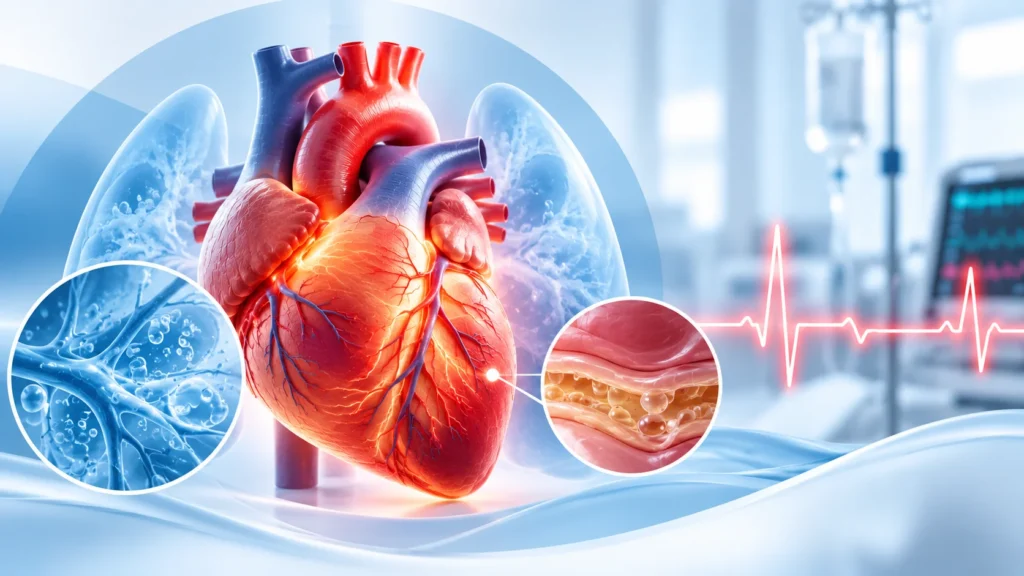
Acute heart failure is a serious medical condition where the heart suddenly becomes unable to pump enough blood to meet the body’s needs. This can happen over hours or days and often leads to fluid buildup in the lungs and other parts of the body. Patients may experience severe breathlessness, swelling, extreme tiredness, and in some cases, life-threatening complications. Unlike chronic heart failure, which develops slowly over time, acute heart failure comes on quickly and usually requires urgent hospital treatment.
Many people confuse acute heart failure with a heart attack, but they are not the same. A heart attack happens when blood flow to part of the heart is blocked. Acute heart failure happens when the heart muscle is too weak or too stiff to pump properly. A heart attack can trigger acute heart failure, but there are many other causes as well.
What is Acute Heart Failure?
Acute heart failure is a sudden worsening of the heart’s ability to pump blood. The heart may become too weak, too stiff, or both. This leads to reduced blood flow to organs and fluid backup in the lungs, legs, abdomen, and other tissues.
The condition can occur in someone who already has chronic heart failure and suddenly gets worse. It can also happen in a person who never knew they had heart problems. In either case, acute heart failure is a medical emergency that needs fast evaluation and treatment.
When the heart cannot pump effectively, pressure builds up in the blood vessels leading to the lungs. Fluid leaks into the air sacs, making it hard to breathe. At the same time, other organs may not receive enough oxygen-rich blood, which can cause weakness, confusion, and organ stress.
Types of Acute Heart Failure
Acute heart failure can present in different ways depending on which part of the heart is affected and how the symptoms appear.
Based on heart function
- Acute heart failure with reduced pumping function, where the heart muscle is weak and cannot squeeze properly.
- Acute heart failure with preserved pumping function, where the heart muscle is stiff and cannot relax properly.
- Combined pattern, where both weakness and stiffness are present.
Based on clinical presentation
- Acute decompensated heart failure, where existing chronic heart failure suddenly worsens.
- Acute pulmonary edema, where fluid rapidly fills the lungs causing severe breathlessness.
- Hypertensive heart failure, where very high blood pressure triggers sudden heart strain.
- Cardiogenic shock, where the heart is so weak that blood pressure drops dangerously low.
- Right-sided heart failure, where fluid builds up in the body, legs, and abdomen.
- Left-sided heart failure, where fluid builds up mainly in the lungs.
Based on severity
- Mild acute heart failure, where symptoms are present but the patient is stable.
- Moderate acute heart failure, where breathing difficulty and fluid overload are more significant.
- Severe acute heart failure, where the patient may have low oxygen, low blood pressure, or organ dysfunction.
Causes of Acute Heart Failure
Acute heart failure can be triggered by many different problems affecting the heart, blood vessels, or other organs.
Common cardiac causes
- Heart attack or acute coronary syndrome.
- Severe high blood pressure crisis.
- Worsening of chronic heart failure.
- Heart valve problems such as severe leakage or narrowing.
- Abnormal heart rhythms like atrial fibrillation or very fast or slow heart rates.
- Inflammation of the heart muscle or lining.
- Complications after heart surgery or procedures.
Common non-cardiac triggers
- Severe infection or sepsis.
- Kidney failure or sudden worsening of kidney function.
- Severe anemia.
- Thyroid problems.
- Overuse of salt or fluids in susceptible patients.
- Missing heart failure medicines.
- Use of certain painkillers or anti-inflammatory drugs.
- Alcohol or drug abuse.
- Pulmonary embolism or blood clot in the lungs.
- Pregnancy-related heart stress in some cases.
Why the heart fails suddenly
The heart may fail suddenly because it is overloaded with fluid, faced with very high blood pressure, damaged by a heart attack, or stressed by infection or other illness. In some patients, a small trigger can push an already weak heart into acute failure.
Risk Factors for Acute Heart Failure
Some people are more likely to develop acute heart failure than others.
Higher-risk groups
- People with known chronic heart failure.
- Patients with coronary artery disease or previous heart attack.
- Individuals with long-standing high blood pressure.
- People with diabetes.
- Older adults.
- Patients with kidney disease.
- Those with significant heart valve disease.
- People with a history of abnormal heart rhythms.
- Patients who frequently miss heart medications.
- Individuals with high salt intake or fluid overload.
Why risk increases in these groups
- Existing heart disease reduces the heart’s reserve.
- High blood pressure increases strain on the heart.
- Diabetes and kidney disease affect blood vessels and fluid balance.
- Age-related changes make the heart more vulnerable.
- Missed medicines allow fluid and pressure to build up.
- Salt and fluid excess directly worsen congestion.
Symptoms of Acute Heart Failure
Symptoms can develop over hours or days and often worsen quickly.
Common symptoms
- Severe breathlessness, especially at rest or when lying flat.
- Waking up at night gasping for air.
- Cough, sometimes with frothy or pink sputum.
- Rapid or irregular heartbeat.
- Swelling in the legs, ankles, or feet.
- Sudden weight gain due to fluid.
- Extreme tiredness or weakness.
- Reduced ability to perform daily activities.
- Confusion or difficulty concentrating.
- Nausea or loss of appetite.
- Cold or clammy skin in severe cases.
- Low urine output.
Emergency warning signs
- Severe breathlessness that does not improve with rest.
- Inability to speak in full sentences due to shortness of breath.
- Blue or gray lips or fingertips.
- Chest pain or pressure.
- Fainting or near-fainting.
- Confusion or extreme drowsiness.
- Very fast or very slow heart rate.
- Cold, sweaty skin with weakness.
Acute Heart Failure in Different Age Groups
Acute heart failure can affect people of different ages, but the pattern and causes may vary.
In younger adults
- Often related to heart muscle disease, valve problems, or congenital heart issues.
- May follow a viral infection affecting the heart.
- Can be associated with drug or alcohol use.
- May be missed initially because heart disease is not expected at a young age.
In middle-aged adults
- More likely to be linked with high blood pressure, diabetes, or coronary disease.
- May present after a heart attack or uncontrolled blood pressure.
- Often associated with lifestyle factors and missed medications.
In older adults
- More common due to age-related heart changes and multiple health conditions.
- May be triggered by infection, kidney problems, or medication issues.
- Recovery may be slower due to reduced reserve and other illnesses.
How is Acute Heart Failure Diagnosed?
Diagnosis is based on symptoms, physical examination, and urgent tests. Since acute heart failure can be life-threatening, evaluation is often done in the emergency department.
Diagnostic steps
- Detailed history of symptoms and medical conditions.
- Review of current medicines and recent changes.
- Physical examination focusing on breathing, heart, and fluid status.
- Checking oxygen level, blood pressure, heart rate, and temperature.
- Listening to the lungs for fluid and the heart for abnormal sounds.
- Examining the legs and abdomen for swelling.
Common tests that may be done
- Electrocardiogram to check heart rhythm and signs of strain or heart attack.
- Chest X-ray to look for fluid in the lungs and heart size.
- Blood tests to assess heart strain markers, kidney function, electrolytes, and infection.
- Echocardiogram to evaluate heart pumping and valve function.
- Arterial blood gas to check oxygen and carbon dioxide levels in severe cases.
- Additional tests such as CT scan or coronary angiography if a heart attack or clot is suspected.
Why diagnosis matters
Quick and accurate diagnosis helps doctors decide whether the patient needs oxygen, diuretics, blood pressure support, or emergency procedures. Early treatment reduces the risk of organ damage and improves survival.
Treatment for Acute Heart Failure
Treatment focuses on stabilizing breathing, reducing fluid overload, supporting heart function, and treating the underlying cause.
1. Oxygen and breathing support
- Oxygen therapy to maintain safe oxygen levels.
- Non-invasive ventilation such as CPAP or BiPAP in severe breathlessness.
- Intubation and mechanical ventilation in very severe cases.
2. Medicines to remove excess fluid
- Diuretics given through a vein to help the kidneys remove extra fluid.
- Careful monitoring of urine output and electrolytes.
- Adjustment of oral diuretics once the patient is stable.
3. Medicines to support heart function and blood pressure
- Medicines to reduce strain on the heart and improve pumping in selected patients.
- Blood pressure control with IV or oral medicines depending on the situation.
- Treatment of abnormal heart rhythms if present.
4. Treatment of the underlying cause
- Emergency treatment for heart attack if present.
- Management of severe infection with antibiotics and supportive care.
- Correction of kidney problems or electrolyte imbalance.
- Adjustment or temporary stopping of medicines that may worsen heart failure.
- Treatment of severe anemia, thyroid issues, or other triggers.
5. Intensive monitoring
- Continuous monitoring of heart rhythm, blood pressure, and oxygen.
- Regular assessment of breathing, urine output, and mental status.
- Repeat blood tests and imaging as needed.
Recovery After Acute Heart Failure
Recovery depends on the severity of the episode, the underlying cause, and the patient’s overall health.
Hospital recovery phase
- Gradual improvement in breathing and energy.
- Adjustment of heart failure medicines.
- Education about diet, fluids, and warning signs.
- Planning for follow-up after discharge.
After discharge
- Regular follow-up with a cardiologist or heart failure clinic.
- Strict adherence to prescribed medicines.
- Daily monitoring of weight and symptoms.
- Gradual increase in activity as advised.
- Cardiac rehabilitation if recommended.
Long-term management
- Ongoing treatment for chronic heart failure if present.
- Control of blood pressure, diabetes, and cholesterol.
- Lifestyle changes to reduce future risk.
- Avoidance of triggers such as excess salt, missed medicines, or harmful drugs.
Possible Complications
Acute heart failure can lead to serious complications, especially if treatment is delayed.
Short-term complications
- Low oxygen levels affecting the brain and other organs.
- Kidney injury due to reduced blood flow.
- Abnormal heart rhythms.
- Low blood pressure or shock.
- Need for intensive care or ventilation.
Long-term complications
- Worsening of chronic heart failure.
- Repeated hospital admissions.
- Reduced exercise capacity.
- Increased risk of future heart events.
- Emotional stress, anxiety, or depression.
Why complications happen
When the heart cannot pump effectively, organs do not receive enough blood and oxygen. Fluid buildup strains the lungs and heart. Without prompt treatment, this can lead to a cycle of worsening function and repeated episodes.
When to See a Doctor
Medical evaluation is important for people with risk factors or symptoms that suggest heart failure.
- Increasing breathlessness on exertion.
- Needing more pillows to sleep due to breathlessness.
- Swelling in the legs or abdomen.
- Sudden weight gain.
- Persistent cough or wheeze.
- Extreme tiredness or reduced activity tolerance.
- Known heart disease with new or worsening symptoms.
Prevention of Acute Heart Failure Episodes
Not all episodes can be prevented, but risk can be reduced.
Prevention pointers
- Take heart failure medicines exactly as prescribed.
- Do not stop or change doses without medical advice.
- Limit salt intake as advised by your doctor.
- Monitor daily weight and report sudden gains.
- Control blood pressure, diabetes, and cholesterol.
- Avoid NSAID painkillers unless approved by your doctor.
- Treat infections early.
- Keep regular follow-up appointments.
- Follow fluid restrictions if advised.
- Avoid smoking and limit alcohol.
For people with chronic heart failure
- Learn your personal warning signs of fluid overload.
- Have an action plan for worsening symptoms.
- Keep an updated list of medicines and doses.
- Involve family members in recognizing emergency signs.
Why Choose Rama Hospital for Acute Heart Failure Treatment?
Acute heart failure is a complex emergency that requires expert cardiac care, advanced monitoring, and rapid decision-making. A hospital with experienced cardiologists, intensivists, and cardiac support teams can make a major difference in outcomes.
- Expert evaluation by cardiac and critical care specialists.
- Advanced monitoring and imaging for accurate diagnosis.
- Rapid access to emergency treatments and procedures.
- Intensive care support for severe cases.
- Structured follow-up and heart failure management after discharge.
- Coordinated care for related conditions such as kidney disease, diabetes, and lung problems.
Frequently Asked Questions (FAQs)
Is acute heart failure the same as a heart attack?
No, they are not the same. A heart attack is caused by blocked blood flow to the heart muscle. Acute heart failure is caused by the heart’s inability to pump effectively, though a heart attack can trigger it.
Can acute heart failure be cured?
Acute heart failure can often be stabilized and improved with treatment. Long-term outlook depends on the underlying cause, heart function, and how well risk factors are controlled.
What are the first signs of acute heart failure?
Early signs include sudden breathlessness, swelling in the legs, rapid weight gain, extreme tiredness, and difficulty lying flat. Severe cases may cause confusion, chest discomfort, or low oxygen levels.
How is acute heart failure diagnosed in the hospital?
Diagnosis is based on symptoms, examination, ECG, chest X-ray, blood tests, and echocardiogram. These tests help assess heart function, fluid status, and possible triggers.
Can acute heart failure happen again after treatment?
Yes, it can recur, especially if underlying heart disease is not well controlled. Regular follow-up, medicines, and lifestyle changes help reduce the risk of future episodes.
What is the role of diet in acute heart failure?
Diet plays an important role, especially limiting salt and sometimes fluids as advised. A heart-healthy diet supports blood pressure control, weight management, and overall heart function.
When should someone go to the emergency room for heart failure symptoms?
Emergency care is needed for severe breathlessness at rest, chest pain, fainting, confusion, blue lips, or inability to lie flat due to breathing difficulty. These are signs of a potentially life-threatening situation.
Conclusion
Acute heart failure is a serious, sudden worsening of heart function that leads to breathlessness, fluid overload, and reduced blood flow to the body. It is a medical emergency that requires fast diagnosis and treatment to protect the heart, lungs, kidneys, and other organs. With timely care, many patients stabilize and recover, but long-term management is essential to prevent future episodes.
The most important steps are recognizing warning signs early, seeking emergency care when needed, taking medicines as prescribed, controlling blood pressure and other conditions, and following a heart-healthy lifestyle. For patients with increasing breathlessness, swelling, or known heart disease, a medical evaluation can make a major difference.
Rama Hospital can help evaluate and treat acute heart failure, provide emergency cardiac care, and support patients with structured follow-up to reduce the risk of recurrence and improve long-term heart health.