Warts are one of the most common skin conditions, affecting people of all ages. Although they are generally harmless, they can be unsightly, uncomfortable, and sometimes painful depending on their location. Fortunately, modern wart treatments offer safe and effective solutions that remove warts while reducing the risk of recurrence.
Whether you have a wart on your face, hands, feet, or another part of your body, Choosing the right wart treatments depends on the type of wart, its size, location, and your overall health. While many over-the-counter products claim to work, professional wart removal performed by a dermatologist often provides faster, more reliable, and longer-lasting results.
Why Timely Wart Treatments Matter
Warts are non-cancerous skin growths caused by infection with the Human Papillomavirus (HPV). The virus enters the skin through tiny cuts or abrasions and causes rapid growth of skin cells, leading to raised bumps that vary in size, shape, and appearance.
Although some warts disappear naturally as the immune system fights the virus, this process can take months or even years. During this time, the virus may spread to other parts of the body or to other people through direct skin contact or contaminated surfaces.
Seeking timely wart treatments offer several benefits:
- Prevents the wart from increasing in size
- Reduces the chance of spreading the virus
- Minimizes discomfort and pain
- Improves cosmetic appearance
- Lowers the risk of developing multiple warts
- Provides faster relief than waiting for spontaneous resolution
Getting professional wart treatments is especially important for facial warts, painful foot warts, rapidly growing lesions, or warts that continue to recur after home treatment.
Types of Warts
Understanding the type of wart helps determine the most appropriate wart treatments.
Common Warts (Verruca Vulgaris): These rough, raised bumps usually appear on the hands, fingers, elbows, and knees. They have a grainy surface and may contain tiny black dots representing clotted blood vessels.
Flat Warts: Flat warts are smaller, smoother, and slightly raised. They commonly occur on the face, neck, arms, and legs and often appear in clusters.
Filiform Warts: Filiform warts grow as thin, finger-like projections and typically develop around the eyes, nose, lips, and beard area. Because of their location, many people seek prompt wart removal for cosmetic reasons.
Plantar Warts: These develop on the soles of the feet and are pushed inward by body weight, making walking painful. Professional plantar wart removal is often recommended when home treatments fail.
Periungual Warts: These occur around fingernails and toenails and can interfere with nail growth if left untreated.
Genital Warts: These are caused by specific strains of HPV and require specialized medical evaluation and HPV wart treatment.
How Do Dermatologists Diagnose Warts?
Most dermatologists can diagnose warts during a physical examination based on their appearance and location.
The diagnostic process generally includes:
| Medical History | Clinical Skin Examination |
| When did the wart first appear? Helps determine the duration and progression of the wart. | Wart type: Identifies whether it is a common, plantar, flat, filiform, or periungual wart. |
| Has the wart changed in size or appearance? Assesses growth, spread, or any unusual changes. | Size and number: Evaluates the extent of the infection and whether multiple warts are present. |
| Have you tried any previous treatments? Reviews the effectiveness of home remedies or prior medical treatments. | Depth of involvement: Determines how deeply the wart extends into the skin, helping guide treatment selection. |
| Do you experience pain, bleeding, or discomfort? Identifies symptoms that may require prompt medical attention. | Signs of infection: Checks for redness, swelling, discharge, or tenderness that may indicate a secondary infection. |
| Is there a family history of skin conditions? Assesses any genetic predisposition or similar skin disorders. | Surrounding skin changes: Examines nearby skin for irritation, inflammation, or additional lesions. |
| Do you have any medical conditions that affect immunity? Conditions such as diabetes or a weakened immune system may influence treatment choice and healing. | Overall skin assessment: Evaluates the affected area to rule out other skin conditions that may resemble warts. |
Dermatologists can often distinguish warts from skin tags, moles, corns, calluses, molluscum contagiosum, and certain skin cancers.
Dermoscopy: A dermatoscope magnifies the lesion and allows visualization of tiny blood vessels and other characteristic wart features.
Skin Biopsy: If the lesion appears unusual or does not respond to treatment, your dermatologist may recommend a biopsy to confirm the diagnosis and rule out other skin disorders.
Early diagnosis ensures that patients receive the most appropriate wart treatment methods before the condition worsens.
7 Best Wart Treatments Methods:
There is no single wart treatment that works for everyone. Dermatologists select the one of the best wart treatments based on:
- Type of wart
- Number of lesions
- Size and depth
- Location on the body
- Patient’s age
- Medical history
- Previous treatment response
Below are the most commonly used wart treatments methods.
Topical Medications: Prescription and over-the-counter medications are often used for small or early warts.
Common topical wart treatments include:
- Salicylic acid
- Trichloroacetic acid (TCA)
- Retinoid creams
- Imiquimod
- 5-Fluorouracil (selected cases)
These medications gradually destroy infected skin cells and stimulate healthy skin regeneration.
Cryotherapy: Cryotherapy uses liquid nitrogen to freeze the wart, causing infected tissue to die and eventually fall off.
Advantages
- Quick outpatient procedure
- Minimal downtime
- Suitable for many wart types
- High success rate for common warts
Multiple wart treatments sessions may be needed depending on the size and location.
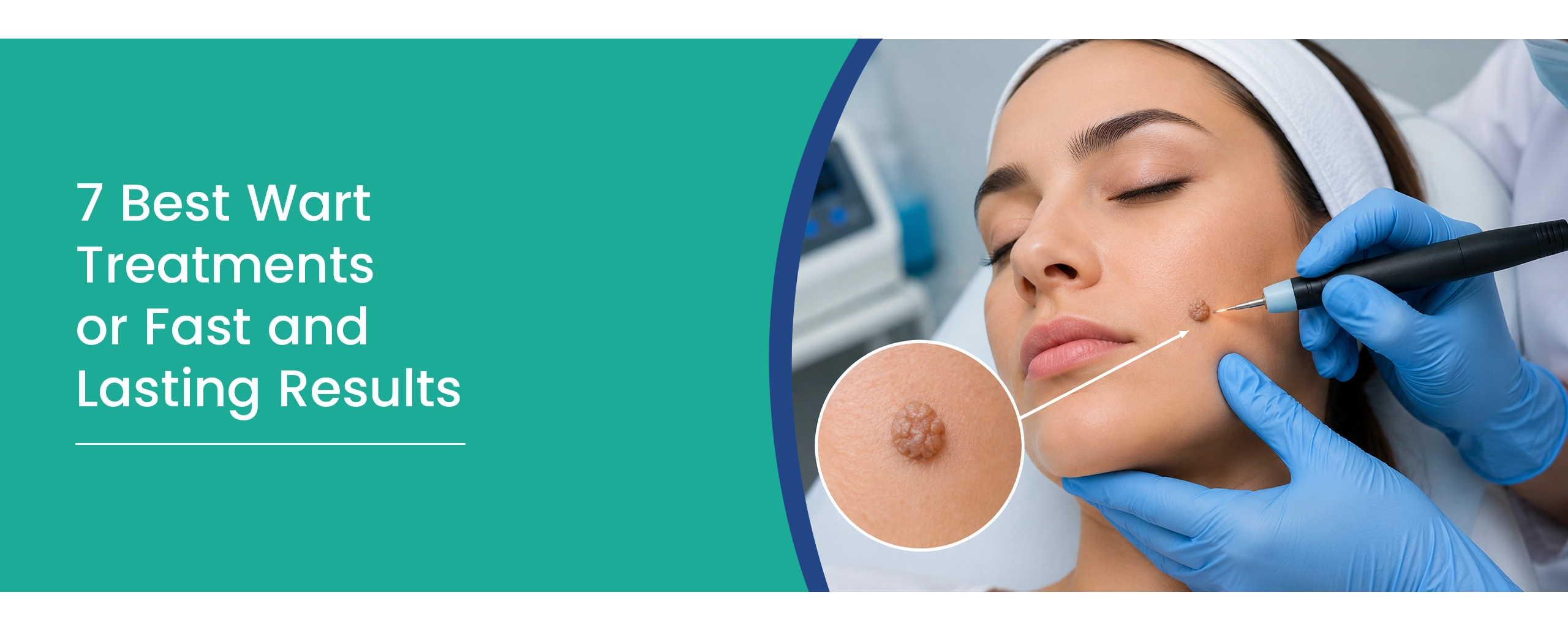
Electrocautery: Electrocautery destroys wart tissue using controlled electrical heat.
It is commonly recommended for:
- Facial warts
- Filiform warts
- Resistant common warts
- Cosmetic wart removal
Healing usually occurs within one to three weeks.
Chemical Peels: Certain acids are applied directly to the wart to gradually remove infected tissue.
Chemical treatments are particularly useful for:
- Flat warts
- Multiple facial warts
- Superficial lesions
Immunotherapy: For stubborn or recurrent warts, dermatologists may recommend treatments that stimulate the body’s immune response to fight HPV naturally.
These therapies can be effective when conventional treatments have failed.
Laser Therapy: Laser treatment precisely destroys wart tissue while minimizing damage to surrounding skin.
Modern laser technology is especially useful for:
- Multiple facial warts
- Resistant plantar warts
- Difficult-to-treat lesions
- Cosmetic areas requiring precision
We’ll discuss laser treatment for warts on face and laser treatment for warts in detail in the next section.
Minor Surgical Removal: Large, painful, or persistent warts may require a small surgical wart removal procedure performed under local anesthesia. Surgical removal offers immediate results but is generally reserved for selected cases due to the possibility of scarring.
When Should You Seek Professional Wart Removal?
Consult a dermatologist if you notice:
- Rapidly growing warts
- Pain while walking
- Facial warts
- Bleeding warts
- Multiple recurring warts
- Warts near the eyes
- Warts around the nails
- Diabetes or weakened immunity
- Home treatment has failed after several weeks
Professional dermatologist wart removal offers a more accurate diagnosis and access to advanced wart treatments options that are often unavailable over the counter.
Conclusion
Choosing the right wart treatments is essential for safe, effective removal and reducing the risk of recurrence. While some warts may disappear on their own, persistent, painful, or recurring warts often require professional medical care. Advanced wart treatments, including cryotherapy, laser therapy, electrocautery, topical medications, and minor surgery, offer effective solutions tailored to different types of warts. Visiting the Best Skin Care Hospital or the best hospital for skin diseases ensures access to experienced dermatologists, accurate diagnosis, and personalized treatment plans. Early intervention and appropriate wart treatments can help restore healthy skin, prevent the spread of HPV, and deliver long-lasting results.
Frequently Asked Questions (FAQs)
1. What are the best wart treatments?
The best wart treatments depends on the wart type, size, and location. A dermatologist can recommend the most effective option for your condition.
2. How do dermatologists remove warts?
Dermatologists use treatments such as cryotherapy, electrocautery, laser therapy, topical medications, or minor surgery.
3. Can warts go away on their own?
Yes, some warts disappear naturally, but it may take months or years, and they can spread in the meantime.
4. Is laser treatment for warts effective?
Yes, laser therapy is highly effective for stubborn or recurring warts and offers precise removal with minimal damage to surrounding skin.
5. Is laser treatment for warts on the face safe?
Yes, when performed by a qualified dermatologist, it is a safe and precise option with a low risk of scarring.
6. What is HPV wart treatment?
It involves removing visible warts and managing the HPV infection using medications or medical procedures.
7. How long does a wart removal procedure take?
Most procedures take about 15–30 minutes and are performed on an outpatient basis.
8. When should I see a wart removal doctor?
See a doctor if the wart is painful, growing, bleeding, recurring, or located on the face, feet, or genital area.
9. Can warts come back after treatment?
Yes, recurrence is possible because HPV may remain in the skin, although proper treatment reduces the risk.