Urethrotomy is a surgical procedure used to treat a condition called urethral stricture. A urethral stricture happens when the urethra, the tube that carries urine from the bladder to the outside of the body, becomes narrowed due to scar tissue. This narrowing can make it difficult to pass urine, cause pain, increase the risk of infections, and in severe cases, affect kidney function.
Many men ignore early symptoms such as weak urine flow, straining to pass urine, or frequent urinary infections, thinking it is just a minor problem. However, if left untreated, a urethral stricture can lead to serious complications including bladder damage, urinary retention, and kidney problems. Urethrotomy is one of the most common and effective treatments for selected cases of urethral stricture.
What is Urethrotomy?
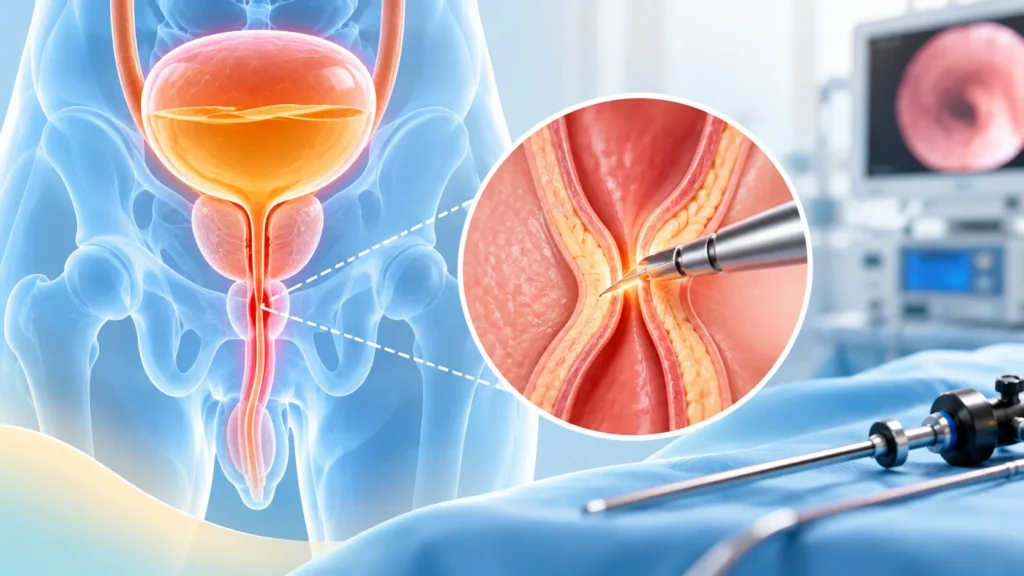
Urethrotomy is a minimally invasive surgical procedure that involves cutting the scar tissue inside the urethra to widen the narrowed segment. The goal is to restore normal urine flow and reduce symptoms caused by the stricture.
The procedure is usually done using a special instrument called a cystoscope or urethrotome, which is passed through the urethra. No external incision is needed on the skin. The surgeon uses the instrument to visualize the stricture and make a precise cut in the scar tissue. This opens up the narrowed area and allows urine to flow more freely.
Urethrotomy is typically performed under anesthesia and takes a short time. Many patients can go home the same day or after a brief observation period. It is considered a standard treatment for short, simple strictures, especially in the bulbar urethra.
Why is Urethrotomy Done?
Urethrotomy is done to treat urethral stricture disease when it causes significant symptoms or complications.
Common reasons for urethrotomy
- Weak or slow urine flow.
- Straining to pass urine.
- Spraying or splitting of urine stream.
- Frequent urinary tract infections.
- Pain or burning during urination.
- Feeling of incomplete bladder emptying.
- Urinary retention or inability to pass urine.
- Bladder stones due to poor drainage.
- Risk of kidney damage from long-standing obstruction.
Goals of the procedure
- Restore normal urine flow.
- Reduce straining and discomfort.
- Lower the risk of infections.
- Prevent bladder and kidney complications.
- Improve quality of life.
Types of Urethrotomy
There are different ways to perform urethrotomy depending on the equipment and technique used.
Direct vision internal urethrotomy
This is the most common type. The surgeon uses a cystoscope with a camera to see the stricture directly. A cold knife or laser is used to cut the scar tissue under vision. This method is precise and reduces damage to healthy tissue.
Laser urethrotomy
In this technique, a laser fiber is used instead of a cold knife. The laser cuts or vaporizes the scar tissue. It may cause less bleeding and can be useful in selected cases.
Optical urethrotomy
This term is often used interchangeably with direct vision internal urethrotomy. It emphasizes the use of optical instruments to visualize and treat the stricture.
Choice of technique
The choice depends on the stricture location, length, severity, surgeon expertise, and available equipment. The goal in all cases is to open the narrowed segment safely and effectively.
Who is Eligible for Urethrotomy?
Not every patient with urethral stricture is suitable for urethrotomy. Careful selection improves success and reduces the need for repeat procedures.
Ideal candidates
- Patients with short segment strictures, usually less than two centimeters.
- Strictures in the bulbar urethra.
- First-time treatment for stricture.
- Patients who are fit for anesthesia.
- Those without complex or multiple strictures.
Patients who may need alternative treatment
- Long segment strictures.
- Multiple strictures in different areas.
- Recurrent strictures after previous urethrotomy.
- Strictures in the penile urethra in some cases.
- Patients with severe spongiofibrosis or dense scar tissue.
- Those with associated conditions requiring open surgery.
In such cases, urethroplasty, which is an open reconstructive surgery, may be recommended for better long-term results.
How is Urethrotomy Performed?
Urethrotomy is a well-established procedure with a standard surgical approach.
Before the procedure
- Detailed evaluation by a urologist.
- Urine tests to rule out infection.
- Imaging or endoscopic evaluation to assess stricture.
- Discussion of risks, benefits, and alternatives.
- Fasting for a few hours before anesthesia.
- Adjustment of blood thinning medicines if needed.
During the procedure
- Anesthesia is given, either spinal or general.
- A cystoscope is passed through the urethra into the bladder.
- The stricture is identified under direct vision.
- A cold knife or laser is used to cut the scar tissue.
- The cut is usually made in one or more directions to open the lumen.
- A catheter may be placed to allow healing.
- The procedure typically takes 30 to 60 minutes.
After the procedure
- Patient is monitored in the recovery area.
- Pain relief and antibiotics are given as needed.
- Catheter is usually kept for a few days.
- Most patients go home within 24 to 48 hours.
- Follow-up is arranged to assess urine flow and healing.
Recovery After Urethrotomy
Recovery is usually smooth, but it requires careful attention to instructions.
Immediate recovery
- Mild burning or discomfort during urination is common.
- Blood-tinged urine may be seen for a few days.
- Catheter may cause bladder spasms or discomfort.
- Pain medicines and antibiotics are prescribed.
- Rest is recommended for the first few days.
Catheter care
- Keep the catheter and bag clean.
- Ensure the bag is below bladder level.
- Do not pull or tug on the catheter.
- Report any blockage, leakage, or severe pain.
- Catheter is usually removed after 2 to 7 days depending on the case.
Activity guidance
- Avoid heavy lifting for at least one to two weeks.
- Avoid cycling, horse riding, or straddle activities initially.
- Walking is encouraged to prevent clots and aid recovery.
- Sexual activity is usually resumed after 2 to 4 weeks as advised.
- Return to work depends on the nature of job and recovery.
Long-term recovery
- Urine flow usually improves within days to weeks.
- Some patients may need repeat procedures if stricture recurs.
- Regular follow-up helps monitor for recurrence.
- Healthy bladder habits support long-term outcomes.
Risks and Complications
Like any surgery, urethrotomy has potential risks, though serious complications are uncommon.
Common and mild complications
- Burning or pain during urination.
- Blood in urine for a few days.
- Temporary urinary frequency or urgency.
- Mild infection treatable with antibiotics.
- Discomfort from the catheter.
Less common complications
- Urinary tract infection requiring longer treatment.
- Bleeding that needs additional care.
- Injury to the urethra or surrounding tissue.
- Formation of false passage during instrumentation.
- Urinary retention after catheter removal.
Long-term risks
- Recurrence of stricture over time.
- Need for repeat urethrotomy or urethroplasty.
- Worsening of stricture in some cases.
- Erectile dysfunction in rare cases.
- Incontinence in very rare cases.
Why complications happen
- Scar tissue may reform after healing.
- Infection or inflammation can affect outcomes.
- Technical challenges in complex strictures.
- Underlying tissue quality affects healing.
- Patient factors such as diabetes or smoking may influence recovery.
Long-Term Care After Urethrotomy
Long-term care focuses on preventing recurrence and maintaining urinary health.
Follow-up plan
- Regular visits to the urologist for assessment.
- Urine flow test to check for obstruction.
- Symptom review for any return of stricture signs.
- Imaging or endoscopy if recurrence is suspected.
- Early intervention if symptoms reappear.
Bladder and urinary habits
- Drink adequate fluids unless restricted.
- Do not hold urine for long periods.
- Maintain good hygiene to prevent infection.
- Report any change in urine stream promptly.
- Avoid self-catheterization unless instructed.
Lifestyle measures
- Control diabetes and other chronic conditions.
- Stop smoking to improve healing.
- Maintain a healthy weight.
- Avoid trauma to the perineal area.
- Follow all medical advice regarding activity and medications.
When to Seek Medical Help?
Most patients recover well, but some symptoms need prompt attention.
- Fever or chills.
- Severe pain not relieved by medicines.
- Heavy bleeding or clots in urine.
- Inability to pass urine after catheter removal.
- Foul-smelling or cloudy urine with discomfort.
- Worsening urine flow after initial improvement.
- Persistent burning beyond the expected period.
Benefits of Urethrotomy
Urethrotomy offers several advantages for suitable patients.
Key benefits
- Minimally invasive with no external incision.
- Short procedure time.
- Quick recovery compared to open surgery.
- Immediate improvement in urine flow.
- Can be repeated if needed in selected cases.
- Lower initial morbidity than urethroplasty.
- Suitable for first-time short strictures.
Why it is preferred in selected cases
- Less pain and shorter hospital stay.
- Faster return to normal activities.
- Effective for appropriate stricture types.
- Can be done under spinal or general anesthesia.
- Well-established safety profile.
Alternatives to Urethrotomy
Not all patients are best treated with urethrotomy. Other options may be more suitable depending on the case.
Alternative treatments
- Urethral dilation, which stretches the stricture but has higher recurrence.
- Urethroplasty, which is open reconstructive surgery for long or recurrent strictures.
- Stent placement in selected cases.
- Suprapubic catheter for temporary drainage in complex cases.
- Observation in very mild, asymptomatic cases.
Choosing the right option
The choice depends on stricture length, location, severity, previous treatments, and patient preference. A detailed discussion with a urologist helps determine the best approach.
Why Choose Rama Hospital for Urethrotomy?
Urethrotomy requires skilled urological care, proper equipment, and structured follow-up. A hospital-based urology department can offer comprehensive management from diagnosis to long-term care.
- Expert evaluation by qualified urologists.
- Advanced endoscopic equipment for precise treatment.
- Safe anesthesia and surgical environment.
- Structured post-operative care and monitoring.
- Access to alternative treatments if needed.
- Long-term follow-up for recurrence prevention.
Frequently Asked Questions (FAQs)
Is urethrotomy painful?
The procedure is done under anesthesia, so there is no pain during surgery. Afterward, mild burning or discomfort during urination is common for a few days. Pain medicines and catheter care help manage discomfort during recovery.
How long does the procedure take?
Urethrotomy typically takes 30 to 60 minutes depending on the stricture complexity. Most patients go home within 24 to 48 hours. The exact duration and stay depend on individual factors and hospital protocol.
Will I need a catheter after urethrotomy?
Yes, a catheter is usually placed after the procedure to allow the urethra to heal. It is typically kept for 2 to 7 days. The catheter helps maintain the opening and prevents early closure of the treated area.
Can urethral stricture come back after urethrotomy?
Yes, recurrence is possible, especially in long or recurrent strictures. Some patients may need repeat urethrotomy or urethroplasty for better long-term results. Regular follow-up helps detect recurrence early.
How successful is urethrotomy?
Success depends on stricture length, location, and type. Short, first-time strictures have better success rates. Long or recurrent strictures have higher recurrence and may need alternative surgery for durable results.
When can I resume normal activities?
Light activities can be resumed within a few days. Heavy lifting, cycling, and strenuous exercise should be avoided for 1 to 2 weeks. Sexual activity is usually resumed after 2 to 4 weeks as advised by the doctor.
What are the signs of complications after urethrotomy?
Warning signs include fever, severe pain, heavy bleeding, inability to pass urine, or worsening urine flow. If any of these occur, contact your doctor promptly for evaluation and management.
Conclusion
Urethrotomy is a well-established, minimally invasive treatment for urethral stricture that can significantly improve urine flow and quality of life. It is most effective for short, simple strictures and offers quick recovery with minimal discomfort. However, careful patient selection, skilled surgical technique, and proper follow-up are essential for the best outcomes.
The most important steps are accurate diagnosis, discussion of treatment options, adherence to post-operative care, and long-term monitoring for recurrence. For patients with urinary symptoms, weak flow, or recurrent infections, a urology evaluation can make a major difference. With the right care, patients can achieve better urinary function and reduced risk of complications.
Rama Hospital can help evaluate urethral stricture, determine if urethrotomy is suitable, and provide safe, effective treatment with structured follow-up to support long-term urinary health.