
Your kidneys work quietly in the background, filtering waste and excess fluid from your blood. But when kidney function suddenly drops, the change can happen quickly, and the symptoms may initially seem unrelated to your kidneys.
This condition is called acute kidney injury (AKI). It can develop over hours or days and may occur because of severe dehydration, infection, reduced blood flow to the kidneys, certain medicines, kidney damage or a blockage in the urinary tract.
The good news is that acute kidney injury can often be treated, particularly when the underlying cause is identified early. But delaying medical attention can allow waste products, fluids and electrolytes to build up in the body.
Knowing the acute kidney injury symptoms can help you recognise a potential problem before it becomes more serious.
What Is Acute Kidney Injury?
Acute kidney injury, previously called acute kidney failure, is a sudden decrease in the kidneys’ ability to filter waste products and maintain the body’s fluid and chemical balance.
Unlike chronic kidney disease, which usually develops gradually, AKI can appear within a short period. Some people may have noticeable symptoms, while others may have few or no symptoms and discover the problem through blood or urine tests.
AKI can be temporary and reversible when its cause is treated promptly. However, severe cases can lead to serious complications and may require dialysis.
7 Warning Signs of Acute Kidney Injury
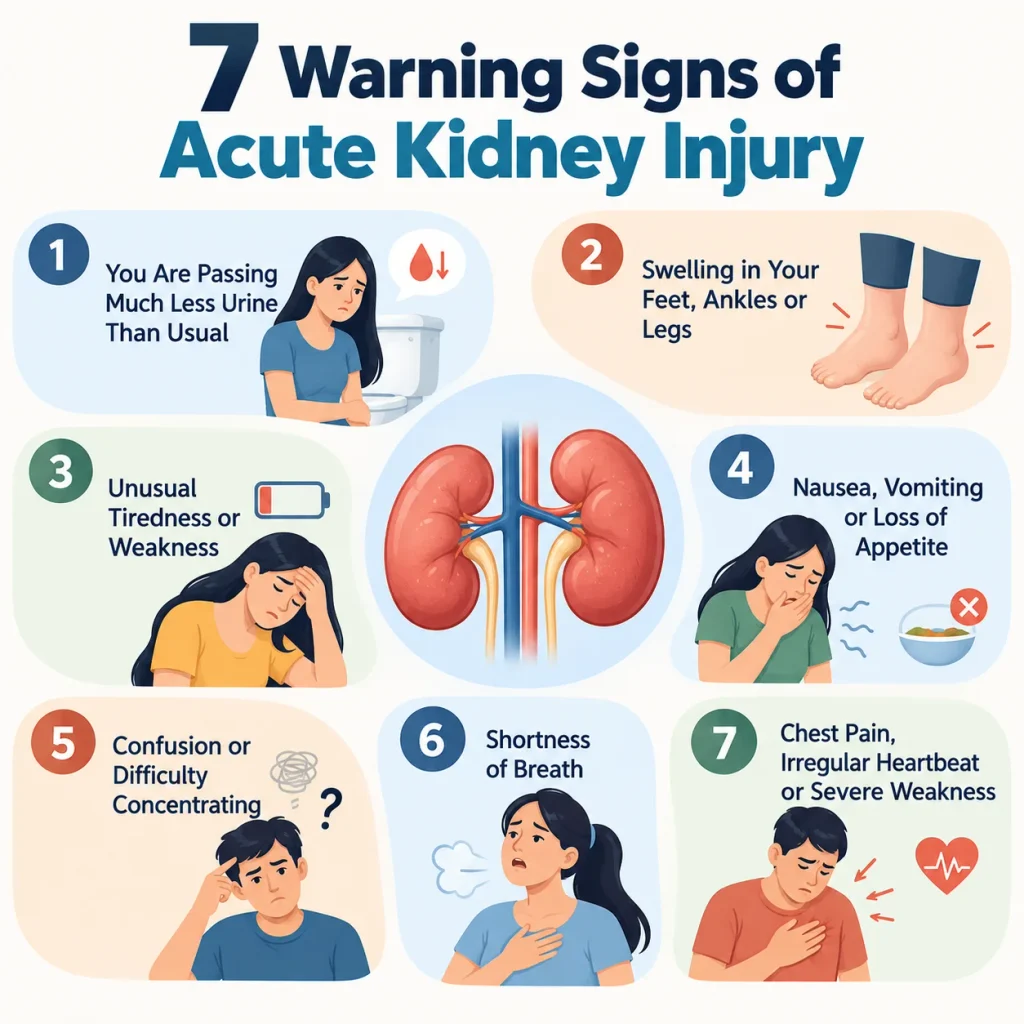
1. You Are Passing Much Less Urine Than Usual
One of the important acute kidney injury warning signs is a noticeable reduction in urine output.
You may find yourself:
- Urinating much less frequently
- Passing only a small amount of urine
- Not urinating despite drinking fluids
This can happen because the kidneys are no longer filtering blood effectively or because urine flow is blocked.
However, reduced urine output does not always occur with AKI. Some people can develop kidney injury without an obvious change in how much they urinate.
Do not ignore a sudden and unexplained change in urination, particularly if it occurs alongside swelling, weakness or other symptoms.
2. Swelling in Your Feet, Ankles or Legs
When the kidneys cannot remove enough excess fluid, fluid can accumulate in the body.
This may cause:
- Swelling around the ankles
- Puffy feet or legs
- Sudden weight gain from fluid retention
In more severe cases, excess fluid may accumulate in the lungs and contribute to breathlessness.
If swelling appears suddenly and is accompanied by reduced urine output or shortness of breath, it should be medically evaluated.
3. Unusual Tiredness or Weakness
Feeling unusually exhausted can also be one of the symptoms of acute kidney injury.
When kidney function decreases, waste products can accumulate in the blood. Changes in fluid and electrolyte balance may also affect how you feel.
You may notice:
- Low energy
- General weakness
- Difficulty carrying out your usual activities
- Feeling unusually tired despite adequate rest
Tiredness alone does not mean you have AKI. It can occur with many conditions, including infections, anaemia, thyroid disorders and poor sleep. But when it occurs with other kidney-related symptoms, it deserves attention.
4. Nausea, Vomiting or Loss of Appetite
A sudden change in appetite accompanied by nausea or vomiting may also occur when kidney function declines.
As the kidneys become less effective at removing waste products from the blood, you may experience:
- Nausea
- Vomiting
- Loss of appetite
- An unpleasant taste in the mouth
These symptoms are not specific to AKI and can have many causes. However, if they develop together with reduced urine output, swelling or weakness, a medical evaluation becomes more important.
5. Confusion or Difficulty Concentrating
Changes in mental alertness can be a more concerning sign.
Some people with significant acute kidney injury may experience:
- Confusion
- Difficulty concentrating
- Feeling unusually foggy
- Changes in alertness
This can occur when severe kidney dysfunction causes waste products and chemical imbalances to build up in the body.
Sudden confusion should never be dismissed as simple tiredness, particularly in an older adult or someone who is already seriously ill.
6. Shortness of Breath
Breathlessness can occur when excess fluid builds up in the body and, in severe cases, affects the lungs.
You may notice:
- Breathlessness during activity
- Difficulty breathing when lying down
- A feeling of heaviness or tightness in the chest
- Increasing difficulty breathing
Shortness of breath can have many causes, including heart and lung conditions. But when it occurs alongside swelling and reduced urine output, kidney dysfunction is one possible explanation.
Severe or sudden breathing difficulty requires urgent medical attention.
7. Chest Pain, Irregular Heartbeat or Severe Weakness
Severe AKI can cause electrolyte disturbances, including changes in potassium levels. These changes can affect muscles and the heart.
Warning symptoms may include:
- Chest pain or pressure
- Irregular heartbeat
- Significant muscle weakness
- Severe weakness or feeling unwell
These symptoms can indicate a potentially serious complication and should not be managed at home.
If chest pain, severe breathlessness, fainting or significant confusion occurs, seek emergency medical care.
What Causes Acute Kidney Injury?
Understanding the acute kidney injury causes is important because AKI is often triggered by another health problem rather than occurring on its own.
Doctors generally consider three broad categories.
Reduced blood flow to the kidneys
Conditions that reduce blood flow can affect kidney function. These may include:
- Severe dehydration
- Significant blood or fluid loss
- Very low blood pressure
- Severe infection or sepsis
- Heart failure
- Certain serious illnesses
Direct kidney damage
AKI can also occur when the kidney itself is injured.
Possible causes include:
- Certain infections
- Inflammation of the kidney
- Some medicines
- Certain chemotherapy medicines
- Problems affecting the kidney’s blood supply
- Severe muscle injury
Blockage of urine flow
A blockage can prevent urine from leaving the kidneys normally.
Possible causes include:
- Kidney stones
- Enlarged prostate
- Tumours
- Blood clots
- Other urinary tract obstructions
Who Is More Likely to Develop Acute Kidney Injury?
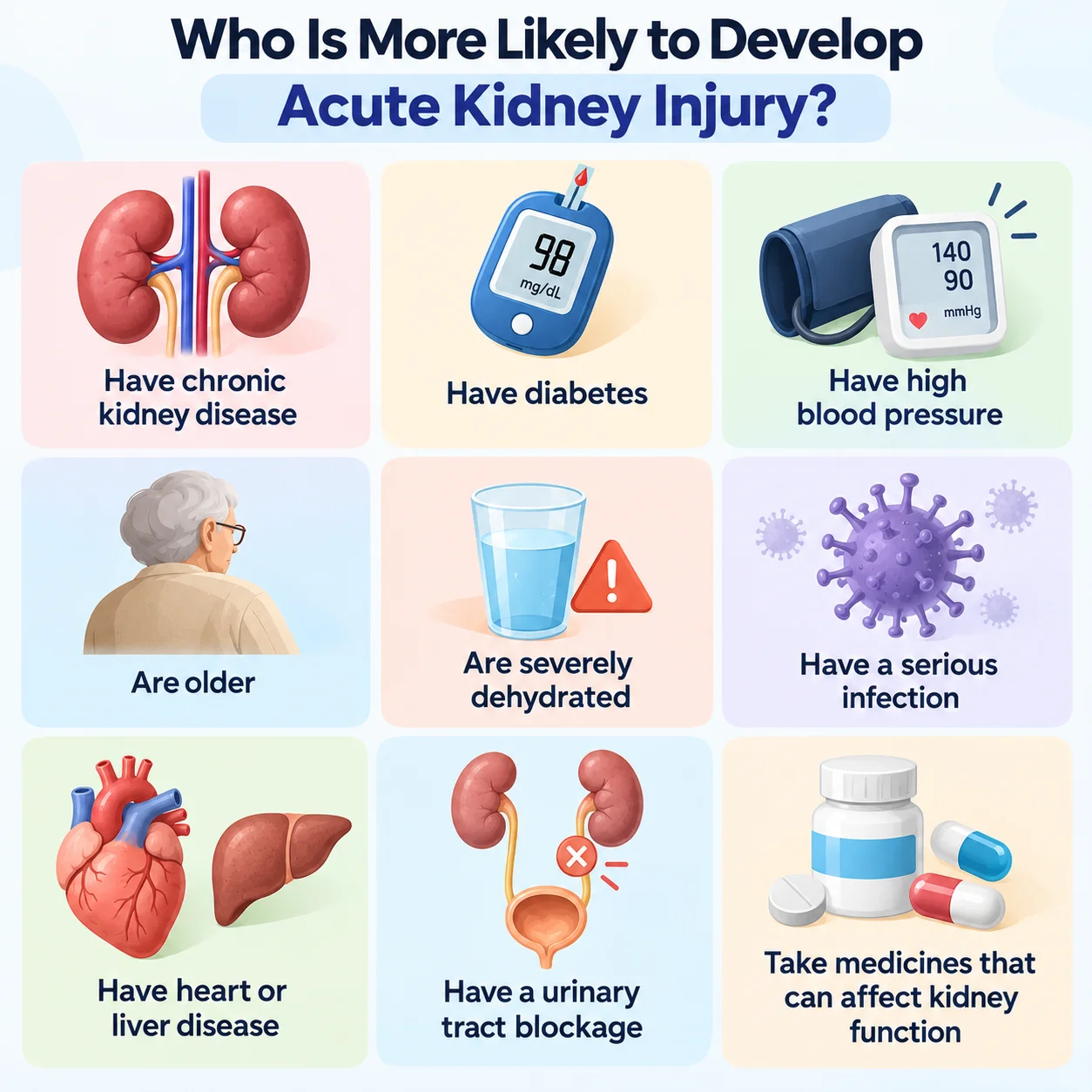
AKI can happen to anyone, but the risk may be higher in people with certain health conditions or circumstances.
Hospitalised patients, particularly those who are seriously ill or require intensive care, are also at increased risk.
You may have a higher risk if you:
- Have chronic kidney disease
- Have diabetes
- Have high blood pressure
- Are older
- Are severely dehydrated
- Have a serious infection
- Have heart or liver disease
- Have a urinary tract blockage
- Take medicines that can affect kidney function
How Is Acute Kidney Injury Diagnosed?
Symptoms alone cannot confirm acute kidney injury.
A doctor may evaluate your medical history, medications, fluid intake, recent illness and symptoms before ordering tests.
Blood tests showing a rapid rise in creatinine can indicate a decline in kidney function. Imaging may be used when doctors need to look for an obstruction or another structural cause.
Common investigations may include:
| Test | What it helps assess |
| Blood tests | Creatinine, urea and other markers of kidney function |
| Urine tests | Changes that may indicate kidney or urinary problems |
| Urine output monitoring | Helps assess how much urine the kidneys are producing |
| Ultrasound | Can help identify kidney abnormalities or urinary obstruction |
| CT scan | May be recommended in selected cases |
How Is Acute Kidney Injury Treated?
There is no single acute kidney injury treatment because treatment depends on what caused the kidney injury and how severe it is.
The priority is to identify and treat the underlying problem.
Treatment may involve:
- IV fluids when dehydration is responsible
- Treating an underlying infection
- Reviewing or stopping medicines that may be affecting the kidneys
- Treating urinary obstruction
- Managing abnormal potassium or other electrolyte levels
- Managing excess fluid
- Dialysis in severe cases
In some people, kidney function improves once the underlying cause is treated. Severe AKI may temporarily require dialysis while the kidneys recover.
This is why early evaluation matters.
Can Acute Kidney Injury Be Reversed?
Some people recover kidney function completely after the underlying problem is treated. Others may have persistent kidney damage, particularly when the AKI is severe or occurs in someone who already has kidney disease.
Cleveland Clinic notes that recovery can vary considerably depending on the severity and underlying cause.
So, the question isn’t simply “Can AKI be cured?”
The more important question is: What caused the kidney injury, and how quickly can that cause be treated?
When Should You See a Kidney Specialist?
Do not wait for symptoms to become severe if you notice a sudden change in your health that could involve your kidneys.
- A significant reduction in urine
- Sudden swelling
- Persistent nausea or vomiting
- Unexplained severe weakness
- Confusion
- Breathlessness
- Known kidney disease with worsening symptoms
- A recent severe infection, dehydration or major illness
If symptoms are severe, particularly chest pain, severe breathing difficulty, significant confusion, fainting or very little/no urine, seek urgent medical care.
A nephrologist can assess kidney function, identify the underlying cause and determine whether further treatment or monitoring is required.
If you are looking for a nephrologist in Noida, choosing a hospital with access to diagnostic testing, emergency care and specialist kidney management can be important, particularly when AKI develops suddenly.
How Can You Reduce Your Risk of Acute Kidney Injury?
Not every case of AKI can be prevented, but certain steps can help reduce your risk.
Stay alert during illness
Severe vomiting, diarrhoea, fever or dehydration can affect kidney function. Seek medical advice if you cannot maintain adequate fluid intake or become significantly unwell.
Use medicines responsibly
Some medicines, including certain painkillers, can affect kidney function, particularly in people who already have kidney problems or are dehydrated. Do not stop prescribed medicines on your own; discuss concerns with your doctor.
Manage existing health conditions
Keeping conditions such as diabetes and high blood pressure under control can help protect long-term kidney health.
Don’t ignore urinary obstruction
Problems such as kidney stones or an enlarged prostate can sometimes obstruct urine flow. Persistent difficulty passing urine should be evaluated.
Frequently Asked Questions (FAQs)
What is the first sign of acute kidney injury?
A sudden reduction in urine output can be an important warning sign, but AKI does not always cause obvious symptoms. Some cases are detected through blood tests before noticeable symptoms appear.
Can dehydration cause acute kidney injury?
Yes. Severe dehydration can reduce blood flow to the kidneys and contribute to AKI. Prompt treatment of significant dehydration is particularly important in people who are older or have existing kidney or other medical conditions.
Can acute kidney injury be cured?
AKI can often improve when its underlying cause is identified and treated promptly. However, recovery varies according to the cause, severity of kidney injury and a person’s overall health.
Does acute kidney injury always require dialysis?
No. Dialysis is generally considered when kidney injury is severe and the kidneys cannot adequately remove waste, excess fluid or certain electrolytes. Some people recover without dialysis.
Can kidney stones cause acute kidney injury?
A kidney stone can contribute to AKI when it causes significant obstruction of urine flow, particularly when the obstruction affects the urinary system in a way that compromises kidney function.
Conclusion
Acute kidney injury can develop quickly, and its early symptoms may look like those of many other illnesses. Reduced urine output, swelling, unusual weakness, nausea, confusion, breathlessness and changes affecting the heart or chest can all warrant medical attention.
The important thing is not to diagnose yourself based on one symptom. Instead, pay attention when several symptoms appear together especially after severe dehydration, infection, low blood pressure, medication exposure or a urinary blockage.
Early diagnosis can make a difference to treatment and recovery.
If you are experiencing possible symptoms of acute kidney injury, consult a qualified kidney specialist or seek urgent medical care depending on the severity of your symptoms.