The rotator cuff is a group of muscles and tendons that surround the shoulder joint and help stabilize and move the arm. When these tendons are damaged or torn, it can cause significant pain, weakness, and loss of shoulder function. Rotator cuff tears are common, especially in middle-aged and older adults, athletes, and people who perform repetitive overhead activities.
Rotator cuff repair is a surgical procedure that reattaches the torn tendon to the bone to restore shoulder strength and function. Not all tears require surgery, but when conservative treatment fails or the tear is severe, surgery may be the best option. The procedure can be performed using minimally invasive arthroscopic techniques or open surgery, depending on the tear pattern and surgeon’s assessment.
What is Rotator Cuff Repair?
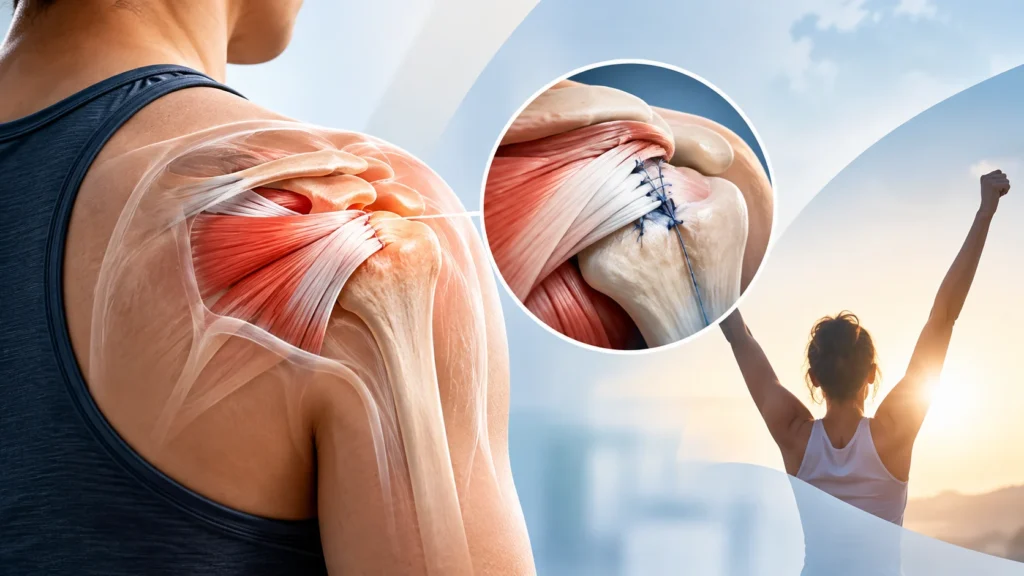
Rotator cuff repair is a surgical procedure to fix a torn rotator cuff tendon by reattaching it to the upper arm bone. The goal is to relieve pain, restore strength, and improve shoulder movement. The procedure is commonly performed by orthopedic surgeons who specialize in shoulder conditions.
The rotator cuff consists of four muscles and their tendons that attach the shoulder blade to the humerus. These tendons help lift and rotate the arm while keeping the shoulder joint stable. When a tendon tears, it can pull away from the bone, causing pain and dysfunction. Repair surgery anchors the tendon back to its normal position using sutures, anchors, or other fixation devices.
The surgery can be done arthroscopically through small incisions with a camera, or through a larger open incision for complex tears. The choice depends on tear size, tissue quality, patient age, activity level, and surgeon expertise. Most patients experience significant pain relief and functional improvement after proper rehabilitation.
Causes of Rotator Cuff Tears
Rotator cuff tears can happen due to injury, wear and tear, or a combination of both.
Common causes include:
- Acute injury from falling on an outstretched arm.
- Lifting heavy objects with sudden force.
- Repetitive overhead activities in sports or work.
- Age-related degeneration of tendon tissue.
- Poor blood supply to the tendon with aging.
- Bone spurs that rub against the tendon.
- Chronic inflammation from tendinitis or bursitis.
- Previous shoulder dislocation or trauma.
Why tears happen
Over time, tendons can weaken and become less flexible. Repetitive stress or a sudden injury can cause the weakened tendon to tear. In older adults, degenerative changes make the tendon more prone to tearing even with minor trauma. In younger patients, high-impact sports or accidents are more common causes.
Risk Factors for Rotator Cuff Tears
Some people are more likely to develop rotator cuff tears than others.
Higher-risk groups
- Adults over the age of forty.
- People who perform repetitive overhead work.
- Athletes in sports like tennis, swimming, or baseball.
- Smokers, as smoking reduces blood flow to tendons.
- People with diabetes or metabolic conditions.
- Individuals with poor posture or shoulder mechanics.
- Those with previous shoulder injuries.
- People with family history of tendon problems.
Why risk increases in these groups
- Aging reduces tendon elasticity and healing capacity.
- Repetitive motion causes micro-tears over time.
- Smoking impairs blood supply needed for tendon health.
- Diabetes affects tissue quality and recovery.
- Poor mechanics increase stress on the rotator cuff.
- Previous injuries weaken the tendon structure.
Symptoms of Rotator Cuff Tear
Symptoms can vary depending on the size and location of the tear.
Common symptoms include:
- Pain in the shoulder, especially at night.
- Weakness when lifting or rotating the arm.
- Difficulty reaching behind the back or overhead.
- Cracking or popping sensation during movement.
- Pain that radiates down the arm.
- Loss of range of motion.
- Difficulty with daily activities like dressing or combing hair.
Signs that suggest a significant tear
- Sudden weakness after an injury.
- Inability to lift the arm above shoulder level.
- Persistent pain despite rest and medication.
- Noticeable muscle wasting around the shoulder.
- Pain that interferes with sleep regularly.
How is Rotator Cuff Tear Diagnosed?
Diagnosis is based on symptoms, physical examination, and imaging tests.
Diagnostic steps
- Detailed history of pain, injury, and activity.
- Physical examination of shoulder strength and movement.
- Specific tests to assess rotator cuff function.
- X-rays to check for bone spurs or arthritis.
- Ultrasound to visualize tendon tears.
- MRI to assess tear size, location, and tissue quality.
- CT scan in selected complex cases.
Why diagnosis matters
Accurate diagnosis helps determine whether surgery is needed and which technique is most appropriate. Small partial tears may heal with conservative care, while large complete tears often require surgical repair. Imaging also helps plan the procedure and set realistic expectations.
Treatment Options for Rotator Cuff Tear
Treatment depends on the severity of the tear, symptoms, age, and activity level.
1. Conservative treatment
Non-surgical options are often tried first for partial tears or mild symptoms.
- Rest and activity modification to reduce strain.
- Ice or heat therapy for pain relief.
- Anti-inflammatory medications for pain and swelling.
- Physical therapy to strengthen surrounding muscles.
- Corticosteroid injections for severe inflammation.
- Shoulder support or sling for acute pain.
2. Surgical treatment
Surgery is considered when conservative treatment fails or the tear is severe.
- Arthroscopic repair for most tears using small incisions.
- Open repair for large or complex tears.
- Mini-open repair combining arthroscopy and small incision.
- Tendon transfer in cases of massive irreparable tears.
- Reverse shoulder replacement for severe arthritis with tear.
Rotator Cuff Repair Surgery
The surgical procedure aims to reattach the torn tendon to the bone securely.
Arthroscopic repair
- Small incisions are made around the shoulder.
- A camera and instruments are inserted to visualize and repair.
- Sutures and anchors are used to reattach the tendon.
- Less tissue damage and faster recovery in many cases.
- Suitable for most tear patterns.
Open repair
- A larger incision is made over the shoulder.
- Direct visualization of the tendon and bone.
- Used for large, complex, or revision tears.
- May be needed when tissue quality is poor.
- Longer recovery but effective for difficult cases.
Mini-open repair
- Combines arthroscopic assessment with a small open incision.
- Allows direct tendon repair with less tissue disruption.
- Useful for certain tear types.
- Balances benefits of both techniques.
Surgical steps overview
- Anesthesia is given for pain control.
- The torn tendon edges are prepared.
- Anchors are placed in the bone.
- Sutures secure the tendon to the anchors.
- The repair is tested for stability.
- Incisions are closed and dressing applied.
Recovery After Rotator Cuff Repair
Recovery is a gradual process that requires patience and adherence to rehabilitation.
Immediate postoperative period
- Shoulder is immobilized in a sling for protection.
- Pain medication is prescribed for comfort.
- Ice therapy helps reduce swelling.
- Gentle finger and wrist movements are encouraged.
- Follow-up visit to check wound healing.
Early rehabilitation phase
- Passive range of motion exercises begin first.
- A therapist moves the arm without muscle activation.
- Protects the repair while preventing stiffness.
- Lasts for several weeks depending on tear size.
- No active lifting or resistance during this phase.
Intermediate rehabilitation phase
- Active assisted exercises are introduced.
- Patient begins to use shoulder muscles gently.
- Gradual increase in range of motion.
- Light strengthening starts under guidance.
- Focus on posture and scapular control.
Advanced rehabilitation phase
- Progressive strengthening exercises.
- Resistance bands and weights are added.
- Functional activities are reintroduced.
- Sport-specific or work-specific training.
- Full recovery may take 6 to 12 months.
Long-term care
- Continue shoulder strengthening exercises.
- Avoid repetitive overhead strain initially.
- Maintain good posture and body mechanics.
- Regular follow-up to monitor progress.
- Return to full activity as cleared by surgeon.
Possible Complications
While rotator cuff repair is generally safe, some risks exist.
Possible complications
- Infection at the incision site.
- Stiffness or frozen shoulder.
- Re-tear of the repaired tendon.
- Nerve or blood vessel injury.
- Persistent pain or weakness.
- Anesthesia-related risks.
- Blood clots in rare cases.
Why complications happen
- Poor tissue quality affects healing.
- Non-compliance with rehabilitation protocol.
- Large or complex tears have higher re-tear risk.
- Smoking or diabetes impairs recovery.
- Premature return to heavy activity.
When Should You See a Doctor?
Medical evaluation is important for persistent shoulder pain or weakness.
- Shoulder pain lasting more than a few weeks.
- Weakness when lifting or rotating the arm.
- Night pain that disturbs sleep.
- Difficulty with daily activities.
- History of shoulder injury or trauma.
- Popping or catching sensation in the shoulder.
Prevention of Rotator Cuff Tears
While not all tears can be prevented, risk can be reduced.
Prevention pointers
- Strengthen shoulder muscles with regular exercise.
- Warm up before sports or physical activity.
- Use proper technique for overhead movements.
- Avoid repetitive strain without adequate rest.
- Maintain good posture during work and daily tasks.
- Stop smoking to improve tendon health.
- Manage diabetes and other health conditions.
- Seek early treatment for shoulder pain.
For athletes and workers
- Follow sport-specific conditioning programs.
- Use ergonomic tools and equipment.
- Take regular breaks during repetitive tasks.
- Listen to early warning signs of strain.
Why Choose Rama Hospital for Rotator Cuff Repair?
Rotator cuff repair requires surgical expertise, advanced technology, and structured rehabilitation. A hospital with experienced orthopedic surgeons and physiotherapy support can make a major difference in outcomes.
- Expert evaluation by shoulder specialists.
- Advanced arthroscopic and open surgical options.
- Personalized treatment plans based on tear pattern.
- Comprehensive rehabilitation services.
- Pain management and postoperative care.
- Long-term follow-up for optimal recovery.
Frequently Asked Questions (FAQs)
How long does recovery take after surgery?
Recovery varies but typically takes 6 to 12 months for full strength. Most patients regain daily function within 3 to 6 months. Adherence to rehabilitation is crucial for optimal results.
Is rotator cuff surgery painful?
Some pain is expected after surgery but is managed with medication and ice. Pain gradually decreases over weeks. Physical therapy may cause temporary discomfort but is essential for recovery.
Can rotator cuff tears heal without surgery?
Some partial tears and mild symptoms can improve with conservative treatment. Complete tears or severe weakness often require surgery. A doctor can assess the best option based on imaging and symptoms.
What is the success rate of rotator cuff repair?
Most patients experience significant pain relief and functional improvement. Success depends on tear size, tissue quality, age, and rehabilitation. Re-tear can occur in some cases, especially with large tears.
When can I return to work after surgery?
Return to work depends on job type and recovery progress. Desk jobs may resume in 2 to 6 weeks. Heavy labor or overhead work may take 4 to 6 months or longer.
Will I need physical therapy after surgery?
Yes, physical therapy is essential for regaining motion and strength. It starts with passive exercises and progresses to active strengthening. Skipping therapy can lead to stiffness or poor outcomes.
Can rotator cuff tears come back after repair?
Re-tear is possible, especially with large tears or poor tissue quality. Following rehabilitation and activity restrictions reduces risk. Long-term strengthening helps maintain repair integrity.
Conclusion
Rotator cuff tears are a common cause of shoulder pain and weakness that can significantly affect daily life and activity. While some tears can be managed without surgery, many patients benefit from rotator cuff repair to restore function and reduce pain. The procedure, combined with structured rehabilitation, offers excellent outcomes for most patients.
The most important steps are proper diagnosis, timely treatment, adherence to rehabilitation, and realistic expectations. For patients with persistent shoulder pain, weakness, or loss of function, an orthopedic evaluation can make a major difference. With expert care and commitment to recovery, patients can return to normal activities and enjoy improved shoulder health.
Rama Hospital can help evaluate rotator cuff tears, provide advanced surgical options, and support patients through comprehensive rehabilitation for optimal long-term results.