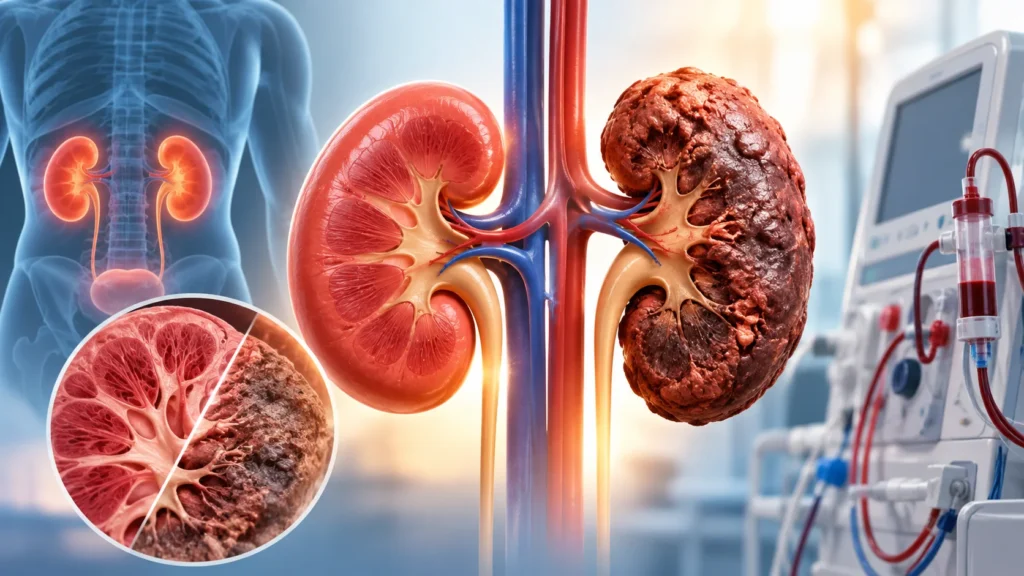
Advanced kidney failure, also called end-stage kidney disease or end-stage renal disease, is a serious condition in which the kidneys lose most of their ability to function. The kidneys normally filter waste, remove extra fluid, balance salts and minerals, control blood pressure, help make red blood cells, and keep bones healthy. When kidney function drops to a very low level, these tasks can no longer be done properly, and waste and fluid build up in the body.
This stage usually develops after years of chronic kidney disease. Many people do not notice early kidney problems because symptoms can be mild or absent at first. By the time kidney failure becomes advanced, patients may experience severe tiredness, swelling, breathlessness, nausea, loss of appetite, confusion, and other complications. Without treatment, advanced kidney failure can be life-threatening.
What is Advanced Kidney Failure?
Advanced kidney failure means the kidneys have lost most of their filtering ability. In medical terms, this is often described as stage 5 chronic kidney disease, where kidney function is less than 15 percent of normal. At this stage, the kidneys cannot remove waste and fluid effectively on their own.
The condition does not usually happen suddenly. It is often the final stage of long-term kidney damage caused by diabetes, high blood pressure, infections, autoimmune diseases, or other kidney disorders. Some people reach this stage quickly due to severe injury or acute illness, but most have a gradual decline over months or years.
When kidney function is this low, the body accumulates toxins and extra fluid. This can affect the heart, lungs, brain, bones, blood, and digestive system. Treatment is needed to replace some of the kidney functions and to manage complications.
Causes of Advanced Kidney Failure
Advanced kidney failure has many possible causes. In most patients, it is the result of long-standing disease that slowly damages the kidneys.
Common causes include:
- Long-term diabetes affecting the kidney filters.
- Uncontrolled high blood pressure damaging kidney blood vessels.
- Chronic glomerulonephritis, which is inflammation of the kidney filters.
- Polycystic kidney disease and other inherited kidney disorders.
- Repeated kidney infections or chronic pyelonephritis.
- Long-term obstruction of urine flow due to stones, enlarged prostate, or strictures.
- Autoimmune diseases such as lupus affecting the kidneys.
- Long-term use of certain painkillers or nephrotoxic medicines.
- Severe acute kidney injury that does not fully recover.
- Diseases of the kidney blood vessels.
Why these conditions lead to kidney failure
Diabetes and high blood pressure are the most common causes worldwide. High sugar levels and high pressure damage the tiny filtering units in the kidneys over time. As more filters are damaged, the remaining ones work harder until they also begin to fail. Infections, autoimmune diseases, and genetic conditions can cause scarring and loss of kidney tissue. Obstruction prevents urine from draining properly, which increases pressure and damages the kidneys.
Risk Factors for Advanced Kidney Failure
Some people are more likely to develop advanced kidney failure than others.
Higher-risk groups
- People with long-standing diabetes.
- People with uncontrolled high blood pressure.
- Older adults.
- People with a family history of kidney disease.
- People with heart disease or blood vessel disease.
- People who smoke.
- People who are obese.
- People with recurrent kidney infections or stones.
- People taking long-term painkillers or certain herbal remedies.
- People with autoimmune diseases.
Why risk increases in these groups
- Diabetes and hypertension directly damage kidney filters and blood vessels.
- Age-related changes reduce kidney reserve.
- Genetics can predispose certain families to kidney disorders.
- Smoking and obesity increase inflammation and vascular damage.
- Recurrent infections and stones cause scarring and obstruction.
- Some medicines are toxic to kidneys when used for long periods.
Symptoms of Advanced Kidney Failure
Symptoms become more noticeable as kidney function declines. In advanced stages, multiple body systems are affected.
Common symptoms include:
- Severe tiredness and weakness.
- Swelling in legs, ankles, feet, and around the eyes.
- Reduced urine output or changes in urine.
- Shortness of breath due to fluid in the lungs.
- Nausea and vomiting.
- Loss of appetite and weight loss.
- Metallic taste in the mouth.
- Itching of the skin.
- Muscle cramps.
- Difficulty sleeping.
- Difficulty concentrating or confusion.
- High blood pressure that is hard to control.
- Pale skin due to anemia.
- Bone pain or fractures in long-standing cases.
Warning signs that need urgent attention
- Severe breathlessness.
- Chest pain or palpitations.
- Confusion or drowsiness.
- Very little or no urine output.
- Severe swelling with rapid weight gain.
- Persistent vomiting and inability to keep fluids down.
- Seizures or loss of consciousness.
How is Advanced Kidney Failure Diagnosed?
Diagnosis is based on symptoms, medical history, physical examination, and blood and urine tests. Imaging and sometimes kidney biopsy may also be needed.
Diagnostic steps
- Detailed history of diabetes, blood pressure, kidney disease, and medicines.
- Review of symptoms such as swelling, breathlessness, and fatigue.
- Physical examination for fluid overload, blood pressure, and signs of anemia.
- Blood tests to measure kidney function and electrolytes.
- Urine tests to check for protein, blood, and infection.
- Imaging such as ultrasound to assess kidney size and structure.
- Additional tests to evaluate heart, bones, and blood if needed.
Common tests that may be done
- Serum creatinine and estimated glomerular filtration rate.
- Blood urea nitrogen.
- Electrolytes including sodium, potassium, calcium, and phosphate.
- Complete blood count to check for anemia.
- Urine albumin or protein measurement.
- Ultrasound of kidneys and urinary tract.
- Tests for diabetes control and blood pressure-related damage.
- Additional immune or genetic tests in selected cases.
Why diagnosis matters
Accurate diagnosis helps determine the cause, stage, and complications of kidney failure. It also guides decisions about dialysis, transplant evaluation, and medical management. Early recognition of advanced kidney failure allows time for planning and preparation.
Treatment for Advanced Kidney Failure
Treatment aims to replace some kidney functions, manage symptoms, prevent complications, and improve quality of life. The main options are dialysis, kidney transplant, and supportive medical care.
1. Dialysis
Dialysis is a treatment that filters waste and extra fluid from the blood when the kidneys can no longer do this adequately.
- Hemodialysis uses a machine to filter blood through an artificial filter.
- Peritoneal dialysis uses the lining of the abdomen to filter blood inside the body.
- Dialysis may be done several times a week depending on the type.
- It helps control fluid, electrolytes, and waste levels.
- It does not cure kidney failure but supports life and symptoms.
2. Kidney Transplant
Kidney transplant is a surgical procedure where a healthy kidney from a donor is placed into the patient’s body.
- It can come from a living donor or a deceased donor.
- It offers the best long-term quality of life for many suitable patients.
- It requires lifelong medicines to prevent rejection.
- Not everyone is eligible due to other health conditions.
- Evaluation is done by a transplant team before surgery.
3. Medical Management
Even with dialysis or transplant planning, medical care remains important.
- Blood pressure control with appropriate medicines.
- Diabetes management to prevent further damage.
- Treatment of anemia with iron and erythropoietin support.
- Management of bone and mineral problems with vitamins and binders.
- Control of fluid and salt intake.
- Treatment of itching, nausea, and other symptoms.
- Vaccination and infection prevention.
4. Supportive and Palliative Care
For some patients, especially those with multiple serious illnesses, the focus may be on comfort and quality of life rather than aggressive treatment.
- Symptom control for pain, breathlessness, and nausea.
- Emotional and spiritual support for patient and family.
- Help with decision-making about dialysis and transplant.
- Coordination with palliative care teams when appropriate.
Dialysis Options in Detail
Dialysis is the most common treatment for advanced kidney failure when transplant is not immediately possible.
Hemodialysis
- Blood is taken out through a needle in an arm access, passed through a dialyzer, and returned to the body.
- Usually done in a dialysis center three times a week.
- Each session lasts several hours.
- Requires a vascular access such as an arteriovenous fistula, graft, or catheter.
- Helps remove waste, correct electrolytes, and control fluid.
Peritoneal Dialysis
- A soft catheter is placed in the abdomen.
- A special fluid is introduced into the abdomen and left for several hours.
- Waste and extra fluid move from blood into the dialysis fluid, which is then drained.
- Can be done at home by the patient or caregiver.
- Offers more flexibility but requires strict hygiene to prevent infection.
Choosing between dialysis types
The choice depends on medical suitability, lifestyle, support at home, and patient preference. Some patients start with hemodialysis and later switch to peritoneal dialysis or vice versa. The nephrologist helps guide this decision based on individual needs.
Kidney Transplant Overview
Kidney transplant is often the best long-term treatment for suitable patients with advanced kidney failure.
Benefits of transplant
- Better quality of life compared to long-term dialysis.
- More freedom from frequent dialysis sessions.
- Improved energy and appetite in many patients.
- Better long-term survival for many recipients.
- More flexible diet and fluid intake in the long run.
Evaluation process
- Detailed medical assessment of heart, lungs, and other organs.
- Blood tests for tissue matching and infection screening.
- Psychological and social evaluation.
- Assessment of donor if a living donor is available.
- Discussion of risks, benefits, and lifelong medicines.
After transplant care
- Lifelong immunosuppressive medicines to prevent rejection.
- Regular follow-up with the transplant team.
- Monitoring for infection, blood pressure, sugar, and kidney function.
- Healthy lifestyle to protect the new kidney.
- Prompt attention to any signs of infection or rejection.
Diet and Lifestyle Support
Diet and lifestyle play a major role in managing advanced kidney failure, whether on dialysis, waiting for transplant, or on supportive care.
Diet pointers
- Control fluid intake as advised by the nephrologist.
- Limit salt to help control blood pressure and swelling.
- Adjust protein intake based on dialysis status and nutrition needs.
- Monitor potassium-rich foods if potassium levels are high.
- Limit phosphate-rich foods if phosphate is elevated.
- Eat small, frequent meals if appetite is poor.
- Avoid over-the-counter painkillers and herbal remedies without advice.
Lifestyle pointers
- Take all prescribed medicines regularly.
- Keep blood pressure and sugar under control.
- Attend all dialysis sessions on time if on dialysis.
- Maintain good access site hygiene for dialysis.
- Stay up to date with recommended vaccines.
- Avoid smoking and limit alcohol.
- Report new symptoms such as fever, swelling, or breathlessness early.
Possible Complications
Advanced kidney failure can affect many organs and systems.
Common complications
- Fluid overload leading to swelling and breathlessness.
- High potassium levels affecting heart rhythm.
- Severe anemia causing fatigue and weakness.
- Bone disease with pain and fracture risk.
- Nerve damage causing numbness and tingling.
- Increased infection risk due to weak immunity.
- Heart and blood vessel disease.
- Malnutrition and weight loss.
- Itching and sleep disturbance.
- Emotional distress, anxiety, or depression.
Why complications happen
When kidneys fail, waste and fluid accumulate, salts become imbalanced, and hormones made by the kidneys drop. This affects the heart, blood, bones, nerves, and immune system. Dialysis and medicines help, but careful monitoring is still needed.
When to See a Doctor
Regular nephrology follow-up is essential for anyone with advanced kidney disease or kidney failure.
- Increasing swelling in legs or face.
- Worsening breathlessness.
- Persistent nausea or vomiting.
- Very low urine output.
- Severe fatigue or confusion.
- Uncontrolled blood pressure.
- New chest pain or palpitations.
- Signs of infection at dialysis access site.
Prevention of Progression to Advanced Kidney Failure
While advanced kidney failure may not always be preventable, progression can often be slowed.
Prevention pointers
- Control blood sugar strictly if you have diabetes.
- Keep blood pressure within target range.
- Take kidney-protective medicines as prescribed.
- Avoid long-term use of painkillers without supervision.
- Treat kidney infections promptly.
- Maintain a healthy weight and stay active.
- Stop smoking and limit alcohol.
- Get regular kidney function tests if you are at risk.
- Follow up with a nephrologist for chronic kidney disease.
For high-risk patients
People with diabetes, hypertension, or family history should have periodic checks of kidney function, urine protein, blood pressure, and sugar. Early treatment can delay or prevent progression to advanced stages.
Why Choose Rama Hospital for Advanced Kidney Failure Care?
Advanced kidney failure needs expert nephrology care, access to dialysis, transplant evaluation, and management of multiple complications. A hospital with a dedicated kidney care team can provide comprehensive support.
- Experienced nephrologists and kidney specialists.
- Modern dialysis units with infection control.
- Transplant evaluation and coordination services.
- Management of anemia, bone disease, and heart issues.
- Dietician and counselor support.
- Emergency care for complications such as high potassium or fluid overload.
Frequently Asked Questions (FAQs)
What are the main causes of advanced kidney failure?
The most common causes are long-standing diabetes and high blood pressure. Other causes include chronic kidney infections, autoimmune diseases, genetic kidney disorders, and long-term use of certain medicines that damage the kidneys.
Can advanced kidney failure be cured?
Advanced kidney failure itself cannot be cured, but it can be managed. Dialysis replaces some kidney functions, and kidney transplant can restore near-normal kidney function in suitable patients. Medical care helps control symptoms and complications.
Is dialysis the only treatment option?
No, dialysis is one option. Kidney transplant is another option for eligible patients and often offers better long-term quality of life. Some patients may choose supportive care focused on comfort depending on their overall health and preferences.
How long can a person live on dialysis?
Life expectancy on dialysis varies based on age, other health conditions, and how well complications are managed. Many people live for years on dialysis with good care. Transplant generally offers better long-term survival for suitable candidates.
Can a person work while on dialysis?
Yes, many people continue to work while on dialysis, especially if their job is not physically demanding. Dialysis schedules can often be planned around work. Peritoneal dialysis offers more flexibility for some patients.
What is the difference between hemodialysis and peritoneal dialysis?
Hemodialysis filters blood through a machine, usually in a center, several times a week. Peritoneal dialysis uses the lining of the abdomen to filter blood inside the body and can be done at home daily. The choice depends on medical and lifestyle factors.
Can kidney transplant fail?
Yes, a transplanted kidney can fail over time due to rejection, infection, or other causes. Lifelong medicines and regular follow-up reduce this risk. If a transplant fails, dialysis or another transplant may be considered.
What diet is recommended for advanced kidney failure?
Diet is individualized based on dialysis status, blood tests, and other conditions. Common advice includes controlling fluid, salt, potassium, and phosphate, and adjusting protein intake. A renal dietician can provide a personalized plan.
Conclusion
Advanced kidney failure is a serious condition in which the kidneys lose most of their ability to filter waste and control fluid. It affects multiple body systems and requires long-term medical care. The main treatment options are dialysis and kidney transplant, along with careful management of blood pressure, diabetes, anemia, bone health, and other complications.
With proper diagnosis, timely treatment, and regular follow-up, many patients can live meaningful lives despite advanced kidney failure. Early planning for dialysis or transplant, attention to diet and lifestyle, and strong medical support can improve outcomes and quality of life. For patients with worsening kidney function, swelling, breathlessness, or fatigue, specialist evaluation is essential.
Rama Hospital can provide comprehensive nephrology care for advanced kidney failure, including dialysis services, transplant evaluation, complication management, diet support, and long-term follow-up to help patients and families navigate this condition with confidence.