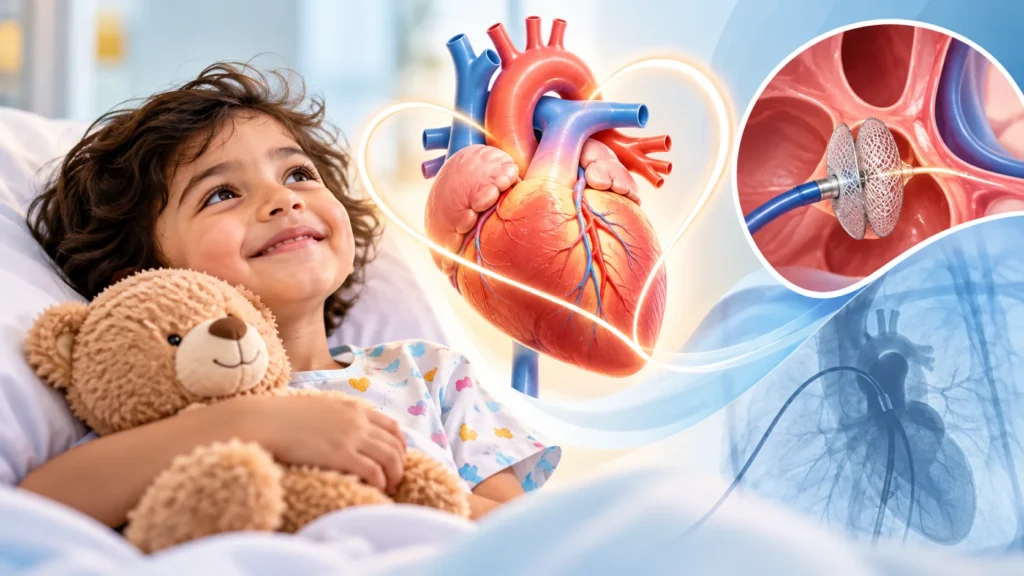
Pediatric cardiology interventions refer to specialized medical and surgical treatments for heart conditions in infants, children, and adolescents. Unlike adult heart disease, which is often related to lifestyle or aging, congenital and acquired heart problems in children are usually structural or functional abnormalities present from birth or developing during childhood. These conditions can affect how the heart pumps blood, how valves function, or how blood flows through the heart and lungs.
The field of pediatric cardiology has advanced significantly in recent years. Many heart defects that were once considered fatal can now be treated successfully with minimally invasive catheter procedures, advanced imaging, and specialized surgery. Early diagnosis and timely intervention can allow children to grow, study, play, and live full lives with minimal restrictions.
What are Pediatric Cardiology Interventions?
Pediatric cardiology interventions are specialized treatments designed to diagnose and manage heart conditions in children. These interventions may be non-invasive, minimally invasive, or surgical, depending on the type and severity of the heart defect.
The goal of these interventions is to restore normal or near-normal heart function, improve blood flow, prevent complications, and support healthy growth and development. Some children need only monitoring and medication. Others may require catheter-based procedures or open-heart surgery. In many cases, a combination of approaches is used over time as the child grows.
Pediatric cardiology teams include pediatric cardiologists, pediatric cardiac surgeons, anesthesiologists, intensivists, nurses, and rehabilitation specialists who work together to provide comprehensive care from diagnosis through long-term follow-up.
Common Heart Conditions in Children
In pediatric cardiology interventions many heart conditions in children are congenital, meaning they are present at birth. Others may develop later due to infection, inflammation, or other causes.
Common congenital heart defects
- Ventricular septal defect, which is a hole between the lower chambers of the heart.
- Atrial septal defect, which is a hole between the upper chambers.
- Patent ductus arteriosus, where a fetal blood vessel fails to close after birth.
- Tetralogy of Fallot, a combination of four heart defects affecting blood flow.
- Coarctation of the aorta, which is narrowing of the main artery from the heart.
- Pulmonary stenosis, where the valve to the lungs is narrowed.
- Aortic stenosis, where the valve to the body is narrowed.
- Transposition of the great arteries, where the main vessels are switched.
- Hypoplastic left heart syndrome, where the left side of the heart is underdeveloped.
- Complex single ventricle defects requiring staged surgical care.
Acquired heart conditions in children
- Rheumatic heart disease affecting valves after streptococcal infection.
- Cardiomyopathy, where the heart muscle becomes weak or thickened.
- Arrhythmias, where the heart rhythm is abnormal.
- Myocarditis, inflammation of the heart muscle due to infection.
- Kawasaki disease affecting coronary arteries.
- Heart problems secondary to other genetic or systemic conditions.
Symptoms of Heart Problems in Children
Symptoms in pediatric cardiology interventions vary depending on the type and severity of the heart defect. Some children show signs soon after birth, while others may appear healthy for months or years.
Symptoms in infants
- Bluish discoloration of lips, tongue, or skin.
- Rapid or difficult breathing.
- Poor feeding or tiring during feeds.
- Sweating while feeding.
- Poor weight gain or failure to thrive.
- Excessive sleepiness or irritability.
- Frequent respiratory infections.
Symptoms in older children
- Shortness of breath during activity.
- Fatigue or tiring easily compared to peers.
- Chest pain or discomfort.
- Fainting or dizziness.
- Palpitations or irregular heartbeat.
- Swelling in legs, feet, or abdomen.
- Poor exercise tolerance.
- Heart murmur detected during routine check-up.
Emergency warning signs
- Severe breathing difficulty.
- Blue or gray skin color.
- Fainting or collapse.
- Extreme lethargy or unresponsiveness.
- Rapid heartbeat with distress.
- Cold, clammy skin with poor feeding in infants.
Diagnosis of Pediatric Heart Conditions
Accurate diagnosis in pediatric cardiology interventions is the first step toward effective treatment. Pediatric cardiologists use a combination of clinical evaluation and advanced imaging to understand the heart structure and function.
Diagnostic steps
- Detailed history of symptoms and pregnancy.
- Family history of heart defects or genetic conditions.
- Physical examination including heart sounds and pulses.
- Measurement of oxygen saturation in blood.
- Assessment of growth and development.
Common tests that may be done
- Echocardiogram, which is an ultrasound of the heart and the most important test.
- Electrocardiogram to assess heart rhythm and electrical activity.
- Chest X-ray to evaluate heart size and lung blood flow.
- Pulse oximetry to measure oxygen levels.
- Blood tests to check for infection, anemia, or genetic markers.
- Cardiac MRI or CT scan for detailed anatomy in complex cases.
- Cardiac catheterization to measure pressures and visualize blood flow.
Why diagnosis matters
Early and accurate diagnosis in pediatric cardiology interventions allows the medical team to plan the right intervention at the right time. Some defects need immediate treatment after birth, while others can be monitored and treated later. Proper diagnosis also helps predict long-term outcomes and guide family counseling.
Treatment Options for Pediatric Heart Conditions
Treatment depends on the type of defect, severity, symptoms, and the child’s overall health. Not all heart defects require surgery.
1. Observation and monitoring
Some mild defects may not need immediate treatment in pediatric cardiology interventions.
- Small holes in the heart may close on their own.
- Mild valve narrowing may only need regular follow-up.
- The child is monitored for growth, symptoms, and heart function.
- Intervention is planned only if the condition worsens.
2. Medication management
Medicines can help manage symptoms and support heart function in pediatric cardiology interventions.
- Diuretics to reduce fluid overload.
- Medicines to support heart pumping.
- Drugs to control heart rhythm.
- Medicines to keep certain blood vessels open in newborns.
- Antibiotics in selected cases to prevent infection.
3. Catheter-based interventions
Many heart defects can now be treated without open surgery using catheter procedures in pediatric cardiology interventions.
- Closure of atrial septal defect using a device.
- Closure of ventricular septal defect in selected cases.
- Closure of patent ductus arteriosus with a coil or device.
- Balloon valvuloplasty to open narrowed valves.
- Balloon angioplasty to widen narrowed blood vessels.
- Stent placement to keep vessels open.
- Electrophysiology studies and ablation for arrhythmias.
4. Surgical interventions
Some complex defects require open-heart surgery in pediatric cardiology interventions.
- Repair of septal defects using patches.
- Reconstruction of heart valves.
- Correction of Tetralogy of Fallot.
- Repair of coarctation of the aorta.
- Arterial switch operation for transposition.
- Staged surgeries for single ventricle hearts.
- Heart transplantation in selected severe cases.
5. Hybrid procedures
Some children benefit from a combination of catheter and surgical approaches in pediatric cardiology interventions.
- Minimally invasive techniques combined with surgery.
- Reduced operative time and faster recovery in some cases.
- Tailored approach based on anatomy and risk.
Catheter-Based Procedures in Detail
Catheter-based interventions are minimally invasive procedures performed through small punctures in the groin or neck in pediatric cardiology interventions.
Common catheter procedures
- ASD closure, where a device is placed to seal the hole between upper chambers.
- VSD closure in selected muscular defects.
- PDA closure using coils or devices to block the abnormal vessel.
- Pulmonary valve balloon valvuloplasty to relieve narrowing.
- Aortic valve balloon valvuloplasty in selected cases.
- Coarctation angioplasty and stenting to widen the narrowed aorta.
- Arrhythmia ablation to correct abnormal electrical pathways.
Benefits of catheter procedures
- No large surgical incision.
- Shorter hospital stay.
- Faster recovery and return to normal activity.
- Less pain and scarring.
- Suitable for many defects in appropriate candidates.
Risks and considerations
- Bleeding or bruising at the puncture site.
- Device movement or residual defect in rare cases.
- Need for repeat procedure in some children.
- Careful patient selection is essential for safety.
Surgical Interventions in Detail
Open-heart surgery is needed for complex defects that cannot be treated with catheters alone in pediatric cardiology interventions.
Common surgical procedures
- Patch closure of atrial or ventricular septal defects.
- Complete repair of Tetralogy of Fallot.
- Repair or replacement of heart valves.
- Reconstruction of blood vessels and chambers.
- Arterial switch for transposition of great arteries.
- Norwood, Glenn, and Fontan procedures for single ventricle hearts.
- Heart transplant for end-stage heart failure.
Surgical approach
- Performed under general anesthesia.
- Heart-lung machine supports circulation during surgery.
- Chest is opened through the breastbone in most cases.
- Defect is repaired using patches, sutures, or reconstructed tissue.
- Chest is closed and child is monitored in intensive care.
Risks and considerations
- Bleeding, infection, or reaction to anesthesia.
- Arrhythmias or need for pacemaker in some cases.
- Need for reoperation as the child grows.
- Long-term follow-up is essential for best outcomes.
Recovery After Interventions
Recovery depends on the type of procedure, the child’s age, and overall health in pediatric cardiology interventions.
Recovery after catheter procedures
- Hospital stay is usually one to two days.
- Puncture site is monitored for bleeding or swelling.
- Child can usually resume normal activity within a few days.
- Follow-up echocardiogram is done to check results.
Recovery after surgery
- Intensive care stay for a few days after surgery.
- Gradual transition to regular ward.
- Pain management and breathing exercises.
- Wound care and infection prevention.
- Gradual increase in activity over weeks.
Long-term care
- Regular follow-up with pediatric cardiologist.
- Echocardiograms and tests at recommended intervals.
- Medication adjustment as needed.
- Monitoring for growth, development, and exercise tolerance.
- Vaccination and infection prevention guidance.
Possible Complications
While most interventions are successful, some risks exist in pediatric cardiology interventions.
Possible complications
- Bleeding or infection at procedure site.
- Arrhythmias or heart block.
- Residual defect requiring further treatment.
- Device-related issues in catheter procedures.
- Scarring or chest wall changes after surgery.
- Need for reoperation in some complex cases.
Why complications happen
- Complexity of the heart defect.
- Underlying health conditions.
- Individual variation in healing.
- Growth-related changes requiring further intervention.
When to See a Pediatric Cardiologist
Early evaluation is important for children with suspected heart problems in pediatric cardiology interventions.
- Heart murmur detected by a doctor.
- Bluish discoloration of lips or skin.
- Breathing difficulty or rapid breathing.
- Poor feeding or weight gain in infants.
- Fainting, dizziness, or chest pain.
- Palpitations or irregular heartbeat.
- Family history of congenital heart disease.
- Known genetic syndrome with heart involvement.
Prevention and Risk Reduction
Not all heart defects can be prevented, but some risks can be reduced.
Prevention pointers
- Good prenatal care during pregnancy.
- Avoidance of alcohol, smoking, and harmful drugs during pregnancy.
- Control of maternal diabetes and other conditions.
- Rubella vaccination before pregnancy.
- Early screening for high-risk pregnancies.
- Genetic counseling for families with history of heart defects.
For children with known heart defects
- Regular follow-up with pediatric cardiologist.
- Adherence to medication and treatment plans.
- Infection prevention and timely vaccination.
- Balanced nutrition and appropriate activity.
- Dental care to reduce risk of heart infection.
Why Choose Rama Hospital for Pediatric Cardiology Interventions?
Pediatric heart care requires specialized expertise, advanced technology, and a child-friendly environment. A dedicated pediatric cardiology program can provide comprehensive care from diagnosis through long-term follow-up.
- Expert evaluation by pediatric cardiologists and surgeons.
- Advanced imaging and catheterization facilities.
- Dedicated pediatric cardiac intensive care.
- Multidisciplinary team approach.
- Long-term follow-up and rehabilitation support.
- Family education and counseling.
Frequently Asked Questions (FAQs)
Are all heart defects in children serious?
No, not all heart defects are serious. Some pediatric cardiology interventions are mild and may close on their own or need only monitoring. Others require intervention. The severity depends on the type of defect and its effect on heart function.
Can heart defects be treated without surgery?
Yes, many heart defects can be treated with catheter-based procedures that do not require open surgery. Examples include closure of holes in the heart, balloon valvuloplasty, and stent placement.
How long does recovery take after heart intervention?
Recovery time varies by procedure. Catheter procedures in pediatric cardiology interventions often need one to two days in hospital. Open-heart surgery may need one to two weeks in hospital and several weeks for full recovery at home.
Will my child need follow-up after treatment?
Yes, long-term follow-up with a pediatric cardiologist is essential. Regular check-ups, echocardiograms, and monitoring ensure the heart in pediatric cardiology interventions is functioning well and detect any issues early.
Can children with heart defects live normal lives?
Many children with treated heart defects go on to live active, normal lives in pediatric cardiology interventions. They can attend school, play, and participate in activities with appropriate medical guidance and follow-up.
Is pediatric heart surgery safe?
Pediatric heart surgery is generally safe when performed by experienced teams in specialized centers. Risks exist but are carefully managed with modern techniques and intensive care support in pediatric cardiology interventions.
What should parents watch for after intervention?
Parents should monitor for fever, wound redness, breathing difficulty, excessive tiredness, or changes in feeding or activity in pediatric cardiology interventions. Any concerning symptoms should be reported to the doctor promptly.
Conclusion
Pediatric cardiology interventions have transformed the outlook for children with heart conditions. Many defects that were once life-limiting can now be diagnosed early and treated effectively with catheter procedures, surgery, and comprehensive medical care. With timely intervention, most children can grow, learn, and thrive with good quality of life.
The most important steps are early recognition of symptoms, accurate diagnosis, treatment by a specialized pediatric cardiology team, and long-term follow-up. For parents concerned about heart murmur, breathing issues, poor growth, or known heart defects, specialist evaluation can make a major difference. With expert care, children can achieve the best possible heart health and future potential.
Rama Hospital can provide comprehensive pediatric cardiology services, from diagnosis and counseling to advanced interventions and long-term care, supporting children and families through every step of the heart care journey.