Festivals are meant to be enjoyed. Families come together, homes are filled with food, friends visit, celebrations run late into the night, and routines temporarily take a back seat.
But somewhere between the sweets, heavy meals, travel, late nights and packed schedules, your health can also take a hit.
A few days of overeating may leave you with acidity or indigestion. Too many sweets can affect blood sugar. Dehydration can cause headaches and weakness, while lack of sleep can leave you exhausted even after the celebrations are over. For people with existing conditions such as diabetes, heart disease, hypertension or digestive problems, these changes in routine can sometimes be more than just uncomfortable.
That does not mean you need to avoid festive food or celebrations.
The goal is balance.
Understanding the common health problems during the festive season can help you enjoy celebrations without turning a few happy days into several days of illness.
What Makes the Festive Season Hard on Your Health?
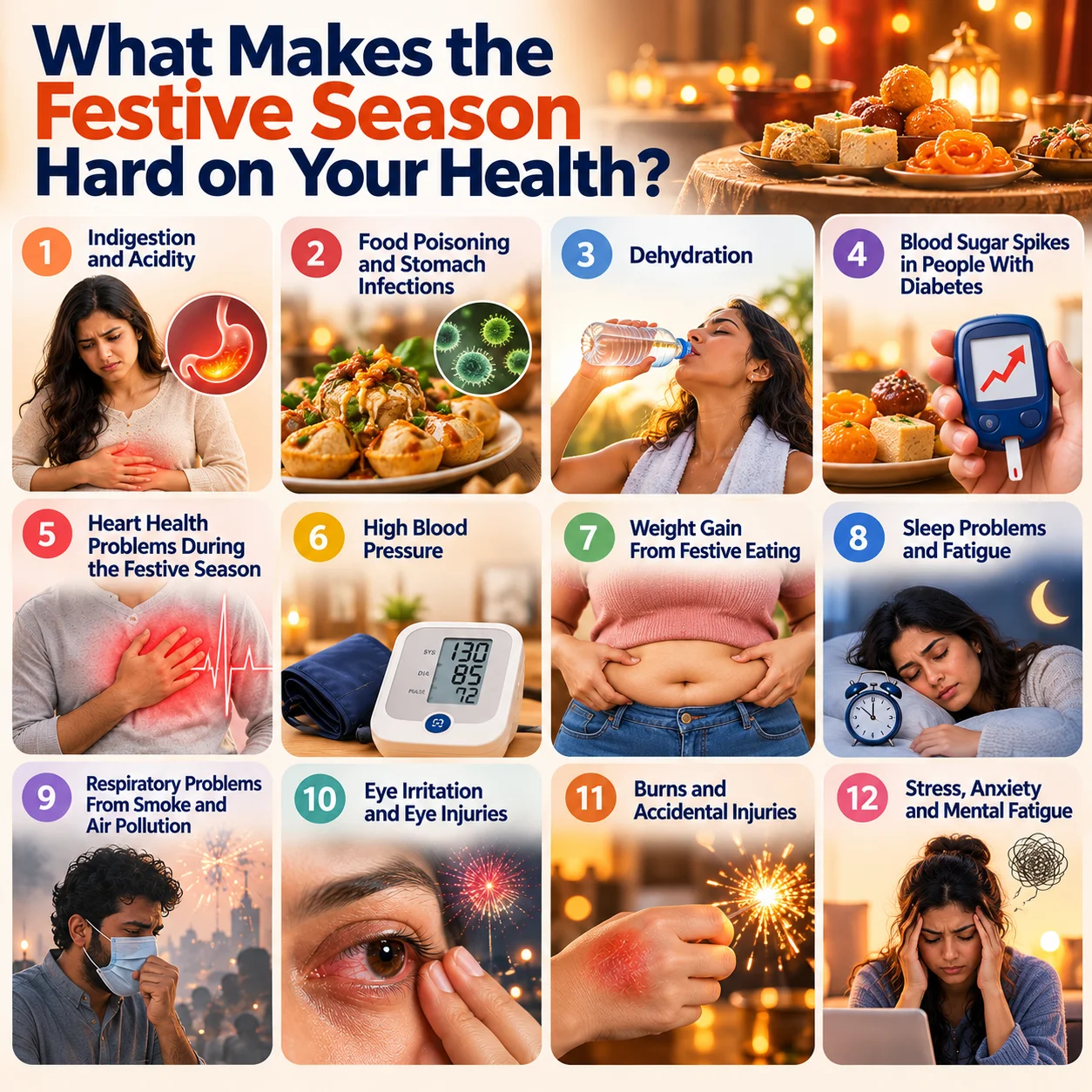
1. Indigestion and Acidity
Indigestion is one of the most common complaints after heavy festive meals can cause health problems.
Festive menus often include rich gravies, fried snacks, sweets, spicy foods and larger portions. Eating several such foods close together can put additional strain on the digestive system.
You may experience:
- Bloating
- Stomach discomfort
- Belching
- Feeling unusually full
- Heartburn
- Nausea
- Acid reflux
Eating late at night and lying down soon after a heavy meal may make reflux symptoms worse in some people.
2. Food Poisoning and Stomach Infections
Food is an important part of almost every celebration but lead to health problems. Unfortunately, large gatherings can also increase the risk of food contamination when food is prepared, stored or handled improperly.
Food poisoning can occur after consuming contaminated food or water.
Symptoms may include:
- Nausea
- Vomiting
- Loose stools
- Abdominal cramps
- Fever
- Weakness
- Dehydration
Symptoms can range from mild to severe depending on the cause and the individual.
Why does the risk increase during festivals?
Large quantities of food may be prepared several hours before they are eaten can cause common health problem. Food may also be transported, kept at unsuitable temperatures or handled by multiple people.
If vomiting or diarrhoea is severe or persistent, especially when accompanied by signs of dehydration, seek medical advice.
3. Dehydration
Festive celebrations can make people surprisingly careless about drinking water.
You may spend hours travelling, shopping, visiting relatives or attending outdoor events without noticing that you have not had enough fluids can cause common health problem.
Dehydration can cause:
- Thirst
- Dry mouth
- Headache
- Dizziness
- Fatigue
- Dark-coloured urine
- Reduced urination
Older adults, children and people with certain medical conditions may be more vulnerable to dehydration.
4. Blood Sugar Spikes in People With Diabetes
Festivals can be particularly challenging for people living with diabetes.
Sweets, desserts, sugary drinks and irregular meal timings can make blood glucose management more difficult.
A person may think: “It’s only a few days.”
But several days of overeating can make it harder to maintain normal blood sugar levels.
If you use insulin or other diabetes medication, do not change your dose simply because you ate more than usual unless your healthcare professional has given you a specific plan.
Persistent high or low blood sugar symptoms should not be ignored.
5. Heart Health Problems During the Festive Season
For most people, enjoying a festive meal does not cause a heart problem.
However, festivals can involve several factors that may be challenging for people with existing cardiovascular disease, heavy meals, excessive salt, poor sleep, stress, dehydration and missed medication.
People with diabetes, high blood pressure, high cholesterol or known heart disease should be particularly careful about maintaining their usual treatment and lifestyle routine.
6. High Blood Pressure
Festive meals can sometimes contain considerably more salt than your usual diet.
Pickles, packaged snacks, savoury mixtures, fried foods, restaurant meals and processed foods can all contribute to higher sodium intake.
Stress, lack of sleep and missed medication can also affect blood pressure management.
7. Weight Gain From Festive Eating
Festivals often mean eating more frequently than normal.
Breakfast may be followed by snacks, sweets, lunch, another round of snacks and a large dinner.
A few days of indulgence may not seem significant, but frequent overeating can contribute to weight gain, especially when combined with reduced physical activity.
You don’t need to “diet” through the festival
Instead, use portion control.
A simple approach is: Enjoy → Portion → Pause → Decide
Take a reasonable portion of the foods you really want rather than taking everything available. Eat slowly and give your body time to recognise fullness. You can enjoy festive food without turning every meal into a feast.
8. Sleep Problems and Fatigue
Late-night gatherings, travel, parties and social events can disrupt your normal sleep schedule.
One or two late nights may be manageable for many people, but repeated sleep deprivation can leave you feeling:
- Tired
- Irritable
- Less focused
- Headachy
- Physically drained
Poor sleep can also make it harder to maintain healthy eating habits because tiredness may increase cravings for high-calorie foods.
9. Respiratory Problems From Smoke and Air Pollution
Festivals that involve fireworks can expose people to smoke and particulate matter.
This can irritate the respiratory system and may be particularly problematic for people with asthma, chronic respiratory disease or other breathing difficulties.
You may experience:
- Cough
- Throat irritation
- Wheezing
- Breathlessness
- Burning or irritation in the nose
People with asthma should continue their prescribed treatment and follow their individual action plan.
10. Eye Irritation and Eye Injuries
Eyes can also be affected during festivals.
Smoke can cause irritation, redness and watering. Fireworks can also cause serious eye injuries if they explode too close to the face.
Protect your eyes
- Maintain a safe distance from fireworks.
- Never point fireworks toward another person.
- Do not allow children to handle fireworks without responsible adult supervision.
- Avoid touching or rubbing irritated eyes.
- Use protective eyewear when appropriate for activities with a risk of eye injury.
If a chemical, spark or foreign object enters the eye, do not rub the eye. Seek appropriate medical care.
Sudden vision loss, severe eye pain or significant injury requires urgent ophthalmic evaluation.
11. Burns and Accidental Injuries
Burns are another preventable festive-season health problem.
Candles, diyas, fireworks, hot cooking oil and kitchen appliances can all cause burns.
Children are particularly vulnerable because they may not understand the danger associated with flames or fireworks.
Simple precautions can make a big difference
- Keep children away from open flames.
- Place lamps and candles on stable surfaces.
- Keep loose clothing away from fire.
- Keep water or an appropriate fire-safety measure readily available.
- Never leave burning candles or diyas unattended.
- Follow fireworks safety instructions.
- Keep flammable materials away from flames.
For a significant burn, seek medical attention instead of relying only on home remedies.
12. Stress, Anxiety and Mental Fatigue
Festivals are often described as happy occasions, but they can also be stressful.
Shopping, travel, financial pressure, family responsibilities, social commitments and long working hours can leave people mentally exhausted.
Some people may also feel lonely or emotionally overwhelmed during a period when everyone around them appears to be celebrating.
How to Stay Healthy During the Festive Season: 10 Simple Rules
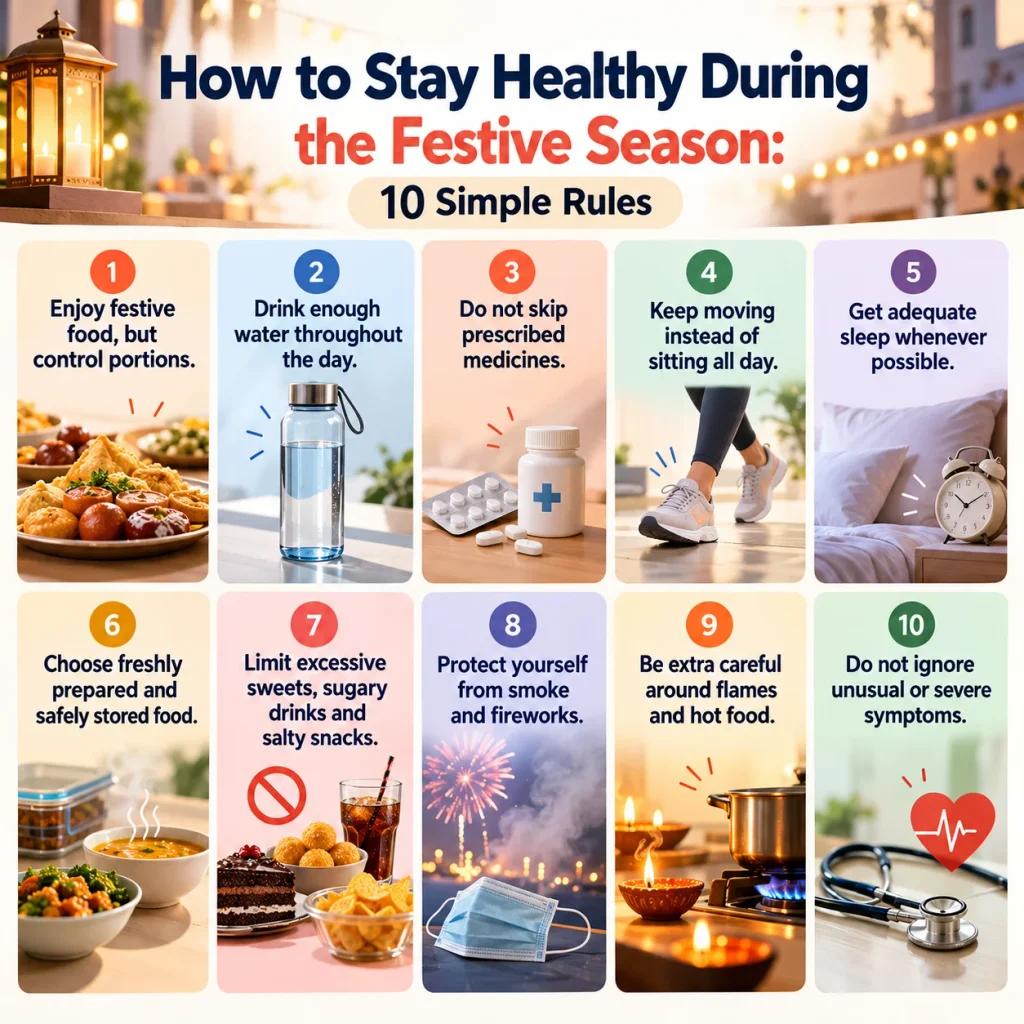
You do not need a complicated health plan to enjoy the festivities. The goal is not to make festivals restrictive.
It is to prevent avoidable health problems from taking away the enjoyment of the season.
Keep these simple habits in mind:
- Enjoy festive food, but control portions.
- Drink enough water throughout the day.
- Do not skip prescribed medicines.
- Keep moving instead of sitting all day.
- Get adequate sleep whenever possible.
- Choose freshly prepared and safely stored food.
- Limit excessive sweets, sugary drinks and salty snacks.
- Protect yourself from smoke and fireworks.
- Be extra careful around flames and hot food.
- Do not ignore unusual or severe symptoms.
What Should People With Existing Health Conditions Keep in Mind?
If you already have a chronic health condition, a little additional planning can help you celebrate safely.
- If you have diabetes: Watch your portions, monitor your blood sugar as advised and continue your prescribed treatment.
- If you have heart disease: Avoid excessive salt and heavy meals, continue your medicines and do not ignore chest discomfort or breathlessness.
- If you have high blood pressure: Limit salty and processed foods and continue monitoring your blood pressure if recommended.
- If you have asthma or another respiratory condition: Minimise exposure to smoke and pollution and keep your prescribed medicines available.
- If you have digestive problems: Avoid foods that you know trigger your symptoms and be cautious with very large or late-night meals.
If you are unsure about what is safe for your condition, speak with your doctor before making significant changes to your diet or medication.
How Can a Health Checkup Help Before or After the Festive Season?
A routine health checkup can be useful if you have ongoing health concerns or risk factors.
Depending on your age, medical history and symptoms, your doctor may recommend checking areas such as:
- Blood pressure
- Blood sugar
- Cholesterol
- Weight and BMI
- Heart health
- Digestive health
- Other condition-specific parameters
A health checkup in Noida can help identify certain health concerns early, particularly if you have not had a routine evaluation for some time.
However, a routine checkup is not a substitute for emergency care when serious symptoms occur.
Frequently Asked Questions (FAQs)
1. What are the most common health problems during the festive season?
Some common festive season health problems include indigestion, acidity, food poisoning, dehydration, blood sugar fluctuations, weight gain, sleep disruption, respiratory irritation, minor injuries and stress.
People with existing conditions such as diabetes, heart disease or asthma may need additional precautions.
2. How can I avoid indigestion during festivals?
Keep portions moderate, eat slowly, avoid repeatedly eating heavy or fried foods, drink adequate water and avoid lying down immediately after a large meal. If you frequently experience severe or persistent acidity, consult a doctor.
3. Can festive foods increase blood sugar?
Yes. Sweets, sugary beverages and large portions of carbohydrate-rich foods can raise blood glucose. People with diabetes should follow their prescribed diet and treatment plan and monitor their blood sugar as advised.
4. How can I prevent food poisoning during festivals?
Choose freshly prepared food, maintain good hand hygiene, drink safe water and avoid food that has been improperly stored or left at unsafe temperatures for prolonged periods.
5. Can festivals affect heart health?
Changes in diet, sleep, physical activity and medication routines may affect people with existing cardiovascular conditions. Anyone experiencing chest pressure, severe breathlessness, fainting or other possible heart-attack symptoms should seek urgent medical care.
6. How can I stay hydrated during festivals?
Drink water regularly throughout the day, particularly when travelling or spending time outdoors. Do not rely entirely on sugary drinks for hydration.
People who have been advised to restrict fluids should follow their doctor’s instructions.
7. Should people with diabetes avoid sweets completely during festivals?
People with diabetes should discuss their individual dietary needs with their healthcare professional. In general, portion control and overall meal planning are more useful than assuming that festive foods are automatically safe or unsafe.
8. Why do I feel tired after festivals?
Late nights, disrupted sleep, travel, heavy meals, dehydration and a busy schedule can all contribute to post-festival fatigue. Returning gradually to your normal sleep, eating and activity routine can help.
Conclusion
Festivals should not come with a choice between celebrating and staying healthy.
You can enjoy your favourite food, meet your family, travel, attend gatherings and participate in traditions while still taking care of your health.
The key is moderation and awareness.
Eat mindfully. Drink enough water. Sleep when you can. Stay active. Continue your medicines. Be careful around fireworks and flames. And most importantly, do not dismiss serious symptoms as “just because of the festival.”
If you have a chronic health condition or notice symptoms that concern you, speaking with a doctor can help you understand what needs attention.
For patients looking for a multispeciality hospital in Noida, timely medical evaluation can help manage both routine health concerns and conditions that require specialist care. Rama Hospital provides access to multiple specialties, including internal medicine, cardiology, gastroenterology and emergency care.
This festive season, celebrate the moments, but don’t put your health on hold.