Acne scars are one of the most common and emotionally distressing skin concerns, especially among teenagers and young adults. While acne itself can be frustrating, the marks and scars that remain after pimples heal can affect confidence, self-esteem, and social interactions for years. Many people mistake acne scars for simple dark spots, but true scars involve changes in the skin texture and depth, not just color.
Acne scars form when the skin’s healing process after acne is disrupted. In some cases, the skin produces too little collagen, leading to depressed or pitted scars. In other cases, the skin produces too much collagen, leading to raised or thickened scars. The type of scar, skin tone, severity of acne, and how the acne was managed all influence how scars develop.
What are Acne Scars?
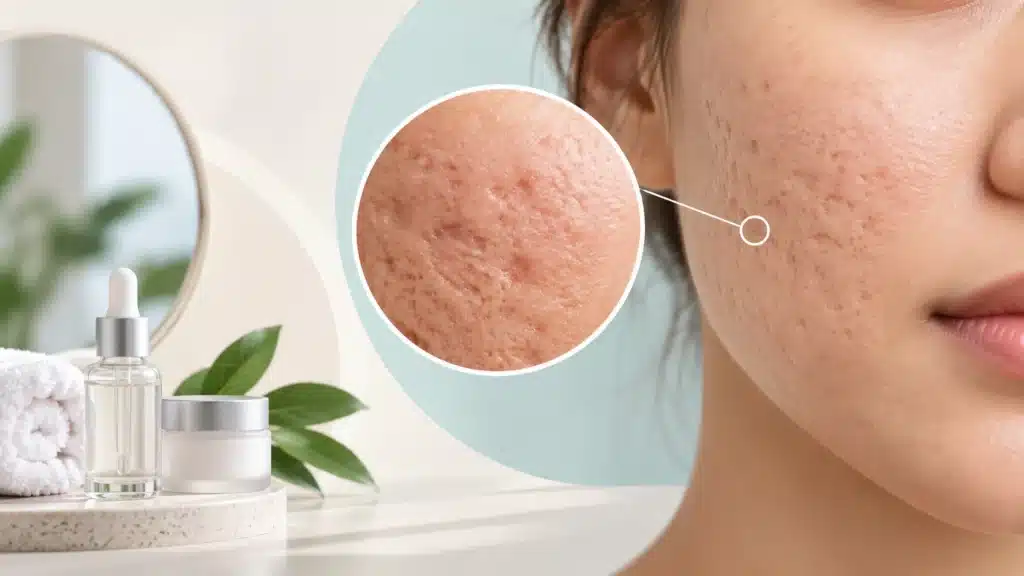
Acne scars are permanent changes in the skin texture that remain after acne lesions heal. Unlike post-acne dark spots or red marks, which are temporary and fade over time, true scars involve structural changes in the deeper layers of the skin.
When a pimple or cyst heals, the body tries to repair the damaged tissue by producing collagen. If too little collagen is made, the skin sinks and forms a depressed scar. If too much collagen is made, the skin becomes raised and thick. The result is an uneven skin surface that can be visible even when active acne is under control.
Acne scars can affect the face, neck, chest, back, and shoulders. They may appear as small pits, deep holes, rolling waves, ice-pick marks, or raised lumps. The emotional impact can be significant, with many patients feeling self-conscious, avoiding social situations, or struggling with low confidence.
Types of Acne Scars
Acne scars are broadly divided into two main categories based on how the skin heals.
Depressed or atrophic scars
These scars form when the skin loses tissue during healing. They are more common and appear as pits or indentations.
- Ice-pick scars, which are narrow, deep, and look like small holes.
- Boxcar scars, which are wider with sharp edges and look like small depressions.
- Rolling scars, which create a wavy or uneven texture due to fibrous bands under the skin.
- Mixed atrophic scars, where more than one type is present.
Raised or hypertrophic scars
These scars form when the skin produces excess collagen during healing. They appear as thickened, raised areas.
- Hypertrophic scars, which stay within the boundary of the original acne lesion.
- Keloid scars, which grow beyond the original area and can become large and firm.
- Raised scars on chest, back, and jawline are more common in certain skin types.
Post-acne marks versus true scars
It is important to distinguish between scars and marks.
- Post-inflammatory hyperpigmentation appears as brown or dark spots and fades over months.
- Post-inflammatory erythema appears as red or pink marks and also fades with time.
- True scars involve texture change and do not fade on their own without treatment.
Causes of Acne Scars
Acne scars result from a combination of acne severity, skin type, healing response, and external factors.
Common causes include:
- Severe or cystic acne that damages deeper skin layers.
- Delayed or inadequate acne treatment.
- Picking, squeezing, or scratching pimples.
- Repeated inflammation in the same area.
- Genetic tendency to scar.
- Certain skin types that are more prone to pigmentation or keloids.
- Sun exposure that worsens marks and delays healing.
- Poor skincare habits that irritate the skin.
Why scarring happens
When acne lesions are deep and inflamed, they damage the collagen and elastic fibers in the skin. The body’s repair process may not restore the skin perfectly. If the repair is weak, depressed scars form. If the repair is excessive, raised scars form. The longer the inflammation lasts, the higher the chance of scarring.
Risk Factors for Acne Scars
Some people are more likely to develop acne scars than others.
Higher-risk groups
- People with severe or cystic acne.
- Those who delay acne treatment.
- Individuals who pick or squeeze pimples.
- People with a family history of scarring.
- Certain skin types prone to keloids or pigmentation.
- Teenagers and young adults with hormonal acne.
- People with acne on chest, back, or shoulders.
- Individuals with poor sun protection habits.
Why risk increases in these groups
- Deep inflammation causes more tissue damage.
- Delayed treatment allows acne to worsen.
- Picking increases trauma and infection risk.
- Genetic factors influence collagen production.
- Sun exposure darkens marks and slows repair.
- Hormonal fluctuations can trigger severe breakouts.
Symptoms and Appearance of Acne Scars
Acne scars are usually visible as changes in skin texture, depth, or elevation.
Common features
- Pitted or depressed areas on the skin.
- Raised or thickened lumps.
- Uneven skin surface.
- Shadowing under certain lighting.
- Persistent marks that do not fade.
- Skin that looks rough or irregular.
- Emotional distress or low confidence due to appearance.
Associated concerns
- Post-acne dark spots.
- Redness or erythema.
- Enlarged pores.
- Uneven skin tone.
- Ongoing active acne in some cases.
How are Acne Scars Diagnosed?
Diagnosis is based on clinical examination by a dermatologist. The doctor assesses the type, depth, and distribution of scars, as well as skin type and history.
Diagnostic steps
- Detailed history of acne and previous treatments.
- Assessment of scar types and severity.
- Evaluation of skin tone and sensitivity.
- Check for active acne or ongoing inflammation.
- Discussion of patient goals and expectations.
- Photographic documentation for monitoring.
Why diagnosis matters
Different scar types respond to different treatments. A proper diagnosis helps the dermatologist create a personalized plan that combines the right procedures for the best outcome.
Treatment for Acne Scars
Treatment depends on the type of scars, skin type, severity, and patient goals. Most patients need a combination of treatments for optimal results.
1. Topical treatments
Topical creams and serums can help with mild texture issues and post-acne marks.
- Retinoids to improve skin turnover and collagen.
- Vitamin C for brightness and pigmentation.
- Alpha hydroxy acids for gentle exfoliation.
- Sunscreen to prevent darkening of marks.
2. Chemical peels
Chemical peels use controlled acids to remove the top layers of skin and stimulate renewal.
- Superficial peels for marks and mild texture.
- Medium peels for deeper pigmentation and shallow scars.
- TCA cross for ice-pick scars.
- Series of peels may be needed for best results.
3. Microneedling
Microneedling uses fine needles to create micro-injuries that stimulate collagen production.
- Improves rolling and shallow boxcar scars.
- Can be combined with serums or growth factors.
- Multiple sessions are usually required.
- Minimal downtime compared to lasers.
4. Laser treatment
Laser therapy is one of the most effective options for acne scars.
- Fractional lasers resurface skin and stimulate collagen.
- Ablative lasers remove top layers for deeper scars.
- Non-ablative lasers work with less downtime.
- Customized settings based on scar type and skin tone.
5. Subcision
Subcision is a minor procedure for rolling scars.
- A needle is used to break fibrous bands under the skin.
- This allows the depressed area to lift.
- Often combined with fillers or other treatments.
- Useful for scars that tether the skin downward.
6. Dermal fillers
Fillers can temporarily lift depressed scars.
- Hyaluronic acid fillers add volume under scars.
- Results are immediate but temporary.
- Useful for deep boxcar or rolling scars.
- Can be combined with other procedures.
7. Steroid injections
Injections are used for raised or keloid scars.
- Steroids reduce thickness and redness.
- Multiple sessions may be needed.
- Helps flatten and soften raised scars.
- Often combined with silicone gel or sheets.
8. Surgical options
In selected cases, minor surgery may be considered.
- Punch excision for deep ice-pick scars.
- Punch grafting to replace scarred tissue.
- Scar revision for specific areas.
- Used when other methods are not suitable.
Recovery After Treatment
Recovery depends on the type of procedure and the individual’s skin.
Recovery after mild treatments
- Topicals and peels may cause mild redness or peeling.
- Sun protection is essential.
- Makeup can often be resumed quickly.
- Regular follow-up helps monitor progress.
Recovery after procedures
- Microneedling may cause redness for a day or two.
- Lasers may cause swelling, redness, or crusting for several days.
- Subcision may cause bruising or tenderness.
- Fillers may cause temporary swelling or bumps.
- Strict sun avoidance and gentle skincare are important.
Long-term care
- Multiple sessions are usually needed for best results.
- Maintenance treatments may be recommended.
- Ongoing acne control prevents new scars.
- Realistic expectations are important for satisfaction.
Possible Complications
While treatments are generally safe, some risks exist.
Possible complications
- Temporary redness or swelling.
- Pigmentation changes in some skin types.
- Infection if aftercare is not followed.
- Scarring from aggressive procedures.
- Unsatisfactory results if expectations are unrealistic.
- Recurrence of acne if not managed.
Why complications happen
- Aggressive treatment on sensitive skin.
- Poor sun protection after procedures.
- Active acne during treatment.
- Inadequate aftercare or hygiene.
- Underlying skin conditions not addressed.
When Should You See a Dermatologist?
Professional evaluation is important for anyone bothered by acne scars.
- Persistent pitted or raised scars.
- Emotional distress due to skin appearance.
- Active acne that is not controlled.
- Dark spots that do not fade.
- History of keloids or abnormal scarring.
- Interest in laser or procedural treatments.
Prevention of Acne Scars
Prevention is the best strategy for avoiding long-term skin damage.
Prevention pointers
- Treat acne early and effectively.
- Avoid picking, squeezing, or scratching pimples.
- Use gentle, non-irritating skincare products.
- Apply sunscreen daily to protect healing skin.
- Follow a dermatologist’s advice for acne control.
- Manage hormonal or stress-related breakouts.
- Maintain a healthy diet and hydration.
- Avoid harsh scrubs or home remedies that irritate.
For people with active acne
- Start treatment as soon as acne appears.
- Use prescribed medicines consistently.
- Attend regular follow-ups for adjustment.
- Control inflammation to reduce scar risk.
Why Choose Rama Hospital for Acne Scar Treatment?
Acne scar treatment requires expertise, advanced technology, and a personalized approach. A hospital-based dermatology department can offer comprehensive care from diagnosis to advanced procedures.
- Expert evaluation by qualified dermatologists.
- Access to advanced lasers and equipment.
- Safe and sterile procedural environment.
- Combined medical and procedural treatments.
- Long-term follow-up and acne management.
- Patient education and realistic goal setting.
Frequently Asked Questions (FAQs)
Can acne scars be removed completely?
Complete removal is not always possible, but significant improvement is achievable. Most patients see 50 to 80 percent improvement with the right combination of treatments. Realistic expectations and multiple sessions are key.
What is the best treatment for acne scars?
The best treatment depends on scar type, skin tone, and severity. Lasers, microneedling, subcision, peels, and fillers are commonly used. A dermatologist can create a personalized plan based on individual needs.
How many sessions are needed for acne scar treatment?
Most patients need multiple sessions for optimal results. This may range from 3 to 6 sessions or more depending on the procedure and scar severity. Improvement is gradual over weeks to months.
Can acne scars be treated at home?
Home care can help with mild marks and skin health, but true scars need professional treatment. Over-the-counter products may improve texture slightly but cannot replace procedures for significant scarring.
Is laser treatment safe for all skin types?
Laser treatment can be safe for most skin types when done by an experienced dermatologist. Settings and laser type are adjusted based on skin tone to minimize risk of pigmentation or damage.
Can acne scars come back after treatment?
Scars do not come back once treated, but new scars can form if acne returns. Controlling active acne and following maintenance care helps prevent new scarring and maintains results.
How long does it take to see results?
Results vary by treatment and individual. Some improvement may be seen within weeks, but significant changes often take 3 to 6 months. Collagen remodeling continues over time for better texture.
Conclusion
Acne scars are a common and emotionally challenging skin concern that affects confidence and quality of life. They result from disrupted healing after acne and can appear as pits, holes, waves, or raised lumps. While scars do not fade on their own, modern dermatology offers many effective treatments to improve texture and appearance.
The most important steps are proper diagnosis, acne control, personalized treatment planning, and realistic expectations. For patients with persistent scars, emotional distress, or interest in advanced procedures, a dermatologist’s evaluation can make a major difference. With the right care, patients can achieve smoother skin, improved confidence, and better overall skin health.
Rama Hospital can help evaluate acne scars, identify the best treatment options, and provide safe, effective care that supports long-term skin improvement and patient satisfaction.