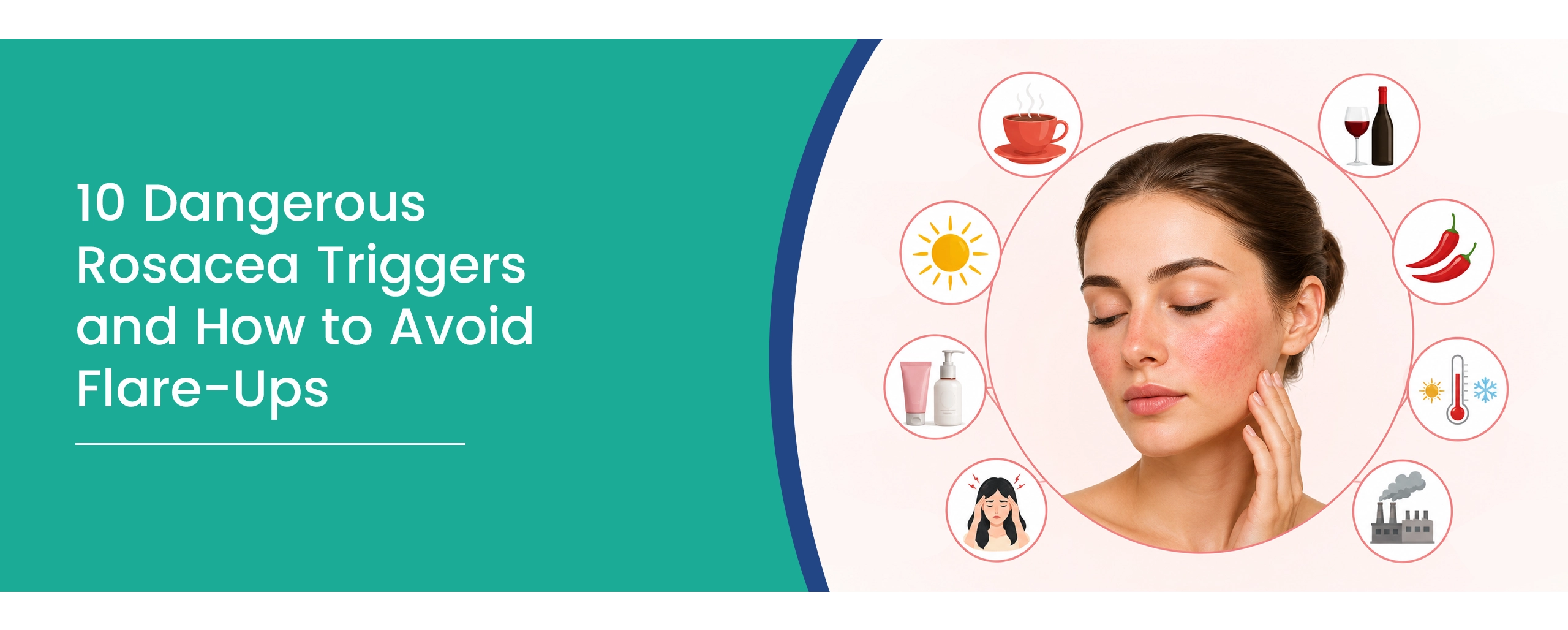
Persistent facial redness, visible blood vessels, and acne-like bumps can be frustrating to manage, especially when symptoms appear without warning. While there is no permanent cure for this chronic skin condition, identifying your personal triggers can significantly reduce flare-ups and improve your quality of life.
Understanding Rosacea Triggers is one of the most effective ways to keep symptoms under control and reduce frequent flare-ups.Combined with the best rosacea treatment, a consistent skincare routine, and healthy lifestyle choices, trigger management can help you maintain calmer, healthier-looking skin. Every individual experiences this condition differently. While some people react strongly to sun exposure, others may notice symptoms after eating spicy food or experiencing emotional stress.
Recognizing your personal Rosacea Triggers allows you to make informed lifestyle changes that reduce the frequency and severity of flare-ups. Instead of avoiding everything, the goal is to identify the specific factors that affect your skin.
What Are Rosacea Triggers?
Rosacea triggers are environmental, dietary, emotional, or lifestyle factors that can worsen the symptoms of rosacea. While these triggers do not cause the condition itself, they can activate inflammation, increase blood flow to the skin, and lead to flare-ups characterized by redness, flushing, burning, stinging, and acne-like bumps.
Rosacea triggers vary from person to person. Common examples include sun exposure, hot weather, spicy foods, alcohol, emotional stress, certain skincare products, and vigorous exercise. Identifying and avoiding your personal triggers is an important part of managing symptoms and reducing the frequency and severity of flare-ups.
Why Do Rosacea Triggers Matter?
Managing Rosacea Triggers is just as important as following a prescribed treatment plan. While medications and skincare products can help control symptoms, continued exposure to your personal triggers may lead to frequent flare-ups and reduce the effectiveness of treatment. Identifying and avoiding these triggers can help keep your skin calmer and improve long-term symptom management.
By recognizing and minimizing your Rosacea Triggers, you may experience:
- Fewer Flare-Ups: Reduces the frequency and severity of sudden symptom flare-ups.
- Less Redness and Inflammation: Helps control persistent facial redness, flushing, and skin irritation.
- Improved Skin Comfort: Minimizes burning, stinging, and sensitivity, making everyday activities more comfortable.
- Better Treatment Outcomes: Supports the effectiveness of your prescribed rosacea treatment by reducing recurring triggers.
- Healthier Skin Over Time: Consistent trigger management helps protect the skin barrier and promotes healthier, more resilient skin.
Understanding your personal Rosacea Triggers and making simple lifestyle adjustments can play a significant role in managing symptoms and maintaining long-term skin health.
The Importance of Tracking
Keeping a symptom diary is one of the simplest ways to identify patterns.
Record details such as:
- Foods and beverages consumed
- Weather conditions
- Skincare products used
- Stress levels
- Physical activity
- Time spent outdoors
Over several weeks, these notes can help you determine which habits or environments consistently lead to Rosacea Flare-Ups.
What Causes Rosacea?
The exact cause remains unknown, but experts believe it develops due to a combination of genetic, immune, vascular, and environmental factors.
Some of the most recognized Rosacea Causes include:
- Family history
- Overactive immune response
- Increased skin sensitivity
- Abnormal blood vessel function
- Microscopic skin mites (Demodex)
- Environmental triggers
While these factors cannot always be controlled, lifestyle modifications often help reduce symptom severity.
Here’s a more polished, SEO-friendly, and reader-friendly version of this section.
10 Common Rosacea Triggers You Should Avoid
While Rosacea Triggers vary from person to person, identifying the factors that worsen your symptoms can help you manage the condition more effectively. Keeping track of your personal Rosacea Triggers allows you to make simple lifestyle changes that reduce redness, inflammation, and frequent flare-ups.
Understanding your personal triggers is one of the most effective ways to reduce flare-ups. While triggers vary from person to person, the following are among the most common factors that can worsen symptoms.
1. Sun Exposure
Sun exposure is one of the leading causes of flare-ups. Ultraviolet (UV) rays can increase skin inflammation, leading to redness, flushing, and visible blood vessels.
How to avoid it:
- Apply a broad-spectrum sunscreen with SPF 30 or higher every day.
- Wear a wide-brimmed hat and UV-protective sunglasses when outdoors.
- Seek shade and avoid prolonged sun exposure, especially during peak afternoon hours.
2. Hot Weather and Heat
Hot weather, steam rooms, saunas, hot baths, and even prolonged exposure to indoor heat can dilate blood vessels, causing increased redness and flushing.
How to avoid it:
- Take lukewarm showers instead of hot ones.
- Stay well-hydrated throughout the day.
- Use fans or air conditioning to keep your environment cool during warmer months.
3. Emotional Stress
Stress, anxiety, excitement, and strong emotions can trigger the release of chemicals that increase blood flow to the face, worsening symptoms.
How to avoid it:
- Practice relaxation techniques such as meditation or yoga.
- Incorporate deep breathing exercises into your daily routine.
- Get adequate sleep and engage in regular, moderate physical activity.
4. Spicy Foods
Spicy foods contain compounds such as capsaicin that can increase body temperature and stimulate facial flushing in sensitive individuals.
Common rosacea food triggers include:
- Chili peppers
- Hot sauces
- Spicy curries
- Pepper-based seasonings
If you notice symptoms after eating spicy meals, consider reducing their frequency or choosing milder alternatives.
5. Alcohol
Alcohol, particularly red wine, is a common trigger for facial flushing and persistent redness. However, the degree of sensitivity varies among individuals.
How to avoid it:
- Limit alcohol consumption or avoid beverages that consistently trigger symptoms.
- Drink plenty of water to stay hydrated.
6. Hot Drinks
Very hot beverages, including coffee, tea, and soups, may trigger flushing because of their high temperature rather than their caffeine content.
How to avoid it:
- Allow hot drinks to cool slightly before consuming them.
- Choose warm or room-temperature beverages whenever possible.
7. Certain Skincare Products
Harsh skincare products can weaken the skin barrier and increase irritation, burning, and redness. Ingredients such as alcohol, artificial fragrances, exfoliating acids, and abrasive scrubs are common irritants.
How to avoid it:
- Follow a gentle Rosacea Skin Care routine.
- Use fragrance-free, non-comedogenic cleansers and moisturizers designed for sensitive skin.
- Patch-test new products before applying them to your entire face.
8. Intense Exercise
High-intensity workouts can raise your body temperature and increase blood flow, leading to facial flushing.
Choose lower-impact activities such as:
- Walking
- Swimming
- Yoga
- Cycling during cooler parts of the day
Taking breaks and staying hydrated can also help minimize flare-ups during exercise.
9. Wind and Cold Weather
Cold temperatures and strong winds can strip the skin of moisture, making it more sensitive and prone to irritation.
How to avoid it:
- Apply a moisturizing cream before going outdoors.
- Protect your face with a scarf in cold or windy conditions.
- Avoid sudden changes between very cold and very warm environments.
10. Certain Foods
Although food triggers vary from person to person, some ingredients are more commonly associated with flare-ups.
Common rosacea diet triggers include:
- Aged cheeses
- Processed meats
- Vinegar-rich foods
- Chocolate
- Cinnamon
- Histamine-rich foods
Rather than eliminating multiple foods at once, keep a food diary to identify which items consistently trigger your symptoms. This personalized approach can help you manage flare-ups while maintaining a balanced and nutritious diet.
How to Control Rosacea Flare-Ups
Avoiding your personal Rosacea Triggers is one of the most effective ways to prevent flare-ups and improve the long-term management of rosacea. Although flare-ups cannot always be prevented, they can often be managed effectively.
Helpful strategies include:
- Follow your dermatologist’s treatment plan.
- Cleanse your skin gently.
- Moisturize daily.
- Apply sunscreen every morning.
- Avoid known triggers.
- Use fragrance-free skincare products.
- Stay hydrated.
- Manage stress effectively.
For persistent symptoms, professional rosacea treatment may include prescription creams, oral medications, laser therapy, or light-based procedures.
Tips for Managing Rosacea Long-Term
Along with following your treatment plan, identifying and avoiding Rosacea Triggers plays a vital role in maintaining healthier skin and preventing recurring flare-ups. Successfully managing rosacea requires a consistent skincare routine, healthy lifestyle habits, and regular medical care. The following tips can help reduce flare-ups and support long-term skin health.
| Tips | How It Helps |
| Maintain a Daily Skincare Routine | Cleanse, moisturize, and apply sunscreen every day using gentle products formulated for sensitive skin. |
| Avoid Harsh Exfoliants | Stay away from abrasive scrubs, alcohol-based products, and strong exfoliating acids that can irritate the skin. |
| Introduce New Products Gradually | Patch-test new skincare products and add them one at a time to identify any potential triggers. |
| Manage Stress Effectively | Practice relaxation techniques, get adequate sleep, and engage in moderate exercise to help reduce stress-related flare-ups. |
| Eat a Balanced Diet | Include plenty of fruits, vegetables, whole grains, and lean proteins while avoiding foods that consistently trigger symptoms. |
| Schedule Regular Dermatology Check-ups | Routine visits help monitor your skin’s condition and allow your dermatologist to adjust treatment when needed. |
| Track Your Flare-Ups | Keep a journal of your diet, activities, weather conditions, skincare products, and symptoms to identify personal triggers. |
| Protect Your Skin from the Sun | Apply a broad-spectrum SPF 30+ sunscreen daily and wear protective clothing when spending time outdoors. |
| Stay Hydrated | Drinking enough water helps maintain healthy skin and supports the skin’s natural barrier function. |
| Follow Your Treatment Plan | Use prescribed medications and skincare products consistently, even when symptoms improve, to help prevent future flare-ups. |
Following these habits consistently can help minimize flare-ups, improve skin comfort, and support long-term management of rosacea.
Using suitable rosacea skin care products designed for sensitive skin can also improve comfort and strengthen the skin barrier over time.
Does Genetics Play a Role in Rosacea?
Yes. Although the exact cause of rosacea is not fully understood, research suggests that genetics may play an important role in its development. Individuals with a family history of the condition are more likely to experience symptoms, indicating that inherited factors may increase skin sensitivity and the body’s inflammatory response.
However, genetics alone do not determine whether symptoms will appear. Environmental and lifestyle factors, such as sun exposure, stress, hot weather, spicy foods, and certain skincare products, often act as triggers that cause flare-ups in people who are genetically predisposed.
While genetic factors cannot be changed, understanding your family history can help with early recognition and timely treatment. Seeking medical advice at the first signs of persistent redness or flushing, following a dermatologist-recommended treatment plan, and avoiding known triggers can significantly reduce the frequency and severity of flare-ups, helping maintain healthier skin over the long term.
How Does Sun Exposure Affect Rosacea?
Sun exposure is one of the most common Rosacea Triggers, making daily sun protection essential for people living with rosacea. Ultraviolet (UV) rays can worsen inflammation, increase redness, and make the skin more sensitive. Protecting your skin from the sun is essential for long-term symptom management.
- Triggers Inflammation: UV rays can increase skin inflammation, leading to redness and irritation.
- Causes Flushing: Sun exposure dilates superficial blood vessels, resulting in facial flushing and persistent redness.
- Weakens the Skin Barrier: Prolonged UV exposure can damage the skin’s protective barrier, making it more prone to dryness and sensitivity.
- Increases Flare-Ups: Even brief periods of unprotected sun exposure may trigger or worsen symptoms in susceptible individuals.
- Wear Sunscreen Daily: Apply a broad-spectrum sunscreen with SPF 30 or higher every morning, regardless of the weather.
- Use Protective Clothing: Wear a wide-brimmed hat, UV-protective sunglasses, and lightweight clothing when outdoors.
- Avoid Peak Sun Hours: Limit direct sun exposure between 10 a.m. and 4 p.m., when UV rays are strongest.
- Seek Shade: Whenever possible, stay in shaded areas to minimize UV exposure.
- Reapply Sunscreen: Reapply sunscreen every two hours, or more often if you are sweating or swimming.
Consistent sun protection, combined with a gentle skincare routine and appropriate medical treatment, can help reduce flare-ups and keep rosacea symptoms under control throughout the year.
When Should You See a Doctor?
Consult a dermatologist if you experience:
- Persistent facial redness
- Frequent flushing
- Acne-like bumps that do not improve
- Burning or stinging skin
- Eye irritation or dryness
- Symptoms that interfere with daily life
Early diagnosis allows for timely treatment, helping prevent progression and improve long-term skin health.
Conclusion
Understanding your personal Rosacea Triggers is one of the most effective ways to reduce flare-ups and maintain healthier skin. By identifying and avoiding common Rosacea Triggers, following a gentle skincare routine, and seeking timely medical care, you can better manage your symptoms and improve your quality of life. If redness or flare-ups persist, consult the Best Skin Care Hospital or the best hospital for skin diseases for expert diagnosis, advanced treatment, and personalized care.