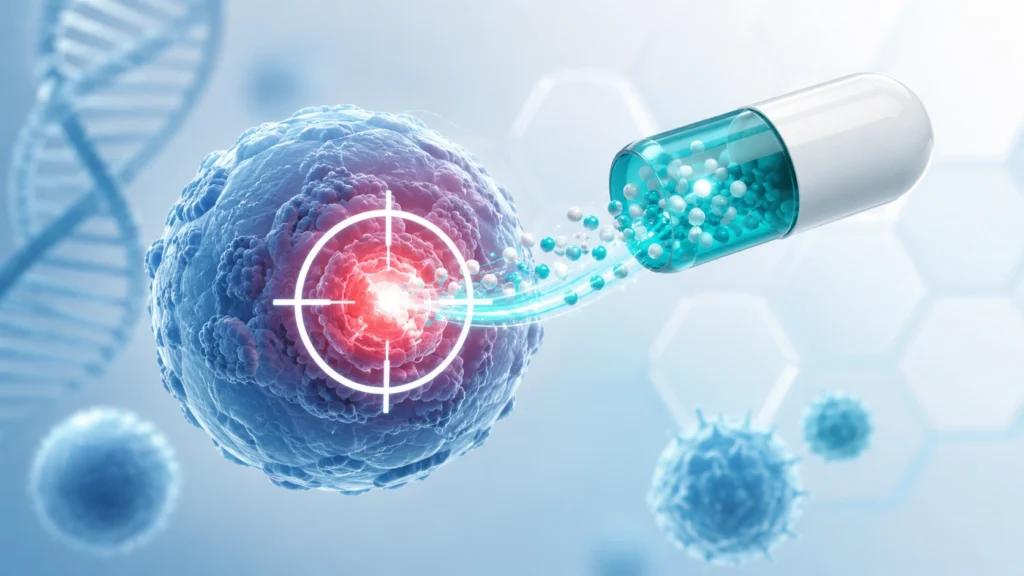
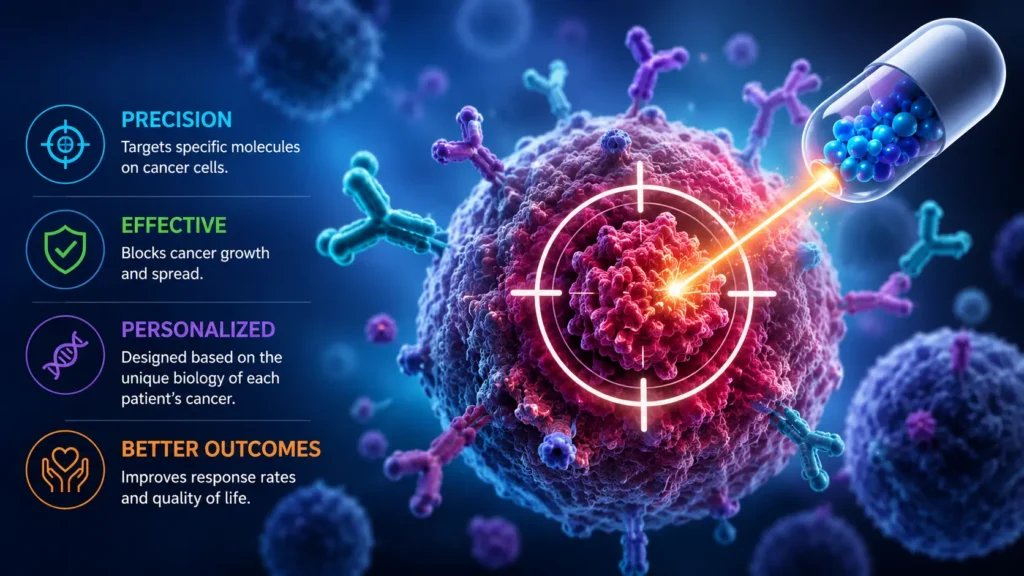
Targeted therapy has transformed modern cancer treatment by enabling doctors to attack cancer cells with greater precision while minimizing damage to healthy tissues. At a best cancer hospital, targeted therapy is often integrated into personalized treatment plans using advanced biomarker testing and precision medicine to improve patient outcomes.
As a key pillar of targeted oncology and precision medicine, targeted therapy has improved outcomes for many patients with breast cancer, lung cancer, colorectal cancer, leukemia, melanoma, and several other malignancies. This comprehensive guide explores what targeted therapy is, how it works, the different types of targeted therapy drugs, success rates, side effects, treatment processes, and the role of biomarker testing in selecting the most effective therapy.
What is targeted therapy? It is a specialized cancer treatment that uses drugs designed to identify and attack specific molecules involved in cancer cell growth, survival, and spread. Rather than destroying all rapidly dividing cells, targeted therapies focus on unique characteristics found within cancer cells.
To understand this therapy is in cancer, it is important to recognize that cancer develops because of genetic mutations and abnormal cellular signaling pathways. It interferes with these abnormalities, helping slow or stop tumor growth while causing less damage to normal tissues.
As a major advancement in targeted oncology, these treatments are often selected based on biomarker testing, genetic profiling, and molecular analysis of the tumor.
It is also considered a form of systemic cancer treatment because the drugs travel through the bloodstream and can reach cancer cells throughout the body.
Understanding how this therapy works helps explain why it has become one of the most important advances in cancer care.
Cancer cells rely on abnormal proteins, genetic mutations, and signaling pathways to grow and multiply uncontrollably. Targeted therapy works by identifying and blocking these specific mechanisms.
Blocking Growth Signals: Many cancers depend on growth factor receptors to receive signals that stimulate cell division. Targeted therapies can block these receptors and prevent cancer cells from receiving growth instructions.
Inhibiting Cancer Cell Pathways: Some targeted drugs interfere with molecular pathways that allow tumors to survive and spread. By disrupting these pathways, the treatment can slow tumor progression or trigger cancer cell death.
Preventing Blood Vessel Formation: Tumors require a blood supply to grow. Certain targeted therapies block angiogenesis, the process by which tumors create new blood vessels.
Triggering Cancer Cell Death: Some targeted therapies activate mechanisms that cause cancer cells to self-destruct while leaving healthy cells relatively unaffected.
Delivering Precision Treatment: This focus on specific molecular abnormalities, they represent a personalized treatment approach that aligns with the principles of precision medicine and targeted oncology.
There are several categories of targeted therapy drugs, each designed to attack cancer through different mechanisms.
Monoclonal antibodies are laboratory-produced proteins that recognize and bind to specific targets on cancer cells. Once attached, they can block growth signals, mark cancer cells for destruction by the immune system, or deliver drugs directly to tumors while minimizing damage to healthy tissues.
Small molecule inhibitors are targeted therapy drugs that enter cancer cells and interfere with proteins responsible for cancer growth and survival. By blocking abnormal signaling pathways inside the cell, these drugs help slow tumor progression, prevent cancer cell multiplication, and induce cell death.
Angiogenesis inhibitors work by preventing tumors from developing new blood vessels, a process known as angiogenesis. Without an adequate blood supply, cancer cells receive less oxygen and nutrients, limiting tumor growth and reducing the ability of cancer to spread to other parts of the body.
Tyrosine kinase inhibitors (TKIs) block enzymes called tyrosine kinases, which play a key role in cancer cell signaling and growth. By disrupting these signals, TKIs can stop cancer cells from multiplying and are commonly used to treat lung cancer, leukemia, and several other cancers.
PARP inhibitors target proteins involved in repairing damaged DNA within cancer cells. When DNA repair is blocked, cancer cells accumulate genetic damage and eventually die. These therapies are particularly effective in cancers associated with BRCA1 and BRCA2 gene mutations, including ovarian and breast cancers.
HER2-targeted therapies are designed for cancers that overproduce the HER2 protein, which promotes rapid tumor growth. These treatments block HER2 signaling pathways, slowing cancer progression and improving outcomes. They are most commonly used in HER2-positive breast cancer and certain gastric cancers.
Targeted therapy for cancer is now used across a wide range of malignancies where specific genetic mutations, proteins, or molecular abnormalities have been identified. Advances in targeted oncology have made it possible to personalize treatment based on the biological characteristics of each patient’s tumor.
For breast cancer this therapy is primarily used in HER2-positive tumors, where cancer cells produce excess HER2 protein. Drugs such as trastuzumab, pertuzumab, and trastuzumab deruxtecan specifically block HER2 signaling pathways, slowing tumor growth, reducing recurrence risk, and significantly improving survival rates in both early-stage and metastatic disease.
Targeted therapy for cancer has transformed the treatment of non-small cell lung cancer (NSCLC). Patients with EGFR, ALK, ROS1, RET, MET, KRAS, or NTRK mutations can receive precision therapies that directly inhibit these genetic alterations, helping shrink tumors, delay progression, and improve quality of life.
In metastatic colorectal cancer, targeted therapy drugs are used to block key growth pathways such as EGFR and VEGF. These treatments help slow cancer progression, improve treatment response, and are often combined with chemotherapy to achieve better disease control and prolonged survival.
PARP inhibitors, a specialized form of targeted therapy, have become a major advancement in ovarian cancer treatment. They are particularly effective in patients with BRCA1 or BRCA2 mutations by preventing cancer cells from repairing damaged DNA, ultimately leading to cancer cell death.
Certain patients with HER2-positive gastric cancer may benefit from targeted therapy drugs that specifically attack HER2 receptors. These therapies help control tumor growth, improve treatment outcomes, and are commonly used alongside chemotherapy in advanced or metastatic gastric cancer cases.
For patients with BRAF-mutated melanoma, targeted oncology treatments such as BRAF and MEK inhibitors have dramatically improved outcomes. These therapies block abnormal signaling pathways that drive cancer growth, resulting in rapid tumor shrinkage and improved progression-free survival in many patients.
Advanced kidney cancer is frequently treated with anti-angiogenic targeted therapy drugs that inhibit the formation of new blood vessels supplying tumors. By restricting the tumor’s blood supply, these therapies help slow cancer growth, reduce disease progression, and improve overall survival outcomes.
Several targeted therapy drugs have revolutionized the treatment of leukemia and lymphoma. These therapies target specific proteins and molecular pathways involved in cancer cell survival, providing more precise treatment, fewer side effects than conventional chemotherapy, and significantly improved long-term outcomes.
It is designed based on the unique genetic and molecular characteristics of a patient’s cancer. By identifying specific mutations, proteins, or pathways driving tumor growth, doctors can select treatments that are more likely to be effective, resulting in a highly individualized and patient-centered approach.
Unlike traditional treatments that affect both healthy and cancerous cells, this therapy focuses on specific molecules involved in cancer development. This precision allows treatment to directly attack cancer cells while minimizing effects on surrounding tissues, leading to improved treatment outcomes and greater effectiveness in many patients.
Because targeted therapy selectively acts on cancer-related targets, it generally causes less harm to normal, healthy cells. This focused approach often results in fewer severe side effects compared to conventional chemotherapy, helping patients maintain physical strength and recover more comfortably during treatment.
Patients receiving targeted therapy often experience fewer treatment-related complications and can continue many daily activities with less disruption. Reduced toxicity, better symptom control, and fewer hospital visits contribute to an improved quality of life, allowing patients to maintain greater independence throughout treatment.
Targeted therapy can be combined with other cancer treatments such as chemotherapy, immunotherapy, radiation therapy, or surgery. These combinations may enhance treatment effectiveness, overcome resistance, and improve long-term outcomes by attacking cancer through multiple mechanisms while maintaining manageable side-effect profiles.
Not every cancer patient is a candidate for targeted therapy. Eligibility depends on the presence of specific genetic mutations, proteins, or molecular markers within the tumor that can be targeted by available drugs. Biomarker testing is therefore an essential step before starting treatment.
Patients with Identifiable Biomarkers: This is most effective in patients whose tumors contain specific biomarkers, such as HER2, EGFR, ALK, BRAF, KRAS, BRCA, or NTRK alterations. These biomarkers help determine whether a targeted drug is likely to work.
Patients with Certain Types of Cancer: Targeted therapies are commonly used in cancers such as breast cancer, lung cancer, colorectal cancer, ovarian cancer, melanoma, leukemia, lymphoma, thyroid cancer, and some gastrointestinal cancers.
Patients with Advanced or Metastatic Cancer: Many targeted therapies are approved for advanced-stage or metastatic cancers that have spread beyond their original site. These treatments can help slow disease progression and improve survival.
Patients with Recurrent Cancer: Targeted therapy may be recommended when cancer returns after initial treatment. Biomarker testing can identify new treatment opportunities based on the tumor’s molecular characteristics.
Patients Who May Not Tolerate Conventional Chemotherapy: Some patients who cannot tolerate the side effects of traditional chemotherapy may benefit from targeted therapy, which often causes less damage to healthy cells and may have a more manageable side-effect profile.
Patients Receiving Combination Treatment: This can be used alongside chemotherapy, immunotherapy, radiation therapy, or surgery as part of a comprehensive treatment plan designed to improve outcomes.
| Assessment | Purpose |
| Biomarker Testing | Identifies genetic mutations, proteins, or molecular targets within the tumor. |
| Cancer Type and Stage | Determines whether targeted therapy is approved and appropriate for the specific cancer. |
| Previous Treatments | Evaluates how the cancer has responded to earlier therapies. |
| Overall Health Status | Ensures the patient can safely receive the recommended treatment. |
| Treatment Goals | Helps align therapy with goals such as cure, disease control, or symptom management. |
A patient qualifies for targeted therapy when their cancer contains a specific molecular target that can be effectively blocked by a targeted drug. Biomarker testing, cancer type, disease stage, and overall health all play important roles in determining eligibility.
Not every patient is eligible for targeted therapy. Determining eligibility requires careful evaluation of tumor biology, genetic mutations, and overall health status.
Biomarker testing is the most important step before starting targeted therapy. It identifies specific genetic mutations, proteins, or molecular alterations that drive cancer growth, helping doctors select the most effective targeted therapy drugs for each patient’s cancer.
| Biomarker | Role in Targeted Therapy |
| HER2 (Human Epidermal Growth Factor Receptor 2) | HER2 overexpression promotes rapid cancer cell growth. Testing helps identify patients with HER2-positive breast, gastric, and other cancers who may benefit from HER2-targeted therapies. |
| EGFR (Epidermal Growth Factor Receptor) | EGFR mutations are commonly found in certain lung cancers. Patients with these mutations may respond well to EGFR-targeted drugs that block cancer growth signals. |
| ALK (Anaplastic Lymphoma Kinase) | ALK gene rearrangements drive the growth of some non-small cell lung cancers. Identifying ALK-positive tumors allows treatment with highly effective ALK inhibitors. |
| ROS1 | ROS1 gene fusions are found in a small percentage of lung cancers. Testing helps identify patients who can benefit from ROS1-targeted therapies. |
| KRAS | KRAS mutations occur in several cancers, including lung and colorectal cancers. Certain KRAS-targeted therapies are now available for specific mutation subtypes, particularly KRAS G12C. |
| BRAF | BRAF mutations can cause uncontrolled cell growth and are commonly seen in melanoma, colorectal, and thyroid cancers. Targeted therapies can block the abnormal BRAF pathway. |
| BRCA1/BRCA2 | Mutations in BRCA genes impair DNA repair mechanisms and increase cancer risk. Patients with BRCA mutations may benefit from PARP inhibitors and other targeted treatments. |
| NTRK (Neurotrophic Tyrosine Receptor Kinase) | NTRK gene fusions can occur across many different cancer types. Patients with NTRK-positive tumors may be eligible for tumor-agnostic targeted therapies. |
| MSI-H (Microsatellite Instability-High) | MSI-H tumors have defects in DNA mismatch repair. Testing helps identify patients who may respond exceptionally well to certain targeted and immunotherapy-based treatments. |
| RET and MET Alterations | RET fusions and MET mutations can drive tumor growth in lung and other cancers. Specialized targeted therapies can effectively inhibit these altered signaling pathways. |
One of the most common questions patients ask is how targeted therapy vs chemotherapy compares.
| Feature | Targeted Therapy | Chemotherapy |
| Primary Target | Specific molecular abnormalities | Rapidly dividing cells |
| Precision | Highly targeted | Broad-acting |
| Personalization | Biomarker-driven | Less personalized |
| Damage to Healthy Cells | Lower | Higher |
| Side Effects | Usually different and more specific | Often widespread |
Targeted chemotherapy is not technically chemotherapy. While chemotherapy directly kills rapidly dividing cells, targeted therapy interferes with specific molecular pathways that cancer cells need to survive and grow.
Although both are modern cancer treatments, targeted therapy vs immunotherapy involves very different mechanisms.
Targeted Therapy: It blocks specific genes, proteins, or molecular pathways that drive cancer growth, offering precise treatment with reduced damage to healthy cells.
Immunotherapy: Immunotherapy strengthens or modifies the immune system, enabling it to recognize, attack, and destroy cancer cells more effectively and durably.
| Feature | Targeted Therapy | Immunotherapy |
| Main Target | Cancer-specific mutations | Immune system |
| Biomarker Requirement | Usually required | Often helpful |
| Treatment Goal | Block cancer growth | Enhance immune response |
| Response Pattern | Often rapid | May take longer |
Many patients receive both targeted therapy and immunotherapy cancer drugs as part of combination treatment strategies.
In many cases, this therapy is used alongside other cancer treatments to improve effectiveness and achieve better outcomes. Combining therapies allows cancer to be attacked through different mechanisms, helping overcome treatment resistance and increasing the chances of successful disease control.
Combining this therapy with chemotherapy improves cancer treatment by attacking tumors through different mechanisms. Targeted therapy blocks specific cancer-driving proteins or genetic mutations, while chemotherapy destroys rapidly dividing cancer cells. This combination is commonly used for breast, lung, and colorectal cancers to improve treatment response and reduce disease progression.
Targeted therapy and immunotherapy work together to fight cancer more effectively. Targeted therapy blocks abnormal molecular pathways that fuel cancer growth, while immunotherapy activates the immune system to attack cancer cells. This combination is particularly effective in lung cancer, melanoma, and kidney cancer, offering improved and longer-lasting treatment outcomes.
Using targeted therapy with radiation therapy enhances the effectiveness of radiation by making cancer cells more sensitive to treatment. Targeted drugs prevent cancer cells from repairing radiation-induced damage, leading to better tumor control, reduced recurrence, and improved protection of nearby healthy tissues in selected cancers.
Dual targeted therapy uses two targeted drugs that block different cancer-related pathways simultaneously. This approach helps overcome treatment resistance, improves disease control, and slows cancer progression. It is commonly used in selected breast, lung, and blood cancers with specific genetic alterations, providing more comprehensive and personalized treatment.
What Are the Side Effects of Targeted Therapy?
Although targeted therapy drugs are designed to attack cancer cells more precisely, they can still affect healthy tissues. Common side effects include fatigue, nausea, diarrhea, loss of appetite, mouth sores, and headaches. Most are manageable and improve with supportive care.
Skin problems are among the most frequent side effects of targeted therapy. Patients may develop rashes, dry skin, itching, acne-like eruptions, or increased sensitivity to sunlight. Regular skincare, hydration, and sun protection can help reduce discomfort and prevent complications.
Some targeted therapy drugs can affect the heart and blood vessels, leading to high blood pressure, irregular heart rhythms, or reduced heart function. Regular cardiovascular monitoring helps detect problems early and ensures treatment can continue safely whenever possible.
Certain targeted therapies may cause liver irritation or inflammation, resulting in elevated liver enzyme levels. Regular blood tests are essential to monitor liver function. Early detection allows doctors to adjust treatment doses or provide supportive care if necessary.
In rare cases, targeted therapy for cancer may cause inflammation of lung tissue, known as pneumonitis. Symptoms can include persistent cough, shortness of breath, chest discomfort, and breathing difficulties. Prompt medical evaluation is important to prevent serious complications.
Targeted radiotherapy is a specialized treatment that delivers radiation directly to cancer cells while minimizing exposure to healthy tissues.
Unlike traditional radiation therapy, targeted radiotherapy uses molecules, antibodies, or radioactive compounds that specifically seek out cancer cells.
Targeted radiotherapy is increasingly being used in prostate cancer, neuroendocrine tumors, and certain blood cancers.
The targeted therapy success rate varies depending on cancer type, disease stage, genetic mutation, and overall patient health.
Patients with EGFR-mutated lung cancer, HER2-positive breast cancer, BCR-ABL-positive leukemia, and BRCA-mutated ovarian cancer often experience substantial benefits from targeted therapy.
Many patients achieve:
The highest success rate is often observed when treatment is matched to the correct biomarker.
Targeted therapy is considered a form of systemic cancer treatment because it circulates throughout the body to reach cancer cells wherever they may be located.
Before starting targeted therapy for cancer, doctors conduct a comprehensive evaluation to determine whether the treatment is appropriate and likely to be effective. This assessment typically includes a detailed medical history review, physical examination, blood tests, imaging scans such as CT, MRI, or PET scans, and biomarker testing to identify actionable genetic mutations or molecular targets. These tests help create a personalized treatment plan and establish baseline measurements for monitoring progress.
The method of administering targeted therapy depends on the specific drug being used and the type of cancer being treated.
Regular monitoring is essential to ensure that this therapy is working effectively and to identify potential side effects early. Patients typically undergo routine blood tests to assess organ function and blood counts, imaging studies to evaluate tumor response, side effect assessments, and periodic treatment reviews. These evaluations help doctors make any necessary adjustments to the treatment plan.
The duration of systemic cancer treatment with targeted therapy varies depending on the cancer type, treatment response, and individual tolerance. Some patients may receive treatment for several months, while others continue therapy for years as long as the cancer remains controlled and side effects are manageable.
Targeted therapy for cancer has emerged as one of the most significant advancements in modern oncology, offering a highly personalized approach to systemic cancer treatment. By targeting specific genetic mutations, proteins, and molecular pathways, targeted therapy drugs help control cancer growth while minimizing damage to healthy tissues.
As a cornerstone of targeted oncology, this therapy continues to improve survival rates, quality of life, and treatment outcomes, providing new hope for patients across a wide range of cancer types.
What is targeted therapy?
Targeted therapy is a cancer treatment that attacks specific genes, proteins, or molecular pathways responsible for cancer growth.
Is targeted therapy chemotherapy?
No. Targeted therapy and chemotherapy work differently. Targeted therapy focuses on specific cancer-related abnormalities, while chemotherapy attacks rapidly dividing cells.
What cancers can be treated with targeted therapy?
Breast cancer, lung cancer, colorectal cancer, ovarian cancer, leukemia, lymphoma, melanoma, kidney cancer, and several other cancers.
What tests are required before targeted therapy?
Biomarker testing, genetic profiling, imaging scans, blood tests, and a comprehensive medical evaluation.
What is the success rate of targeted therapy?
The targeted therapy success rate varies by cancer type and biomarker profile, but many patients experience improved survival and disease control.
Can targeted therapy be combined with immunotherapy?
Yes. Many treatment plans combine targeted therapy with immunotherapy, chemotherapy, or radiation therapy to improve outcomes.
Is targeted therapy a systemic cancer treatment?
Yes. Most targeted therapies are considered systemic cancer treatments because they travel throughout the body and can reach cancer cells wherever they are located.
Is targeted therapy safe for elderly patients?
Many older adults can safely receive this therapy, although treatment decisions should always be individualized based on overall health and medical history.