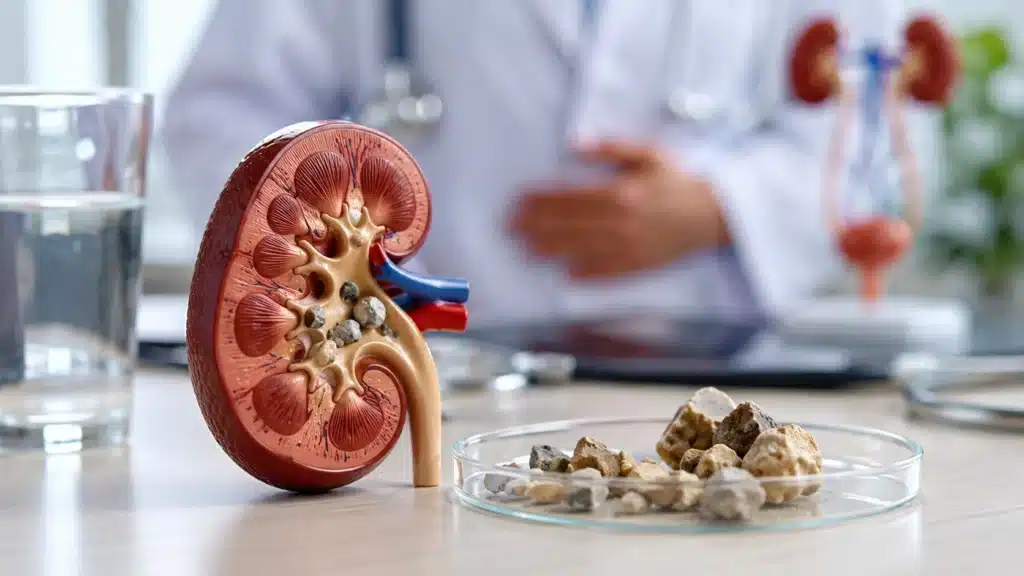
If you’ve ever had a kidney stone, you already know the pain is unlike anything else. It comes on suddenly, hits hard, and can stop you completely in your tracks. For many people, it’s one of the most intense experiences of their lives.
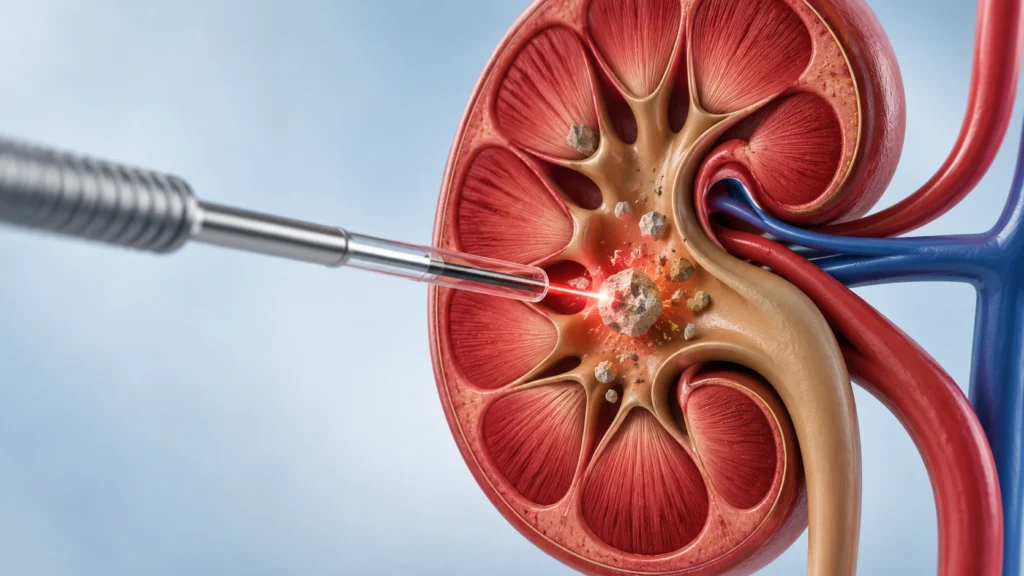
The good news is that you don’t have to go through open surgery to get relief. Today, laser lithotripsy has completely changed the way kidney and ureter stones are treated. It’s a minimally invasive procedure: no large cuts, no long hospital stays, and no prolonged recovery. A thin scope is passed through the body’s natural urinary passage, a laser precisely breaks the stone into tiny fragments, and those fragments are either removed or passed naturally.
Our experienced urology team at Rama Hospital performs laser lithotripsy using the latest technology, giving patients safe, effective, and fast relief from urinary stone disease. Whether your stone is small or large, in the kidney or the ureter, we have the expertise and equipment to treat it with precision.
What is laser lithotripsy?
Laser lithotripsy is a minimally invasive urological procedure used to break down stones in the kidney, ureter, bladder, and urethra using a highly focused laser beam.
How Does URS (Ureteroscopy) Work?
- A thin, flexible ureteroscope is passed through the urinary passage without any cuts or incisions.
- The scope is guided to the kidney stone inside the ureter or kidney.
- A Holmium laser is used to break the stone into tiny pieces or fine dust.
- The stone fragments are either removed or passed naturally through urine.
- The procedure is performed under anesthesia, so you do not feel any pain during treatment.
Key things to know:
- No external cuts or incisions.
- Suitable for stones of varying sizes and locations.
- Works on all types of kidney and ureter stones, including hard calcium oxalate stones and softer uric acid stones.
- Typically completed in 45 minutes to 1.5 hours.
- Most patients go home the same day or the next morning.
What conditions can be treated with laser lithotripsy?
Laser lithotripsy is primarily known as a kidney stone treatment, but its applications go well beyond that. At Rama Hospital, we use this advanced technology to treat a range of urological conditions.
This minimally invasive procedure offers precise stone removal with faster recovery and minimal discomfort. Laser lithotripsy is an advanced treatment used for various urinary stone conditions, including:
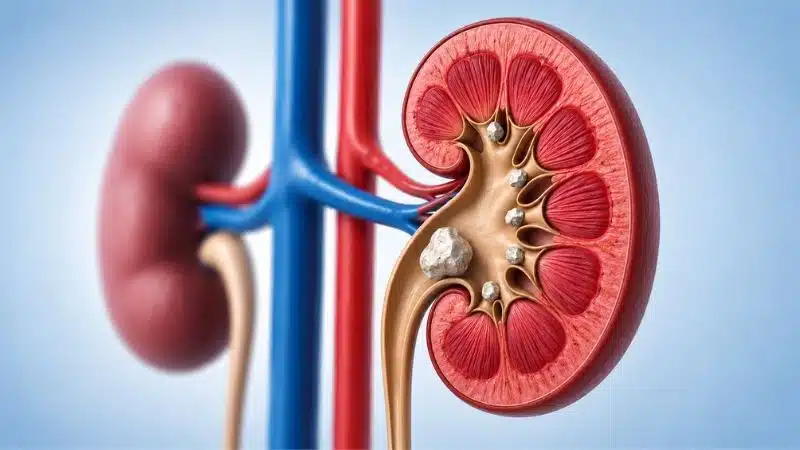
- Kidney stones: Breaks stones inside the kidney that are too large to pass naturally.
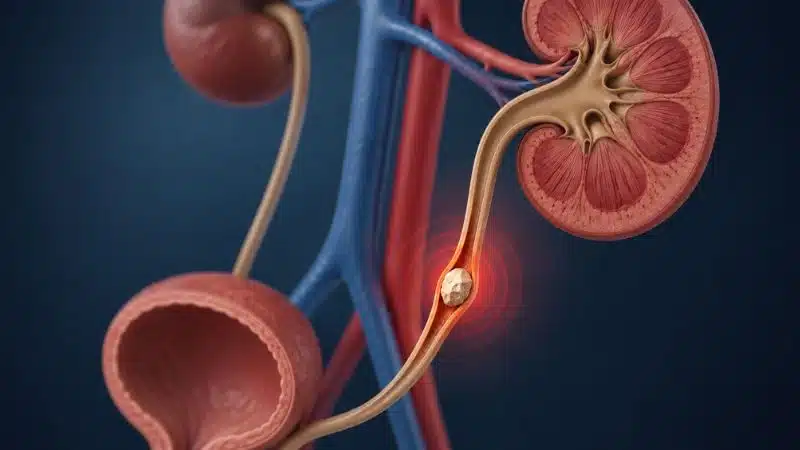
- Ureter stones: Effectively treats stones stuck in the ureter, a common cause of severe kidney stone pain.
- Bladder stones: Removes stones from the bladder without the need for open surgery.
- Urethral stones: Treats stones lodged in the urinary passage that may cause difficulty urinating.
- Calyceal diverticulum stones: Helps remove stones located in difficult-to-reach areas of the kidney.
- Ureteral strictures: Can also assist in treating certain narrowed areas of the ureter.
- Selected urinary tract tumors: In specific cases, laser technology may be used to treat small tumors in the urinary tract under specialist care.
When should you consider laser lithotripsy?
Laser lithotripsy is recommended for patients whose urinary stones cannot be managed conservatively, either because the stone is too large, causing significant symptoms, blocking urine flow, or failing to pass on its own.
Early treatment can help relieve pain, prevent complications, and protect your kidney health. A doctor may recommend laser lithotripsy if:
- Your kidney stone is too large to pass naturally.
- You are experiencing severe kidney stone pain, nausea, or vomiting.
- The stone is blocking the flow of urine from the kidney.
- You have a urinary tract infection (UTI) along with a stone.
- You suffer from recurrent or repeated kidney stones.
- The stone has not passed despite medication and increased fluid intake.
- You have only one functioning kidney or reduced kidney function.
- You are pregnant and have a painful ureter stone that requires treatment.
- You have bladder stones causing pain, infections, or urinary problems.
- Tests show that the stone could damage your kidney if left untreated.
What are the causes and risk factors?
Understanding what causes kidney stones is the first step toward preventing them. If the underlying cause is not identified and managed, kidney stones can return, leading to recurring pain and repeated treatment.
Common causes of urinary stones
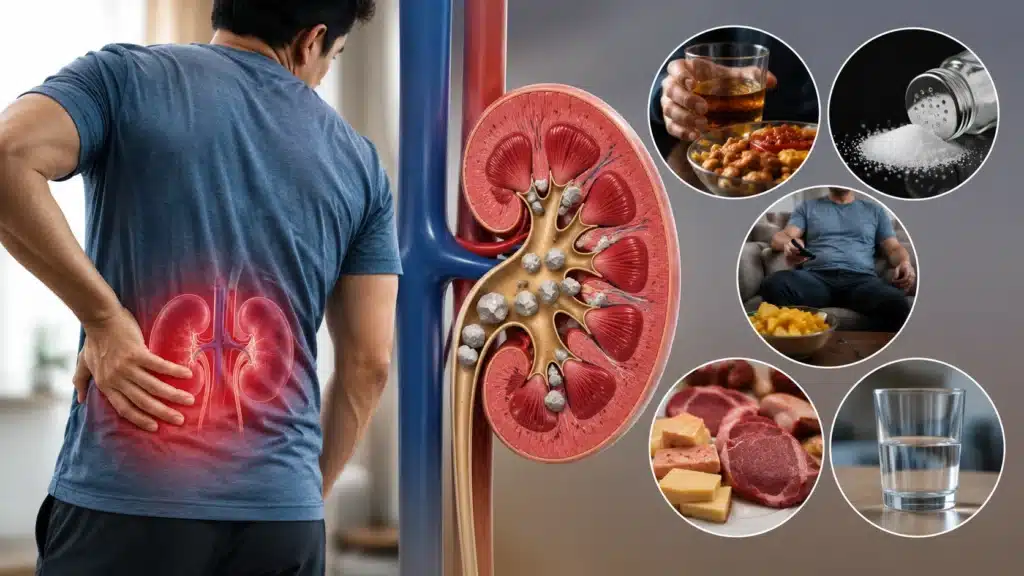
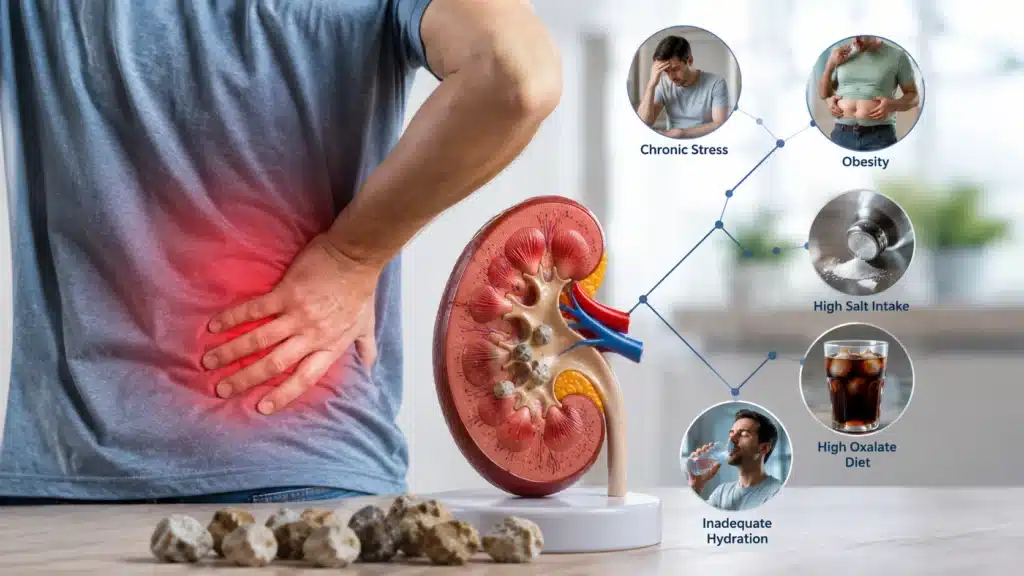
Identifying the cause can help reduce the risk of developing kidney stones again in the future. Urinary stones can develop due to several factors, many of which are related to lifestyle and overall health.
- Not drinking enough water (dehydration).
- High-salt or high-protein diet.
- Excess intake of spinach, nuts, chocolate, and other oxalate-rich foods.
- Metabolic conditions that increase calcium, uric acid, or oxalate levels.
- Repeated urinary tract infections (UTIs).
- Structural problems in the kidney or urinary tract.
- Certain medications and supplements.
- Family history of kidney stones.
Risk factors for urinary stones
Understanding these risk factors can help you take steps to prevent kidney stones and reduce the chances. Your risk of developing kidney stones may be higher if you:
- Do not drink enough water regularly.
- Have a family history of kidney stones.
- Have had kidney stones before.
- Eat a diet high in salt, red meat, or processed foods.
- Are overweight or obese.
- Live in a hot climate or sweat heavily.
- Have a sedentary lifestyle with little physical activity.
- Have medical conditions such as gout, recurrent UTIs, or parathyroid disorders.
- Are male, as kidney stones are more common in men.
What are the signs and symptoms?
Urinary stones can be completely silent, or they can cause some of the most intense pain a person ever experiences. It depends largely on whether the stone is moving and whether it is causing a blockage.
Common symptoms of urinary stones
Urinary stones can cause a range of symptoms, depending on their size and location. If these symptoms are severe or persistent, it is important to seek medical attention promptly.
- Severe pain in the side, back, or lower abdomen that may spread to the groin.
- Blood in the urine (pink, red, or brown urine).
- Frequent urge to urinate.
- Burning or pain while urinating.
- Nausea and vomiting.
- Difficulty passing urine or reduced urine flow.
Warning signs that need immediate medical attention
These symptoms may indicate a serious complication and should not be ignored.
- Fever along with kidney stone pain.
- Difficulty or inability to pass urine.
- Severe pain that does not improve with medication.
- Cloudy, foul-smelling urine.
- Chills or signs of infection.
- Persistent nausea or vomiting.
Diagnosis before laser lithotripsy
Before recommending laser lithotripsy, your doctor at Rama Hospital will conduct a thorough evaluation to confirm the diagnosis, locate the stone precisely, and plan the procedure.
Imaging Investigations
CT Scan (Non-Contrast CT KUB):
- The gold standard for kidney stone diagnosis.
- Detects virtually all types of stones regardless of composition.
- Precisely identifies stone size, number, location, and density.
- Essential for surgical planning before laser lithotripsy.
Ultrasound:
- First-line investigation for kidney stone screening.
- Safe, radiation-free, and widely available.
- Excellent for detecting stones in the kidney and assessing hydronephrosis (kidney swelling due to blockage).
- Less accurate for ureteral stones, CT is preferred for those.
X-Ray KUB (Kidney, Ureter, Bladder):
- Useful for detecting calcium-containing stones, which appear on plain X-ray.
- Used to monitor known stones over time.
- Cannot detect all stone types.
Intravenous Urogram (IVU):
- An older imaging technique now largely replaced by the CT scan.
- Still occasionally useful for assessing the anatomy of the urinary collecting system.
Laboratory Investigations
- Urine analysis: Checks for blood, infection, crystal types, and pH.
- Urine culture: To identify any active urinary tract infection before the procedure.
- Blood tests: Kidney function (creatinine, urea), calcium, uric acid, and full blood count.
- Stone analysis: If a stone has been passed previously, analysis of its composition guides prevention strategies.
Treatment procedure: How is laser lithotripsy done?
Laser Lithotripsy at Rama Hospital is performed by experienced urologists using advanced technology and minimally invasive techniques. The procedure is carefully planned to ensure maximum stone clearance, minimal discomfort, and a faster recovery. Here’s what happens step by step:
Before the procedure
- A thorough preoperative assessment including blood tests, urine culture, and imaging.
- Any active urinary tract infection is treated before the procedure.
- You will be asked to fast for several hours before surgery.
- Your anesthesia team will assess you and plan the most appropriate anesthetic, usually spinal or general anesthesia.
- A ureteral stent (a thin tube) may sometimes be placed in the days before surgery to dilate the ureter and make access easier.
During the procedure
Step 1: Scope insertion:
- You are positioned on the operating table under anesthesia.
- A thin, flexible, or semi-rigid ureteroscope is gently passed through the urethra and bladder; no cuts, no incisions.
- The scope is carefully guided up the ureter toward the stone.
Step 2: Stone localization:
- The stone is identified directly through the scope’s camera.
- The surgeon assesses the stone’s size, position, and texture.
- Real-time fluoroscopy (X-ray guidance) may be used to confirm position.
Step 3: Laser fragmentation:
- A holmium laser fiber thinner than a strand of hair is passed through the scope.
- The laser delivers precise, controlled pulses of energy directly onto the stone.
- The stone is broken down into fine dust or small fragments, a technique called “dusting” for very fine fragmentation or “fragmentation and basketing” for larger pieces.
Step 4: Fragment Removal:
- Fine dust fragments are flushed out naturally in the urine over the following days
- Larger fragments are captured using a small basket tool passed through the scope and removed directly
Step 5: Stent Placement (if required):
- After stone clearance, a temporary ureteral stent (Double J stent) is usually placed to keep the ureter open, reduce swelling, and protect kidney drainage.
- This stent is typically removed 1 to 2 weeks after the procedure in a simple outpatient appointment.
After the Procedure
- You are moved to the recovery room and monitored as the anesthesia wears off.
- Most patients are comfortable and mobile within a few hours.
- A urinary catheter may be in place overnight and removed the next morning.
- Most patients are discharged the same day or the following morning.
What are the benefits of laser lithotripsy?
Laser lithotripsy has become one of the most effective and patient-friendly treatments for kidney stones because it offers excellent results with minimal discomfort.
For many patients, laser lithotripsy offers a safe, minimally invasive, and highly effective solution for long-lasting relief from kidney stones.
- No cuts or stitches.
- Works on almost all types of kidney stones, including hard stones.
- High success rate with excellent stone clearance.
- Minimal bleeding and lower risk of complications.
- Short hospital stay.
- Faster recovery.
- Suitable for complex cases, including difficult-to-reach stones.
- Can remove multiple stones in a single procedure.
- Effective for stones deep inside the kidney where other treatments may not work well.
- Helps reduce future stone-related problems by achieving more complete stone removal.
What are the risks and complications?
Laser lithotripsy is a safe and commonly performed procedure, but like any medical treatment, it may have some risks. Most side effects are temporary and improve within a few days.
Common and temporary side effects
- Mild burning or discomfort while urinating.
- Small amount of blood in the urine.
- Frequent or urgent need to urinate.
- Mild pain or discomfort in the side or back.
- Temporary discomfort from a ureteral stent (if one is placed).
Less common complications
- Urinary tract infection (UTI).
- Incomplete stone removal, which may require additional treatment.
- Minor injury to the ureter during the procedure.
- Small stone fragments getting temporarily stuck in the ureter.
Rare but serious complications
- Narrowing of the ureter due to scarring.
- Severe infection (sepsis).
- Significant injury or perforation of the ureter.
Tips for better recovery after laser lithotripsy
Recovery after laser lithotripsy is usually quick, and most patients return to normal activities within a few days. Following your doctor’s advice can help ensure a smooth recovery and better results.
- Drink plenty of water to help flush out remaining stone fragments.
- Take all prescribed medicines as directed, including antibiotics and pain relief.
- Rest for the first 1–2 days and avoid heavy physical activities.
- Expect mild blood in the urine for a few days after the procedure.
- Follow stent care instructions if a ureteral stent has been placed.
- Attend your stent removal appointment on time.
- Collect stone fragments if advised by your doctor for further analysis.
- Follow a kidney stone-friendly diet by reducing excess salt and certain stone-forming foods.
- Attend follow-up visits and scans to confirm complete stone clearance.
Why choose Rama Hospital for laser lithotripsy?
Choosing the right hospital can make a big difference in the successful treatment of kidney stones. At Rama Hospital, we combine experienced specialists, advanced technology, and personalized care to deliver the best possible outcomes.
- Experienced urology specialists.
- Advanced Holmium Laser Technology.
- High stone-clearance rates.
- Minimally invasive procedures.
- Personalized treatment plans.
- Comprehensive stone management.
- Short hospital stay.
- Modern diagnostic and imaging facilities.
- Dedicated follow-up care to ensure complete recovery.
- Patient-focused approach.
Frequently Asked Questions (FAQs)
-
Is laser lithotripsy painful?
The procedure itself is done under anesthesia, so you feel nothing during it. Afterwards, some mild discomfort, burning during urination, and lower back aching is normal for a few days. Most patients manage this comfortably with simple pain relief prescribed by their doctor.
-
How soon can I go home after laser lithotripsy?
Most patients are discharged the same day or the following morning. This is one of the major advantages of laser lithotripsy over older stone treatments: it is genuinely a short-stay procedure for the vast majority of patients.
-
What is a ureteral stent, and why is it needed?
A ureteral stent (Double J stent) is a thin, flexible tube placed temporarily inside the ureter after the procedure. It keeps the ureter open, allows swelling to settle, and protects kidney drainage.
- Keeps the ureter open after treatment
- Allows swelling to settle
- Maintains proper kidney drainage
- Usually removed 1–2 weeks after the procedure
- Mild discomfort from the stent is normal until removal
-
Will my stone definitely be completely removed in one session?
Stone-free rates with laser lithotripsy at Rama Hospital are very high. However, for very large or complex stones, more than one session may occasionally be needed. Your surgeon will discuss the realistic expectation for your specific stone before the procedure.
-
Can laser lithotripsy treat all types of kidney stones?
Yes, one of the major advantages of holmium laser lithotripsy is that it is effective on all stone compositions, including hard calcium oxalate stones that are resistant to shock wave therapy.
- Effective on all stone compositions
- Treats hard calcium oxalate stones
- Suitable for stones resistant to shock wave therapy
- Highly versatile stone fragmentation method
-
How do I prevent kidney stones from coming back?
The most important preventive measures include:
- Drink 2.5–3 liters of water daily
- Reduce salt intake
- Limit animal protein consumption
- Attend regular follow-up appointments
- Undergo metabolic evaluation when recommended
-
Is laser lithotripsy safe during pregnancy?
Ureteroscopy with laser is considered the safest surgical option for symptomatic ureteral stones during pregnancy. It avoids radiation and is highly effective. Our urology team works closely with our obstetrics team to manage pregnant patients with stone disease safely.
-
How is laser lithotripsy different from ESWL (shock wave treatment)?
ESWL uses external shock waves to break stones from outside the body, while laser lithotripsy uses a scope passed internally to fragment stones with a laser.
- ESWL: Non-invasive, uses external shock waves
- Best for: Smaller, softer stones in favorable locations
- Laser Lithotripsy: Uses an internal scope and laser fiber
- More effective: For hard, ureteral, larger, and complex stones
- Higher stone-free rates: Particularly for difficult stone cases
Your doctor will recommend the most appropriate treatment based on the size, location, and composition of your stone.
Conclusion
Urinary stone disease can be painful, frightening, and disruptive, but with today’s technology, it is also highly treatable. Laser lithotripsy has transformed the way kidney, ureter, and bladder stones are managed, replacing painful open surgery with a precise, minimally invasive procedure that most patients recover from within days. If you are seeking advanced stone treatment, choosing the best urology hospital in Noida can help ensure accurate diagnosis, expert care, and faster recovery with the latest laser technology.
If you are experiencing kidney stone symptoms, have been diagnosed with a urinary stone, or are looking for a second opinion on your stone treatment options, our team is here to help. Don’t wait for the pain to get worse.
Book your consultation at Rama Hospital today.