As cancer research advances, treatments are becoming more precise and personalized. One of the most significant developments in this shift is targeted therapy. Unlike traditional treatments that affect the whole body, targeted therapy for cancer is designed to attack specific molecules involved in the growth and spread of cancer cells. If your doctor has mentioned this option, you’re probably wondering what targeted therapy is, how it works, and whether it’s right for you.
This guide breaks down everything you need to know about targeted therapy — how it works, the different types available, expected side effects, costs in India, and how to find the right hospital for your treatment journey.
What Is Targeted Therapy?
It’s a type of cancer treatment that uses drugs or other substances to precisely identify and attack specific genes, proteins, or the tissue environment that contributes to cancer growth and survival. Rather than broadly affecting all rapidly dividing cells like chemotherapy does, targeted therapy zeroes in on the specific molecular changes that allow cancer cells to grow, divide, and spread.
Targeted therapy for cancer is often guided by genetic and molecular testing of the tumor itself. This means treatment can be tailored to the unique characteristics of a patient’s cancer, rather than applying a one-size-fits-all approach. Because it’s designed to interfere with specific cancer-driving mechanisms, it can often spare healthy cells that don’t share those same molecular features, potentially resulting in a different — and sometimes more manageable — side-effect profile.
How Does Targeted Therapy Work?
Understanding how targeted therapy works starts with looking at what makes cancer cells different from normal cells. Cancer often develops because of specific genetic mutations or abnormal proteins that drive uncontrolled cell growth. This therapy drugs are designed to interfere with these exact abnormalities.
The targeted therapy procedure generally relies on a few key mechanisms:
- Blocking growth signals: Some drugs interfere with the proteins that tell cancer cells to keep growing and dividing.
- Cutting off blood supply: Certain therapies block the formation of new blood vessels that tumors need to grow, a process known as angiogenesis inhibition.
- Delivering toxins directly to cancer cells: Some targeted drugs are linked to toxic substances or radioactive particles, delivering them specifically to cancer cells while sparing healthy tissue.
- Triggering cell death: Certain therapies are designed to switch on the natural self-destruct mechanism in cancer cells that has otherwise been disabled.
Before starting treatment, doctors typically perform biomarker or genetic testing on the tumor to identify which specific mutations are present, ensuring the chosen drug actually matches the cancer’s molecular profile. Treatment may be given as a pill, injection, or IV infusion, depending on the specific drug prescribed.
Types of Targeted Therapy
There are several types of targeted therapy, each working through a different mechanism. The main targeted therapy types include:
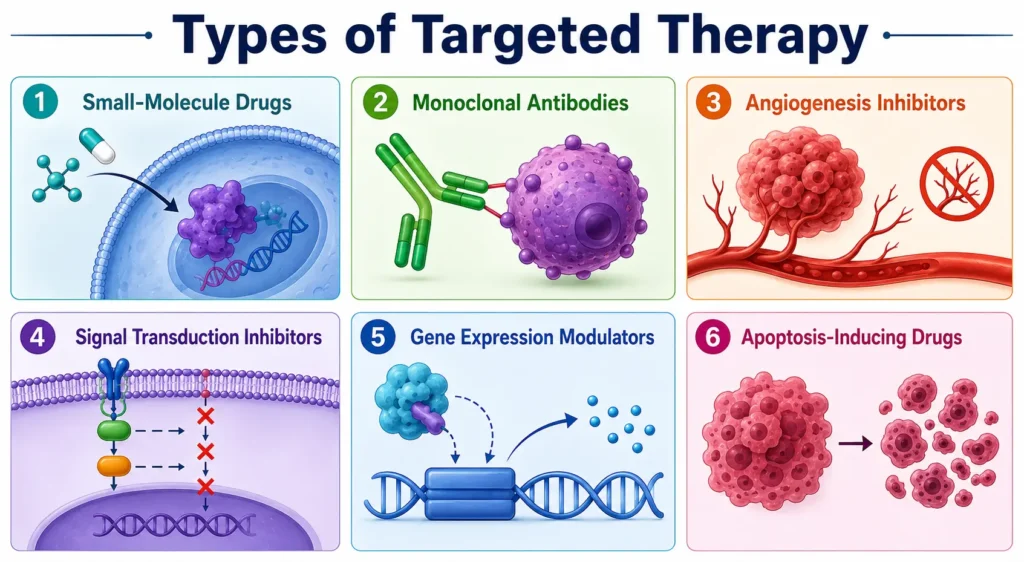
Small-molecule drugs – These are small enough to enter cancer cells and interfere with internal processes that drive growth, such as specific enzyme pathways.
Monoclonal antibodies – Lab-engineered proteins that attach to specific targets on the surface of cancer cells, blocking growth signals or flagging cells for destruction by the immune system.
Angiogenesis inhibitors – These drugs block the formation of new blood vessels that tumors rely on for nutrients and oxygen, effectively starving the cancer.
Signal transduction inhibitors – These interrupt the chain of signals inside cancer cells that tell them to grow and divide uncontrollably.
Gene expression modulators – These therapies alter the function of genes that control cell growth, helping to slow or stop cancer progression.
Apoptosis-inducing drugs – These therapies trigger programmed cell death in cancer cells that have otherwise learned to bypass this natural process.
Your oncologist will determine which type, or combination, is best suited to your cancer’s specific genetic profile.
Which Cancers Can Be Treated with Targeted Therapy?
For cancer treatment this therapy has become an important option for several cancer types where specific genetic mutations or protein markers have been identified, including:
- Breast cancer (particularly HER2-positive and hormone receptor-positive types)
- Lung cancer (especially with EGFR, ALK, or ROS1 mutations)
- Colorectal cancer
- Chronic myeloid leukemia (CML)
- Kidney cancer
- Melanoma with BRAF mutations
- Gastrointestinal stromal tumors (GISTs)
- Certain types of lymphoma
Whether it is an appropriate option depends on whether your specific tumor carries the genetic markers or mutations the drug is designed to target. This is why molecular and biomarker testing is such an essential first step before treatment begins.
Benefits of Targeted Therapy
The benefits of this therapy have made it an increasingly central part of modern cancer treatment plans. Key advantages of targeted therapy include:
Precision – By targeting the specific molecular drivers of cancer, treatment can be more focused and potentially more effective for patients whose tumors carry the relevant markers.
Reduced impact on healthy cells – Because targeted drugs are designed to act on cancer-specific features, they may cause less damage to normal, healthy tissue compared to traditional chemotherapy.
Personalized treatment – Genetic testing allows oncologists to match patients with the therapy most likely to work for their specific cancer profile.
Can be combined with other treatments – Targeted therapy is often used alongside chemotherapy, radiation, or immunotherapy to improve overall outcomes.
Option for resistant or recurrent cancers – For patients whose cancer carries specific mutations, targeted therapy can offer an effective option even when other treatments haven’t worked.
Targeted Therapy Side Effects
Like all cancer treatments, this therapy side effects are possible, although they often differ from those seen with traditional chemotherapy. Because targeted drugs act on specific pathways, side effects tend to relate to the particular target involved.
Common side effects include:
- Skin problems, such as rashes, dryness, or nail changes
- Fatigue
- High blood pressure
- Digestive issues, including diarrhea or nausea
- Slower wound healing
- Liver function changes, requiring regular blood monitoring
Less commonly, some patients may experience more serious effects such as bleeding problems, heart issues, or lung inflammation, depending on the specific drug used. Your care team will monitor you closely throughout treatment with regular blood work and check-ins, and most side effects can be managed effectively when identified early.
Targeted Therapy Treatment Procedure: Step-by-Step
Step 1: Initial Consultation
The oncologist evaluates the patient’s symptoms, medical history, previous treatments, biopsy reports, and imaging scans to determine whether targeted therapy is an appropriate treatment option.
Step 2: Diagnostic Testing
A biopsy, blood test, or tissue sample is collected to perform molecular profiling and biomarker testing. These tests identify specific genetic mutations or proteins (such as EGFR, HER2, ALK, BRAF, ROS1, KRAS, or BRCA) that can be targeted with specialized drugs.
Step 3: Treatment Planning
Based on the test results, the oncologist designs a personalized treatment plan, selecting the most suitable targeted therapy medication. The dosage, treatment schedule, and duration are tailored according to the patient’s cancer type, stage, and overall health.
Step 4: Pre-Treatment Assessment
Before starting therapy, baseline investigations are performed, which may include:
- Blood tests
- Liver and kidney function tests
- ECG or echocardiography (for certain medications)
- CT, MRI, or PET-CT scans
- Blood pressure and general health assessment
Step 5: Administration of Targeted Therapy
The medication is administered based on the prescribed treatment plan:
- Oral Targeted Therapy: Tablets or capsules taken daily or as directed.
- Intravenous (IV) Targeted Therapy: Infusions administered at scheduled intervals in a hospital or daycare chemotherapy unit.
Step 6: Regular Monitoring
During treatment, the oncology team closely monitors the patient’s response through:
- Routine blood investigations
- Physical examinations
- Imaging studies (CT, MRI, PET-CT)
- Assessment of treatment effectiveness and side effects
Step 7: Side Effect Management
Any treatment-related side effects such as skin rash, fatigue, diarrhea, high blood pressure, or liver function changes are promptly managed with medications, supportive care, and lifestyle recommendations. Treatment doses may be adjusted if required.
Step 8: Response Evaluation
After several treatment cycles, follow-up scans and laboratory tests are performed to evaluate:
- Tumor shrinkage
- Disease stabilization
- Cancer progression
- Overall treatment response
Step 9: Treatment Continuation or Modification
Based on the response, the oncologist may:
- Continue the current targeted therapy.
- Change to another targeted medication if resistance develops.
- Combine targeted therapy with chemotherapy, immunotherapy, radiation therapy, or surgery when clinically indicated.
Step 10: Long-Term Follow-Up
Even after successful treatment, patients undergo regular follow-up visits to:
- Monitor for recurrence.
- Assess long-term treatment outcomes.
- Manage any delayed side effects.
- Ensure ongoing health and quality of life.
Because many targeted therapies are taken as oral medications, some patients are able to continue treatment from home, with periodic visits to their oncology team for monitoring.
Is Targeted Therapy Effective?
For patients whose tumors carry the specific genetic mutations or markers a drug is designed to target, targeted therapy can be highly effective — often producing meaningful tumor shrinkage or slowing disease progression. However, effectiveness depends heavily on whether the cancer actually has the molecular features the therapy targets.
This is why genetic and biomarker testing is such a critical step before starting treatment. A targeted drug that works well for one patient’s cancer may have little to no effect on a tumor that doesn’t carry the same mutation. Your oncologist can help interpret your test results and explain what level of effectiveness you might realistically expect.
Targeted Therapy Success Rate
The targeted therapy success rate varies considerably depending on the cancer type, the specific mutation present, and the drug being used. For cancers with well-defined molecular targets — such as HER2-positive breast cancer or certain lung cancers with EGFR mutations — targeted therapies have shown strong response rates and improved survival outcomes compared to older treatment approaches.
For other cancers or in cases where resistance develops over time, success rates may be more variable. Some patients may need to switch to a different targeted drug or combination approach if their cancer develops resistance. Because outcomes are so closely tied to individual tumor genetics, it’s important to discuss your specific success rate expectations directly with your oncology team rather than relying on general averages.
Targeted Therapy vs Chemotherapy
When comparing targeted therapy vs chemotherapy, the key difference lies in precision. Chemotherapy works by attacking all rapidly dividing cells in the body, which includes cancer cells but also healthy cells in areas like hair follicles, bone marrow, and the digestive tract, leading to widely recognized side effects like hair loss and fatigue.
Targeted therapy, by contrast, is designed to act only on specific molecular features present in cancer cells, often resulting in a different and sometimes more manageable side-effect profile. However, targeted therapy only works if the cancer carries the specific mutation or marker the drug is designed for, while chemotherapy can be used more broadly across cancer types regardless of genetic profile. In many cases, the two approaches are combined to maximize effectiveness, using chemotherapy’s broad action alongside the precision of targeted drugs.
Targeted Therapy vs Immunotherapy
Patients often ask about targeted therapy vs immunotherapy, since both are considered more precise alternatives to traditional chemotherapy. The fundamental difference is in their approach: targeted therapy directly interferes with specific molecules or pathways inside or on the surface of cancer cells, essentially disrupting the cancer’s internal machinery. Immunotherapy, on the other hand, works by boosting or redirecting the body’s immune system to recognize and attack cancer cells on its own.
Targeted therapy requires the tumor to have a specific genetic mutation or marker to be effective, while immunotherapy’s effectiveness depends more on how “visible” the cancer is to the immune system and certain biomarkers like PD-L1 expression. Some treatment plans use both approaches together, leveraging targeted therapy’s precision alongside immunotherapy’s ability to create a lasting immune response. Your oncologist will determine which approach, or combination, best fits your specific diagnosis.
Targeted Therapy Cost in India
Targeted therapy cost is an important factor for many patients planning their treatment journey. Compared to many Western countries, the cost of targeted therapy in India is generally more affordable, though it can still represent a significant expense depending on several factors.
Costs can vary based on:
- The specific targeted drug prescribed
- Whether the drug is oral or requires IV administration
- Duration and number of treatment cycles needed
- Required genetic and biomarker testing
- Whether targeted therapy is combined with chemotherapy, radiation, or immunotherapy
- The specific cancer hospital in Noida or treatment center chosen
Many hospitals offer financial counseling services to help patients understand projected costs, navigate insurance coverage, and explore available assistance programs. Discussing cost expectations openly with your care team before beginning treatment can help you plan more confidently.
Why Choose Rama Hospital for Targeted Therapy?
Choosing the right hospital for a treatment as precise as targeted therapy can make a meaningful difference in your care experience and outcomes. As a trusted cancer hospital in Noida, Rama Hospital combines expert oncology care with the diagnostic capabilities needed to deliver advanced cancer treatment.
Here’s what makes Rama Hospital a strong choice for targeted therapy:
- Access to comprehensive genetic and biomarker testing to identify the most effective targeted drugs for your specific cancer
- Experienced oncologists who stay current with the latest developments in precision cancer care
- A multidisciplinary approach that combines targeted therapy with chemotherapy, radiation, or immunotherapy when appropriate
- Close monitoring throughout treatment to manage side effects proactively and adjust care plans as needed
- A patient-first philosophy that prioritizes clear communication and compassionate support at every stage
We’re committed to helping patients access the most appropriate, evidence-based treatment for their unique cancer diagnosis.
Conclusion
Targeted therapy has opened new doors in cancer treatment, offering a more precise approach for patients whose tumors carry specific genetic markers. While it isn’t suitable for every type of cancer, understanding your tumor’s molecular profile — and working closely with a qualified oncology specialist — can help determine whether this treatment path is right for you.
If you’re exploring targeted therapy or other advanced cancer treatment options, Rama Hospital is here to support you. As one of the Best Cancer Hospitals in Noida, we bring together skilled specialists and modern diagnostic resources to guide patients through every stage of their cancer care. Recognized as a leading Oncology Hospital in Noida, our team is ready to help you find the treatment approach best suited to your needs.
Frequently Asked Questions
1. How is targeted therapy different from regular chemotherapy?
Targeted therapy focuses on specific molecules or genetic mutations involved in cancer growth, while chemotherapy attacks all rapidly dividing cells in the body, including healthy ones.
2. Do I need genetic testing before starting targeted therapy?
Yes, most targeted therapies require biomarker or genetic testing of the tumor first to confirm whether the cancer carries the specific mutation the drug is designed to target.
3. Is targeted therapy given as a pill or an injection?
It depends on the specific drug. Many targeted therapies are available as oral pills taken at home, while others are administered through IV infusion at a hospital.
4. Can targeted therapy be combined with other cancer treatments?
Yes, targeted therapy is often combined with chemotherapy, radiation, or immunotherapy as part of a comprehensive treatment plan, depending on the cancer type and stage.
5. What happens if my cancer doesn’t respond to targeted therapy?
If a tumor develops resistance or doesn’t respond, your oncologist may recommend switching to a different targeted drug, adding another treatment, or exploring alternative options like immunotherapy or chemotherapy.
6. How do I know if I’m a candidate for targeted therapy?
An oncology specialist can order genetic and biomarker testing on your tumor to determine whether it carries mutations that targeted therapy drugs are designed to address.
7. Does insurance cover targeted therapy cost in India?
Coverage varies by insurance provider and policy. It’s best to check directly with your insurer and the hospital’s financial counseling team to understand what costs may be covered.