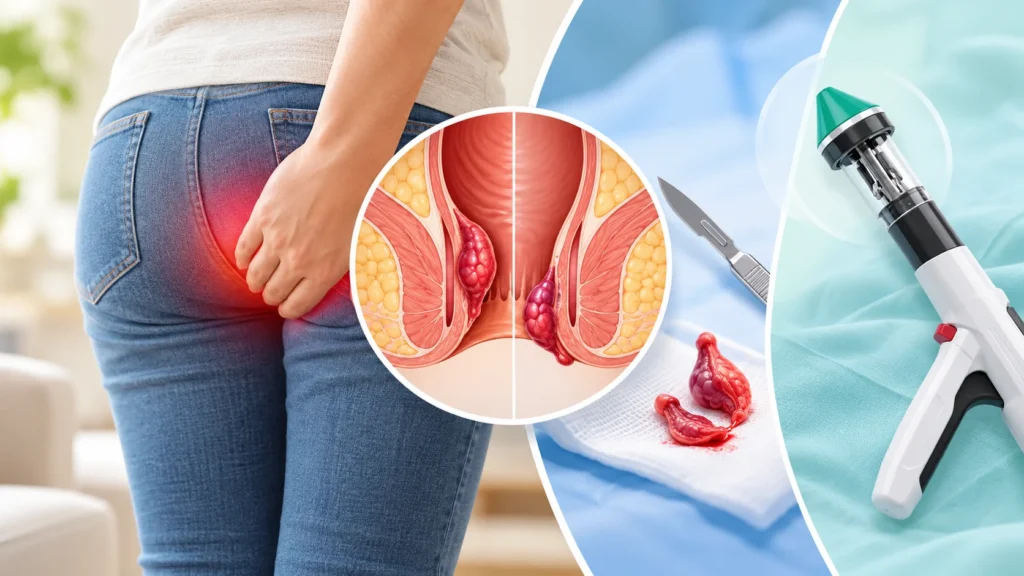
Hemorrhoidectomy is a surgical procedure used to treat severe or recurrent hemorrhoids, commonly known as piles. Hemorrhoids are swollen veins in the lower rectum and anus that can cause pain, bleeding, itching, swelling, and discomfort during bowel movements. While many cases of hemorrhoids can be managed with lifestyle changes, medicines, or minor procedures, some patients require surgery when symptoms are severe, persistent, or affecting quality of life.
Hemorrhoidectomy is considered the most definitive treatment for advanced hemorrhoids. It involves the surgical removal of hemorrhoidal tissue to relieve symptoms and prevent recurrence. There are different techniques available, including open hemorrhoidectomy, closed hemorrhoidectomy, and stapler hemorrhoidectomy. Each method has its own advantages, recovery patterns, and suitability depending on the patient’s condition.
What is Hemorrhoidectomy?
Hemorrhoidectomy is a surgical procedure to remove hemorrhoidal tissue that has become enlarged, symptomatic, or complicated. Hemorrhoids develop when the veins in the anal and rectal area swell due to increased pressure, straining, constipation, pregnancy, or prolonged sitting. Over time, these swollen veins can cause significant discomfort and bleeding.
When conservative treatments such as diet changes, fiber supplements, creams, or minor procedures like banding do not provide relief, surgery may be recommended. Hemorrhoidectomy offers long-term relief by physically removing the problematic tissue. It is usually performed under anesthesia and may be done as a day-care procedure or with a short hospital stay depending on the technique and patient’s condition.
The goal of hemorrhoidectomy is to reduce pain, stop bleeding, improve bowel function, and prevent recurrence. While recovery takes time, most patients experience significant improvement in symptoms and quality of life after healing.
Why Hemorrhoidectomy is Needed
Hemorrhoidectomy is not the first line of treatment for all hemorrhoids. It is reserved for specific cases where other treatments have failed or are not suitable.
Common reasons for recommending surgery
- Severe pain and discomfort affecting daily activities.
- Persistent bleeding leading to anemia or weakness.
- Large hemorrhoids that prolapse or come out during bowel movements.
- Hemorrhoids that cannot be pushed back inside.
- Recurrent hemorrhoids despite medical treatment.
- Thrombosed hemorrhoids causing acute pain.
- Complications such as infection or strangulation.
- Grade 3 or Grade 4 hemorrhoids as classified by doctors.
Why surgery may be better than other treatments
- Provides long-term relief compared to temporary measures.
- Removes the source of bleeding and pain directly.
- Reduces the chance of recurrence in severe cases.
- Addresses complications that minor procedures cannot fix.
- Improves overall bowel comfort and hygiene.
Types of Hemorrhoidectomy Procedures
There are several surgical techniques available for treating hemorrhoids. The choice depends on the severity, location, and patient’s overall health.
Open Hemorrhoidectomy
- Involves making an incision to remove hemorrhoidal tissue.
- The wound is left open to heal naturally over time.
- Suitable for large or external hemorrhoids.
- May have a longer recovery period but offers excellent long-term results.
- Often recommended for Grade 3 and Grade 4 hemorrhoids.
Closed Hemorrhoidectomy
- Similar to open surgery but the wound is stitched closed after removal.
- May heal faster than open technique in some cases.
- Reduces bleeding during recovery.
- Suitable for selected patients based on surgeon’s assessment.
Stapler Hemorrhoidectomy
- Also known as procedure for prolapse and hemorrhoids or PPH.
- Uses a special stapling device to reposition and secure hemorrhoidal tissue.
- Less painful than traditional surgery in many cases.
- Shorter recovery time and quicker return to normal activities.
- Best suited for internal hemorrhoids with prolapse.
Laser Hemorrhoidectomy
- Uses laser energy to remove or shrink hemorrhoidal tissue.
- Minimally invasive with less bleeding.
- Faster healing and reduced post-operative pain.
- Available in select centers with advanced equipment.
Preparation for Hemorrhoidectomy
Proper preparation helps ensure a smooth surgery and faster recovery.
Pre-surgery evaluation
- Detailed medical history and physical examination.
- Assessment of hemorrhoid grade and symptoms.
- Blood tests to check for anemia, infection, or clotting issues.
- Evaluation of other health conditions such as diabetes or heart disease.
- Discussion of anesthesia options and risks.
Dietary preparation
- High-fiber diet in the days before surgery to soften stools.
- Adequate fluid intake to prevent constipation.
- Avoidance of spicy, heavy, or irritating foods before the procedure.
- Fasting as instructed before anesthesia.
Medication review
- Inform the doctor about all current medicines.
- Some blood thinners or pain medicines may need to be paused.
- Continue essential medicines as advised by the surgeon.
- Arrange for someone to accompany you on the day of surgery.
The Surgical Procedure
Hemorrhoidectomy is performed in an operating room under sterile conditions.
Anesthesia
- Most procedures are done under spinal or general anesthesia.
- Local anesthesia with sedation may be used in select cases.
- The anesthesiologist monitors vital signs throughout the surgery.
Surgical steps for open hemorrhoidectomy
- The surgeon identifies the hemorrhoidal tissue to be removed.
- An incision is made around the hemorrhoid.
- The swollen vein and tissue are carefully excised.
- Bleeding is controlled using cautery or sutures.
- The wound may be left open or closed depending on the technique.
Surgical steps for stapler hemorrhoidectomy
- A circular stapling device is inserted into the anal canal.
- The device removes a ring of excess tissue and staples the remaining tissue.
- This repositions the hemorrhoids and reduces blood supply.
- The procedure is less invasive with smaller wounds.
Duration and hospital stay
- Surgery typically takes 30 to 60 minutes depending on complexity.
- Many patients go home the same day or after one night.
- Discharge depends on pain control, bowel function, and overall stability.
Recovery After Hemorrhoidectomy
Recovery is a gradual process that requires patience and proper care.
Immediate post-operative period
- Mild to moderate pain and discomfort is common.
- Some bleeding or discharge may occur during bowel movements.
- Pain medicines and stool softeners are prescribed.
- Rest is important in the first few days.
Wound care
- Keep the area clean and dry.
- Use warm sitz baths to reduce pain and promote healing.
- Change dressings as instructed by the surgeon.
- Avoid straining or excessive wiping.
Activity restrictions
- Avoid heavy lifting or strenuous exercise for a few weeks.
- Walking is encouraged to improve circulation.
- Return to work depends on the nature of job and recovery.
- Most patients resume normal activities within 2 to 4 weeks.
Bowel management
- Take stool softeners to prevent constipation.
- Do not delay bowel movements when the urge arises.
- Use a footstool to improve posture during defecation.
- Report severe pain or inability to pass stool to the doctor.
Diet After Hemorrhoidectomy
Diet plays a crucial role in healing and preventing complications.
Foods to include
- High-fiber foods such as fruits, vegetables, and whole grains.
- Plenty of water and fluids throughout the day.
- Soft, easy-to-digest meals in the first few days.
- Probiotic-rich foods like yogurt to support gut health.
- Lean proteins for tissue repair.
Foods to avoid
- Spicy, fried, or heavy foods that may irritate the bowel.
- Excessive caffeine or alcohol that can cause dehydration.
- Processed foods low in fiber.
- Very hot or very cold foods if they cause discomfort.
Hydration tips
- Drink at least 8 to 10 glasses of water daily.
- Include soups, coconut water, and fresh juices.
- Avoid sugary or carbonated drinks that may cause bloating.
Possible Complications
Like any surgery, hemorrhoidectomy carries some risks, though serious complications are uncommon.
Common post-operative issues
- Pain during bowel movements.
- Mild bleeding or spotting.
- Swelling or discomfort around the anal area.
- Temporary difficulty passing urine.
- Constipation if diet and fluids are inadequate.
Less common complications
- Infection at the surgical site.
- Excessive bleeding requiring medical attention.
- Delayed wound healing.
- Anal stenosis or narrowing in rare cases.
- Recurrence of hemorrhoids if risk factors persist.
When to contact the doctor
- Heavy bleeding that does not stop.
- Severe pain not relieved by medicines.
- Fever or signs of infection.
- Inability to pass urine or stool.
- Foul-smelling discharge from the wound.
Prevention of Recurrence
Preventing hemorrhoids from coming back requires long-term lifestyle changes.
Prevention pointers
- Maintain a high-fiber diet consistently.
- Drink adequate water every day.
- Avoid straining during bowel movements.
- Do not sit on the toilet for long periods.
- Exercise regularly to improve circulation.
- Maintain a healthy weight.
- Treat constipation or diarrhea promptly.
- Avoid heavy lifting without proper technique.
Long-term habits
- Respond to bowel urges without delay.
- Use proper posture during defecation.
- Include physical activity in daily routine.
- Manage chronic cough or other conditions that increase abdominal pressure.
Why Choose Rama Hospital for Hemorrhoidectomy?
Hemorrhoidectomy is a specialized procedure that requires experienced colorectal surgeons, proper anesthesia support, and post-operative care. A hospital setting ensures safety, monitoring, and access to advanced techniques.
- Expert evaluation by colorectal specialists.
- Access to open, stapler, and laser techniques.
- Safe anesthesia and pain management.
- Proper sterilization and infection control.
- Post-operative monitoring and support.
- Guidance on diet, recovery, and prevention.
Frequently Asked Questions (FAQs)
Is hemorrhoidectomy painful?
Some pain and discomfort are expected after surgery, especially during bowel movements. However, pain medicines, sitz baths, and proper care help manage symptoms effectively during recovery.
How long does it take to recover?
Most patients recover within 2 to 4 weeks, though complete healing may take longer. Stapler surgery often has a faster recovery compared to open hemorrhoidectomy.
Will hemorrhoids come back after surgery?
Recurrence is possible if risk factors like constipation, straining, or poor diet continue. Following preventive measures significantly reduces the chance of hemorrhoids returning.
What is the difference between open and stapler surgery?
Open surgery removes hemorrhoidal tissue directly and is suitable for severe cases. Stapler surgery repositions tissue using a stapling device and often has less pain and faster recovery for internal hemorrhoids.
Can I go home the same day?
Many patients are discharged on the same day or after one night, depending on the procedure and recovery. Your surgeon will advise based on your condition and pain control.
What should I eat after surgery?
Focus on high-fiber foods, plenty of fluids, and soft meals initially. Avoid spicy, fried, or irritating foods that may cause discomfort during bowel movements.
When can I return to work?
Most people return to light work within 1 to 2 weeks, depending on the nature of their job and recovery. Avoid heavy lifting or strenuous activity until cleared by the doctor.
Conclusion
Hemorrhoidectomy is a highly effective treatment for severe or recurrent hemorrhoids that significantly impact quality of life. Whether through open, closed, stapler, or laser techniques, surgery offers long-term relief from pain, bleeding, and prolapse. While recovery requires patience and proper care, most patients experience substantial improvement in symptoms and daily comfort.
The key to successful outcomes is choosing the right procedure, following post-operative instructions, maintaining a healthy diet, and adopting long-term preventive habits. For patients suffering from advanced piles, timely surgical intervention can prevent complications and restore normal bowel function.
Rama Hospital provides expert hemorrhoidectomy care with experienced colorectal surgeons, modern surgical techniques, and comprehensive post-operative support. Patients receive personalized treatment plans, clear guidance on recovery, and follow-up care to ensure complete healing and prevention of recurrence.