Thyroid surgery is a common treatment for many thyroid problems, including nodules, goiter, overactive thyroid, and thyroid cancer. In the past, thyroid surgery often meant a large incision in the neck, longer hospital stay, and more visible scarring. Today, minimally invasive thyroid surgery offers a safer, gentler, and more cosmetic-friendly option for many patients.
Minimally invasive thyroid surgery uses smaller incisions, specialized instruments, and advanced techniques to remove part or all of the thyroid gland with less pain, faster recovery, and better cosmetic results. It is suitable for selected patients based on the size of the thyroid, the type of disease, and overall health. For many people, it means going home sooner, returning to normal activities faster, and having a smaller, less noticeable scar.
What is Minimally Invasive Thyroid Surgery?
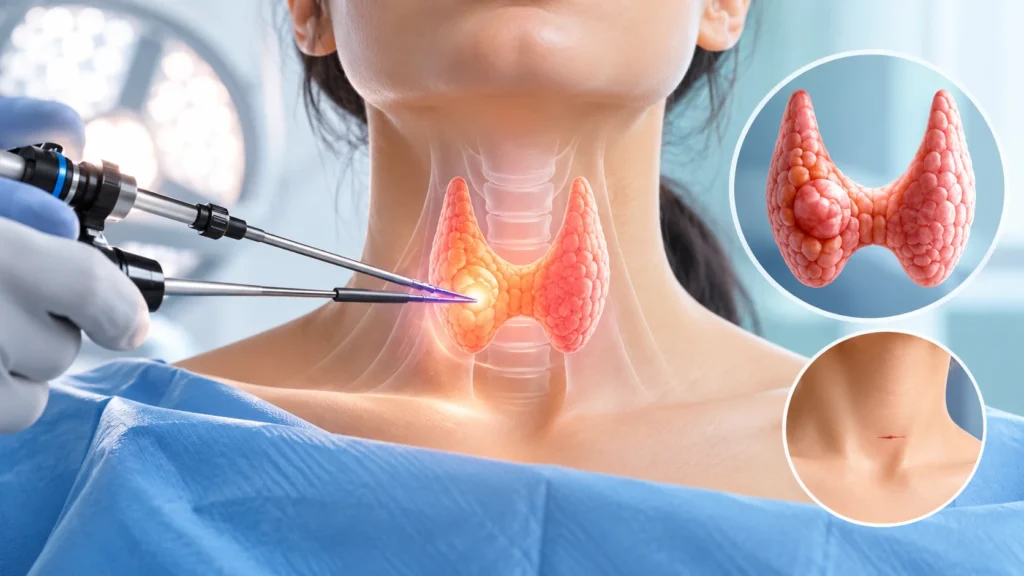
Minimally invasive thyroid surgery is a modern approach to thyroid operations that uses smaller incisions and specialized tools to remove part or all of the thyroid gland. Instead of a large cut across the front of the neck, the surgeon makes a small incision, often in a less visible area, and uses fine instruments and a camera to perform the surgery.
The thyroid is a butterfly-shaped gland in the lower front part of the neck. It produces hormones that control metabolism, energy, heart rate, and body temperature. When the thyroid develops nodules, becomes overactive, enlarges significantly, or shows signs of cancer, surgery may be recommended.
Minimally invasive techniques aim to achieve the same surgical goals as traditional open surgery but with less tissue damage, less pain, and better cosmetic outcomes. Not every patient is a candidate, but for suitable cases, it can be a very effective option.
Why is Thyroid Surgery Done?
Thyroid surgery is performed for several medical reasons. The decision depends on symptoms, test results, imaging, and biopsy findings.
Common reasons for thyroid surgery
- Large thyroid nodules that cause pressure, discomfort, or cosmetic concerns.
- Suspicious or cancerous nodules confirmed on biopsy.
- Overactive thyroid that does not respond well to medicines or radioactive iodine.
- Very large goiter causing difficulty in swallowing or breathing.
- Recurrent cysts or nodules that keep coming back.
- Multinodular goiter with compressive symptoms.
- Thyroid cancer requiring partial or total removal of the gland.
Goals of surgery
- Remove the diseased part of the thyroid safely.
- Preserve important structures such as the voice nerves and parathyroid glands.
- Relieve pressure symptoms in the neck.
- Reduce the risk of cancer spread when cancer is present.
- Improve cosmetic appearance when there is a large visible swelling.
Types of Minimally Invasive Thyroid Surgery
There are different minimally invasive techniques, and the choice depends on the patient’s condition and the surgeon’s expertise.
Minimally invasive open thyroidectomy
- Uses a smaller incision in the front of the neck compared to traditional surgery.
- Direct visualization of the thyroid with specialized retractors and instruments.
- Suitable for many nodules and selected cancers.
- Often done under general anesthesia.
Endoscopic thyroid surgery
- Uses a small camera and long, thin instruments.
- Incisions may be placed in less visible areas such as the armpit, chest, or behind the ear in some techniques.
- Provides magnified view of the surgical area.
- May take longer than open surgery but offers better cosmetic results in selected patients.
Robotic thyroid surgery
- Uses a robotic system controlled by the surgeon.
- Allows precise movements through small incisions.
- Often used for selected benign and early cancer cases.
- May offer better visualization and cosmetic outcomes in appropriate patients.
Video-assisted thyroid surgery
- Combines a small neck incision with video assistance.
- Helps the surgeon see structures more clearly.
- Reduces the size of the incision compared to conventional surgery.
Who is Eligible for Minimally Invasive Thyroid Surgery?
Not every patient is a candidate for minimally invasive thyroid surgery. Careful selection is important for safety and good outcomes.
Suitable candidates may include
- Patients with small to moderate-sized thyroid nodules.
- Patients with benign nodules causing symptoms or cosmetic concerns.
- Selected patients with early-stage, low-risk thyroid cancer.
- Patients without extensive scarring from previous neck surgery.
- Patients without very large goiters extending deeply into the chest.
- Patients who are medically fit for general anesthesia.
Patients who may need traditional open surgery
- Very large goiters causing severe compression.
- Advanced thyroid cancer with spread to nearby structures.
- Extensive previous neck surgery or radiation.
- Complex anatomy that makes minimally invasive approach unsafe.
- Certain medical conditions that increase surgical risk.
The surgeon will review ultrasound reports, biopsy results, blood tests, and overall health before recommending the best approach.
Pre-Surgery Evaluation
Before surgery, a thorough evaluation is done to ensure safety and plan the procedure.
Common pre-surgery steps
- Detailed history of symptoms and medical conditions.
- Physical examination of the neck and voice.
- Thyroid function tests to assess hormone levels.
- Ultrasound of the neck to evaluate nodules and lymph nodes.
- Fine needle aspiration biopsy if a nodule is suspicious.
- CT scan or other imaging if the goiter is large or extends into the chest.
- Voice assessment if there are pre-existing voice changes.
- Routine blood tests, ECG, and chest X-ray as needed.
- Discussion of risks, benefits, and alternatives with the patient.
Patient preparation
- Fasting for a specified period before surgery.
- Adjusting or stopping certain medicines as advised.
- Arranging for a family member to accompany the patient.
- Planning for time off work and help at home during recovery.
How is Minimally Invasive Thyroid Surgery Performed?
The exact steps depend on the technique used, but the overall goals are the same.
General steps of the procedure
- The patient is given general anesthesia and remains asleep during the surgery.
- A small incision is made in the neck or another selected area depending on the technique.
- Specialized instruments and a camera are used to access the thyroid gland.
- The surgeon carefully identifies and protects the voice nerves and parathyroid glands.
- Part or all of the thyroid gland is removed based on the disease.
- Bleeding is controlled, and the incision is closed with fine sutures or adhesive strips.
- A small drain may be placed in some cases to prevent fluid collection.
- The patient is shifted to the recovery room for monitoring.
Duration of surgery
- Surgery may take one to three hours depending on the complexity.
- Total time in the hospital may range from a few hours to one or two days.
Benefits of Minimally Invasive Thyroid Surgery
Minimally invasive thyroid surgery offers several advantages over traditional open surgery for suitable patients.
Key benefits
- Smaller incision and less visible scarring.
- Less post-operative pain and discomfort.
- Shorter hospital stay in many cases.
- Faster return to normal activities and work.
- Better cosmetic outcome, especially for young patients.
- Reduced risk of wound complications in selected cases.
- Magnified view for the surgeon, which may improve precision.
Quality of life improvements
- Less neck tightness and stiffness after surgery.
- Easier swallowing and speaking during recovery.
- Greater confidence due to smaller scar.
- Less need for strong pain medicines.
Risks and Possible Complications
Like any surgery, minimally invasive thyroid surgery carries some risks. Most patients do well, but it is important to be aware of possible complications.
General surgical risks
- Bleeding or hematoma in the neck.
- Infection at the incision site.
- Reaction to anesthesia.
- Fluid collection requiring drainage.
Thyroid-specific risks
- Temporary or permanent hoarseness due to voice nerve irritation.
- Low calcium levels due to parathyroid gland irritation.
- Need for additional surgery if more thyroid tissue must be removed.
- Scar formation or keloid in prone individuals.
- Rare injury to nearby structures such as the windpipe or esophagus.
Why risks are generally low
- Careful patient selection reduces complications.
- Experienced surgeons and modern equipment improve safety.
- Monitoring of calcium and voice function after surgery helps detect issues early.
Recovery After Surgery
Recovery is usually faster with minimally invasive techniques compared to traditional open surgery.
Hospital stay
- Many patients go home the same day or within twenty-four hours.
- Some may stay longer if there are medical reasons or if total thyroidectomy is done.
Pain and discomfort
- Mild to moderate pain is common in the first few days.
- Pain medicines are prescribed as needed.
- Neck stiffness may occur but usually improves quickly.
Wound care
- Keep the incision clean and dry as advised.
- Avoid applying creams or oils unless instructed.
- Watch for signs of infection such as increasing redness, swelling, or discharge.
Activity restrictions
- Avoid heavy lifting and strenuous activity for at least one to two weeks.
- Gentle neck movements are encouraged to prevent stiffness.
- Most people can return to desk work within one to two weeks, depending on recovery.
Voice and swallowing
- Mild hoarseness or throat discomfort is common in the first few days.
- Most voice changes improve within weeks.
- Persistent voice problems should be reported to the surgeon.
Diet After Thyroid Surgery
Diet plays a supportive role in recovery, especially in the first few days.
Early diet recommendations
- Start with soft, easy-to-swallow foods such as soups, khichdi, curd, and mashed foods.
- Avoid very hot, spicy, or rough foods initially.
- Drink plenty of fluids to stay hydrated.
Long-term diet advice
- Return to a normal balanced diet as tolerated.
- Include adequate protein for healing.
- Maintain sufficient calcium and vitamin D, especially if calcium levels are low.
- Follow specific advice if thyroid hormone replacement is started.
Follow-Up and Long-Term Care
Regular follow-up is important to monitor healing, thyroid function, and any need for further treatment.
Common follow-up steps
- Wound check within one to two weeks after surgery.
- Review of biopsy or final pathology report.
- Thyroid function tests to assess hormone levels.
- Calcium and parathyroid hormone tests if needed.
- Adjustment of thyroid hormone medication if total thyroidectomy is done.
- Ultrasound or other imaging if cancer was present.
Long-term care
- Lifelong thyroid hormone replacement may be needed after total thyroidectomy.
- Regular monitoring of TSH and dose adjustment as required.
- Ongoing surveillance for cancer patients as per oncology guidelines.
- Attention to calcium and vitamin D levels if parathyroid function is affected.
When to Seek Medical Help After Surgery
Most patients recover smoothly, but some symptoms need prompt medical attention.
- Increasing neck swelling or tightness.
- Difficulty breathing or swallowing.
- Persistent or worsening hoarseness.
- Signs of wound infection such as fever, redness, or discharge.
- Numbness or tingling around the lips or fingers.
- Severe pain not relieved by medicines.
- Sudden dizziness or fainting.
Why Choose Rama Hospital for Minimally Invasive Thyroid Surgery?
Thyroid surgery requires precision, experience, and advanced facilities. A hospital with a dedicated endocrine surgery team can offer safer and more effective care.
- Expert evaluation by endocrine surgeons and ENT specialists.
- Advanced imaging and biopsy support for accurate diagnosis.
- Modern operating rooms with minimally invasive and robotic capabilities.
- Intensive care and ward support for post-operative monitoring.
- Coordination with endocrinology, pathology, and oncology when needed.
Frequently Asked Questions (FAQs)
Who is a good candidate for this surgery?
Good candidates are patients with small to moderate-sized nodules, selected benign or early cancer cases, and no extensive previous neck surgery. The surgeon decides based on ultrasound, biopsy, and overall health.
Is minimally invasive thyroid surgery safe?
Yes, it is generally safe when performed by experienced surgeons in suitable patients. Like any surgery, it has risks, but careful selection and modern techniques help keep complications low.
Will I need thyroid medicine after surgery?
It depends on how much of the thyroid is removed. After total thyroidectomy, lifelong thyroid hormone replacement is usually needed. After partial removal, some patients may not need medicine, while others may need it later.
How long does recovery take?
Most patients feel much better within one to two weeks. Full recovery may take a few weeks, depending on the extent of surgery and individual healing. Many people return to desk work within one to two weeks.
Will there be a visible scar?
There will be a scar, but it is usually small and fades over time. In some techniques, the incision is placed in less visible areas to improve cosmetic results.
Can this surgery be done for thyroid cancer?
Yes, minimally invasive techniques can be used for selected early-stage, low-risk thyroid cancers. Advanced cancers may still require traditional open surgery for safety and complete removal.
What are the main risks of this surgery?
Main risks include bleeding, infection, temporary or permanent voice changes, and low calcium levels. Serious complications are uncommon when the surgery is done by experienced surgeons.
Conclusion
Minimally invasive thyroid surgery is a modern, effective option for many patients with thyroid nodules, goiter, overactive thyroid, or selected thyroid cancers. It offers smaller incisions, less pain, faster recovery, and better cosmetic outcomes compared to traditional open surgery. However, it is suitable only for carefully selected patients after thorough evaluation.
The most important steps are proper diagnosis, expert surgical planning, and structured follow-up for thyroid function and long-term health. For patients with neck swelling, voice changes, swallowing difficulty, or abnormal thyroid tests, a specialist evaluation can help determine the best treatment approach. With the right care, most patients recover well and return to normal life with good thyroid control.
Rama Hospital can provide expert evaluation, minimally invasive thyroid surgery, and comprehensive follow-up care to support safe treatment and long-term thyroid health.