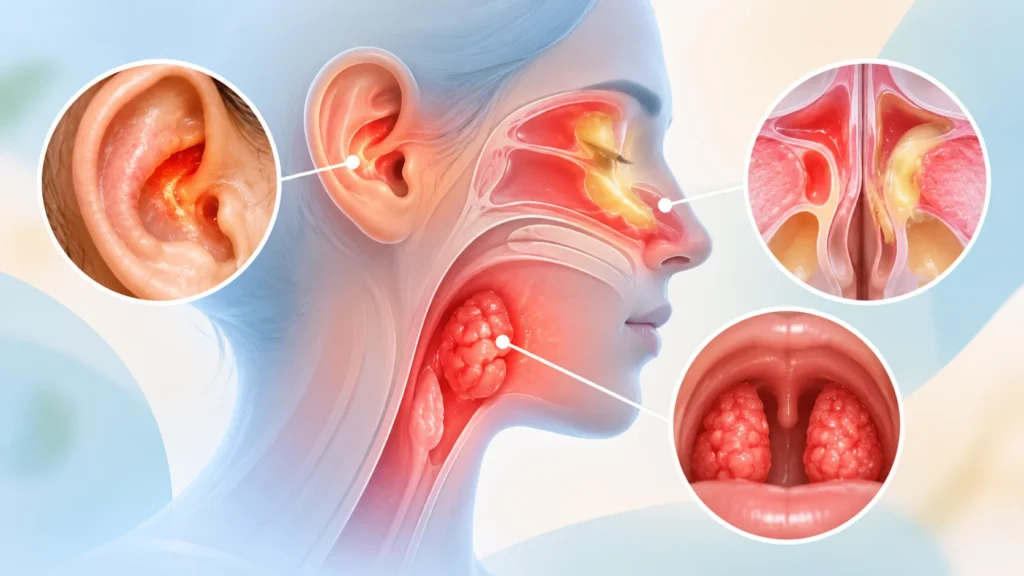
ENT infections are among the most common health problems seen in children and adults. The ear, nose, and throat are closely connected, so an infection in one area can easily affect the others. These infections can cause pain, fever, breathing difficulty, hearing problems, sleep disturbance, and reduced quality of life. While many cases are mild and improve with basic treatment, some can become recurrent or severe and need specialist care.
Tonsillitis, ear infections, and sinusitis are three of the most frequently diagnosed ENT infections. Tonsillitis affects the tonsils at the back of the throat. Ear infections affect the middle or outer ear and can cause pain and hearing issues. Sinusitis affects the sinuses around the nose and can lead to facial pain, congestion, and headache. All three conditions may be caused by viruses or bacteria and can occur alone or together.
What are ENT Infections?
ENT infections are infections that affect the ear, nose, and throat structures. These areas are lined with delicate tissue that can become inflamed when exposed to viruses, bacteria, or irritants. Because the ear, nose, and throat are connected through small passages, an infection in one area can spread or cause symptoms in another.
Common examples include tonsillitis, which affects the tonsils; otitis media or otitis externa, which affect the middle or outer ear; and sinusitis, which affects the air-filled spaces around the nose. These infections can be acute, lasting a short time, or chronic, lasting for weeks or months. They can occur at any age but are especially common in children due to their developing immune systems and smaller anatomical structures.
Types of ENT Infections
ENT infections can be grouped based on the area affected and the duration of symptoms.
Based on area affected
- Tonsillitis and throat infections affecting the tonsils and pharynx.
- Ear infections affecting the outer ear, middle ear, or inner ear structures.
- Sinus infections affecting the maxillary, frontal, ethmoid, or sphenoid sinuses.
- Combined infections where more than one area is involved at the same time.
Based on duration
- Acute infections, which start suddenly and usually last less than four weeks.
- Subacute infections, which last between four and twelve weeks.
- Chronic infections, which persist for more than twelve weeks or keep coming back.
- Recurrent infections, where a person has multiple episodes in a year.
Based on cause
- Viral infections, which are the most common and often improve on their own.
- Bacterial infections, which may need antibiotics if severe or prolonged.
- Fungal infections, which are less common but can occur in certain conditions.
- Allergy-related inflammation, which can mimic or worsen infection symptoms.
Causes of ENT Infections
ENT infections happen when germs enter the ear, nose, or throat and cause inflammation. The body’s immune response leads to swelling, pain, fever, and other symptoms.
Common causes include:
- Viral infections such as cold and flu viruses.
- Bacterial infections such as streptococcus or pneumococcus.
- Spread from upper respiratory infections like common cold.
- Allergies causing swelling and blockage of drainage pathways.
- Enlarged adenoids blocking nasal or ear passages in children.
- Exposure to smoke, pollution, or irritants.
- Poor hand hygiene and close contact with infected people.
- Swimming or water exposure in some ear infections.
- Structural issues such as a deviated nasal septum or narrow sinus openings.
- Weakened immunity due to illness, stress, or poor nutrition.
Why children are more affected
- Smaller Eustachian tubes that block easily.
- Larger adenoids relative to throat size.
- Developing immune systems.
- More frequent exposure to infections in school or daycare.
- Difficulty blowing the nose or clearing the ears properly.
Symptoms of ENT Infections
Symptoms vary depending on which area is infected and how severe the infection is.
Common symptoms across ENT infections
- Fever.
- Pain in the affected area.
- Swelling or redness.
- Difficulty swallowing or breathing.
- Fatigue and irritability.
- Reduced appetite.
- Headache.
- Sleep disturbance.
Symptoms of tonsillitis
- Severe sore throat.
- Pain while swallowing.
- Red and swollen tonsils.
- White or yellow patches on tonsils.
- Fever and chills.
- Swollen lymph nodes in the neck.
- Bad breath.
- Hoarse or changed voice.
- Ear pain referred from the throat.
Symptoms of ear infections
- Ear pain, especially in children.
- Feeling of fullness or pressure in the ear.
- Hearing difficulty or muffled hearing.
- Fluid drainage from the ear in some cases.
- Fever.
- Irritability and crying in young children.
- Balance problems or dizziness.
- Tugging or pulling at the ear in infants.
Symptoms of sinusitis
- Nasal congestion or blockage.
- Thick nasal discharge, yellow or green in color.
- Facial pain or pressure, especially around cheeks and forehead.
- Headache, often worse in the morning.
- Reduced sense of smell.
- Cough, often worse at night.
- Fever in acute cases.
- Bad breath.
- Tooth pain in upper teeth in some cases.
ENT Infections in Children
Children are more prone to ENT infections due to their anatomy and immune development.
Common patterns in children
- Frequent colds leading to secondary ear or sinus infections.
- Recurrent tonsillitis affecting school attendance and sleep.
- Ear infections causing hearing issues and speech delay if untreated.
- Mouth breathing due to nasal blockage.
- Snoring or sleep apnea due to enlarged tonsils or adenoids.
- Irritability, poor feeding, and sleep disturbance during infection.
Why early care matters in children
- Untreated ear infections can affect hearing and learning.
- Severe tonsillitis can cause breathing or swallowing problems.
- Chronic sinusitis can affect growth, sleep, and school performance.
- Recurrent infections may indicate underlying issues such as allergies or enlarged adenoids.
ENT Infections in Adults
Adults also get ENT infections, though the pattern may differ from children.
Common patterns in adults
- Sinusitis triggered by allergies, pollution, or dental issues.
- Tonsillitis that may become recurrent or chronic.
- Ear infections related to swimming, travel, or upper respiratory infections.
- Work and sleep disruption due to pain, congestion, or cough.
- Complications such as chronic sinusitis or persistent throat infection.
Risk factors in adults
- Smoking or exposure to smoke.
- Allergic rhinitis or asthma.
- Deviated nasal septum or nasal polyps.
- Dental infections affecting sinuses.
- Stress, poor sleep, and weakened immunity.
- Occupational exposure to dust or chemicals.
How are ENT Infections Diagnosed?
Diagnosis is based on symptoms, physical examination, and sometimes tests.
Diagnostic steps
- Detailed history of symptoms and their duration.
- History of previous infections or allergies.
- Examination of the throat, ears, and nose using special lights or scopes.
- Checking for fever, swollen lymph nodes, or tenderness.
- Assessment of breathing, hearing, and nasal airflow.
Tests that may be done if needed
- Throat swab to check for bacterial infection.
- Ear examination with an otoscope.
- Nasal endoscopy to view sinuses and nasal passages.
- Blood tests to assess infection or immunity.
- X-ray or CT scan of sinuses in chronic or severe cases.
- Hearing tests if ear infections are recurrent or persistent.
- Allergy testing if allergies are suspected as a trigger.
When tests are more likely
- Severe or prolonged symptoms.
- Recurrent infections.
- Suspected complications.
- Poor response to initial treatment.
- Underlying structural or immune concerns.
Treatment for ENT Infections
Treatment depends on the type of infection, severity, and whether it is viral or bacterial.
1. Supportive care
Most mild viral infections improve with basic supportive care.
- Rest and adequate sleep.
- Plenty of fluids to prevent dehydration.
- Warm salt water gargles for throat pain.
- Steam inhalation for nasal and sinus relief.
- Pain and fever relief medicines as advised.
- Nasal saline sprays or rinses for congestion.
2. Medicines
Medicines may be needed depending on the cause and severity.
- Antibiotics for confirmed or strongly suspected bacterial infections.
- Anti-allergy medicines if allergies contribute to symptoms.
- Nasal steroid sprays for chronic sinus inflammation.
- Decongestants for short-term relief of nasal blockage.
- Ear drops for certain types of ear infection.
- Throat lozenges or sprays for pain relief.
3. Treatment for tonsillitis
- Supportive care for viral tonsillitis.
- Antibiotics for bacterial tonsillitis when indicated.
- Pain relief and hydration.
- Tonsillectomy surgery may be considered for recurrent or severe cases.
4. Treatment for ear infections
- Pain relief and observation for mild cases.
- Antibiotics for moderate to severe bacterial infections.
- Ear drops for outer ear infections.
- Grommet insertion or adenoid surgery in selected recurrent cases.
5. Treatment for sinusitis
- Nasal saline irrigation and steam.
- Antibiotics for bacterial sinusitis.
- Nasal steroid sprays for inflammation.
- Treatment of allergies or dental causes if present.
- Sinus surgery in chronic or resistant cases.
6. When surgery is considered
- Recurrent tonsillitis affecting quality of life.
- Obstructive sleep apnea due to enlarged tonsils or adenoids.
- Chronic sinusitis not responding to medical treatment.
- Recurrent ear infections with hearing loss or fluid buildup.
- Structural problems blocking normal drainage.
Home Care and Self-Management
Many mild ENT infections can be supported with careful home care.
Helpful home care steps
- Drink warm fluids such as soups and herbal teas.
- Use a humidifier or steam to ease congestion.
- Avoid smoke, strong perfumes, and irritants.
- Rest the voice and avoid shouting.
- Keep the head slightly elevated during sleep.
- Practice good hand hygiene to prevent spread.
- Avoid sharing utensils or towels during infection.
Foods that may help
- Warm, soft, and easy-to-swallow foods.
- Soups, broths, and porridge.
- Fruits and vegetables rich in vitamins.
- Adequate protein for recovery.
Things to avoid
- Very spicy or acidic foods if throat is sore.
- Cold drinks if they worsen symptoms.
- Smoking and alcohol during infection.
- Self-medication with antibiotics without advice.
Possible Complications
Most ENT infections improve with proper care, but complications can occur if ignored or poorly treated.
Complications of tonsillitis
- Abscess around the tonsil.
- Difficulty breathing or swallowing.
- Spread of infection to nearby areas.
- Recurrent infections affecting daily life.
- Sleep apnea due to enlarged tonsils.
Complications of ear infections
- Temporary or permanent hearing loss.
- Fluid buildup behind the eardrum.
- Rupture of the eardrum in severe cases.
- Spread of infection to nearby bone or structures.
- Speech and learning issues in children with chronic problems.
Complications of sinusitis
- Chronic sinus inflammation and polyps.
- Spread of infection to eyes or brain in rare cases.
- Worsening of asthma or lung symptoms.
- Dental problems related to sinus infection.
- Persistent headache and facial pain.
When to See a Doctor
Medical evaluation is important if symptoms are severe, prolonged, or recurrent.
- High fever lasting more than two to three days.
- Severe throat pain with difficulty swallowing.
- Ear pain with discharge or hearing loss.
- Nasal congestion and facial pain lasting more than ten days.
- Recurrent infections within a short period.
- Symptoms that do not improve with basic care.
- Breathing difficulty or loud snoring.
- Swelling around the eyes or severe headache.
Prevention of ENT Infections
Prevention focuses on reducing exposure to germs and supporting overall immunity.
Prevention pointers
- Wash hands regularly, especially before eating.
- Avoid close contact with people who have active infections.
- Cover mouth and nose while coughing or sneezing.
- Keep vaccinations up to date, including flu and pneumococcal vaccines.
- Manage allergies with appropriate treatment.
- Avoid smoking and secondhand smoke.
- Maintain good nasal hygiene with saline rinses if prone to sinus issues.
- Ensure adequate sleep, nutrition, and hydration.
- Treat dental problems that may affect sinuses.
- Follow swimming and water hygiene advice to prevent ear infections.
For children
- Teach proper handwashing habits.
- Avoid bottle feeding while lying flat.
- Keep immunizations on schedule.
- Limit exposure to sick contacts when possible.
- Seek early care for persistent cold or ear symptoms.
Why Choose Rama Hospital for ENT Infection Care?
ENT infections may seem common, but proper diagnosis and treatment are important to prevent complications and recurrence. A hospital with experienced ENT specialists, proper diagnostic tools, and surgical support can provide comprehensive care.
- Accurate diagnosis using proper examination and tests.
- Differentiation between viral and bacterial infections.
- Safe and appropriate use of antibiotics.
- Access to minor and major ENT procedures when needed.
- Coordinated care for children, adults, and complex cases.
- Follow-up to ensure complete recovery and prevent recurrence.
Frequently Asked Questions (FAQs)
Are ENT infections contagious?
Many ENT infections, especially viral ones, are contagious. They can spread through coughing, sneezing, close contact, or shared utensils. Good hand hygiene and avoiding close contact during illness can reduce the risk of spreading infection to others.
When are antibiotics needed for ENT infections?
Antibiotics are needed only for confirmed or strongly suspected bacterial infections. Most viral infections do not benefit from antibiotics. A doctor will decide based on symptoms, examination, and sometimes tests such as throat swab or ear examination.
Can ENT infections cause hearing loss?
Yes, ear infections can cause temporary hearing loss due to fluid buildup or inflammation. Most cases improve with treatment, but recurrent or severe infections may need further evaluation. Early care helps protect long-term hearing, especially in children.
How can I tell if it is sinusitis or a common cold?
A common cold usually improves within a week with mild symptoms. Sinusitis often lasts longer, with thick nasal discharge, facial pain, and headache. If symptoms persist beyond ten days or worsen after initial improvement, sinusitis is more likely.
Is surgery always needed for recurrent tonsillitis?
No, surgery is not always needed. It is considered when infections are very frequent, severe, or causing complications such as sleep apnea. Many cases can be managed with medical treatment and lifestyle measures.
Can allergies cause ENT infections?
Allergies do not directly cause infection but can increase the risk. Allergic swelling can block nasal and ear passages, making infections more likely. Treating allergies can reduce the frequency of ENT infections in susceptible people.
How can I prevent ENT infections in my child?
Good hand hygiene, up-to-date vaccinations, and avoiding smoke exposure are key. Managing allergies, ensuring proper nasal care, and seeking early treatment for colds can also help. Breastfeeding and proper feeding position may reduce ear infection risk in infants.
Conclusion
ENT infections such as tonsillitis, ear infections, and sinusitis are very common but should not be ignored. They can cause significant discomfort, affect sleep, hearing, breathing, and daily activities, and sometimes lead to complications if not treated properly. The good news is that most cases improve with timely diagnosis, appropriate treatment, and preventive care.
The most important steps are recognizing warning signs, avoiding self-medication, and seeking medical advice when symptoms are severe or recurrent. For patients with frequent throat infections, persistent ear pain, chronic nasal blockage, or sleep disturbance, a specialist evaluation can make a major difference. With the right care, patients can recover fully and reduce the risk of future infections.
Rama Hospital can help evaluate ENT infections, provide appropriate treatment, and offer guidance on prevention and long-term care for both children and adults.