-

-

Barrett’s esophagus

Barrett’s esophagus

Barrett’s esophagus

Barrett's Esophagus: Causes, Symptoms, Diagnosis, Treatment, and Surveillance

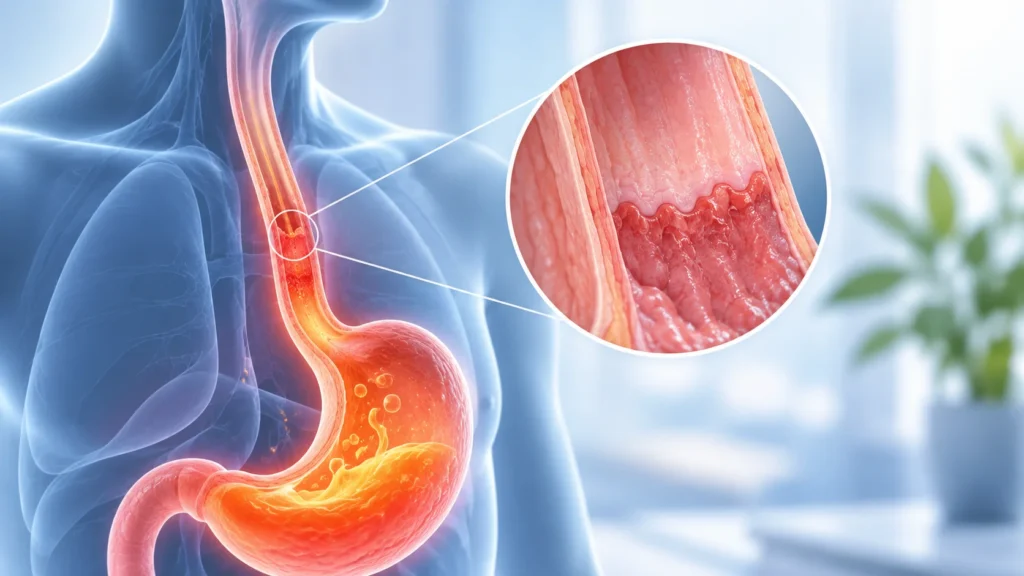
Barrett’s esophagus is a condition in which the normal lining of the lower esophagus changes due to long-term acid exposure. The esophagus is the food pipe that carries food from the mouth to the stomach. Normally, it is lined with a type of cell that is not designed to handle strong stomach acid. When acid repeatedly flows back from the stomach into the esophagus over many years, the body may try to protect itself by changing the lining to a more acid-resistant type. This change is called Barrett’s esophagus.

Most people with Barrett’s esophagus have a long history of acid reflux or gastroesophageal reflux disease, often called GERD. Many patients have had heartburn, regurgitation, or chest discomfort for years before the condition is detected. Barrett’s esophagus itself may not cause new symptoms, but it is important because it increases the risk of developing a type of cancer called esophageal adenocarcinoma. The risk is still small for most patients, but it is higher than in people without Barrett’s.

What is Barrett’s Esophagus?

Barrett’s esophagus is a condition where the normal squamous lining of the lower esophagus is replaced by a different type of lining called columnar epithelium. This change happens as a response to chronic acid exposure. The new lining is more similar to the lining of the intestine and can better tolerate acid, but it also carries a small risk of developing abnormal cells over time.

The condition is usually diagnosed during an endoscopy, when a gastroenterologist sees a change in the color and texture of the lower esophageal lining. Biopsy samples are taken to confirm the diagnosis under a microscope. Barrett’s esophagus is considered a premalignant condition, which means it can increase the risk of cancer, but most patients will never develop cancer.

Barrett’s esophagus is more common in adults over fifty, in people with long-standing reflux, and in those with additional risk factors such as obesity, smoking, or family history. It is often found in patients who have been treated for GERD for many years.

Causes of Barrett’s Esophagus

The main cause of Barrett’s esophagus is chronic exposure of the lower esophagus to stomach acid and bile. Over time, this repeated irritation leads to changes in the cells lining the esophagus.

Common causes and contributing factors

  • Long-standing gastroesophageal reflux disease or GERD.
  • Frequent acid reflux, especially at night.
  • Weak lower esophageal sphincter that allows acid to flow back.
  • Hiatal hernia, where part of the stomach moves upward into the chest.
  • Obesity, which increases pressure on the stomach and worsens reflux.
  • Smoking, which relaxes the sphincter and damages the esophageal lining.
  • Alcohol use, which can irritate the esophagus and worsen reflux.
  • Diet high in fatty, spicy, or acidic foods.
  • Large meals and lying down soon after eating.
  • Certain medicines that relax the sphincter or irritate the esophagus.

Why the lining changes

The normal esophageal lining is not designed to handle strong acid. When acid reflux happens frequently, the body tries to protect the area by changing the cell type. This new lining is more resistant to acid but is also more prone to developing abnormal changes over many years. This is why long-term control of reflux is so important.

Risk Factors for Barrett’s Esophagus

Some people are more likely to develop Barrett’s esophagus than others.

Higher-risk groups

  • Adults over the age of fifty.
  • Men, who are more commonly affected than women.
  • People with long-standing GERD, especially for more than five to ten years.
  • Patients with frequent or severe heartburn and regurgitation.
  • Individuals with a hiatal hernia.
  • People who are overweight or obese.
  • Smokers and former smokers.
  • People with a family history of Barrett’s esophagus or esophageal cancer.
  • Individuals with central obesity or large waist size.
  • Patients with nighttime reflux symptoms.

Why risk increases in these groups

  • Long-term acid exposure causes more damage to the esophageal lining.
  • Age-related changes make the sphincter weaker and healing slower.
  • Obesity increases abdominal pressure and reflux episodes.
  • Smoking reduces blood flow and impairs tissue repair.
  • Genetic factors may make some people more susceptible to cell changes.

Symptoms of Barrett’s Esophagus

Barrett’s esophagus itself often does not cause specific symptoms. Most symptoms come from the underlying acid reflux rather than the Barrett’s change itself.

Common symptoms related to reflux

  • Heartburn, especially after meals or when lying down.
  • Sour or bitter taste in the mouth.
  • Regurgitation of food or acid.
  • Chest discomfort or burning sensation.
  • Difficulty swallowing or feeling of food sticking.
  • Chronic cough or throat clearing.
  • Hoarseness or voice changes.
  • Bloating or belching.
  • Nausea after meals.
  • Worsening symptoms at night.

Symptoms that need attention

  • Progressive difficulty swallowing.
  • Painful swallowing.
  • Unintentional weight loss.
  • Vomiting blood or black stools.
  • Persistent chest pain not related to heart disease.
  • Anemia or fatigue without clear cause.

These symptoms do not always mean cancer, but they should be evaluated promptly to rule out serious complications.

How is Barrett’s Esophagus Diagnosed?

Diagnosis is based on endoscopy and biopsy. Symptoms and risk factors help decide who should be tested, but the diagnosis can only be confirmed by examining the esophageal lining and tissue samples.

Diagnostic steps

  • Detailed history of reflux symptoms and duration.
  • Assessment of risk factors such as age, sex, obesity, smoking, and family history.
  • Physical examination and review of other medical conditions.
  • Upper gastrointestinal endoscopy to visualize the esophagus and stomach.
  • Biopsy of any abnormal-looking areas in the lower esophagus.
  • Pathology examination to confirm Barrett’s lining and check for dysplasia.

What endoscopy shows

  • Change in the color of the lower esophageal lining from pale pink to salmon-colored.
  • Irregular or raised areas that may need closer evaluation.
  • Presence of inflammation, ulcers, or strictures.
  • Hiatal hernia or other structural changes.

Importance of biopsy

Biopsy is essential because the appearance alone is not enough to confirm Barrett’s esophagus. The pathologist looks for specific cell changes and checks for dysplasia, which means abnormal cell growth. Dysplasia can be low-grade or high-grade, and this finding guides treatment and surveillance plans.

Treatment for Barrett’s Esophagus

Treatment focuses on controlling acid reflux, monitoring for cell changes, and treating any dysplasia or early cancer if present. Not all patients need aggressive treatment, but all need proper follow-up.

1. Acid suppression therapy

Reducing acid exposure is the cornerstone of management.

  • Proton pump inhibitors are commonly prescribed to reduce stomach acid.
  • These medicines help heal inflammation and reduce symptoms.
  • Long-term use is often needed to protect the esophageal lining.
  • Proper timing and dosing improve effectiveness.

2. Lifestyle and dietary measures

Lifestyle changes can significantly reduce reflux and support treatment.

  • Weight loss if overweight or obese.
  • Avoiding large meals and eating smaller, more frequent meals.
  • Not lying down for at least two to three hours after eating.
  • Elevating the head of the bed for nighttime reflux.
  • Avoiding trigger foods such as spicy, fatty, or acidic items.
  • Reducing caffeine, chocolate, mint, and carbonated drinks.
  • Stopping smoking completely.
  • Limiting alcohol intake.
  • Wearing loose clothing around the abdomen.

3. Endoscopic treatment for dysplasia

If biopsy shows dysplasia, endoscopic treatment may be recommended.

  • Endoscopic mucosal resection to remove abnormal areas.
  • Radiofrequency ablation to destroy abnormal lining.
  • Cryotherapy or other ablation techniques in selected cases.
  • These procedures aim to remove or destroy dysplastic tissue while preserving the esophagus.

4. Surgical options

Surgery is considered in selected patients with severe reflux or complications.

  • Laparoscopic fundoplication to strengthen the lower esophageal sphincter.
  • Hiatal hernia repair if present.
  • Surgery may reduce reflux and improve symptoms in appropriate candidates.
  • Not all patients with Barrett’s need surgery, but it can be helpful in some cases.

5. Surveillance endoscopy

Regular follow-up endoscopy is important to monitor for cell changes.

  • Patients without dysplasia need periodic endoscopy at recommended intervals.
  • Patients with low-grade dysplasia need closer surveillance or treatment.
  • Patients with high-grade dysplasia need more intensive management.
  • Surveillance helps detect abnormal changes early when they are most treatable.

Surveillance and Monitoring

Surveillance is a key part of Barrett’s esophagus management. The goal is to detect any progression to dysplasia or early cancer at a stage when treatment is most effective.

Surveillance pointers

  • Regular endoscopy at intervals based on biopsy results.
  • Careful biopsy sampling during each endoscopy.
  • Comparison of findings over time to detect changes.
  • Prompt evaluation of new or worsening symptoms.
  • Continued acid suppression and lifestyle measures between scopes.

Why surveillance matters

Most patients with Barrett’s esophagus will never develop cancer, but the risk is higher than in the general population. Regular monitoring allows doctors to detect abnormal cell changes early. Early detection means simpler treatment and better outcomes.

Possible Complications

Barrett’s esophagus can lead to complications if not properly managed.

Complications related to reflux

  • Esophagitis or inflammation of the esophagus.
  • Esophageal ulcers.
  • Strictures or narrowing of the esophagus causing swallowing difficulty.
  • Chronic cough, hoarseness, or throat irritation.
  • Dental erosion due to acid exposure.
  • Sleep disturbance due to nighttime reflux.

Complications related to Barrett’s changes

  • Low-grade dysplasia.
  • High-grade dysplasia.
  • Esophageal adenocarcinoma in a small proportion of patients.
  • Anxiety or worry about cancer risk.

Why complications happen

Ongoing acid exposure continues to irritate the esophageal lining. Over time, this can lead to inflammation, scarring, and cell changes. That is why controlling reflux and attending surveillance endoscopies are so important.

When to See a Doctor

Medical evaluation is important for people with long-standing reflux or risk factors for Barrett’s esophagus.

  • Heartburn or reflux symptoms for more than five years.
  • Frequent symptoms despite over-the-counter medicines.
  • Difficulty swallowing or pain with swallowing.
  • Unintentional weight loss.
  • Persistent chest discomfort not explained by heart disease.
  • Nighttime reflux that disturbs sleep.
  • A family history of Barrett’s esophagus or esophageal cancer.
  • Long-standing obesity with severe reflux.

Prevention of Barrett’s Esophagus

Not all cases can be prevented, but risk can be reduced by controlling reflux and adopting healthy habits.

Prevention pointers

  • Treat GERD symptoms early and effectively.
  • Maintain a healthy weight.
  • Avoid smoking and limit alcohol.
  • Follow a balanced diet low in fatty and acidic foods.
  • Eat smaller meals and avoid late-night eating.
  • Elevate the head of the bed if nighttime reflux is present.
  • Take prescribed acid-reducing medicines regularly.
  • Attend follow-up appointments as advised.
  • Seek evaluation for long-standing reflux rather than self-medicating indefinitely.

For people with chronic reflux

  • Do not ignore symptoms that persist for years.
  • Ask about the need for endoscopy if risk factors are present.
  • Keep a record of symptoms and response to treatment.
  • Work with a gastroenterologist for long-term management.

Why Choose Rama Hospital for Barrett’s Esophagus Care?

Barrett’s esophagus requires careful diagnosis, long-term management, and expert endoscopic care. A hospital with experienced gastroenterologists, advanced endoscopy facilities, and a structured surveillance program can make a major difference in outcomes.

  • Expert evaluation by gastroenterology specialists.
  • High-quality endoscopy with careful biopsy sampling.
  • Access to advanced endoscopic treatments for dysplasia.
  • Structured surveillance program for long-term monitoring.
  • Coordinated care for reflux, lifestyle, and related conditions.
  • Patient education about risk, surveillance, and prevention.

Frequently Asked Questions (FAQs)

Is Barrett’s esophagus the same as GERD?

No, GERD is acid reflux disease, while Barrett’s esophagus is a change in the esophageal lining caused by long-term GERD. Not everyone with GERD develops Barrett’s, but most people with Barrett’s have a history of significant reflux.

Can Barrett’s esophagus be cured?

The cell change itself may not fully reverse, but the condition can be managed effectively. Acid control, lifestyle changes, and endoscopic treatment when needed can reduce symptoms and lower cancer risk. Many patients live normal lives with proper care.

Does Barrett’s esophagus always lead to cancer?

No, most patients with Barrett’s esophagus never develop cancer. The risk is higher than in people without Barrett’s, but it is still small for most individuals. Regular surveillance helps detect any abnormal changes early.

How is Barrett’s esophagus diagnosed?

It is diagnosed by upper gastrointestinal endoscopy with biopsy. The endoscopy shows changes in the esophageal lining, and biopsy confirms the cell type and checks for dysplasia or early cancer.

What is dysplasia in Barrett’s esophagus?

Dysplasia means abnormal cell growth seen under the microscope. It can be low-grade or high-grade. High-grade dysplasia carries a higher risk of progressing to cancer and usually needs more intensive treatment or closer surveillance.

How often do I need an endoscopy for Barrett’s esophagus?

The frequency depends on biopsy results and individual risk. Patients without dysplasia usually need endoscopy every few years, while those with dysplasia need more frequent monitoring or treatment. Your gastroenterologist will advise the right interval for you.

Can lifestyle changes help Barrett’s esophagus?

Yes, lifestyle changes such as weight loss, diet modification, avoiding late meals, stopping smoking, and elevating the head of the bed can reduce reflux. This helps protect the esophagus and supports medical treatment.

Conclusion

Barrett’s esophagus is a condition caused by long-term acid reflux that changes the lining of the lower esophagus. While it increases the risk of esophageal cancer, most patients will never develop cancer if the condition is properly managed. The key to good outcomes is early diagnosis, effective acid control, regular surveillance, and healthy lifestyle habits.

For patients with long-standing heartburn, regurgitation, or risk factors such as obesity, smoking, or family history, medical evaluation is important. With the right care, Barrett’s esophagus can be monitored and treated effectively, reducing risk and providing peace of mind.

Rama Hospital can help evaluate Barrett’s esophagus, provide expert endoscopy and biopsy, offer advanced endoscopic treatments when needed, and support patients with long-term surveillance and reflux management.

Table of Contents

Explore More

What to Know More About Barrett’s esophagus

Find Ailments & Treatments

Search Ailments

Quickly find the information you need. Search our database to explore detailed information on various diseases and conditions, including symptoms, causes, and treatment options.

Search Treatments

Quickly find the information you need. Search our database to explore detailed information on various diseases and conditions, including symptoms, causes, and treatment options.

Recommended Reading

Video Playlist

No rows found.

Experience Healthcare the Rama Way

Emergency • OPD • Surgery • ICU Care

Need Help? Talk to our experts

Get a callback from our experts

Request a callback