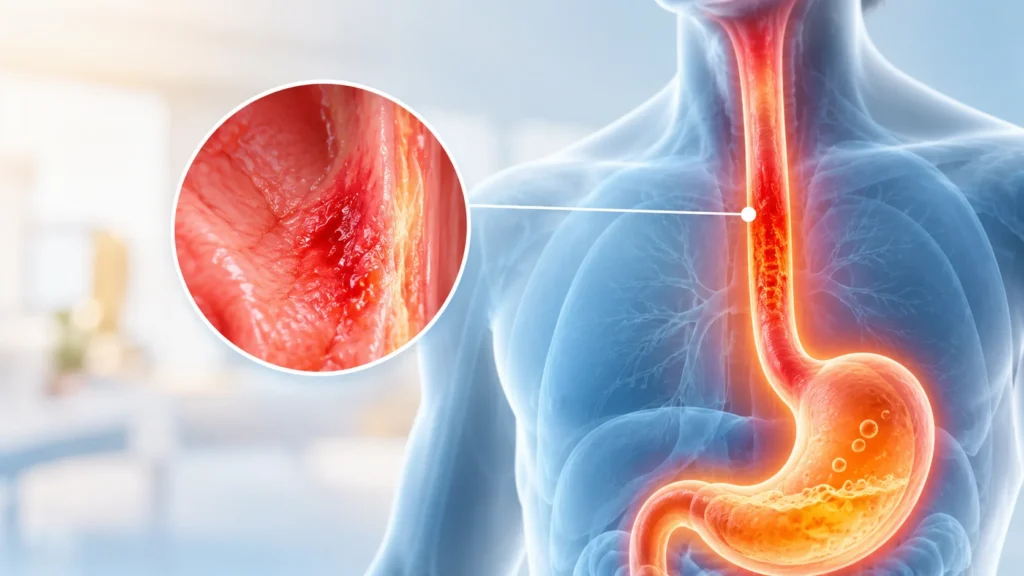
Esophagitis is inflammation of the esophagus, the food pipe that carries food and liquids from the mouth to the stomach. When the lining of the esophagus becomes irritated, swollen, or damaged, it can cause pain, burning, difficulty swallowing, heartburn, and other uncomfortable symptoms. In many cases, esophagitis is related to acid reflux, where stomach acid flows back into the esophagus and irritates its delicate lining.
Esophagitis is more common than many people realize. It can affect people of all ages, but it is especially common in adults with long-standing acid reflux, obesity, hiatal hernia, or certain lifestyle habits. If left untreated, this can lead to complications such as ulcers, narrowing of the esophagus, bleeding, or changes in the lining that increase long-term risk.
What is Esophagitis?
Esophagitis means inflammation of the esophagus. The esophagus is a muscular tube that connects the throat to the stomach. Its inner lining is designed to handle food and liquids, but it is not meant to handle strong stomach acid or certain irritants for long periods.
When the esophageal lining is repeatedly exposed to acid, infection, medicines, or other irritants, it can become red, swollen, and sometimes develop small breaks or ulcers. This leads to symptoms such as burning in the chest, pain when swallowing, sour taste in the mouth, or a feeling that food is stuck.
This can be mild and improve with simple changes. It can also be severe and require medicines, endoscopy, or other treatments. Understanding the cause is important because treatment depends on whether the problem is due to acid reflux, infection, medicines, allergy, or another condition.
Types of Esophagitis
This can be classified based on the cause and the pattern of inflammation.
Reflux esophagitis
- Caused by stomach acid flowing back into the esophagus.
- Most common type of esophagitis.
- Often linked to GERD or chronic acid reflux.
- Can lead to erosions or ulcers over time.
Eosinophilic esophagitis
- Caused by an allergic or immune reaction in the esophagus.
- Often seen in people with allergies, asthma, or food sensitivities.
- Can cause difficulty swallowing and food getting stuck.
- May need a special diet or allergy-based treatment.
Infectious esophagitis
- Caused by infections such as fungi, viruses, or bacteria.
- More common in people with weak immunity.
- Can cause severe pain, fever, and difficulty swallowing.
- Needs specific anti-infective treatment.
Drug-induced esophagitis
- Caused by certain medicines irritating the esophagus.
- Happens when tablets get stuck or dissolve in the esophagus.
- Common culprits include some painkillers, antibiotics, and osteoporosis medicines.
- Improves when the medicine is changed or taken correctly.
Radiation or chemical esophagitis
- Caused by radiation therapy to the chest or neck.
- Can also happen after swallowing harmful chemicals.
- Leads to inflammation, pain, and sometimes scarring.
- Needs specialized care depending on the cause.
Causes of Esophagitis
This has many possible causes. Identifying the cause helps guide the right treatment.
Common causes include:
- Chronic acid reflux or GERD.
- Weak lower esophageal sphincter allowing acid to flow back.
- Hiatal hernia.
- Obesity increases abdominal pressure.
- Smoking and alcohol use.
- Certain medicines irritate the esophagus.
- Infections in people with low immunity.
- Allergic or immune-related inflammation.
- Radiation therapy to the chest or neck area.
- Swallowing corrosive substances by accident.
- Frequent vomiting.
- Lying down soon after meals.
- Large, heavy, or spicy meals.
Why acid reflux causes esophagitis
Stomach acid is strong and meant to digest food. The esophagus does not have the same protective lining as the stomach. When acid repeatedly flows back into the esophagus, it irritates and damages the lining. Over time, this leads to inflammation, erosions, and symptoms of esophagitis.
Risk Factors for Esophagitis
Some people are more likely to develop esophagitis than others.
Higher-risk groups
- People with long-standing acid reflux or GERD.
- Overweight or obese individuals.
- Smokers and regular alcohol users.
- People who eat late at night.
- Those who lie down soon after meals.
- Patients taking medicines that irritate the esophagus.
- People with hiatal hernia.
- Individuals with weak immunity.
- Patients with allergies or asthma.
- Older adults with multiple health conditions.
Why risk increases in these groups
- Extra abdominal pressure pushes acid upward.
- Smoking and alcohol relax the valve between esophagus and stomach.
- Certain medicines directly irritate the esophageal lining.
- Allergies can trigger immune inflammation in the esophagus.
- Infections are more likely when immunity is low.
Symptoms of Esophagitis
Symptoms can vary depending on the cause and severity of inflammation.
Common symptoms include:
- Burning sensation in the chest or heartburn.
- Pain or discomfort behind the breastbone.
- Pain when swallowing.
- Difficulty swallowing or feeling food is stuck.
- Sour or bitter taste in the mouth.
- Regurgitation of food or acid.
- Nausea.
- Burping or bloating.
- Chronic cough.
- Hoarseness or voice changes.
- Throat irritation.
- Bad breath.
Symptoms that suggest more severe disease
- Severe pain when swallowing.
- Inability to swallow liquids.
- Vomiting blood.
- Black or tarry stools.
- Unintentional weight loss.
- Persistent vomiting.
- Chest pain that is severe or worsening.
- Signs of anemia such as extreme tiredness or pale skin.
Esophagitis in Children
Children can also develop esophagitis, though the pattern may be different.
Common signs in children
- Refusal to eat or drink.
- Crying during feeding.
- Frequent vomiting or spitting up.
- Complaints of stomach or chest pain.
- Difficulty swallowing.
- Poor weight gain.
- Chronic cough or wheezing.
- Irritability during or after meals.
Why it matters in children
Untreated esophagitis in children can affect growth, nutrition, and comfort. It may also be linked to allergies or reflux that needs specific management. Parents should not ignore persistent feeding problems or pain with swallowing.
How is Esophagitis Diagnosed?
Diagnosis is based on symptoms, medical history, and tests. Since many conditions can cause similar symptoms, proper evaluation is important.
Diagnostic steps
- Detailed symptom history.
- Review of diet, lifestyle, and medicines.
- Physical examination.
- Assessment for acid reflux and related conditions.
- Tests to confirm inflammation and rule out other causes.
Common tests that may be done
- Upper GI endoscopy to directly view the esophagus.
- Biopsy during endoscopy to check for inflammation, infection, or allergy.
- Barium swallow X-ray to assess swallowing and structure.
- pH monitoring to measure acid exposure in the esophagus.
- Blood tests to check for anemia or infection.
- Allergy evaluation in suspected eosinophilic esophagitis.
Why diagnosis matters
Esophagitis symptoms can overlap with heart problems, ulcers, gallbladder disease, or functional digestive issues. Accurate diagnosis ensures the patient gets the right treatment rather than only symptom relief.
Treatment for Esophagitis
Treatment depends on the cause, severity, and presence of complications.
1. Acid suppression therapy
For reflux-related esophagitis, reducing stomach acid is the main treatment.
- Proton pump inhibitors to reduce acid production.
- H2 blockers as an alternative or add-on.
- Antacids for short-term relief.
- Medicines to improve esophageal and stomach movement in selected cases.
2. Treatment for infectious esophagitis
- Antifungal medicines for fungal infection.
- Antiviral medicines for viral causes.
- Antibiotics if bacterial infection is present.
- Immunity support in patients with weak immune systems.
3. Treatment for eosinophilic esophagitis
- Dietary changes to avoid trigger foods.
- Swallowed steroid preparations to reduce inflammation.
- Allergy management and follow-up.
- Endoscopic dilation if narrowing is present.
4. Management of drug-induced esophagitis
- Review and change of irritating medicines.
- Instructions on how to take tablets properly.
- Use of liquid forms when needed.
- Acid suppression to allow healing.
5. Endoscopic treatment
In some cases, endoscopy is used as part of treatment.
- Dilation to widen a narrowed esophagus.
- Removal of food that is stuck.
- Assessment of ulcers or suspicious areas.
- Guided biopsy for accurate diagnosis.
6. Lifestyle and diet support
Medicines work better when combined with lifestyle changes.
- Weight management if overweight.
- Avoiding late-night meals.
- Elevating the head end of the bed.
- Avoiding trigger foods and drinks.
- Stopping smoking and reducing alcohol.
Diet Advice for Esophagitis
Diet plays an important role in both treatment and prevention.
Foods and drinks to limit or avoid
- Spicy and fried foods.
- Citrus fruits and juices.
- Tomato-based products.
- Chocolate.
- Coffee and strong tea.
- Carbonated drinks.
- Alcohol.
- Very hot or very cold foods.
- Large, heavy meals.
Foods that are usually better tolerated
- Plain rice, khichdi, and porridge.
- Boiled or steamed vegetables.
- Lean proteins such as chicken, fish, eggs, or pulses.
- Low-fat dairy if tolerated.
- Non-citrus fruits such as banana or papaya.
- Small, frequent meals instead of large ones.
Eating habits that help
- Eat slowly and chew well.
- Do not lie down for at least two to three hours after meals.
- Avoid tight clothing around the waist.
- Maintain a gap between dinner and bedtime.
- Keep a food diary to identify personal triggers.
Possible Complications
Untreated or severe esophagitis can lead to complications over time.
Possible complications include:
- Esophageal ulcers.
- Bleeding from the esophagus.
- Narrowing or stricture of the esophagus.
- Difficulty swallowing solids or liquids.
- Food getting stuck in the esophagus.
- Barrett’s esophagus, a change in the lining that increases long-term risk.
- Chronic pain and reduced quality of life.
- Weight loss due to difficulty eating.
- Anemia from slow bleeding.
- Aspiration of food or acid into the lungs.
Why complications happen
Repeated acid exposure and inflammation weaken the esophageal lining. Over time, this can cause scarring, narrowing, or abnormal cell changes. Infections and severe inflammation can also damage the tissue deeply if not treated.
When to See a Doctor?
Medical evaluation is important if symptoms are persistent or severe.
- Heartburn more than twice a week.
- Pain or difficulty swallowing.
- Feeling that food gets stuck.
- Persistent sour taste or regurgitation.
- Chronic cough or hoarseness.
- Unexplained weight loss.
- Long-term use of acid medicines without evaluation.
- Symptoms that return after stopping medicines.
Prevention of Esophagitis
Prevention focuses on reducing acid exposure and protecting the esophageal lining.
Prevention pointers
- Maintain a healthy weight.
- Avoid large, heavy, or late-night meals.
- Do not lie down immediately after eating.
- Elevate the head end of the bed if reflux is frequent.
- Limit spicy, oily, and acidic foods.
- Reduce coffee, tea, and carbonated drinks.
- Stop smoking.
- Limit alcohol intake.
- Take medicines with enough water and in an upright position.
- Do not self-medicate with painkillers or other irritant drugs for long periods.
For people with chronic reflux
- Follow prescribed acid-suppression therapy.
- Attend regular follow-up if advised.
- Report new or worsening symptoms early.
- Consider endoscopy if symptoms are long-standing.
Why Choose Rama Hospital for Esophagitis Treatment?
Esophagitis may seem like a simple heartburn problem, but in many patients it is part of a larger digestive issue that needs proper evaluation. A hospital-based approach helps identify the exact cause, assess severity, and plan safe, effective treatment.
- Accurate diagnosis with endoscopy and biopsy when needed.
- Evaluation for reflux, infection, allergy, or medicine-related causes.
- Safe use of acid-suppression and other medicines.
- Endoscopic treatment for narrowing or complications.
- Diet and lifestyle guidance tailored to the patient.
- Long-term follow-up for chronic or recurrent cases.
Frequently Asked Questions (FAQs)
Is esophagitis the same as GERD?
No, they are related but not the same. GERD is chronic acid reflux, while esophagitis is the inflammation that can result from it. Not everyone with GERD develops esophagitis, but many cases of esophagitis are due to GERD.
Can esophagitis be cured?
Yes, many cases improve or resolve with proper treatment. Acid suppression, diet changes, and avoiding triggers help the esophagus heal. Some types need longer treatment or ongoing management.
What foods should be avoided in esophagitis?
Spicy, fried, acidic, and very hot foods often worsen symptoms. Coffee, tea, chocolate, citrus, tomato, alcohol, and carbonated drinks can also irritate the esophagus. Smaller, bland meals are usually better tolerated.
Can stress cause esophagitis?
Stress does not directly cause esophagitis, but it can worsen acid reflux and make symptoms feel worse. Managing stress, sleep, and routine can support treatment and reduce flare-ups.
Is endoscopy necessary for esophagitis?
Not always, but it is often recommended if symptoms are severe, persistent, or atypical. Endoscopy helps confirm the diagnosis, check for complications, and guide treatment.
Can esophagitis lead to cancer?
Long-standing, untreated reflux and esophagitis can increase the risk of changes in the esophageal lining over many years. Proper treatment and follow-up reduce this risk significantly.
How long does it take to heal from esophagitis?
Mild cases may improve within a few weeks with treatment. Severe or complicated cases may take longer and need closer monitoring. Consistency with medicines and diet is important for healing.
Conclusion
Esophagitis is a common but often underestimated condition that affects the food pipe and can cause significant discomfort if not treated. It is frequently linked to acid reflux, but infection, allergies, medicines, and other factors can also play a role. The good news is that most cases can be managed effectively with the right diagnosis and treatment.
The most important steps are identifying the cause, protecting the esophageal lining, controlling acid exposure, and making supportive diet and lifestyle changes. For patients with frequent heartburn, pain on swallowing, or long-standing reflux symptoms, a medical evaluation can make a major difference. With proper care, patients can reduce symptoms, prevent complications, and improve their digestive health.
Rama Hospital can help evaluate esophagitis, identify individual risk factors, and provide a clear treatment plan that supports healing, symptom control, and long-term digestive well-being.