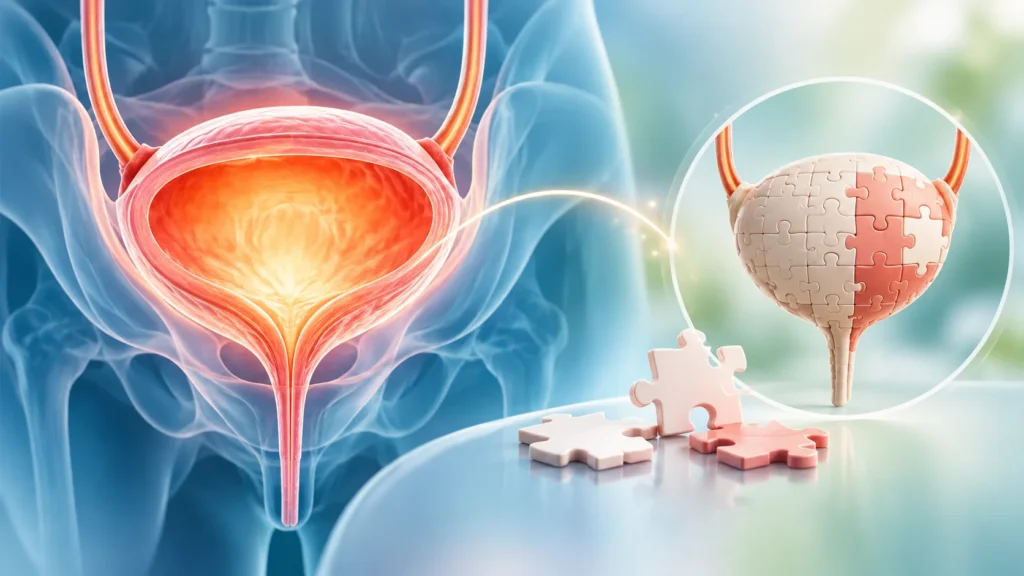
Bladder reconstruction is a complex but life-changing urological surgery that is performed when the bladder is damaged, diseased, or non-functional. The bladder is a muscular organ that stores urine before it is passed out of the body. When the bladder loses its ability to store or empty urine properly due to congenital defects, injury, cancer, neurological disorders, or chronic disease, reconstruction may be needed to restore function, protect the kidneys, and improve quality of life.
This surgery is not a single procedure but a group of surgical techniques that aim to rebuild, replace, or reroute the urinary system. In some cases, part of the intestine is used to create a new bladder or urinary reservoir. In other cases, the ureters are rerouted to an opening on the abdomen, or a catheterizable channel is created for easier bladder emptying. The goal is always to provide safe urine storage, controlled emptying, and protection of kidney function.
What is Bladder Reconstruction?
Bladder reconstruction refers to surgical procedures that rebuild or replace the bladder when it is no longer able to function normally. This may involve creating a new bladder from intestinal tissue, rerouting urine flow, or creating a continent reservoir that can be emptied through a catheter.
The surgery is typically considered when the bladder is severely damaged, removed due to cancer, or affected by neurological conditions that prevent normal storage or emptying. The reconstruction aims to provide a safe way for the body to store and eliminate urine while protecting the kidneys from back pressure and infection.
Bladder reconstruction is a major surgery that requires careful planning, specialized surgical expertise, and long-term follow-up. It is often part of a broader treatment plan that may include cancer therapy, management of neurological conditions, or treatment of congenital abnormalities.
Indications for Bladder Reconstruction
Bladder reconstruction is not performed for minor bladder problems. It is reserved for serious conditions where simpler treatments are not sufficient.
Common indications include:
- Bladder cancer requiring removal of the bladder.
- Neurogenic bladder due to spinal cord injury or neurological disease.
- Congenital bladder abnormalities such as bladder exstrophy.
- Severe bladder fibrosis or shrinkage from chronic inflammation.
- Radiation damage to the bladder from cancer treatment.
- Traumatic injury to the bladder from accidents or surgery.
- End-stage bladder disease with kidney risk.
- Failed previous bladder surgeries or reconstructions.
Why reconstruction is needed
When the bladder cannot store urine safely, pressure builds up and can damage the kidneys. When it cannot empty properly, infections and stone formation become common. Reconstruction provides a new way to manage urine that protects kidney function and improves daily life.
Types of Bladder Reconstruction Procedures
There are several types of bladder reconstruction, each suited to different patient needs and conditions.
Orthotopic neobladder
- A new bladder is created from a segment of intestine.
- It is connected to the urethra so the patient can pass urine normally.
- Suitable for selected patients after bladder removal for cancer.
- Requires good kidney function and ability to learn new voiding techniques.
- May need intermittent self-catheterization in some cases.
Ileal conduit urinary diversion
- A segment of intestine is used to create a channel from the ureters to the abdominal wall.
- Urine drains continuously into an external bag called a stoma bag.
- Commonly used when neobladder is not suitable.
- Simpler surgery with reliable urine drainage.
- Requires lifelong stoma care and bag management.
Continent cutaneous reservoir
- An internal pouch is created from intestine to store urine.
- A small opening on the abdomen allows catheter drainage.
- No external bag is needed between catheterizations.
- Suitable for patients who prefer not to have a stoma bag.
- Requires regular self-catheterization through the stoma.
Catheterizable channel with native bladder
- The existing bladder is preserved but a catheterizable channel is created.
- Allows intermittent catheterization through the abdomen.
- Useful in neurogenic bladder with poor emptying.
- Helps protect kidneys and reduce infections.
- Requires disciplined catheterization routine.
Augmentation cystoplasty
- The bladder is enlarged using a segment of intestine.
- Increases storage capacity and reduces pressure.
- Used in small, high-pressure bladders.
- Often combined with catheterizable channel.
- Requires long-term monitoring for complications.
Pre-Operative Preparation
Proper preparation is essential for safe surgery and better recovery.
Pre-operative steps
- Detailed evaluation by urology and anesthesia teams.
- Imaging tests such as CT scan, MRI, or ultrasound.
- Kidney function tests and blood work.
- Assessment of bowel health for intestinal use.
- Discussion of procedure options and expectations.
- Stoma marking and education if diversion is planned.
- Nutritional optimization and anemia correction.
- Smoking cessation and alcohol reduction advice.
- Psychological counseling for major lifestyle changes.
- Arrangement for post-operative support at home.
Why preparation matters
Good preparation reduces surgical risk, improves healing, and helps patients adapt to new urinary management. Education before surgery reduces anxiety and improves compliance after discharge.
Surgical Method and Procedure Overview
Bladder reconstruction is a major abdominal surgery that typically takes several hours.
General surgical steps
- General anesthesia is administered for patient comfort.
- An incision is made in the lower abdomen.
- The bladder is removed or prepared for reconstruction.
- A segment of intestine is isolated and prepared.
- The intestine is reshaped to form a reservoir or channel.
- Ureters are connected to the new reservoir or conduit.
- The reconstruction is connected to the urethra or abdominal wall.
- Drains and catheters are placed for healing.
- The incision is closed in layers.
- Patient is moved to recovery or intensive care for monitoring.
During hospital stay
- Pain management with medications.
- Monitoring of urine output and drainage.
- Bowel function recovery support.
- Early mobilization to prevent complications.
- Stoma care education if applicable.
- Catheter care and flushing instructions.
- Discharge planning and follow-up scheduling.
Recovery After Bladder Reconstruction
Recovery is gradual and requires patience, support, and adherence to medical advice.
Hospital recovery
- Hospital stay typically ranges from 7 to 14 days.
- Catheters and drains remain in place for several weeks.
- Pain is managed with medications.
- Bowel function returns gradually.
- Walking and light activity are encouraged early.
- Diet is advanced from liquids to solids as tolerated.
Home recovery
- Rest and avoid heavy lifting for several weeks.
- Keep incision clean and dry.
- Monitor urine output and color.
- Attend all follow-up appointments.
- Learn stoma or catheter care if applicable.
- Report fever, severe pain, or leakage immediately.
- Gradual return to normal activities over 6 to 12 weeks.
Long-term adaptation
- Learning new voiding or catheterization techniques.
- Adjusting to stoma care if diversion is done.
- Managing mucus in urine from intestinal segment.
- Regular monitoring of kidney function and electrolytes.
- Psychological support for body image and lifestyle changes.
- Sexual health counseling if needed.
Possible Complications
Like any major surgery, bladder reconstruction carries risks.
Early complications
- Infection at incision or urinary tract.
- Bleeding requiring transfusion.
- Bowel obstruction or ileus.
- Leakage from surgical connections.
- Blood clots in legs or lungs.
- Electrolyte imbalance from intestinal segment.
Late complications
- Kidney function decline over time.
- Urinary tract infections.
- Stone formation in reservoir or kidneys.
- Stricture at ureter or outlet connection.
- Incontinence or leakage.
- Difficulty catheterizing.
- Metabolic changes from intestinal absorption.
- Hernia at incision or stoma site.
- Sexual dysfunction in some patients.
Why complications happen
- Major surgery involves multiple organ systems.
- Intestinal tissue behaves differently than bladder tissue.
- Long-term changes in urine storage affect metabolism.
- Scar tissue can narrow connections over time.
- Underlying disease may progress despite surgery.
Long-Term Care and Follow-Up
Lifelong follow-up is essential to monitor kidney health and surgical outcomes.
Follow-up schedule
- Regular visits to urology team every 3 to 6 months initially.
- Annual visits once stable for several years.
- Blood tests for kidney function and electrolytes.
- Imaging to check kidneys and reservoir.
- Urine tests for infection or abnormalities.
- Endoscopic evaluation if symptoms suggest issues.
Self-care measures
- Drink adequate fluids daily.
- Maintain good hygiene around stoma or catheter site.
- Empty reservoir or bag regularly.
- Report fever, pain, or reduced urine output promptly.
- Avoid dehydration and extreme heat exposure.
- Follow medication advice for acid balance or infections.
- Maintain healthy weight and activity level.
Lifestyle considerations
- Most patients return to work and normal activities.
- Travel is possible with proper planning and supplies.
- Sports and exercise can be resumed gradually.
- Sexual activity may require counseling or adaptation.
- Pregnancy is possible in selected cases with careful monitoring.
Quality of Life After Bladder Reconstruction
Quality of life improves significantly for most patients once recovery is complete.
Positive outcomes
- Protection of kidney function.
- Controlled urine elimination.
- Reduced infections and pain.
- Improved energy and daily function.
- Better body image after adaptation.
- Return to work and social activities.
Challenges to expect
- Learning new routines takes time.
- Body image adjustment may be needed.
- Occasional leakage or mucus in urine.
- Need for lifelong medical follow-up.
- Possible sexual or fertility concerns.
Support available
- Urology nurses for stoma and catheter education.
- Counseling for emotional and psychological support.
- Patient support groups for shared experiences.
- Sexual health specialists if needed.
- Nutritionists for dietary guidance.
When to Seek Medical Help
Prompt medical attention is important if warning signs appear.
- Fever or chills.
- Severe abdominal or back pain.
- Reduced urine output.
- Blood in urine that persists.
- Leakage from incision or stoma.
- Nausea, vomiting, or inability to drink.
- Swelling, redness, or discharge at stoma site.
- Difficulty passing catheter or emptying reservoir.
Why Choose Rama Hospital for Bladder Reconstruction?
Bladder reconstruction is one of the most complex urological surgeries. It requires experienced surgeons, advanced facilities, and comprehensive post-operative care.
- Expert urology and reconstructive surgery team.
- Advanced imaging and surgical technology.
- Multidisciplinary support from anesthesia, nephrology, and oncology.
- Dedicated stoma and catheter care nursing.
- Long-term follow-up and complication management.
- Patient education and rehabilitation support.
Frequently Asked Questions (FAQs)
Who needs bladder reconstruction?
Patients with bladder cancer, neurogenic bladder, congenital defects, severe fibrosis, or traumatic injury may need reconstruction. It is considered when simpler treatments cannot protect the kidneys or provide acceptable urinary function.
How long does the surgery take?
The surgery typically takes 6 to 10 hours depending on the procedure and complexity. Hospital stay is usually 1 to 2 weeks for initial recovery and monitoring before discharge.
Will I need a stoma bag?
Some procedures require a stoma bag, such as ileal conduit. Others, like neobladder or continent reservoir, do not need an external bag. The choice depends on your condition, health, and surgical plan.
Can I live a normal life after surgery?
Yes, most patients return to normal activities, work, and social life after recovery. Adaptation takes time, but quality of life improves significantly once healing is complete and routines are established.
How long does recovery take?
Initial recovery takes 6 to 12 weeks, but full adaptation may take several months. Catheters and drains are removed gradually, and activities are increased slowly under medical guidance.
What are the risks of bladder reconstruction?
Risks include infection, bleeding, leakage, kidney issues, stones, strictures, and metabolic changes. Long-term follow-up helps detect and manage complications early for better outcomes.
Is bladder reconstruction reversible?
No, bladder reconstruction is generally not reversible. The original bladder is removed or significantly altered. The new urinary system is designed for long-term function and requires lifelong care and monitoring.
Conclusion
Bladder reconstruction is a major but often life-saving surgery that restores urinary function and protects kidney health in patients with severe bladder disease or damage. While the procedure is complex and recovery requires patience, most patients achieve significant improvement in quality of life, daily function, and long-term health.
The most important steps are careful patient selection, expert surgical planning, thorough pre-operative preparation, and dedicated long-term follow-up. For patients facing bladder removal or dysfunction, a specialized urology team can provide the guidance, surgery, and support needed for the best possible outcome.
Rama Hospital offers comprehensive bladder reconstruction care with experienced urologists, advanced surgical facilities, and dedicated post-operative support to help patients recover safely and adapt confidently to their new urinary system.