
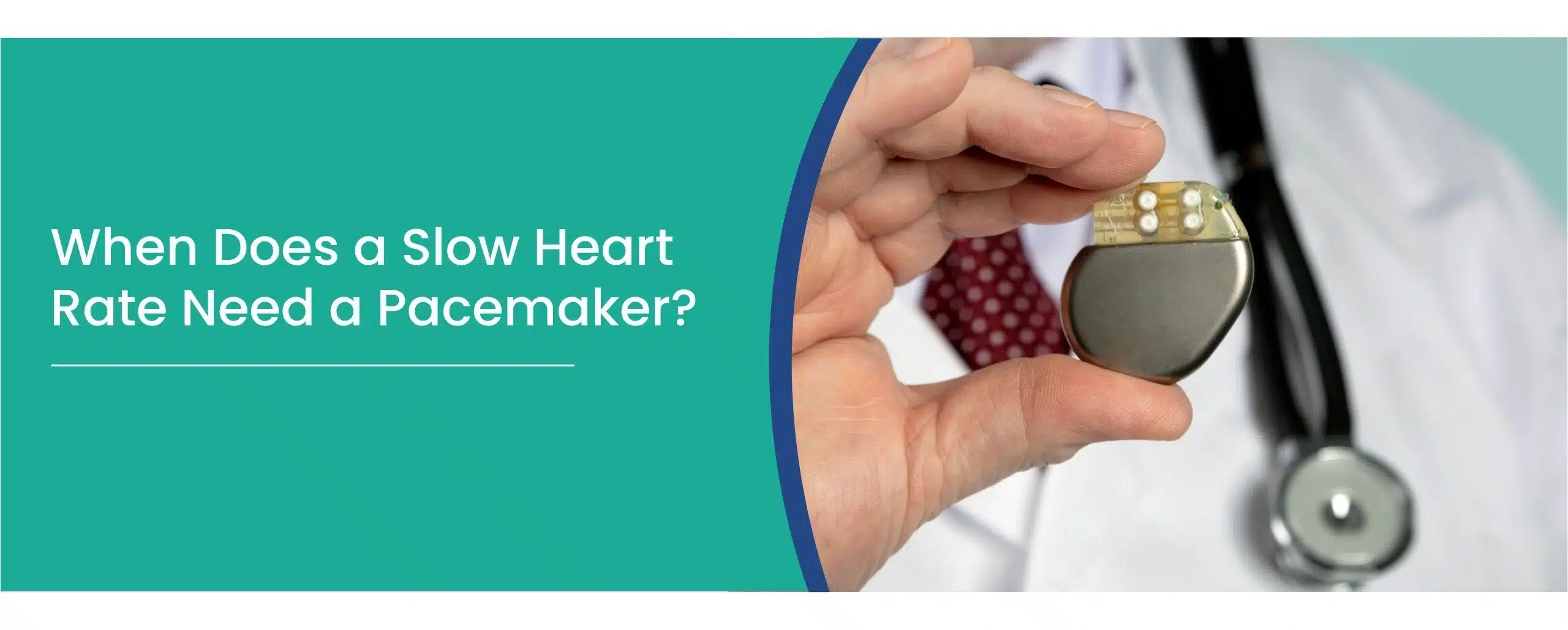
A slow heartbeat can sound alarming, especially when you see a heart-rate reading below 60 beats per minute. But a slow heart rate does not automatically mean you need a pacemaker.
In some people, a lower resting heart rate is normal. It can occur during sleep or in physically fit individuals. In others, however, a slow heart rate, known medically as bradycardia, can prevent the heart from pumping enough blood to meet the body’s needs.
So, when does a slow heart rate need a pacemaker?
The answer depends on why the heart rate is slow, whether you have symptoms, and whether the problem can be corrected without a pacemaker.
Let’s understand when a pacemaker may actually be needed and what doctors look for before recommending one.
What Is a Slow Heart Rate?
For most adults, a resting heart rate below 60 beats per minute (bpm) is considered bradycardia. However, this number alone does not tell you whether something is wrong. Heart rate can naturally vary depending on age, fitness, activity, medications and whether you are awake or asleep.
For example, a resting heart rate between 40 and 60 bpm can occur in some healthy young adults and trained athletes, and heart rate commonly falls during sleep.
The more important question is: Is the slow heart rate affecting how well your heart pumps blood or causing symptoms?
If the answer is yes, further evaluation may be needed.
What Happens When Your Heart Rate Is Too Slow?
Your heart has its own electrical system that controls each heartbeat.
The sinus node, located in the upper part of the heart, normally generates the electrical signals that start each heartbeat. These signals then travel through the heart’s conduction system, allowing the chambers to contract in the correct sequence.
If these electrical signals become too slow or are blocked, the heart may beat more slowly than it should.
Not everyone with bradycardia has symptoms. However, symptoms can be an important clue that the slow heart rate is affecting circulation.
When the heart cannot maintain adequate blood flow, you may experience:
- Dizziness or lightheadedness
- Unusual tiredness or weakness
- Shortness of breath
- Fainting or near-fainting
- Difficulty exercising
- Confusion or difficulty concentrating
- Chest discomfort
Does a Heart Rate Below 60 Mean You Need a Pacemaker?
This is one of the most important things to understand about bradycardia.
A heart rate below 60 bpm is a definition of bradycardia, but it is not, by itself, an indication for a pacemaker.
For example, a healthy person may have a naturally low resting heart rate without needing treatment. On the other hand, someone with a slow heart rate and repeated fainting may need more detailed evaluation.
A doctor will look at the complete picture, including:
- Your symptoms
- Your ECG findings
- The type of rhythm problem
- How frequently the slow heart rate occurs
- Your medical history
- Your medications
- Whether another medical condition is causing it
- Whether the problem can be reversed
When Does a Slow Heart Rate Need a Pacemaker?
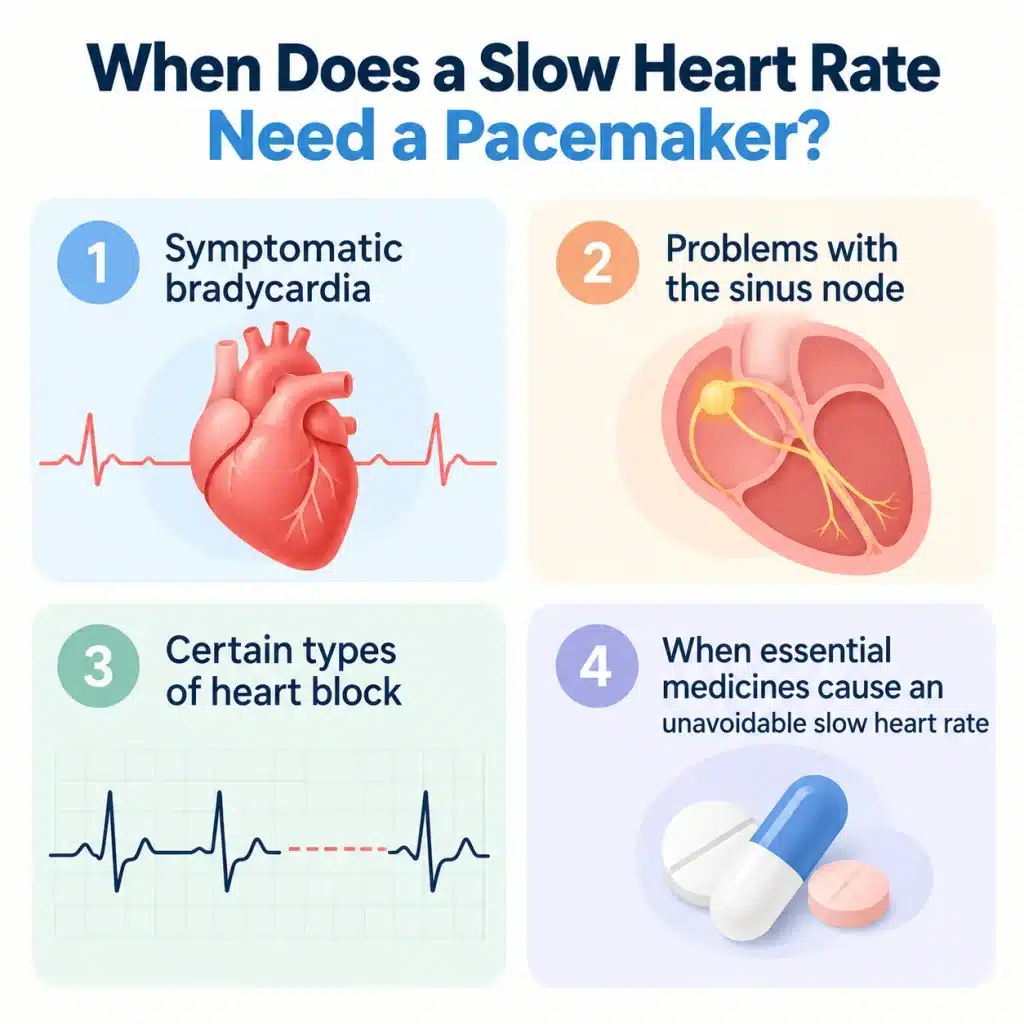
A pacemaker may be considered when bradycardia is causing significant symptoms or results from a persistent problem with the heart’s electrical system that cannot be corrected another way.
Some situations that may lead a cardiologist to consider pacemaker implantation include:
1. Symptomatic bradycardia
If a slow heart rate is associated with symptoms such as fainting, dizziness, significant fatigue, breathlessness or reduced exercise tolerance, your doctor may investigate whether the symptoms are directly related to the slow rhythm.
When symptoms are caused by an abnormally slow heart rate and the underlying cause cannot be corrected, a pacemaker may be considered.
2. Problems with the sinus node
The sinus node is the heart’s natural pacemaker. When it does not generate electrical signals properly, a person may develop sinus node dysfunction.
Some people experience periods of unusually slow heart rate, while others may alternate between slow and fast rhythms.
If this electrical problem produces significant symptoms and cannot be corrected through another approach, a permanent pacemaker may be recommended.
3. Certain types of heart block
A heart block occurs when electrical signals have difficulty travelling from the upper chambers of the heart to the lower chambers.
The severity and type of heart block matter when determining treatment. Significant conduction disease may require a pacemaker because the heart’s electrical signals are not reliably reaching the chambers that need to contract.
4. When essential medicines cause an unavoidable slow heart rate
Some medicines can slow the heart rate. Depending on the situation, doctors may adjust the dose or change the medicine.
However, if an important medication cannot be stopped or changed and significant bradycardia persists, a pacemaker may sometimes be considered. This decision depends on the individual patient’s condition and should be made by a cardiologist.
Can Bradycardia Be Treated Without a Pacemaker?
Yes. Not every person with bradycardia needs a pacemaker.
Treatment depends on the underlying cause. If an underlying condition is responsible, treating that condition may improve the heart rate.
Similarly, if a medication is contributing to bradycardia, the doctor may consider adjusting the dose or switching to another medicine when clinically appropriate.
For example, a doctor may investigate whether the slow heart rate is related to:
- Certain medications
- An underactive thyroid
- Sleep apnea
- Abnormal potassium or calcium levels
- Heart disease
- Previous heart attack or heart surgery
- Inflammation affecting the heart
- Problems with the heart’s electrical conduction system
Never stop or change a heart medicine on your own.
How Do Doctors Decide If You Need a Pacemaker?

The decision is based on more than a pulse reading.
Your cardiologist may start with your symptoms and medical history and then perform tests to understand how your heart’s electrical system is working.
ECG
An electrocardiogram (ECG/EKG) records the heart’s electrical activity and is one of the main tests used to evaluate bradycardia.
Holter or ambulatory monitoring
If the slow heart rate happens intermittently, a standard ECG may not capture it.
A Holter monitor or another ambulatory ECG device can record the heart rhythm over a longer period, helping doctors identify episodes that may not occur during a clinic visit.
Blood tests
Blood tests may be used to look for potentially reversible causes, including thyroid problems and abnormalities in blood chemicals such as potassium.
Other cardiac tests
Depending on your symptoms and medical history, your cardiologist may recommend additional investigations to assess heart structure or rhythm.
The goal is not simply to answer “How low is the heart rate?”
It is to answer: “Why is the heart rate slow, and is it causing a problem?”
What Is a Pacemaker and How Does It Help?
A pacemaker is a small electronic device designed to help regulate a heart rhythm that is too slow.
When the heart’s natural electrical system does not maintain an adequate rate, the pacemaker can deliver electrical impulses to help the heart beat at an appropriate rate.
A conventional pacemaker is generally placed under the skin near the collarbone, with leads positioned to deliver electrical signals to the heart as required. The exact device and implantation approach depend on the patient’s rhythm problem and clinical needs.
The purpose is not to make every heartbeat faster.
Instead, the device is designed to support the heart when its own rhythm becomes too slow.
Is a Slow Heart Rate More Common With Age?
It can be.
Age-related changes in the heart’s electrical system can contribute to bradycardia. Previous heart disease, heart attack or heart surgery can also affect the tissue responsible for generating or conducting electrical signals.
But age alone does not mean that someone needs a pacemaker.
The decision still depends on the person’s rhythm, symptoms, underlying condition and overall clinical assessment.
Slow Heart Rate vs. Pacemaker: What Patients Should Know
| Situation | Does it automatically mean a pacemaker? |
| Heart rate below 60 bpm | No |
| Low heart rate during sleep | Not necessarily |
| Low heart rate in a trained athlete without symptoms | Usually not |
| Bradycardia caused by a reversible condition | Usually the cause is treated first |
| Slow heart rate causing repeated fainting | May require pacemaker evaluation |
| Significant electrical conduction problems | May require pacemaker evaluation |
| Persistent symptomatic bradycardia | Pacemaker may be considered |
Frequently Asked Questions
1. At what heart rate is a pacemaker needed?
There is no single heart-rate number that automatically means a person needs a pacemaker. A resting rate below 60 bpm is generally considered bradycardia, but treatment depends on symptoms, the underlying rhythm problem and whether the cause can be corrected.
2. Is a heart rate below 50 dangerous?
Not necessarily. Some healthy people, particularly physically fit individuals, can naturally have a low resting heart rate. However, a low heart rate accompanied by dizziness, fainting, breathlessness or chest pain needs medical evaluation.
3. Does everyone with bradycardia need a pacemaker?
No. Some cases require no treatment, while others improve after treating an underlying condition or changing a medication. A pacemaker is considered when the slow rhythm causes significant problems or results from a persistent electrical abnormality.
4. Can a slow heart rate be treated without a pacemaker?
Yes. Depending on the cause, treatment may involve addressing thyroid disease, sleep apnea, medication effects or other underlying conditions.
5. What tests are done before pacemaker implantation?
Evaluation commonly includes a medical history, physical examination, ECG and, when needed, longer-term heart rhythm monitoring. Blood tests may also help identify reversible causes such as thyroid or electrolyte abnormalities.
6. Who should I consult for a slow heart rate?
A cardiologist can evaluate persistent or symptomatic bradycardia and determine whether further rhythm testing or treatment is required. If you are looking for cardiac care in Noida, you can consult the cardiology team at Rama Hospital, Noida for an appropriate evaluation.
Conclusion
A low number on your smartwatch or blood-pressure monitor does not automatically mean that something is wrong.
But if a slow heart rate is new, persistent, unexplained or accompanied by symptoms, it deserves medical attention.
The important question isn’t simply: “Is my heart rate below 60?”
It’s: “Why is my heart rate slow, and is it affecting my heart’s ability to pump blood properly?”
A timely cardiac evaluation can help identify the cause and determine whether observation, treatment of an underlying condition, medication adjustment or a pacemaker is appropriate.
If you are experiencing persistent symptoms or have been diagnosed with bradycardia, consult a cardiologist in Noida for a personalised assessment rather than deciding based on your heart-rate reading alone.
Rama Hospital, Noida provides access to cardiac evaluation and specialist consultation for patients with heart rhythm concerns.