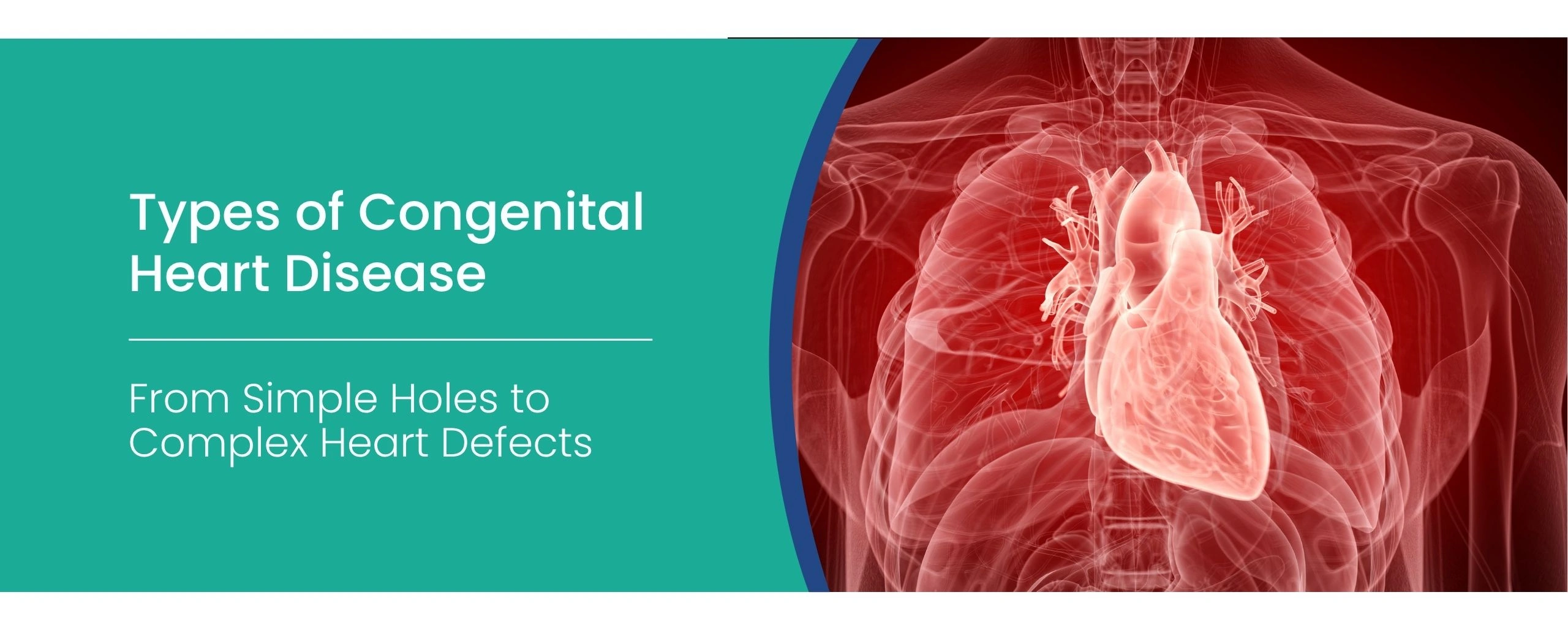
Congenital heart disease is one of the most common birth defects seen in newborns. It develops before birth when the baby’s heart does not form normally during pregnancy. Because the condition is present from birth, it can affect the structure of the heart, the flow of blood, or the way the heart functions.
A baby’s heart begins developing within the first eight weeks of pregnancy. During this critical period, even a small change in heart development can lead to congenital heart disease. In some babies, the condition may be mild, such as a small hole in the heart that closes naturally over time. In others, congenital heart disease can be more complex, involving abnormalities in the heart chambers, valves, or major blood vessels.
The good news is that advances in diagnosis, medical care, and pediatric cardiac surgery have significantly improved outcomes for children with congenital heart disease. Early detection and timely treatment can help many children lead healthy, active lives. Understanding the causes, symptoms, and treatment options for congenital heart disease is an important step for parents seeking the best care for their child.
What is congenital heart disease?
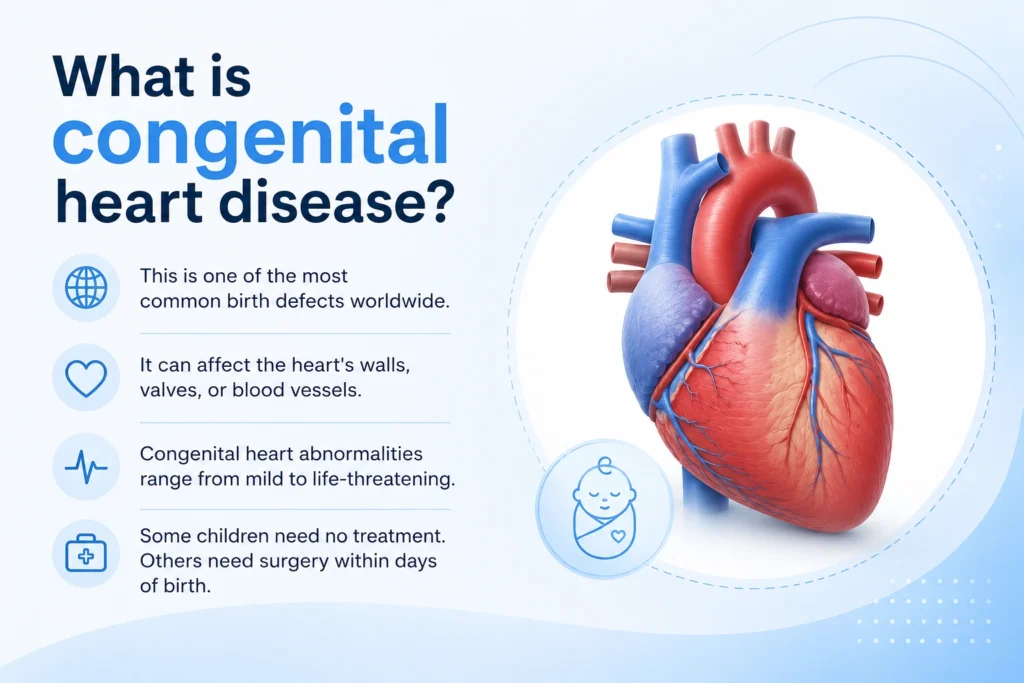
Congenital heart disease refers to structural problems in the heart that a baby is born with. It happens when the heart doesn’t develop normally during pregnancy.
Key points:
- This is one of the most common birth defects worldwide.
- It can affect the heart’s walls, valves, or blood vessels.
- Congenital heart abnormalities range from mild to life-threatening.
- Some children need no treatment. Others need surgery within days of birth.
Doctors often describe it as an umbrella term. It covers dozens of specific conditions, not just one disease.
How common is congenital heart disease?
Awareness matters. Early detection of congenital heart disease often leads to better long-term outcomes. This condition is far more common than most people realize.
- It affects nearly 8 to 10 out of every 1,000 live births globally.
- This is the leading category of birth defect reported worldwide among newborns.
- Many cases of congenital heart defects are now detected before birth, thanks to advanced imaging.
- Improved pediatric cardiac care means most children today grow into healthy adults.
Classification of congenital heart defects
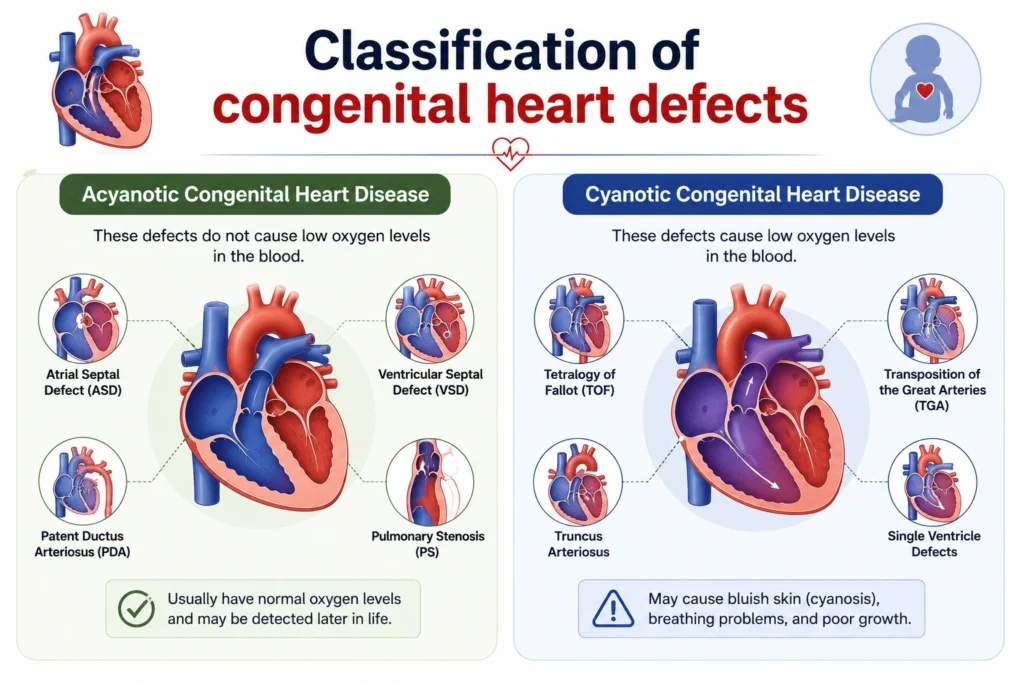
Doctors broadly classify congenital heart defects into two categories, based on oxygen levels in the blood.
Acyanotic Congenital Heart Disease
In this type, oxygen-rich and oxygen-poor blood don’t mix in a way that lowers oxygen levels significantly. Skin color usually stays normal.
- The most common form seen in pediatric congenital heart disease cases.
- Includes septal defects and valve defects.
- Often diagnosed later, sometimes even in adulthood.
- Symptoms may be mild or absent.
Cyanotic Congenital Heart Disease
Understanding this split helps families grasp why some congenital heart defects need urgent surgery while others can be monitored over time.
Here, oxygen-poor blood mixes with oxygen-rich blood. This lowers oxygen levels and causes a bluish tint to the skin, known as cyanosis.
- Considered a more serious form, often needing quicker action.
- Often diagnosed shortly after birth.
- Usually needs early surgical intervention.
- Includes several complex congenital defects needing early intervention.
Common types of congenital heart disease
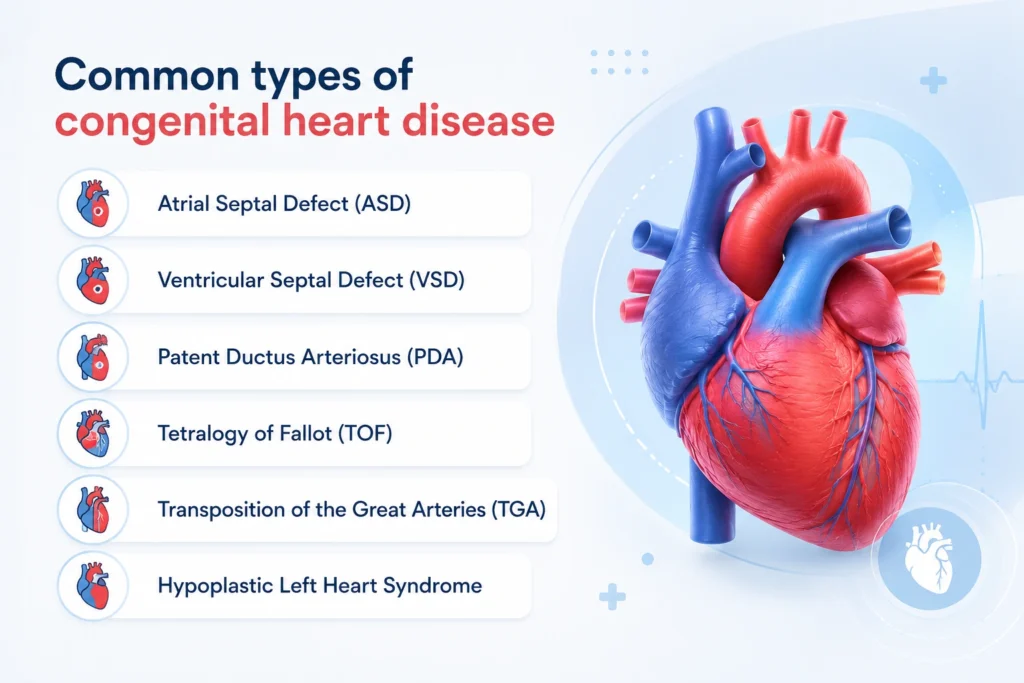
Let’s look at the specific conditions doctors diagnose most often.
Atrial Septal Defect (ASD)
An atrial septal defect is a hole between the heart’s two upper chambers.
- One of the most common heart hole defects.
- Often called a “heart hole in baby.”
- Small ASDs may close naturally.
- Larger septal defects in children may need catheter-based or surgical closure.
- Falls under congenital heart hole treatment protocols.
Ventricular Septal Defect (VSD)
A ventricular septal defect is a hole between the heart’s two lower chambers.
- The most frequently diagnosed among congenital cardiac defects.
- Sizes vary — small holes may resolve on their own.
- Larger holes usually require surgical repair.
- Considered a classic example of common congenital heart defects.
Patent Ductus Arteriosus (PDA)
Before birth, a blood vessel called the ductus arteriosus allows blood to bypass the lungs. It should close after birth. When it doesn’t, it’s called PDA.
- More frequent in premature babies.
- A structural heart defect in babies that’s usually treatable.
- Small PDAs may not need treatment.
- Larger ones may need medication or a minor procedure.
Tetralogy of Fallot (TOF)
This is a combination of four heart defects occurring together, making it one of the best-known cyanotic conditions in this space.
- Includes a VSD, a narrowed pulmonary valve, a thickened right ventricle, and a shifted aorta.
- Causes low oxygen levels and cyanosis.
- Requires corrective surgery, usually within the first year of life.
- A well-studied and closely monitored complex defect.
Transposition of the Great Arteries (TGA)
In TGA, the two main arteries leaving the heart are swapped.
- A critical cyanotic defect requiring immediate care right after birth.
- Oxygen-poor blood circulates instead of oxygen-rich blood.
- Needs surgical correction, often within the first weeks of life.
- One of the more urgent congenital heart abnormalities identified in newborns.
Hypoplastic Left Heart Syndrome
This is one of the most complex conditions doctors treat. The left side of the heart is underdeveloped and can’t pump blood effectively.
- Considered among the most serious single ventricle heart defects.
- Requires a series of surgeries, usually starting within the first week of life.
- Falls under the broader category of complex congenital defects.
- Related conditions include double outlet right ventricle, tricuspid atresia, and pulmonary atresia.
Valve defects in congenital heart disease
Not every congenital heart defect involves a hole. Some involve the valves that control blood flow.
- Pulmonary valve stenosis, narrowing of the valve leading to the lungs.
- Aortic valve stenosis, narrowing of the valve leading to the body’s main artery.
- Both fall under congenital heart valve defects.
- These valve abnormalities at birth can range from mild to severe.
- Treatment ranges from monitoring to balloon procedures or surgery.
What causes these heart defects?
Doctors don’t always find one single cause behind these heart defects. Most cases result from a mix of factors during early pregnancy.
In most cases, though, no clear cause is identified. This is one reason routine prenatal scans matter, they catch structural issues even when no risk factor is obvious.
Known contributing factors include:
- Genetic conditions, such as Down syndrome, linked to certain congenital heart abnormalities.
- Maternal infections during early pregnancy, like rubella.
- Poorly controlled maternal diabetes.
- Certain medications taken during pregnancy without medical guidance.
- Family history of heart defects present at birth.
Can children live normal lives after treatment?
Yes, and this is genuinely encouraging news for families. Early diagnosis and timely treatment remain the two biggest factors in long-term outcomes for these young patients.
- Most children treated for congenital heart disease grow up to lead active, fulfilling lives.
- Many require only periodic follow-ups with a cardiologist.
- Some may need lifelong monitoring, especially with complex structural defects.
- Advances in pediatric cardiology have significantly improved survival and quality of life for these children.
- Regular checkups help catch any late complications early.
When should you consult a pediatric cardiologist?
Parents should seek expert evaluation if they notice:
- Bluish skin, lips, or nails in a baby.
- Rapid breathing or breathlessness during feeding.
- A heart murmur flagged during a routine visit.
- Poor weight gain despite normal feeding.
- Family history of heart defects at birth.
If you’re searching for a pediatric cardiologist in Noida, timely consultation can make a significant difference. A dedicated children’s heart hospital in Noida with experienced specialists can help detect the condition early and guide the right treatment path.
For families researching congenital heart disease treatment in Noida, choosing the best hospital for congenital heart disease matters just as much as early diagnosis. Look for a pediatric cardiology hospital in Noida with advanced diagnostic tools, an experienced surgical team, and a strong track record of successful outcomes.
Frequently Asked Questions (FAQs)
Can congenital heart disease be cured permanently?
Many forms of congenital heart disease can be effectively corrected with surgery or catheter-based procedures, allowing children to live normal, healthy lives. However, some complex cases may need lifelong monitoring rather than a complete “cure.”
Is surgery always required for congenital heart defects?
No. Many small congenital heart defects, like tiny ASDs or VSDs, may close on their own or need no intervention. Surgery is generally reserved for moderate to severe cases.
What is the difference between ASD and VSD?
An ASD is a hole in the upper chambers of the heart, while a VSD is a hole in the lower chambers. Both are common types of congenital heart disease, but their treatment approach can differ based on size and location.
Can congenital heart disease be detected during pregnancy?
Yes. A fetal echocardiogram can often detect congenital heart disease as early as 18 to 22 weeks into pregnancy, allowing families to plan ahead with their care team.
Are congenital heart defects hereditary?
In some cases, yes. Genetics can play a role, especially if there’s a family history of congenital heart disease. However, many cases occur without any known hereditary link.
Can adults have congenital heart disease?
Absolutely. Some mild congenital heart defects go undetected until adulthood. With improved treatments, more children with congenital heart disease are also living well into adulthood, requiring ongoing adult congenital cardiac care.
Conclusion
This condition covers a wide spectrum, from a simple hole that may close on its own, to complex heart defects requiring multiple surgeries.
The key takeaway: not all congenital heart disease is the same, and neither is the treatment.
Choosing the best hospital in Noida for congenital heart disease diagnosis and treatment can make all the difference, for your child’s health today, and their future tomorrow.
Book a consultation with our pediatric cardiology team and get expert, compassionate care for every stage of your child’s heart health journey.