Your kidneys filter about 200 liters of blood every single day. They remove toxins, balance fluids, regulate blood pressure, and keep your body running. When this process suddenly breaks down, it is called acute kidney injury.
It is not a slow, gradual decline. Acute kidney injury happens fast. Sometimes within hours. And if missed or ignored, it can become life-threatening.
What is acute kidney injury?
Acute kidney injury (AKI) is a sudden and rapid loss of kidney function. The kidneys lose their ability to filter waste products from the blood effectively. Toxins build up. Fluid retention begins. The entire body feels the impact.
Acute kidney injury is also referred to as acute renal failure or acute kidney disease. The terms mean essentially the same thing, a sudden drop in kidney performance that requires urgent medical attention.
It is far more common than most people realize. It affects millions of patients globally each year, including a large number of hospitalized patients in India.
The good news: when caught early, acute kidney injury is often reversible.
How is acute kidney disease different from chronic kidney disease?
Think of acute kidney injury as a kidney emergency. Chronic kidney disease is a long-term condition. Both are serious. But this demands immediate action.
This is one of the most important distinctions to understand.
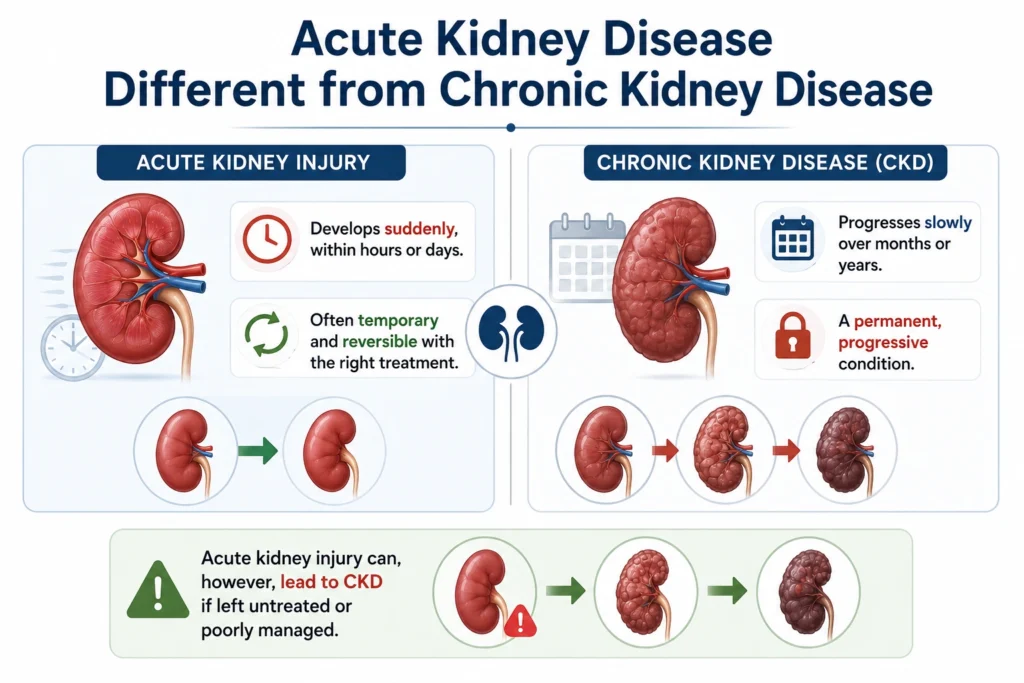
- Acute kidney injury develops suddenly, within hours or days.
- Chronic kidney disease (CKD) progresses slowly over months or years.
- Acute kidney injury is often temporary and reversible with the right treatment.
- CKD is a permanent, progressive condition.
- Acute kidney injury can, however, lead to CKD if left untreated or poorly managed.
Common causes of acute kidney injury
Among the most underrecognized causes in India is dehydration, particularly during summer months. When fluid intake drops significantly and the body becomes severely dehydrated, blood flow to the kidneys falls.
Certain pain medications and antibiotics are also common culprits, especially when taken without medical supervision.
Acute kidney injury has three broad categories of causes:
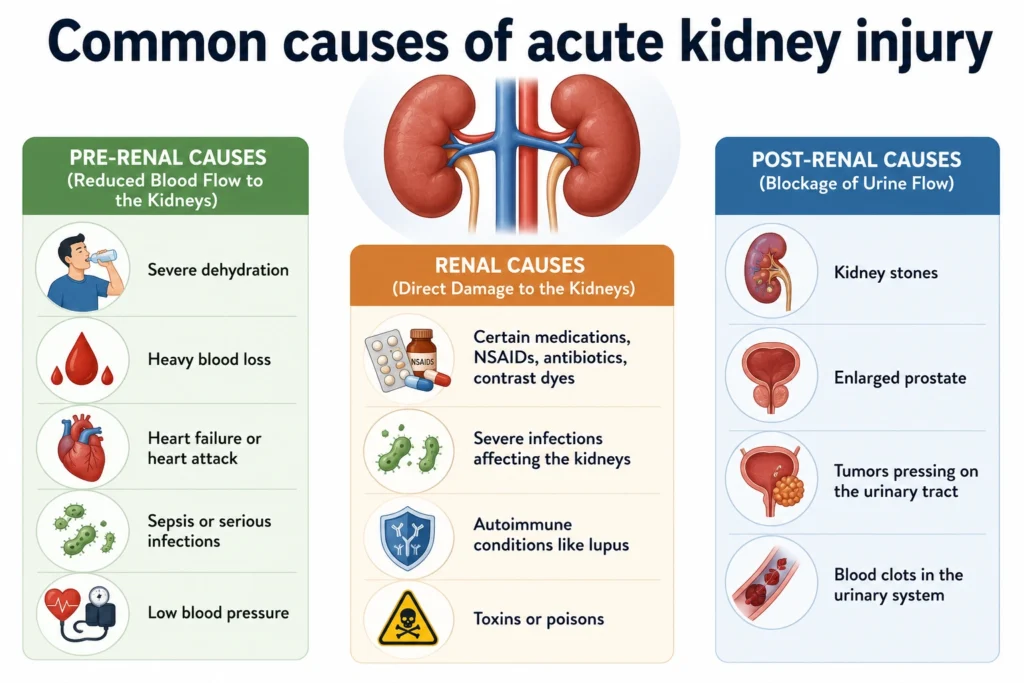
Pre-Renal Causes (Reduced Blood Flow to the Kidneys):
- Severe dehydration
- Heavy blood loss
- Heart failure or heart attack
- Sepsis or serious infections
- Low blood pressure
Renal Causes (Direct Damage to the Kidneys)
- Certain medications, NSAIDs, antibiotics, contrast dyes
- Severe infections affecting the kidneys
- Autoimmune conditions like lupus
- Toxins or poisons
Post-Renal Causes (Blockage of Urine Flow)
- Kidney stones
- Enlarged prostate
- Tumors pressing on the urinary tract
- Blood clots in the urinary system
Early warning signs and symptoms of acute kidney injury
Acute kidney injury symptoms can be subtle at first. That is what makes them dangerous. Many patients dismiss these early signs as fatigue or a minor illness.
Some patients experience symptoms without obvious warning signs, particularly those who are already hospitalized for another condition. This is why routine monitoring of kidney function is essential for high-risk patients.
If you notice any combination of these kidney injury symptoms, do not wait. Seek medical care immediately.
Key acute kidney injury symptoms to watch for:
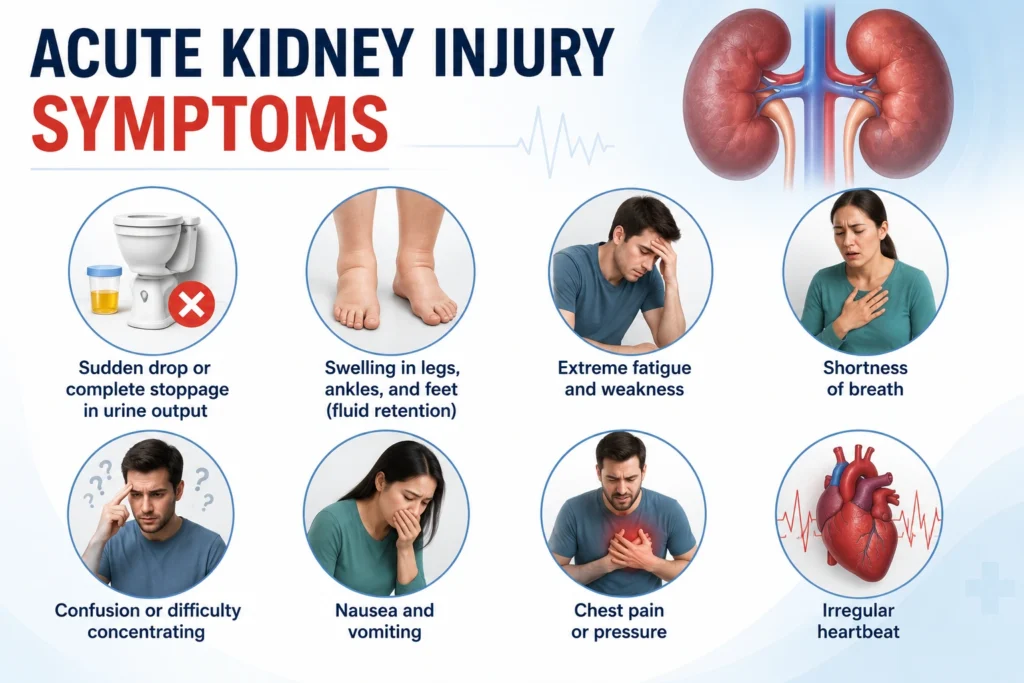
- Sudden drop or complete stoppage in urine output
- Swelling in legs, ankles, and feet (fluid retention)
- Extreme fatigue and weakness
- Shortness of breath
- Confusion or difficulty concentrating
- Nausea and vomiting
- Chest pain or pressure
- Irregular heartbeat
Why acute kidney injury can become life-threatening
In severe cases of, multiple organs begin to fail. The heart, lungs, and brain can all be affected. This is why acute kidney injury is considered a medical emergency, not a condition to monitor at home and “see how it goes.”
Acute kidney injury is not just about the kidneys. When kidneys fail suddenly, the entire body is affected.
- Toxin buildup: Waste products accumulate in the blood (uremia).
- Fluid overload: Can lead to lung congestion and breathing difficulty.
- Electrolyte imbalance: Dangerous rise in potassium levels can trigger cardiac arrest.
- Acid-base imbalance: Blood becomes too acidic, affecting organ function.
- Sepsis complication: This one of the leading causes of death in sepsis patients.
Who is most at risk?
In India, a significant portion of sudden kidney failure cases occur in patients who delayed medical care, self-medicated with over-the-counter drugs, or were not monitored properly during a serious illness.
Acute kidney injury can happen to anyone. But certain groups face significantly higher risk.
High-risk individuals include:
- Patients with diabetes or high blood pressure.
- Elderly patients (kidneys naturally lose efficiency with age).
- People with existing kidney or heart disease.
- Patients undergoing major surgeries.
- ICU and critically ill patients.
- People who are severely dehydrated.
- Those who self-medicate with high doses of painkillers.
- Patients receiving contrast dye for imaging tests.
- Individuals with severe infections or sepsis.
How acute kidney injury is diagnosed
Diagnosing requires a combination of clinical evaluation and laboratory tests.
Nephrologists classify into three stages (Stage 1, 2, and 3) based on creatinine rise and urine output. Early diagnosis, at Stage 1, dramatically improves recovery outcomes.
Diagnostic tools for acute kidney injury:
- Serum Creatinine Test: The primary marker. A sudden rise in creatinine indicates acute kidney injury.
- Blood Urea Nitrogen (BUN): Measures waste product buildup.
- Urine Output Monitoring: Less than 0.5 ml/kg/hour is a warning sign.
- Urine Analysis: Checks for protein, blood, and abnormal cells.
- Ultrasound: Rules out obstruction and assesses kidney size.
- CT Scan: Used when structural causes are suspected.
- Kidney Biopsy: In complex or unclear cases.
Treatment options for acute kidney injury
Acute kidney injury treatment depends on the cause, severity, and the patient’s overall condition.
Core treatment approaches:
- Treating the underlying cause: Addressing infection, stopping the offending medication, and correcting dehydration.
- IV Fluid Management: Restoring adequate blood flow to the kidneys.
- Medications: Diuretics to manage fluid overload and medications to control potassium and phosphorus levels.
- Nutritional Support: A kidney-specific low-protein, low-potassium diet.
- Dialysis: Required in severe cases where toxins reach dangerous levels.
Dialysis in Acute Kidney Injury:
Not every patient requires dialysis. It is used when:
- Potassium levels are critically high.
- Severe fluid overload affects breathing.
- Uremia causes confusion or neurological symptoms.
- Toxins cannot be cleared by the body on their own.
For patients in Noida and the Delhi-NCR region, timely access to a dialysis center in Noida or a kidney care hospital in Noida can make a significant difference in outcomes.
The best hospital for acute kidney injury will have a dedicated nephrology unit, round-the-clock critical care support, and advanced dialysis facilities.
Can kidneys recover after acute kidney injury?
Yes, and this is what gives patients and families hope.
Recovery depends on several factors:
- How quickly treatment was started.
- The severity of the acute kidney injury (Stage 1, 2, or 3).
- The patient’s age and overall health.
- Whether the underlying cause was resolved.
In mild to moderate cases of acute kidney injury, kidneys can recover partially or fully within days to weeks. In severe cases, recovery may take months. Some patients who survive serious episodes may go on to develop chronic kidney disease later.
This is why follow-up care matters just as much as the initial treatment. Ongoing monitoring of creatinine, blood pressure, and kidney function is essential.
How to reduce your risk of acute kidney injury
If you are in a high-risk group, consulting a kidney specialist in Noida or the best hospital in Noida for periodic kidney function monitoring is worth doing proactively.
Prevention is possible. Here are practical steps to reduce your risk:
- Stay well hydrated: Especially during summer, illness, or physical exertion.
- Avoid self-medication: Painkillers like ibuprofen and diclofenac are among the most common causes of medication-induced acute kidney injury.
- Monitor blood pressure and diabetes: Both are leading risk factors for acute kidney injury.
- Tell your doctor about all medications: Before contrast imaging, surgeries, or starting new drugs.
- Get kidney function tests regularly: If you are diabetic, hypertensive, or over 50.
- Respond to infections quickly: Untreated sepsis is one of the most dangerous triggers.
- Limit alcohol: Excessive alcohol can reduce kidney blood flow.
Frequently Asked Questions (FAQs)
Can acute kidney injury be reversed completely?
Yes, acute kidney injury can often be reversed completely, especially when diagnosed early and the underlying cause is treated promptly. Stage 1 and Stage 2 have good recovery rates with proper medical care.
Does AKI always lead to dialysis?
No. Most patients do not require dialysis. Dialysis is only needed in severe cases where toxin levels become dangerous or fluid overload affects breathing.
Is acute kidney injury permanent?
Not always. Many patients recover full kidney functio. However, severe or repeated episodes can lead to permanent kidney damage or chronic kidney disease.
Can dehydration trigger AKI?
Absolutely. Dehydration is one of the most common triggers, particularly in hot climates like India. When blood volume drops, the kidneys receive less blood flow, which can cause within hours in severe cases.
How long does recovery from AKI take?
Recovery time varies. Mild injury may resolve within a few days to two weeks. Severe cases may take several months. Some patients need ongoing monitoring even after creatinine levels return to normal.
Can AKI occur without symptoms?
Yes. Acute kidney injury can sometimes occur with minimal or no obvious symptoms, especially in hospitalized patients. This is why blood and urine tests are routinely done for patients in ICUs, post-surgery, and those on nephrotoxic medications.
Conclusion
Acute kidney injury is sudden. It is serious. And it is treatable when caught in time.
The difference between full recovery and long-term kidney damage often comes down to how quickly is recognized and treated. Knowing the symptoms, understanding the causes, and acting fast can protect your kidneys and your life.
If you or someone in your family is experiencing signs, reduced urine output, swelling, confusion, or extreme fatigue, do not ignore it. These are not symptoms to “monitor from home.”
For patients in Delhi-NCR, accessing acute kidney injury treatment in Noida at a specialized acute kidney injury treatment hospital with experienced nephrologists and round-the-clock support can make all the difference.
Your kidneys work hard for you. Give them the care they deserve.