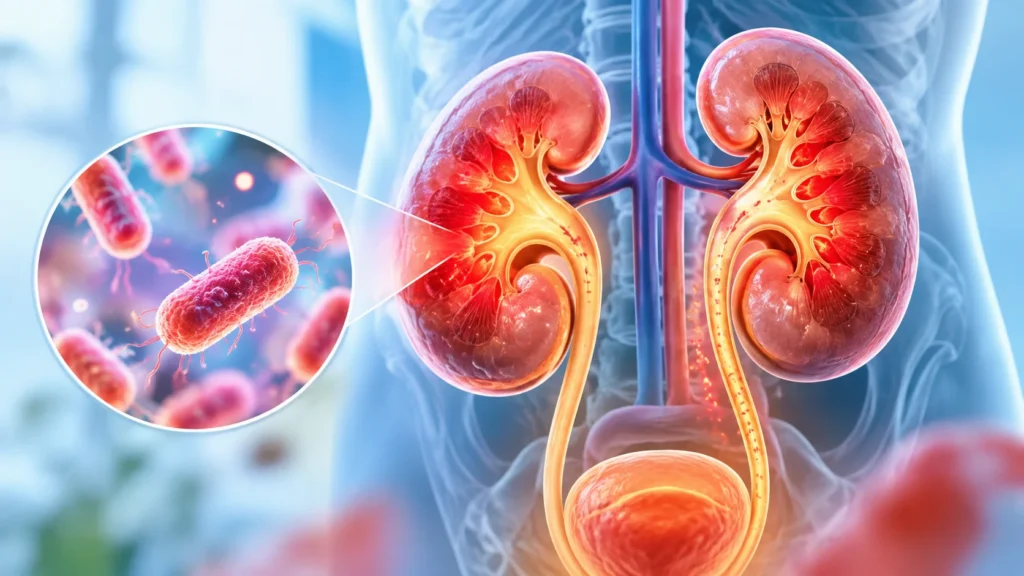
A kidney infection, medically called pyelonephritis, is a serious type of urinary tract infection that affects one or both kidneys. It usually starts as a bladder infection that spreads upward through the ureters to the kidneys. If not treated on time, it can cause high fever, severe back or side pain, vomiting, and in some cases, life-threatening complications such as sepsis or kidney damage.
Kidney infections are more common in women than in men, but they can affect anyone at any age. Children, pregnant women, older adults, and people with diabetes or kidney problems are at higher risk. Early diagnosis and proper antibiotic treatment are essential to prevent complications and protect kidney function.
What is a Kidney Infection (Pyelonephritis)?
Pyelonephritis is an infection of the kidney tissue and the renal pelvis, which is the area where urine collects before moving to the bladder. It is usually caused by bacteria that enter the urinary tract through the urethra, multiply in the bladder, and then travel up to the kidneys.
Most kidney infections are caused by a common gut bacterium called Escherichia coli (E. coli). Other bacteria can also cause infection, especially in people with recurrent UTIs, kidney stones, or structural abnormalities of the urinary tract.
A kidney infection is more serious than a simple bladder infection. While bladder infections cause burning urination and frequent urges, pyelonephritis cause systemic symptoms such as high fever, chills, flank pain, nausea, and vomiting. Without proper treatment, the infection can spread to the bloodstream and become life-threatening.
Types of Kidney Infection
Pyelonephritis can be classified based on how they occur, how severe they are, and whether there are complicating factors.
Based on occurrence
- Acute pyelonephritis, which is a sudden, severe infection that requires prompt treatment.
- Chronic pyelonephritis, which is a long-standing or recurrent infection that can cause scarring and kidney damage over time.
- Recurrent pyelonephritis, which happens multiple times in a year and may need further evaluation.
Based on complexity
- Uncomplicated pyelonephritis, which occurs in otherwise healthy people with normal urinary tracts.
- Complicated pyelonephritis, which occurs in people with diabetes, kidney stones, pregnancy, enlarged prostate, or structural abnormalities.
Based on cause
- Bacterial pyelonephritis, which is the most common type.
- Fungal pyelonephritis, which is rare and usually seen in immunocompromised patients.
- Tuberculous pyelonephritis, which is caused by tuberculosis bacteria and requires special treatment.
Causes of Kidney Infection
The most common cause of kidney infection is bacterial infection that starts in the lower urinary tract and spreads upward.
Common causes include:
- Bacteria entering the urethra from the skin or genital area.
- Bladder infection that is not treated properly.
- Urinary retention or incomplete emptying of the bladder.
- Kidney stones that block urine flow.
- Enlarged prostate in men.
- Pregnancy, which can compress the ureters and slow urine flow.
- Diabetes, which weakens immunity and increases infection risk.
- Catheter use or recent urinary procedures.
- Structural abnormalities of the urinary tract.
- Weakened immune system due to illness or medicines.
How bacteria reach the kidneys
Bacteria usually enter through the urethra and multiply in the bladder. If the infection is not cleared, bacteria can travel up the ureters to the kidneys. Once in the kidneys, they cause inflammation, swelling, and pain. The body responds with fever, chills, and other systemic symptoms.
Risk Factors for Kidney Infection
Some people are more likely to develop kidney infection than others.
Higher-risk groups
- Women, especially sexually active women.
- Pregnant women.
- People with a history of recurrent UTIs.
- People with kidney stones or urinary tract abnormalities.
- Men with enlarged prostate.
- People with diabetes.
- Older adults.
- People with weakened immune systems.
- People using urinary catheters.
- Children with vesicoureteral reflux, where urine flows backward from bladder to kidneys.
Why risk increases in these groups
- Shorter urethra in women makes it easier for bacteria to enter.
- Pregnancy compresses ureters and slows urine flow.
- Stones or prostate enlargement block urine and allow bacteria to grow.
- Diabetes reduces the body’s ability to fight infection.
- Catheters provide a direct path for bacteria to enter the bladder.
- Reflux in children allows infected urine to reach the kidneys.
Symptoms of Kidney Infection
Symptoms can develop suddenly and may be severe. They often include both urinary symptoms and systemic symptoms.
Common symptoms include:
- High fever, often above 101°F or 38.3°C.
- Chills and shivering.
- Pain in the back, side, or flank, usually on one side.
- Tenderness over the kidney area.
- Frequent urination.
- Urgent need to urinate.
- Burning or pain during urination.
- Cloudy or foul-smelling urine.
- Blood in urine.
- Nausea and vomiting.
- Loss of appetite.
- Fatigue and weakness.
- Confusion in older adults.
Symptoms in children
- Fever without obvious cause.
- Irritability or crying during urination.
- Poor feeding.
- Vomiting.
- Abdominal pain.
- Wetting accidents in toilet-trained children.
Symptoms in older adults
- Confusion or altered mental status.
- Weakness or falls.
- Low-grade fever or no fever.
- Loss of appetite.
- General decline in function.
How is Kidney Infection Diagnosed?
Diagnosis is based on symptoms, physical examination, and laboratory tests. Early diagnosis is important to start antibiotics and prevent complications.
Diagnostic steps
- Detailed history of symptoms and past UTIs.
- Physical examination including checking for flank tenderness.
- Urine test to look for bacteria, white blood cells, and blood.
- Urine culture to identify the specific bacteria and guide antibiotic choice.
- Blood tests to check for infection markers and kidney function.
- Imaging tests if complications are suspected or infection is recurrent.
Common tests that may be done
- Urinalysis to detect infection signs.
- Urine culture and sensitivity test.
- Complete blood count to check white blood cells.
- Blood culture if sepsis is suspected.
- Serum creatinine and kidney function tests.
- Ultrasound of kidneys and bladder.
- CT scan if abscess, stones, or obstruction is suspected.
- Special tests in children to check for reflux or structural issues.
Why diagnosis matters
Proper diagnosis ensures the right antibiotic is chosen and treatment is started early. Delayed treatment can lead to kidney damage, abscess formation, or sepsis. Recurrent infections need further evaluation to find and fix the underlying cause.
Treatment for Kidney Infection
Treatment depends on the severity of infection, the patient’s age, and whether there are complicating factors. Most patients need antibiotics, fluids, and rest.
1. Antibiotics
Antibiotics are the main treatment for pyelonephritis. The choice depends on the bacteria, severity, and patient factors.
- Oral antibiotics for mild to moderate cases in otherwise healthy patients.
- Intravenous antibiotics for severe cases, vomiting, or high-risk patients.
- Common antibiotics include fluoroquinolones, cephalosporins, aminoglycosides, or trimethoprim-sulfamethoxazole.
- Treatment usually lasts 7 to 14 days depending on response.
- Antibiotic choice may be adjusted based on culture results.
2. Fluids and hydration
Adequate fluid intake helps flush bacteria from the urinary tract.
- Drink plenty of water unless restricted by a doctor.
- Intravenous fluids may be needed if the patient is vomiting or dehydrated.
- Avoid caffeine and alcohol during infection.
3. Pain and fever management
Medicines can help control symptoms while antibiotics work.
- Paracetamol or acetaminophen for fever and pain.
- Avoid NSAIDs if kidney function is impaired unless advised by a doctor.
- Rest and avoid strenuous activity during acute infection.
4. Hospital care if needed
Some patients need admission for closer monitoring and IV treatment.
- Severe infection with high fever and vomiting.
- Elderly patients or those with weak immunity.
- Pregnant women with pyelonephritis.
- Patients with kidney stones or obstruction.
- Signs of sepsis or low blood pressure.
5. Treatment of underlying causes
If there is an underlying problem, it must be addressed to prevent recurrence.
- Removal of kidney stones if present.
- Treatment of enlarged prostate in men.
- Correction of structural abnormalities if needed.
- Management of diabetes and other chronic conditions.
- Removal or change of urinary catheter if infected.
Recovery After Treatment
Most patients start feeling better within 24 to 48 hours of starting antibiotics. Complete recovery may take one to two weeks.
Recovery pointers
- Finish the full course of antibiotics even if you feel better.
- Drink plenty of fluids to help flush the urinary tract.
- Rest and avoid heavy physical activity during recovery.
- Monitor for return of fever, pain, or urinary symptoms.
- Follow up with your doctor if symptoms do not improve within 48 hours.
When to seek follow-up care
- Symptoms return after finishing antibiotics.
- Fever persists beyond 48 hours of treatment.
- New symptoms such as rash, swelling, or difficulty breathing appear.
- Recurrent infections occur within a short period.
- You are pregnant, diabetic, or have kidney disease.
Possible Complications
If not treated properly, pyelonephritis can lead to serious complications.
Complications may include:
- Kidney abscess, which is a collection of pus in the kidney.
- Sepsis, which is a life-threatening whole-body response to infection.
- Acute kidney injury or temporary loss of kidney function.
- Chronic kidney damage from repeated infections.
- Preterm labor or low birth weight in pregnant women.
- Spread of infection to other organs.
- Emphysematous pyelonephritis, a rare but severe infection seen in diabetics.
Why complications happen
Bacteria can multiply rapidly in the kidneys and enter the bloodstream. The infection can cause swelling, pus formation, and tissue damage. In severe cases, the body’s response to infection can cause organ failure and shock.
When to See a Doctor?
Medical evaluation is important for anyone with symptoms of pyelonephritis.
- Fever with back or side pain.
- Burning urination with fever.
- Nausea or vomiting with urinary symptoms.
- Blood in urine.
- Symptoms that do not improve within 24 hours.
- Recurrent UTIs.
- Pregnancy with any urinary symptoms.
- Diabetes with fever or urinary symptoms.
Prevention of Kidney Infection
Prevention focuses on reducing the risk of UTIs and addressing underlying risk factors.
Prevention pointers
- Drink plenty of water throughout the day.
- Urinate frequently and do not hold urine for long periods.
- Wipe from front to back after using the toilet.
- Urinate after sexual intercourse.
- Avoid irritating feminine products or douches.
- Wear cotton underwear and loose-fitting clothing.
- Manage diabetes and keep blood sugar under control.
- Treat bladder infections early before they spread to kidneys.
- Remove or change catheters as per medical advice.
- Seek evaluation for recurrent UTIs to find underlying causes.
Special advice for high-risk groups
- Pregnant women should have regular urine checks during prenatal care.
- Children with recurrent UTIs may need imaging to check for reflux.
- Men with prostate symptoms should seek urology evaluation.
- Diabetic patients should monitor for early signs of infection.
- Elderly patients should stay hydrated and report confusion or fever promptly.
Why Choose Rama Hospital for Kidney Infection Treatment?
Kidney infection requires prompt diagnosis, appropriate antibiotics, and monitoring for complications. A hospital with experienced nephrologists, urologists, and emergency care can provide comprehensive treatment.
- Accurate diagnosis with urine culture and imaging.
- Appropriate antibiotic selection based on sensitivity.
- IV treatment and monitoring for severe cases.
- Management of complications such as abscess or sepsis.
- Evaluation of underlying causes to prevent recurrence.
- Coordinated care between nephrology, urology, and emergency teams.
Frequently Asked Questions (FAQs)
How is kidney infection different from bladder infection?
Bladder infection causes burning urination and frequency but usually no fever or back pain. Pyelonephritis causes high fever, chills, flank pain, nausea, and vomiting, and is more serious.
Can kidney infection be treated at home?
Mild cases in healthy adults may be treated with oral antibiotics at home under medical supervision. Severe cases, pregnancy, or high-risk patients need hospital care with IV antibiotics and monitoring.
How long does it take to recover from kidney infection?
Most patients start feeling better within 24 to 48 hours of starting antibiotics. Complete recovery usually takes one to two weeks, but the full antibiotic course must be completed.
Can kidney infection cause kidney damage?
Yes, if not treated properly or if infections recur frequently, pyelonephritis can cause scarring, reduced function, or chronic kidney disease. Early treatment helps prevent long-term damage.
Is kidney infection common in pregnancy?
Pregnant women are at higher risk due to hormonal changes and pressure on the urinary tract. Pyelonephritis in pregnancy needs prompt treatment to protect both mother and baby.
Can children get kidney infection?
Yes, children can get kidney infection, especially if they have vesicoureteral reflux or recurrent UTIs. Fever without obvious cause in children should be evaluated for possible kidney infection.
How can I prevent kidney infection?
Drink plenty of water, urinate regularly, maintain good hygiene, treat bladder infections early, and manage underlying conditions like diabetes or kidney stones. Seek medical advice for recurrent UTIs.
Conclusion
Kidney infection (pyelonephritis) is a serious but treatable condition that requires prompt medical attention. It can cause high fever, severe pain, vomiting, and in some cases, life-threatening complications if not treated on time. The good news is that most patients recover fully with appropriate antibiotics and supportive care.
The most important steps are early diagnosis, proper antibiotic treatment, adequate hydration, and follow-up to ensure complete recovery. For patients with fever, back pain, urinary symptoms, or recurrent UTIs, a medical evaluation can make a major difference in preventing complications and protecting kidney health.
Rama Hospital can provide expert evaluation, appropriate antibiotic treatment, imaging support, and comprehensive care for kidney infection, along with guidance on prevention and long-term kidney health.