You wake up feeling unusually tired. Your body aches, your forehead feels warm, and even simple tasks seem exhausting. By evening, the thermometer confirms what you suspected, you have a fever.
At this point, many people assume it is viral fever and begin treating themselves at home. While viral infections are a common cause of fever, not every fever is viral, and not every viral infection follows the same recovery pattern.
Understanding the symptoms, causes, expected duration, and warning signs can help you manage a mild illness appropriately and recognise when medical attention is necessary.
In this guide, we explain what viral fever is, how it spreads, how long it usually lasts, what helps with recovery, and when you should consult a doctor.
What Is Viral Fever?
Viral fever refers to an increase in body temperature caused by a viral infection. It is not a single disease but a symptom that can occur with several types of viral illnesses, including common cold, influenza, COVID-19, and certain mosquito-borne viral infections such as dengue.
When a virus enters the body, the immune system responds to fight the infection. As part of this response, the body’s temperature may rise, creating a fever.
Depending on the virus involved, you may also experience:
- Headache and body aches
- Chills or sweating
- Tiredness and weakness
- Sore throat or cough
- Loss of appetite
- Nausea or digestive discomfort
Most uncomplicated viral infections improve with supportive care. However, the severity and duration depend on the specific virus, your overall health, and whether complications develop.
Important: Fever alone cannot confirm that an illness is viral. Bacterial infections and other medical conditions can also cause fever.
What Causes Viral Fever?
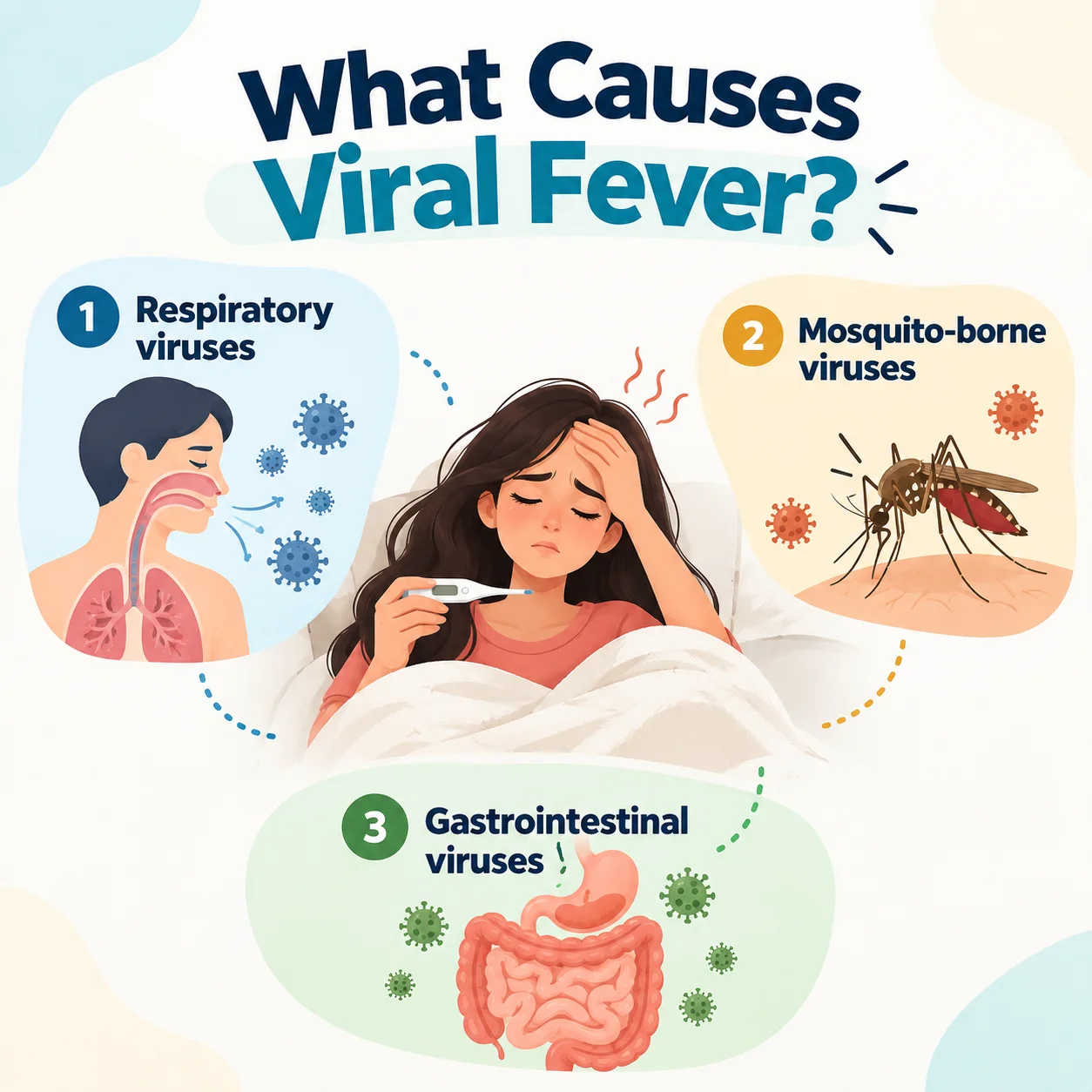
Viral fever occurs when a virus infects the body and triggers an immune response. Different viruses spread through different routes, depending on the type of infection.
Common causes include:
1. Respiratory viruses
Viruses responsible for the common cold, influenza, and other respiratory infections can spread through respiratory droplets, aerosols, and close contact.
They may cause fever along with cough, sore throat, congestion, headache, and body aches.
2. Mosquito-borne viruses
Viruses such as dengue and chikungunya spread through infected mosquito bites. These infections may cause fever, significant muscle or joint pain, headache, and sometimes a rash.
In regions where these infections occur, persistent or high fever should not automatically be dismissed as an ordinary viral illness.
3. Gastrointestinal viruses
Some viruses infect the digestive system and may cause fever along with nausea, vomiting, abdominal discomfort, or diarrhoea.
How Does Viral Fever Spread?
Depending on the virus, infection may spread through:
- Coughing, sneezing, or close contact
- Touching contaminated surfaces and then touching the face
- Contaminated food or water
- Infected mosquito bites
Not every virus spreads in the same way, so prevention depends on identifying the likely source of infection.
What Are the Common Symptoms of Viral Fever?
Viral fever symptoms can vary depending on the virus and the part of the body affected. Some people experience a mild fever with fatigue, while others develop several flu-like symptoms.
Common viral fever symptoms include:
Some people may also develop a rash, swollen glands, or digestive symptoms.
| Symptom | What it may feel like |
| Fever | Raised body temperature, sometimes with chills |
| Headache | Mild to moderate head pain or heaviness |
| Body aches | Muscle or joint discomfort |
| Fatigue | Unusual tiredness or low energy |
| Chills and sweating | Feeling cold followed by sweating |
| Sore throat | Irritation or pain while swallowing |
| Cough or congestion | Common with respiratory viral infections |
| Loss of appetite | Reduced interest in food |
| Nausea | Feeling sick or occasional vomiting |
| Weakness | Reduced stamina during daily activities |
Does Viral Fever Always Cause a High Temperature?
No. Viral infections can cause mild, moderate, or high fever, and some viral infections may occur without fever at all.
The temperature alone does not tell you how serious an infection is. Your other symptoms, hydration, medical history, and overall condition are also important.
How Long Does Viral Fever Last?
One of the most common questions patients ask is: How many days does viral fever last?
There is no single answer because viral fever can be caused by many different viruses.
For many uncomplicated viral respiratory infections, fever improves within a few days, while other symptoms may take longer to settle. Some infections can last a week or more.
General recovery pattern
Many mild viral infections improve within approximately 3–5 days, but this is not a universal rule. The duration depends on the specific infection.
For example, dengue commonly causes symptoms lasting around 2–7 days, while fatigue may continue after the acute illness. Other viral infections may follow a different course.
| Stage | What you may experience |
| Early stage | Fever, tiredness, headache, or body aches may begin |
| Peak symptoms | Fever and associated symptoms may become more noticeable |
| Recovery stage | Temperature improves, but weakness or cough may continue |
| After recovery | Energy and appetite gradually return |
When is viral fever lasting too long?
Consider consulting a doctor if:
- Fever continues beyond three days.
- Symptoms are getting worse instead of improving.
- Fever returns after disappearing.
- You develop new symptoms such as breathing difficulty, persistent vomiting, or a rash.
- You have a medical condition that increases your risk of complications.
Do not rely only on the number of days. A person who appears seriously unwell may need assessment earlier.
How Is Viral Fever Diagnosed?
There is no single test that confirms every viral fever.
Doctors usually begin by understanding your symptoms, medical history, and how the illness has progressed.
During a consultation, your doctor may ask about:
- When the fever started
- Highest recorded temperature
- Presence of cough, sore throat, body aches, or digestive symptoms
- Recent travel or exposure to someone who was ill
- Mosquito exposure, depending on the area and symptoms
- Existing medical conditions and medications
The doctor may also check your temperature, pulse, blood pressure, breathing, and hydration status.
Tests that may be recommended
Depending on your symptoms and clinical findings, tests may include:
- Complete Blood Count (CBC): May help assess blood cell counts and support evaluation of certain infections.
- Viral tests: Specific tests may be advised for infections such as influenza or COVID-19 when appropriate.
- Dengue testing: If dengue is suspected, the doctor may recommend suitable blood tests based on the stage of illness.
- Urine tests or other investigations: These may be considered when symptoms suggest another possible cause of fever.
Not everyone with fever needs every test. Investigations should be guided by clinical assessment rather than performed unnecessarily.
What Is the Treatment for Viral Fever?
In many mild viral infections, treatment focuses on relieving symptoms and supporting the body’s recovery while the immune system responds to the infection.
There is no universal medicine that cures every viral fever.
Common approaches to viral fever treatment include:
1. Adequate rest
Your body needs energy to recover. Reduce strenuous activity and allow yourself enough sleep.
2. Stay hydrated
Fever, sweating, vomiting, and diarrhoea can increase fluid loss.
Drink fluids regularly, such as:
- Water
- Oral rehydration solution when appropriate
- Soups and other suitable fluids
If you cannot keep fluids down or notice signs of dehydration, seek medical advice.
3. Medicines for fever and discomfort
A doctor or pharmacist may recommend an appropriate fever-reducing medicine, such as paracetamol, depending on your age, medical history, and other medications.
Follow the recommended dose and avoid taking multiple products containing the same active ingredient.
4. Specific antiviral treatment when indicated
Some viral infections have antiviral medicines that may be useful in selected patients. Their suitability depends on the virus, timing, and individual risk factors.
5. Treatment of complications
If the illness causes dehydration, breathing problems, or other complications, additional medical treatment may be required.
Do Antibiotics Help With Viral Fever?
No. Antibiotics work against bacteria, not viruses.
Taking antibiotics unnecessarily may cause side effects and contribute to antibiotic resistance.
If a doctor identifies or suspects a bacterial infection alongside or instead of a viral illness, antibiotics may be prescribed when appropriate.
Home Care Tips for Viral Fever

If your symptoms are mild and you have no warning signs, supportive care at home may help you feel more comfortable.
What you can do:
- Rest when your body feels tired. Avoid pushing through intense fatigue.
- Drink fluids regularly. Take small, frequent sips if you feel nauseated.
- Eat light, balanced meals. Choose foods you can tolerate and maintain nutrition as your appetite returns.
- Monitor your temperature. A digital thermometer can help you track changes.
- Wear comfortable clothing. Avoid excessive bundling that makes you uncomfortable.
- Maintain personal hygiene. Wash your hands regularly and avoid sharing personal items.
- Reduce close contact when contagious. Follow appropriate precautions for respiratory symptoms.
What should you avoid?
- Self-medicating with antibiotics
- Taking multiple fever medicines without checking their ingredients
- Ignoring worsening symptoms
- Delaying medical consultation because you assume the fever is viral
- Using unverified remedies as a substitute for medical care
Home care can support recovery, but it should not replace evaluation when symptoms are concerning.
When Should You See a Doctor for Viral Fever?
Many mild viral infections improve without complications. However, some fevers require medical assessment, particularly when symptoms persist, worsen, or affect your ability to stay hydrated and function normally.
- Fever lasts longer than three days.
- Temperature remains high or repeatedly returns.
- You feel unusually weak or symptoms are worsening.
- You have persistent vomiting or difficulty drinking fluids.
- You develop a new rash.
- You have significant abdominal pain.
- You have an underlying condition or weakened immunity.
Viral Fever in Children and Older Adults
Viral infections can affect people of all ages, but certain groups may need closer monitoring.
Children
Children may have difficulty explaining their symptoms. Parents should pay attention to fluid intake, urination, alertness, breathing, and changes in behaviour.
Medical advice is especially important for:
- Infants with fever, particularly those younger than three months
- Children who are unusually sleepy, confused, or difficult to comfort
- Children who are not drinking enough fluids
- Fever lasting longer than expected
- Breathing difficulty or seizures
Older adults
Older adults, especially those with diabetes, heart disease, lung disease, kidney problems, or weakened immunity, may be more vulnerable to complications.
They should seek medical advice promptly if fever is persistent or accompanied by worsening weakness, confusion, breathing difficulty, or reduced fluid intake.
Can Viral Fever Be Prevented?
Not every viral infection can be prevented, but several everyday measures can reduce the risk of transmission.
Prevention tips:
- Wash your hands regularly with soap and water.
- Avoid close contact with people who are unwell when possible.
- Cover your mouth and nose when coughing or sneezing.
- Avoid touching your eyes, nose, and mouth with unwashed hands.
- Keep frequently touched surfaces clean.
- Follow recommended vaccinations for preventable infections.
- Prevent mosquito breeding by removing stagnant water around your home.
- Use appropriate mosquito protection in areas where mosquito-borne infections occur.
Prevention becomes particularly important during seasonal outbreaks and periods of increased viral transmission.
Frequently Asked Questions (FAQs)
1. How many days does viral fever usually last?
Many uncomplicated viral infections improve within a few days, but the duration varies by virus. Some illnesses may last a week or longer. If fever persists beyond three days or symptoms worsen, consult a doctor.
2. Can viral fever go away on its own?
Yes, many mild viral infections resolve with rest, hydration, and supportive care. However, some viral illnesses can become serious, so worsening symptoms should not be ignored.
3. Is 102°F fever dangerous?
A temperature of 102°F does not automatically mean a dangerous illness. The significance depends on age, symptoms, duration, medical history, and overall condition. Seek medical advice if fever persists or is accompanied by concerning symptoms.
4. Can I take antibiotics for viral fever?
Antibiotics do not treat viral infections. They should only be taken when prescribed for an appropriate bacterial infection.
5. What should I eat during viral fever?
Choose light, nutritious meals that you can tolerate. Maintain fluid intake and consider suitable electrolyte-containing fluids when needed.
6. Can viral fever cause weakness after recovery?
Yes. Fatigue and reduced energy may continue for some time after the fever improves, depending on the infection and individual recovery.
7. When should I visit a general physician for fever?
Consult a general physician if your fever lasts longer than three days, keeps returning, worsens, or is accompanied by symptoms such as breathing difficulty, persistent vomiting, rash, or unusual weakness.
Conclusion
Viral fever is common, but it should not always be dismissed as a minor illness.
Most uncomplicated viral infections improve with appropriate rest, hydration, and symptom management. However, understanding the possible causes, monitoring how long the fever lasts, and recognising warning signs can help you seek medical care at the right time.
If you or a family member has persistent fever, worsening symptoms, or concerns about the cause, consulting a qualified physician can help identify the problem and guide appropriate treatment in best hospital in Noida.
Rama Hospital provides medical consultation and diagnostic support to help evaluate fever and other symptoms. Speak with a qualified general physician or internal medicine specialist for personalised medical guidance.