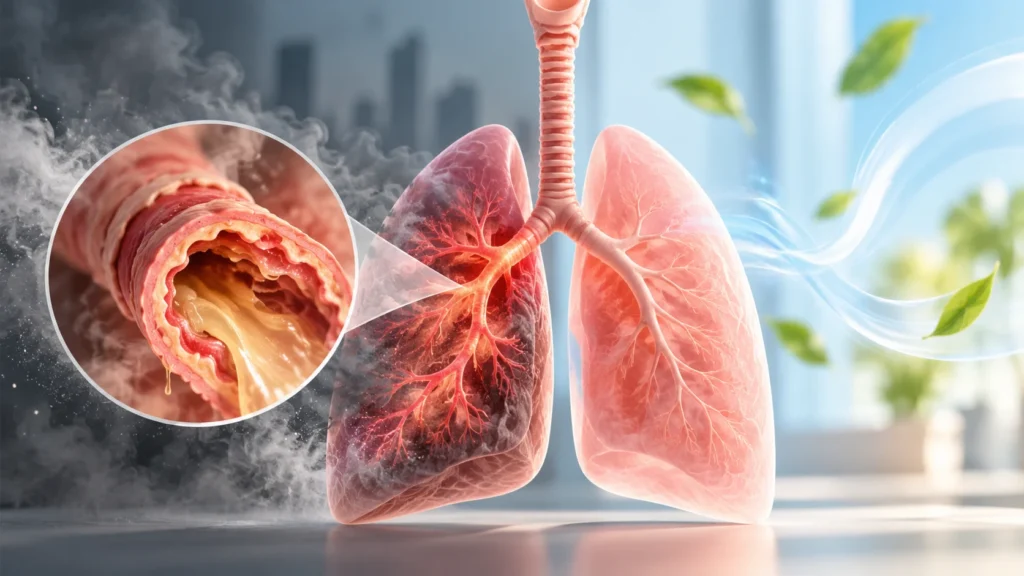
Chronic bronchitis is a long-term lung condition that causes persistent cough, mucus production, and breathing difficulty. It is one of the main types of chronic obstructive pulmonary disease, commonly known as COPD. Unlike a normal cough or cold that lasts a few days, chronic bronchitis continues for months or years and tends to worsen over time if not managed properly.
The condition develops when the airways in the lungs become inflamed and produce excess mucus. This mucus narrows the breathing tubes, making it harder for air to move in and out. Over time, the airways become damaged, and the lungs lose some of their ability to function normally. Many people ignore early symptoms, thinking it is just a smoker’s cough or a routine winter cough. But chronic bronchitis is a serious condition that needs medical attention.
What is Chronic Bronchitis?
Chronic bronchitis is defined as a cough with mucus that lasts for at least three months in a year, for two consecutive years, after other causes of cough have been ruled out. It is a type of chronic obstructive pulmonary disease, which means the airflow in the lungs is blocked over a long period.
The condition affects the bronchial tubes, which are the airways that carry air into the lungs. In chronic bronchitis, these tubes become swollen, irritated, and filled with mucus. This makes breathing difficult and causes a persistent cough. The cough is often worse in the morning and may produce yellow, green, or clear mucus.
Chronic bronchitis is different from acute bronchitis, which is a short-term infection that usually improves within a few weeks. Chronic bronchitis is a long-term disease that requires ongoing management. It is most common in smokers, but it can also affect people exposed to smoke, dust, chemicals, or air pollution over many years.
Causes of Chronic Bronchitis
The main cause of chronic bronchitis is long-term irritation and inflammation of the airways. This irritation damages the lining of the bronchial tubes and leads to excess mucus production.
Common causes include:
- Long-term smoking, which is the most common cause.
- Secondhand smoke exposure over many years.
- Air pollution, especially in cities with poor air quality.
- Occupational exposure to dust, chemicals, or fumes.
- Indoor smoke from cooking fuels, biomass, or poorly ventilated spaces.
- Repeated lung infections that damage the airways over time.
- Genetic factors that make some people more susceptible to lung disease.
- Aging, which reduces lung function and resilience.
- Pre-existing asthma or allergic conditions that worsen airway inflammation.
Why smoking is the biggest risk
Cigarette smoke contains thousands of harmful chemicals that irritate the airways. Over time, this irritation causes swelling, mucus overproduction, and damage to the tiny hair-like structures called cilia that help clear mucus. When cilia stop working properly, mucus builds up, leading to cough and infection risk.
Risk Factors for Chronic Bronchitis
Some people are more likely to develop chronic bronchitis than others.
Higher-risk groups
- Current or former smokers.
- People exposed to secondhand smoke regularly.
- Workers in industries with dust, chemicals, or fumes.
- People living in areas with high air pollution.
- Older adults, especially above forty years.
- People with a history of childhood lung infections.
- Individuals with asthma or allergic respiratory conditions.
- People with weak immunity or frequent respiratory infections.
- Those using indoor biomass fuels without proper ventilation.
Why risk increases in these groups
- Smoking directly damages airway lining.
- Pollution and dust cause ongoing irritation.
- Age reduces lung elasticity and cleaning ability.
- Repeated infections cause cumulative airway damage.
- Genetic and environmental factors combine to increase susceptibility.
Symptoms of Chronic Bronchitis
Symptoms develop slowly and may be mild at first. Many people ignore them until breathing becomes noticeably difficult.
Common symptoms include:
- Persistent cough lasting for months or years.
- Cough that produces mucus, especially in the morning.
- Shortness of breath during activity.
- Wheezing or whistling sound while breathing.
- Chest tightness or discomfort.
- Frequent respiratory infections.
- Fatigue due to poor oxygen levels.
- Reduced exercise tolerance.
- Bluish tint to lips or nails in advanced cases.
- Swelling in ankles in severe disease.
Symptoms during flare-ups
- Increased cough and mucus.
- Change in mucus color to yellow or green.
- Worse shortness of breath.
- Fever or chills.
- Increased chest tightness.
- Need for more inhalers or medicines.
Warning signs that need medical attention
- Severe breathlessness at rest.
- High fever with cough.
- Confusion or extreme tiredness.
- Bluish lips or fingers.
- Chest pain.
- Coughing up blood.
- Sudden worsening of symptoms.
Chronic Bronchitis in Different Age Groups
Chronic bronchitis can affect people of different ages, but the pattern and severity may vary.
In middle-aged adults
- Often linked to long-term smoking or occupational exposure.
- Symptoms may be dismissed as smoker’s cough.
- Early diagnosis can slow progression significantly.
In older adults
- More likely to have advanced disease with complications.
- May have other conditions such as heart disease or diabetes.
- Recovery from infections may be slower.
In younger adults
- Less common but possible with heavy smoking or pollution exposure.
- May be misdiagnosed as asthma or recurrent bronchitis.
- Early intervention can prevent long-term damage.
How is Chronic Bronchitis Diagnosed?
Diagnosis is based on symptoms, medical history, physical examination, and lung function tests. Since symptoms overlap with other lung diseases, proper testing is important.
Diagnostic steps
- Detailed history of cough, mucus, and breathing difficulty.
- Smoking and exposure history.
- Occupational and environmental history.
- Family history of lung disease.
- Physical examination of chest and breathing.
- Lung function tests to measure airflow.
- Imaging tests to rule out other conditions.
- Blood tests to check oxygen levels and infection markers.
Common tests that may be done
- Spirometry to measure lung function and airflow limitation.
- Chest X-ray to check for lung changes or infection.
- CT scan if more detailed imaging is needed.
- Arterial blood gas test to measure oxygen and carbon dioxide levels.
- Sputum test to check for infection or other causes.
- Pulse oximetry to measure oxygen saturation.
- Exercise testing to assess functional capacity.
Why diagnosis matters
Early diagnosis helps start treatment before significant lung damage occurs. It also helps distinguish chronic bronchitis from asthma, pneumonia, tuberculosis, or other lung conditions that need different treatment.
Treatment for Chronic Bronchitis
There is no cure for chronic bronchitis, but treatment can control symptoms, reduce flare-ups, and improve quality of life.
Goals of treatment
- Reduce cough and mucus production.
- Improve breathing and exercise tolerance.
- Prevent and manage flare-ups.
- Slow disease progression.
- Treat complications early.
- Improve overall quality of life.
1. Medicines for symptom control
- Inhalers to open the airways and reduce tightness.
- Bronchodilators to relax airway muscles.
- Inhaled steroids to reduce inflammation in selected patients.
- Combination inhalers for better symptom control.
- Mucus-thinning medicines to help clear phlegm.
- Antibiotics during bacterial infections or flare-ups.
- Cough suppressants only when advised by a doctor.
2. Oxygen therapy
- Used in patients with low oxygen levels.
- Helps reduce breathlessness and improve energy.
- May be needed at home in advanced disease.
- Requires medical supervision and regular follow-up.
3. Pulmonary rehabilitation
- Structured program of exercise, education, and support.
- Helps improve breathing techniques.
- Increases stamina and reduces fatigue.
- Teaches energy conservation and self-management.
- Improves confidence and daily functioning.
4. Vaccination
- Flu vaccine to prevent seasonal influenza.
- Pneumococcal vaccine to reduce pneumonia risk.
- COVID vaccine as per guidelines.
- Vaccination reduces infection-related flare-ups.
5. Lifestyle management
- Smoking cessation is the most important step.
- Avoiding smoke, dust, and pollution exposure.
- Regular physical activity within tolerance.
- Breathing exercises such as pursed-lip breathing.
- Adequate hydration to thin mucus.
- Balanced nutrition to maintain strength.
- Good sleep and stress management.
6. Management of flare-ups
- Early recognition of worsening symptoms.
- Prompt use of rescue inhalers.
- Medical review for possible antibiotics or steroids.
- Hospital care if breathlessness is severe.
- Action plan to prevent future flare-ups.
Living with Chronic Bronchitis
Living with chronic bronchitis requires daily management and long-term commitment.
Daily self-care tips
- Take medicines and inhalers as prescribed.
- Practice breathing exercises regularly.
- Stay active with walking or light exercise.
- Drink enough water to keep mucus thin.
- Avoid smoke, strong fumes, and dust.
- Use a mask in polluted areas if needed.
- Keep follow-up appointments regularly.
- Monitor symptoms and report changes early.
Home environment tips
- Keep living spaces well ventilated.
- Avoid indoor smoke from cooking or heating.
- Use air purifiers if pollution is high.
- Keep bedding and rooms clean to reduce dust.
- Avoid strong perfumes or chemical sprays.
Emotional and social support
- Chronic illness can affect mood and confidence.
- Support from family and friends is important.
- Patient groups and counseling can help.
- Understanding the condition reduces anxiety.
- Setting realistic goals improves motivation.
Possible Complications
Untreated or poorly managed chronic bronchitis can lead to serious complications over time.
Common complications
- Frequent lung infections and pneumonia.
- Worsening breathlessness and reduced activity.
- Respiratory failure in advanced stages.
- Heart strain due to low oxygen levels.
- Pulmonary hypertension or high lung pressure.
- Right-sided heart failure in severe disease.
- Weight loss and muscle weakness.
- Depression or anxiety due to chronic symptoms.
- Reduced quality of life and independence.
Why complications happen
Long-term inflammation and airflow limitation reduce oxygen supply to the body. This affects the heart, muscles, and other organs. Repeated infections cause further lung damage. That is why early and consistent management is essential.
When to See a Doctor
Medical evaluation is important for people with persistent cough, breathing difficulty, or risk factors.
- Cough lasting more than eight weeks.
- Regular mucus production, especially in the morning.
- Shortness of breath during routine activities.
- Wheezing or chest tightness.
- Frequent chest infections.
- History of smoking or pollution exposure.
- Reduced exercise tolerance.
- Family history of lung disease.
Prevention of Chronic Bronchitis
Not all cases can be prevented, but risk can be significantly reduced.
Prevention pointers
- Do not start smoking.
- Quit smoking if you already smoke.
- Avoid secondhand smoke exposure.
- Use protective masks in dusty or polluted areas.
- Ensure proper ventilation at home and work.
- Reduce indoor smoke from cooking fuels.
- Get vaccinated against flu and pneumonia.
- Treat respiratory infections promptly.
- Maintain good overall health and immunity.
- Have regular check-ups if you have risk factors.
For smokers
- Seek medical support for quitting.
- Use nicotine replacement or medicines if advised.
- Join cessation programs or counseling.
- Avoid triggers that lead to smoking.
- Celebrate small milestones in quitting.
Why Choose Rama Hospital for Chronic Bronchitis Treatment?
Chronic bronchitis is a complex condition that requires expert pulmonology care, lung function testing, and long-term management. A hospital with experienced respiratory specialists can make a major difference in outcomes.
- Expert evaluation by pulmonology specialists.
- Advanced lung function testing and imaging.
- Personalized treatment plans for each patient.
- Pulmonary rehabilitation and breathing support.
- Vaccination and infection prevention guidance.
- Long-term follow-up and flare-up management.
Frequently Asked Questions (FAQs)
Is chronic bronchitis curable?
Chronic bronchitis cannot be completely cured, but it can be managed effectively. Treatment focuses on reducing symptoms, preventing flare-ups, and slowing disease progression. Early diagnosis and smoking cessation give the best outcomes.
What is the main cause of chronic bronchitis?
The main cause is long-term smoking, which damages the airways and causes excess mucus. Other causes include air pollution, occupational dust, chemical exposure, and repeated lung infections. Avoiding these triggers is essential for prevention.
Can chronic bronchitis lead to COPD?
Chronic bronchitis is already a type of COPD. Many patients have features of both chronic bronchitis and emphysema. Together they cause progressive airflow limitation and breathing difficulty over time.
How is chronic bronchitis diagnosed?
Diagnosis is based on symptoms, smoking history, and lung function tests such as spirometry. Chest X-ray or CT scan may be done to rule out other conditions. Proper testing helps confirm the diagnosis and guide treatment.
Can non-smokers get chronic bronchitis?
Yes, non-smokers can develop chronic bronchitis due to air pollution, occupational exposure, indoor smoke, or repeated infections. However, smoking remains the most common cause worldwide.
What are the best treatments for chronic bronchitis?
Treatment includes inhalers, bronchodilators, inhaled steroids, mucus-thinning medicines, and antibiotics during infections. Pulmonary rehabilitation, oxygen therapy, and vaccination also play important roles in management.
Can chronic bronchitis be prevented?
Yes, prevention is possible by avoiding smoking, reducing pollution exposure, using protective masks, ensuring good ventilation, and getting vaccinated. Early treatment of respiratory infections also helps prevent long-term damage.
Conclusion
Chronic bronchitis is a serious, long-term lung condition that causes persistent cough, mucus production, and breathing difficulty. It is most common in smokers but can also affect people exposed to pollution, dust, or chemicals over many years. Without proper management, it can lead to frequent infections, worsening breathlessness, and serious complications.
The most important steps are early diagnosis, smoking cessation, appropriate medicines, pulmonary rehabilitation, vaccination, and long-term follow-up. For patients with chronic cough, increasing breathlessness, or risk factors such as smoking or occupational exposure, a medical evaluation can make a major difference. With the right care, patients can control symptoms, reduce flare-ups, and maintain a better quality of life.
Rama Hospital can help evaluate chronic bronchitis, identify individual risk factors, and provide a clear treatment plan that supports better breathing, fewer infections, and improved overall lung health.