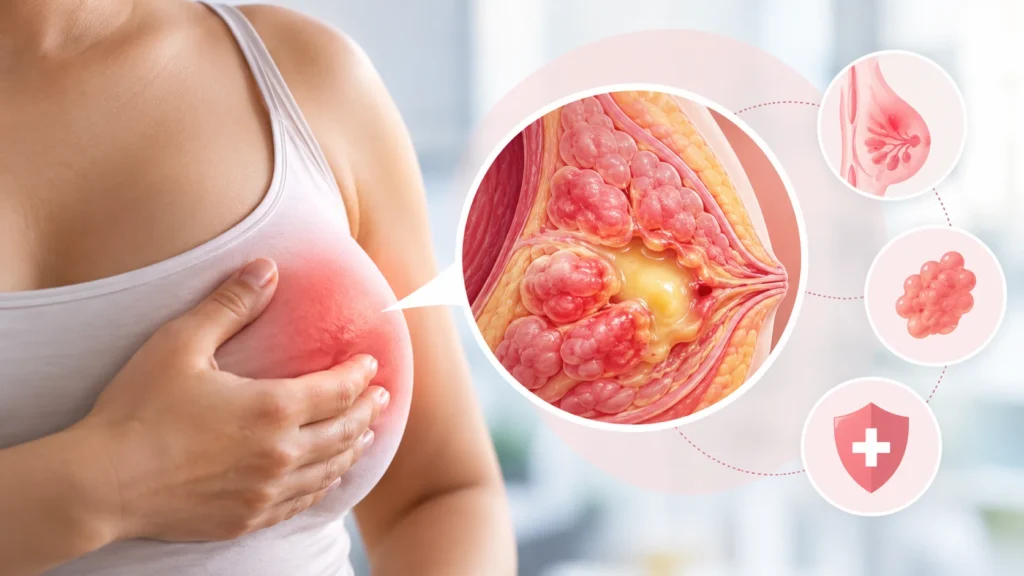
Breast infections, also called mastitis, and breast abscess are conditions that can affect women of any age, but they are most common during breastfeeding. A breast infection happens when bacteria enter the breast tissue, causing pain, redness, swelling, warmth, and sometimes fever. If the infection is not treated early, a pocket of pus may form inside the breast. This is called a breast abscess.
Many women feel scared or embarrassed when they develop breast pain, lumps, or discharge. Some assume it must be cancer. In most cases, breast infection and abscess are not cancer, but they still need proper medical care. Without treatment, the pain can become severe, breastfeeding may become difficult, and the infection can spread.
What is Breast Infection?
Breast infection, or mastitis, is inflammation of the breast tissue that is often caused by bacteria. It usually affects one breast at a time. The breast may become red, swollen, warm, and very tender. The woman may also feel feverish, tired, and unwell.
Breast infection is most common in women who are breastfeeding, especially in the first few weeks after delivery. This is called lactational mastitis. It can also happen in women who are not breastfeeding, which is called non-lactational mastitis. In both cases, early treatment helps prevent complications such as abscess formation.
What is Breast Abscess?
A breast abscess is a collection of pus that forms inside the breast tissue as a result of an untreated or severe infection. It feels like a painful, firm, or soft lump under the skin. The area is usually very tender, red, and warm. Some women may have fever and feel generally unwell.
An abscess often develops when mastitis is not treated early or when the infection does not respond fully to initial treatment. It may need drainage in addition to antibiotics. With proper care, most women recover well and can continue breastfeeding if they wish.
Types of Breast Infection
Breast infections can be grouped based on when they occur and what causes them.
Based on timing
- Lactational mastitis, which happens during breastfeeding.
- Non-lactational mastitis, which happens in women who are not breastfeeding.
- Periductal mastitis, which affects the ducts under the nipple and is more common in smokers.
- Post-surgical mastitis, which can occur after breast surgery or biopsy.
Based on severity
- Mild infection with local pain and redness.
- Moderate infection with fever and more widespread symptoms.
- Severe infection with abscess formation or spreading infection.
Based on cause
- Bacterial infection, which is the most common type.
- Fungal infection, which is less common but can occur, especially with cracked nipples.
- Inflammatory conditions that mimic infection but are not due to bacteria.
Causes of Breast Infection and Abscess
Breast infection usually happens when bacteria enter the breast through cracked or damaged skin, often around the nipple.
Common causes include:
- Cracked or sore nipples during breastfeeding.
- Milk stasis, where milk is not drained properly from the breast.
- Blocked milk ducts.
- Poor latching by the baby during feeds.
- Infrequent or irregular feeding.
- Sudden weaning or long gaps between feeds.
- Tight or ill-fitting bras causing pressure and blockage.
- Bacteria from the baby’s mouth or mother’s skin entering the breast.
- Smoking, which increases risk of non-lactational infection.
- Diabetes or weak immunity, which can make infections more likely.
- Previous breast infection or abscess.
- Nipple piercing or trauma.
Why infection develops
When milk is not removed well, it can collect in the ducts. This causes swelling and pressure. Cracked skin allows bacteria to enter. The combination of trapped milk and bacteria creates an environment where infection can grow. If the infection is not controlled, pus may collect and form an abscess.
Risk Factors for Breast Infection and Abscess
Some women are more likely to develop breast infection or abscess than others.
Higher-risk groups
- Women who are breastfeeding, especially in the first six weeks after delivery.
- First-time mothers who are learning to breastfeed.
- Women with a history of mastitis or abscess.
- Women with cracked or painful nipples.
- Mothers with babies who have difficulty latching.
- Women who smoke.
- Women with diabetes or obesity.
- Women with weak immune systems.
- Women with nipple piercings.
- Women who wear very tight clothing or bras.
Why risk increases in these groups
- Breastfeeding creates more opportunities for milk stasis and nipple damage.
- Smoking affects blood flow and healing in breast tissue.
- Diabetes and obesity can reduce immunity and slow recovery.
- Poor latching increases nipple trauma and incomplete milk drainage.
- Tight clothing can block ducts and increase pressure.
Symptoms of Breast Infection
Symptoms can develop quickly, sometimes within a few hours.
Common symptoms include:
- Pain in one area of the breast.
- Redness on part of the breast.
- Swelling and warmth over the affected area.
- A tender, firm area that may feel like a lump.
- Fever and chills.
- Body aches and fatigue.
- Feeling generally unwell, like having flu.
- Burning pain during breastfeeding.
- Nipple discharge in some cases.
Signs that infection may be worsening
- Increasing pain despite home care.
- Spreading redness.
- Higher fever.
- A soft, fluctuant lump suggesting pus formation.
- Pus or abnormal discharge from the nipple.
- Inability to breastfeed due to pain.
Symptoms of Breast Abscess
A breast abscess usually develops after mastitis has been present for some time.
Common symptoms include:
- A painful lump in the breast that may feel soft or fluid-filled.
- Red, shiny, and very tender skin over the lump.
- Persistent fever.
- Pus discharge from the nipple or from the skin if it drains spontaneously.
- Severe pain that makes it difficult to touch or wear a bra.
- General weakness and tiredness.
When to suspect abscess
- Mastitis symptoms that do not improve after 48 hours of treatment.
- A new, very tender lump appearing after initial improvement.
- Persistent fever despite antibiotics.
- A soft, boggy area that feels different from the surrounding firm breast tissue.
Breast Infection in Breastfeeding Women
Breast infection is very common during breastfeeding, especially in the early weeks.
Why it happens during breastfeeding
- Babies may not latch properly, causing nipple damage.
- Feeds may be infrequent or irregular.
- Milk may not be fully drained from the breast.
- Mothers may be exhausted and dehydrated.
- Cracked nipples provide an entry point for bacteria.
Impact on breastfeeding
- Pain may make feeding difficult.
- Some mothers stop breastfeeding due to fear or discomfort.
- With proper treatment, most women can continue breastfeeding safely.
- In many cases, emptying the breast regularly helps recovery.
Breast Infection in Non-Breastfeeding Women
Breast infection can also occur in women who are not breastfeeding.
Common features in non-lactational mastitis
- More common in smokers.
- Often affects the area around the nipple.
- May be linked to duct problems under the nipple.
- Can recur if the underlying cause is not addressed.
- May require longer treatment and closer follow-up.
Why it matters
Non-lactational infection can sometimes be confused with other breast conditions. Proper evaluation is important to rule out other causes and to plan the right treatment.
How is Breast Infection and Abscess Diagnosed?
Diagnosis is based on symptoms, physical examination, and sometimes imaging or tests.
Diagnostic steps
- Detailed history of symptoms and breastfeeding pattern.
- Examination of the breast for redness, swelling, warmth, and lumps.
- Checking for fever and general signs of infection.
- Assessment of nipple condition and milk flow.
- Evaluation of risk factors such as smoking, diabetes, or previous infection.
Tests that may be done
- Ultrasound of the breast to look for abscess or fluid collection.
- Blood tests to check for infection markers if needed.
- Culture of pus or discharge to identify the bacteria in recurrent or severe cases.
- Mammogram or further imaging in older women or atypical cases.
- Biopsy only if there is concern about other breast conditions.
Why diagnosis matters
Early diagnosis helps start the right treatment before an abscess forms. If an abscess is present, imaging helps plan drainage. Proper diagnosis also ensures that other breast problems are not missed.
Treatment for Breast Infection
Treatment depends on the severity of symptoms and whether an abscess is present.
1. Antibiotics
Antibiotics are the main treatment for bacterial breast infection.
- A course of oral antibiotics is usually prescribed for 10 to 14 days.
- It is important to complete the full course even if symptoms improve.
- The antibiotic choice may be adjusted based on response or culture results.
- Safe antibiotics are available for breastfeeding women.
2. Pain relief and fever control
Medicines can help reduce pain and fever.
- Paracetamol or ibuprofen may be used as advised.
- These can make feeding and rest more comfortable.
- Always follow medical advice regarding dose and safety in breastfeeding.
3. Continued milk drainage
For lactational mastitis, draining the breast is very important.
- Continue breastfeeding or expressing milk regularly.
- Start feeds on the affected side if tolerable.
- Ensure good latching and positioning.
- Gentle massage toward the nipple during feeds can help.
- Avoid sudden weaning unless advised by a doctor.
4. Home care support
Simple measures can support recovery.
- Apply warm compresses before feeding to help milk flow.
- Apply cold packs after feeding to reduce swelling and pain.
- Wear a supportive but not tight bra.
- Rest as much as possible.
- Drink plenty of fluids.
- Maintain good hand and nipple hygiene.
Treatment for Breast Abscess
If an abscess has formed, antibiotics alone are usually not enough. The pus needs to be drained.
1. Needle aspiration
This is often the first choice for many abscesses.
- A thin needle is used to draw out pus under ultrasound guidance.
- It may need to be repeated more than once.
- It is less invasive and leaves minimal scarring.
- Antibiotics are continued along with aspiration.
2. Surgical drainage
This may be needed for large or complex abscesses.
- A small cut is made to drain the pus.
- The cavity may be cleaned and packed if needed.
- It is done under local or general anesthesia depending on size.
- Wound care and follow-up are important.
3. Supportive care during abscess treatment
- Pain relief medicines as prescribed.
- Antibiotics to treat remaining infection.
- Regular dressing changes if surgical drainage is done.
- Ultrasound follow-up to ensure complete resolution.
- Breastfeeding support to continue safely if possible.
Home Care and Self-Help Measures
Home care plays a big role in recovery and prevention of recurrence.
Helpful home care steps
- Continue regular breastfeeding or milk expression.
- Ensure correct latching and positioning with help if needed.
- Apply warm compresses before feeding.
- Apply cold packs after feeding for pain and swelling.
- Take prescribed antibiotics on time.
- Use pain relief medicines as advised.
- Rest and avoid overexertion.
- Drink adequate water and maintain nutrition.
- Keep the nipple area clean and dry.
- Avoid tight clothing that presses on the breast.
What to avoid
- Do not stop breastfeeding suddenly unless advised.
- Do not press or squeeze the lump forcefully.
- Do not apply harsh substances on cracked nipples.
- Do not ignore fever or worsening symptoms.
- Do not self-medicate with leftover antibiotics.
Prevention of Breast Infection and Abscess
Prevention focuses on good breastfeeding technique, nipple care, and early attention to symptoms.
Prevention pointers
- Learn correct latching and positioning early.
- Feed frequently and avoid long gaps.
- Empty the breast well at each feed.
- Treat cracked nipples early with proper care.
- Change feeding positions to drain all areas of the breast.
- Wear comfortable, well-fitting bras.
- Avoid smoking.
- Manage diabetes and other health conditions well.
- Seek help early if pain, redness, or fever develops.
- Attend lactation support sessions if available.
For women not breastfeeding
- Maintain good breast hygiene.
- Avoid nipple trauma or unnecessary piercing.
- Stop smoking to reduce risk of duct problems.
- Seek early care for any new breast lump or persistent pain.
Possible Complications
Most women recover fully with proper treatment, but complications can occur if care is delayed.
Possible complications
- Breast abscess formation.
- Recurrent mastitis.
- Chronic breast pain.
- Scarring or deformity after large abscess.
- Difficulty continuing breastfeeding.
- Spread of infection to surrounding tissue.
- Sepsis in very severe, untreated cases.
- Emotional stress and anxiety about breast health.
Why complications happen
Delayed treatment allows infection to progress. Incomplete drainage of an abscess can lead to recurrence. Poor breastfeeding technique can cause repeated duct blockage and infection.
When to See a Doctor
Medical evaluation is important if symptoms suggest infection or abscess.
- Breast pain, redness, or swelling lasts more than 24 hours.
- Fever develops with breast symptoms.
- A tender lump appears in the breast.
- Nipple discharge is pus-like or bloody.
- Breastfeeding becomes very painful or difficult.
- Symptoms improve and then worsen again.
- There is a history of recurrent mastitis or abscess.
Why Choose Rama Hospital for Breast Infection and Abscess Care?
Breast infection and abscess can be painful and worrying, especially for new mothers. A hospital with experienced breast specialists, imaging support, and lactation guidance can make recovery faster and safer.
- Accurate diagnosis with clinical examination and ultrasound.
- Safe antibiotic treatment suitable for breastfeeding.
- Ultrasound-guided aspiration for abscess when needed.
- Surgical drainage for complex cases.
- Lactation support to continue breastfeeding safely.
- Follow-up to prevent recurrence and monitor healing.
Frequently Asked Questions (FAQs)
What is a breast abscess?
A breast abscess is a collection of pus that forms inside the breast due to an untreated or severe infection. It feels like a painful lump and often needs drainage along with antibiotics for complete treatment.
Can I continue breastfeeding with a breast infection?
Yes, in most cases it is safe and helpful to continue breastfeeding with a breast infection. Regular milk drainage supports recovery. A doctor can advise on safe antibiotics and feeding techniques.
Does breast infection mean cancer?
No, breast infection and abscess are not cancer. However, any new breast lump or persistent change should be evaluated by a doctor to confirm the diagnosis and rule out other conditions.
How long does it take to recover from mastitis?
With proper antibiotics and home care, many women start feeling better within 24 to 48 hours. Complete recovery may take 10 to 14 days. Abscess may take longer and may need drainage.
Can breast abscess come back?
Yes, abscess can recur, especially if the underlying cause is not addressed. Good breastfeeding technique, early treatment of mastitis, and stopping smoking can reduce the risk of recurrence.
Is surgery always needed for breast abscess?
No, many abscesses can be treated with needle aspiration under ultrasound guidance. Surgery is reserved for larger, complex, or recurrent abscesses that do not respond to simpler measures.
Can women who are not breastfeeding get breast infection?
Yes, non-breastfeeding women can also develop breast infection, especially smokers or those with duct problems. Evaluation is important to plan the right treatment and rule out other causes.
Conclusion
Breast infection and breast abscess are common but treatable conditions that can affect breastfeeding and non-breastfeeding women. They cause pain, redness, swelling, fever, and sometimes a lump that needs drainage. With early diagnosis, proper antibiotics, and supportive care, most women recover well and can continue breastfeeding safely.
The most important steps are recognizing symptoms early, continuing milk drainage in lactational cases, completing prescribed treatment, and seeking medical help if symptoms worsen or do not improve. For women with recurrent problems, evaluation of underlying risk factors such as smoking, diabetes, or breastfeeding technique is important.
Rama Hospital can help evaluate breast infection and abscess, provide safe treatment options including antibiotics and drainage, and offer support for breastfeeding and prevention of recurrence.