A transbronchial lung biopsy, commonly called TBLB, is a medical procedure used to take small samples of lung tissue for testing. It is done through a thin, flexible tube called a bronchoscope, which is passed through the nose or mouth into the airways of the lungs. This procedure helps doctors diagnose lung diseases that cannot be clearly identified by scans or blood tests alone.
TBLB is often recommended when a patient has an abnormal chest X-ray or CT scan, unexplained lung shadows, persistent cough, breathing difficulty, or suspected lung infection, inflammation, or cancer. The tissue samples collected during the biopsy are examined under a microscope to find the exact cause of the problem. This helps guide the right treatment plan.
What is Transbronchial Lung Biopsy?
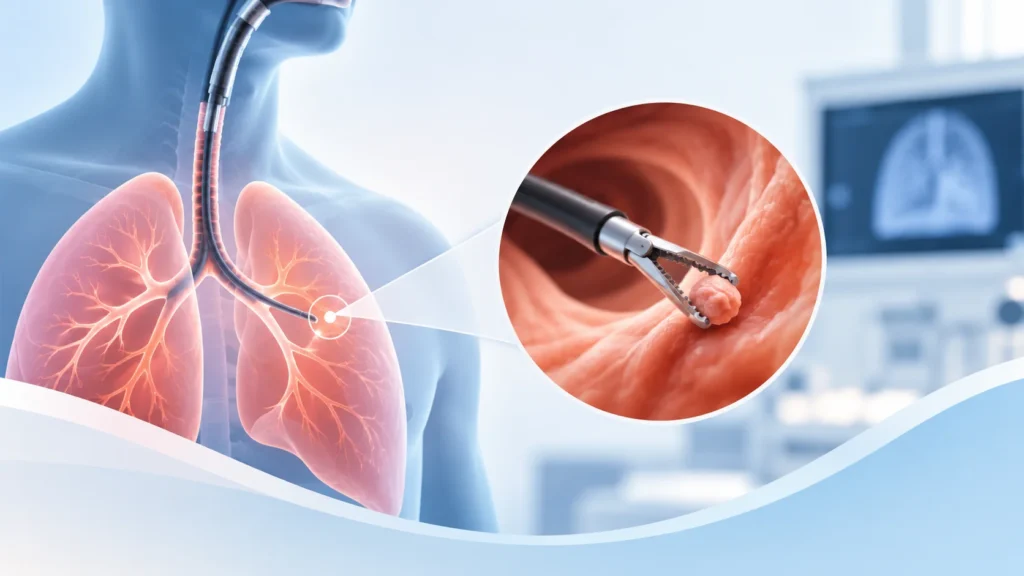
Transbronchial lung biopsy is a minimally invasive procedure in which small pieces of lung tissue are collected through the airways using a bronchoscope. The bronchoscope is a thin, flexible tube with a light and camera at the tip. It allows the doctor to see inside the airways and guide a small instrument to take tissue samples from specific areas of the lung.
The word transbronchial means through the bronchi, which are the main air passages leading into the lungs. During the procedure, the doctor passes the bronchoscope through the nose or mouth, down the throat, into the windpipe, and then into the smaller airways. Once the target area is reached, a tiny forceps or needle is used to collect tissue or cells.
TBLB is different from surgical lung biopsy, which requires larger incisions and general anesthesia. TBLB is usually done with local anesthesia and sedation, and most patients can go home the same day. It is a valuable tool for diagnosing many lung conditions without the need for major surgery.
Why is TBLB Done?
Lung biopsy is performed when doctors need a tissue sample to confirm a diagnosis. Imaging tests like X-ray or CT scan can show abnormalities, but they cannot always tell the exact cause. A biopsy provides direct evidence from the lung tissue itself.
Common reasons for TBLB include:
- To diagnose interstitial lung diseases such as pulmonary fibrosis.
- To evaluate unexplained lung shadows or nodules seen on CT scan.
- To identify the cause of persistent lung infiltrates.
- To check for lung infections such as tuberculosis or fungal infections.
- To assess suspected lung cancer or tumors.
- To evaluate lung involvement in autoimmune or inflammatory diseases.
- To investigate unexplained cough, breathlessness, or low oxygen levels.
- To monitor response to treatment in certain lung diseases.
When TBLB is preferred
- When the abnormality is located near the central airways.
- When a less invasive option is needed before considering surgery.
- When the patient is not fit for surgical biopsy.
- When multiple areas of the lung need sampling.
How is the Procedure Performed?
Lung biopsy is usually performed in a procedure room or endoscopy suite by a pulmonologist, a doctor who specializes in lung diseases. The procedure typically takes thirty to sixty minutes, depending on the complexity and number of samples needed.
Steps of the procedure
- The patient is asked to lie on a procedure table, usually on their back.
- Monitors are attached to track heart rate, blood pressure, and oxygen levels.
- Oxygen is given through a nasal cannula if needed.
- Local anesthesia is sprayed or injected to numb the throat and airways.
- Sedation is given through a vein to help the patient relax and reduce discomfort.
- The bronchoscope is gently passed through the nose or mouth into the windpipe.
- The doctor guides the bronchoscope into the specific airway leading to the target area.
- Small forceps or a needle is passed through the bronchoscope to collect tissue samples.
- Multiple samples may be taken from different areas if required.
- The samples are sent to the pathology lab for examination.
- The bronchoscope is removed carefully once the procedure is complete.
During the procedure
- The patient is usually awake but sedated and comfortable.
- Breathing is not blocked, but the patient may feel pressure or mild discomfort.
- Coughing is common but manageable with anesthesia and sedation.
- The medical team monitors vital signs throughout the procedure.
Preparation for TBLB
Proper preparation helps ensure the procedure is safe and successful. Patients are given specific instructions by their doctor before the biopsy.
Pre-procedure instructions
- Inform the doctor about all medicines, supplements, and allergies.
- Share details of any bleeding disorders or previous surgeries.
- Mention if you are pregnant or suspect pregnancy.
- Discuss any heart, lung, or kidney conditions.
- Follow fasting instructions, usually no food or drink for six to eight hours before the procedure.
- Arrange for someone to accompany you and take you home after sedation.
- Wear comfortable clothing and avoid jewelry or heavy makeup.
Medicines that may need adjustment
- Blood thinners such as warfarin, aspirin, clopidogrel, or newer anticoagulants may need to be paused temporarily.
- Diabetes medicines may need dose adjustment due to fasting.
- Blood pressure medicines are usually continued, but confirm with your doctor.
- Inhalers are generally continued unless advised otherwise.
Tests that may be done before TBLB
- Chest X-ray or CT scan to locate the target area.
- Blood tests to check hemoglobin, platelets, and clotting function.
- Lung function tests to assess breathing capacity.
- ECG or heart evaluation if needed.
- Oxygen saturation measurement.
What to Expect During and After the Procedure
Understanding what happens during and after lung biopsy can reduce anxiety and help patients prepare mentally.
During the procedure
- You will feel relaxed due to sedation but may be aware of some pressure.
- You may cough occasionally as the bronchoscope moves through the airways.
- The procedure is not usually painful because of local anesthesia.
- The medical team will talk to you and monitor your comfort throughout.
Immediately after the procedure
- You will be moved to a recovery area for observation.
- Vital signs will be checked regularly.
- You may feel groggy due to sedation for a few hours.
- Throat numbness may last for one to two hours.
- Do not eat or drink until the throat sensation returns to avoid choking.
- A chest X-ray may be done to check for complications.
Going home
- Most patients can go home the same day once stable.
- You must be accompanied by a family member or friend.
- Do not drive or operate machinery for twenty-four hours after sedation.
- Rest for the remainder of the day and avoid strenuous activity.
Recovery After TBLB
Recovery is usually quick, but it is important to follow post-procedure care instructions to reduce risks.
Common post-procedure symptoms
- Mild sore throat.
- Slight cough.
- Small amount of blood-tinged sputum.
- Mild chest discomfort.
- Tiredness or drowsiness from sedation.
Self-care tips
- Rest for the first twenty-four hours.
- Drink warm fluids to soothe the throat.
- Avoid hot or spicy food initially if the throat is sensitive.
- Do not smoke or expose yourself to smoke.
- Take prescribed medicines as directed.
- Avoid heavy lifting or vigorous exercise for a few days.
- Use lozenges or gargle with salt water if the throat is sore.
When to resume normal activities
- Light activities can be resumed within one to two days.
- Work can often be resumed within two to three days, depending on recovery.
- Avoid intense physical activity for at least one week or as advised.
Risks and Complications
Lung biopsy is generally safe, but like any medical procedure, it carries some risks. Most complications are mild and manageable, but serious complications can occur rarely.
Common risks
- Bleeding from the biopsy site, usually minor and self-limiting.
- Temporary drop in oxygen levels during the procedure.
- Sore throat or hoarseness.
- Mild fever or chest discomfort.
Less common risks
- Pneumothorax, which is air leakage causing lung collapse.
- Significant bleeding requiring intervention.
- Infection at the biopsy site.
- Reaction to sedation or anesthesia.
- Worsening of breathing in patients with severe lung disease.
Warning signs that need medical attention
- Severe or worsening shortness of breath.
- Chest pain that does not improve.
- Coughing up more than a few teaspoons of blood.
- High fever or chills.
- Dizziness, fainting, or bluish lips.
- Rapid heartbeat or severe weakness.
Results and Diagnosis
The tissue samples collected during lung biopsy are sent to a pathology lab for detailed examination. Results help confirm or rule out specific lung conditions.
What the results may show
- Signs of infection such as tuberculosis or fungal disease.
- Inflammation consistent with interstitial lung disease.
- Evidence of cancer or tumor cells.
- Signs of autoimmune or allergic lung disease.
- Non-specific changes that may require further evaluation.
Timeframe for results
- Preliminary reports may be available within a few days.
- Final pathology reports may take one to two weeks.
- Special stains or cultures for infection may take longer.
Next steps after results
- If infection is found, appropriate antibiotics or anti-tuberculosis treatment is started.
- If interstitial lung disease is diagnosed, specific medications and monitoring are planned.
- If cancer is detected, further staging and oncology referral are arranged.
- If results are inconclusive, repeat biopsy or alternative tests may be considered.
Who Should Not Have TBLB?
Lung biopsy is not suitable for everyone. Certain conditions increase the risk of complications and may require alternative approaches.
Relative contraindications
- Severe bleeding disorder or very low platelet count.
- Uncontrolled heart disease or recent heart attack.
- Severe low oxygen levels that cannot be corrected.
- Unstable asthma or severe airway spasm.
- Large lung cysts or bullae that increase pneumothorax risk.
- Severe pulmonary hypertension.
- Inability to cooperate during the procedure.
Decision making
- The doctor will weigh the benefits and risks for each patient.
- Alternative tests such as CT-guided biopsy or surgical biopsy may be considered.
- Optimization of medical conditions may be done before proceeding.
Why Choose Rama Hospital for TBLB?
Transbronchial lung biopsy requires expertise, advanced equipment, and careful monitoring. A hospital with experienced pulmonologists, modern bronchoscopy suites, and strong supportive care can make the procedure safer and more effective.
- Experienced pulmonologists specializing in interventional bronchoscopy.
- Modern bronchoscopy equipment with high-definition imaging.
- Dedicated procedure rooms with full monitoring and emergency support.
- On-site pathology and microbiology labs for faster results.
- Coordination with radiology, thoracic surgery, and oncology teams.
- Clear patient education and post-procedure follow-up.
Frequently Asked Questions (FAQs)
Is TBLB painful?
Most patients do not feel significant pain because local anesthesia and sedation are used. You may feel pressure, coughing, or mild discomfort, but the procedure is generally well tolerated.
How long does the procedure take?
The procedure usually takes thirty to sixty minutes, depending on the number of samples and complexity. Recovery and observation may add a few more hours before discharge.
Do I need to stay in the hospital overnight?
Most patients can go home the same day after observation. Overnight stay may be needed if there are complications, significant bleeding, or breathing issues.
What are the risks of TBLB?
Common risks include minor bleeding, sore throat, and temporary oxygen drop. Rare but serious risks include pneumothorax (lung collapse) or significant bleeding, which are managed promptly if they occur.
When will I get the biopsy results?
Preliminary results may be available in a few days, while final pathology reports usually take one to two weeks. Special tests for infection or cancer may take longer.
Can I eat after the procedure?
You should not eat or drink until the throat numbness wears off, usually within one to two hours. Start with soft, cool foods and advance as tolerated.
What should I do if I cough blood after TBLB?
Small amounts of blood-tinged sputum are common. If you cough more than a few teaspoons of blood, have chest pain, or feel breathless, contact your doctor or seek emergency care immediately.
Conclusion
Transbronchial lung biopsy is a valuable and minimally invasive procedure that helps diagnose many lung conditions accurately. It provides direct tissue evidence that imaging and blood tests cannot offer. With proper preparation, expert performance, and careful follow-up, lung biopsy is generally safe and highly informative.
For patients with unexplained lung shadows, persistent cough, breathlessness, or suspected lung disease, lung biopsy can be a key step toward the right diagnosis and treatment. If you have been advised this procedure, discussing your concerns with your pulmonologist and following pre- and post-procedure instructions carefully can ensure the best outcome.
Rama Hospital offers expert transbronchial lung biopsy services with experienced pulmonologists, advanced bronchoscopy technology, and comprehensive supportive care to ensure patient safety and accurate diagnosis.