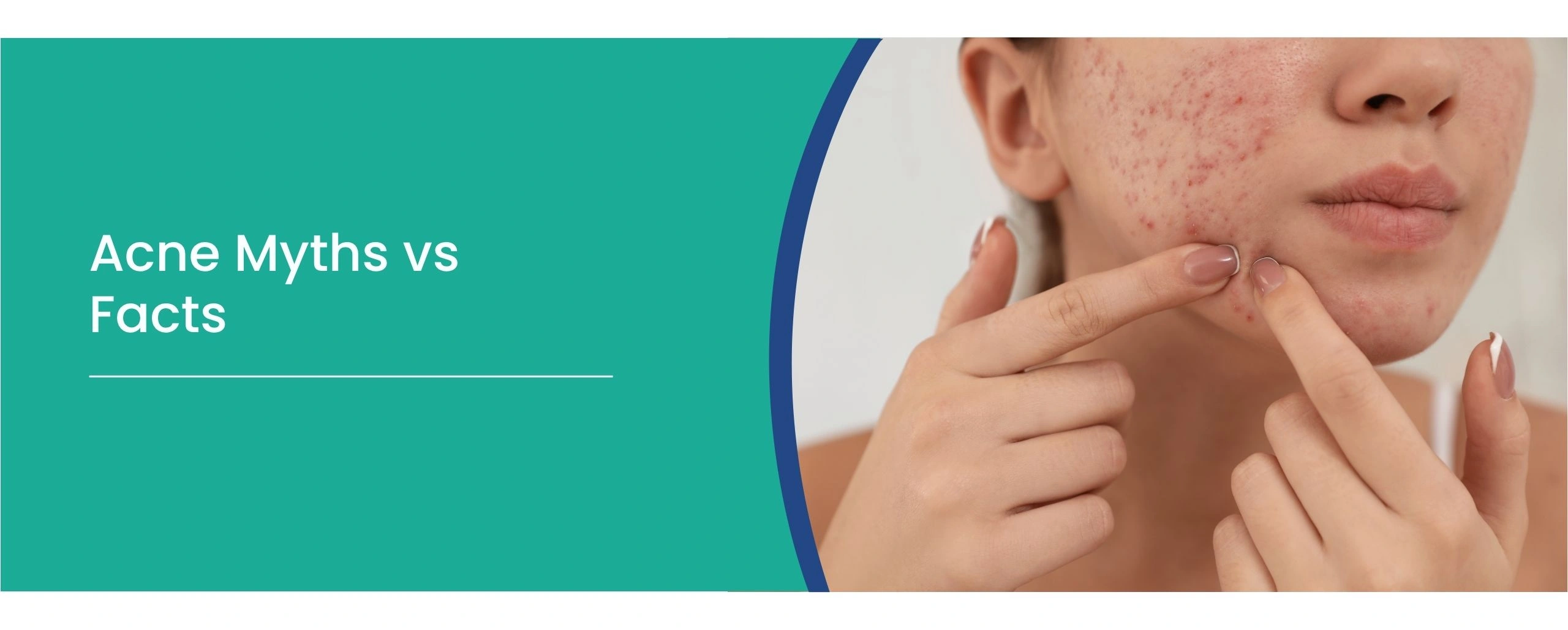
Ask ten people what causes a pimple, and you’ll likely get ten different answers, chocolate, dirty skin, stress, oily food, not washing your face enough. The internet is full of confident-sounding advice on acne, but most of it doesn’t hold up to medical scrutiny. Separating acne myths from acne facts isn’t just about winning an argument, it’s about protecting your skin from treatments that don’t work and habits that can actually make breakouts worse.
Let’s discuss the most common acne myths vs facts, explains what causes acne, and lays out a dermatologist-approved approach to clearer skin.
What Causes Acne Breakouts?
Before busting myths, it helps to understand what causes acne in the first place. An acne breakout happens when hair follicles under the skin become clogged with oil (sebum) and dead skin cells. This creates the perfect environment for C. acnes bacteria to multiply, triggering inflammation, redness, and the pimples, blackheads, and cysts we recognise as acne.
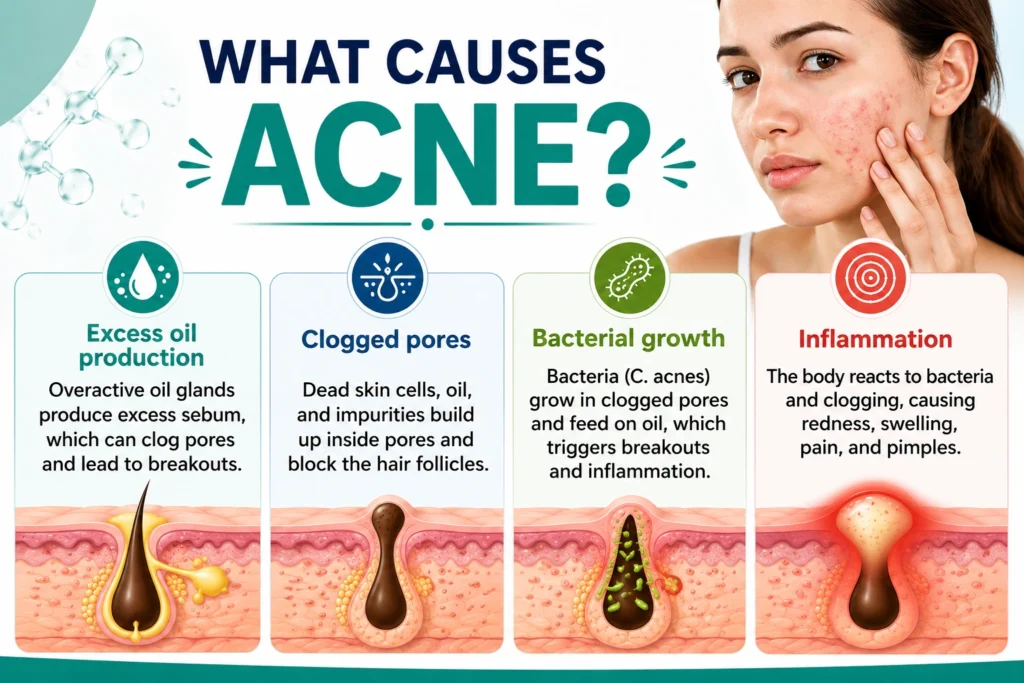
So what is acne breakout, exactly, at a biological level? It’s a combination of four factors working together:
- Excess oil production, often driven by hormones
- Clogged pores from dead skin cell buildup
- Bacterial growth inside blocked follicles
- Inflammation, which causes swelling, redness, and pain
Understanding these causes helps separate Acne Myths vs Facts and prevents unnecessary skincare mistakes. Acne is a skin condition rooted in oil glands, hormones, and bacteria, not a hygiene failure.
Common Acne Myths Vs Facts
Let’s go through the most persistent acne myths and match them against the acne facts backed by dermatology research.
Myth: Acne is caused by dirty skin.
Fact: One of the biggest Acne Myths vs Facts is believing acne results from poor hygiene. Acne doesn’t form on the surface of the skin, it forms beneath it, inside the hair follicle, where oil and dead skin cells mix and become trapped. No amount of external washing can reach that deep. Scrubbing harder, using harsh exfoliants, or cleansing more than twice a day strips away the skin’s natural oil barrier, which the skin then tries to compensate for by producing even more sebum, often making breakouts worse. Clean skin is still a good habit, but it prevents new debris buildup, it doesn’t “clean out” acne that’s already forming underneath.
Myth: Chocolate and greasy food cause acne.
Fact: When discussing Acne Myths vs Facts, research shows there is no direct evidence that chocolate alone causes acne. What the research does show is a connection between acne breakout severity and high-glycemic diets, foods that spike blood sugar quickly, like white bread, sugary drinks, and processed snacks. These can raise insulin and insulin-like growth factor (IGF-1) levels, which in turn increase oil production. So diet isn’t irrelevant, but blaming a single food group like chocolate oversimplifies a more complex hormonal and metabolic picture.
Myth: Popping pimples makes them heal faster.
Fact: Popping feels like progress because the pimple looks smaller immediately afterward, but underneath the surface, the opposite is happening. Squeezing pushes bacteria, oil, and inflammatory debris deeper into surrounding tissue instead of out, which spreads inflammation to nearby follicles and increases the risk of a larger, angrier acne breakout in the same area. It also significantly raises the risk of permanent scarring and dark post-inflammatory marks, since forceful extraction damages the skin’s underlying structure. What looks like a quick fix usually adds days or weeks to the healing process.
Myth: Sun exposure clears acne.
Fact: Many people misunderstand Acne Myths vs Facts regarding sunlight. Tanned or sun-exposed skin can temporarily make redness and inflammation less visible, creating the illusion that acne is improving. But UV exposure actually causes the outer layer of skin to thicken as a protective response, which can trap oil and dead skin cells more effectively and clog pores further once the tan fades. Sun exposure also dries out the skin’s surface, prompting a rebound increase in oil production, and it accelerates collagen breakdown, making any post-acne marks or scarring more prominent and slower to fade over time.
Myth: Only teenagers get acne.
Fact: Acne is often framed as a teenage rite of passage, but adult acne is extremely common, particularly in women in their 20s, 30s, and even 40s. One of the most important Acne Myths vs Facts is recognizing that hormonal changes, stress, and genetics can trigger acne at any age. It’s frequently tied to hormonal fluctuations from menstrual cycles, pregnancy, or conditions like PCOS, as well as stress-driven cortisol spikes, and certain hair or skincare products that clog pores along the hairline and jaw. Adult acne also tends to show up differently than teenage acne often as deeper, tender jawline breakouts rather than the forehead and nose distribution common in adolescence which means it frequently needs a different treatment approach entirely.
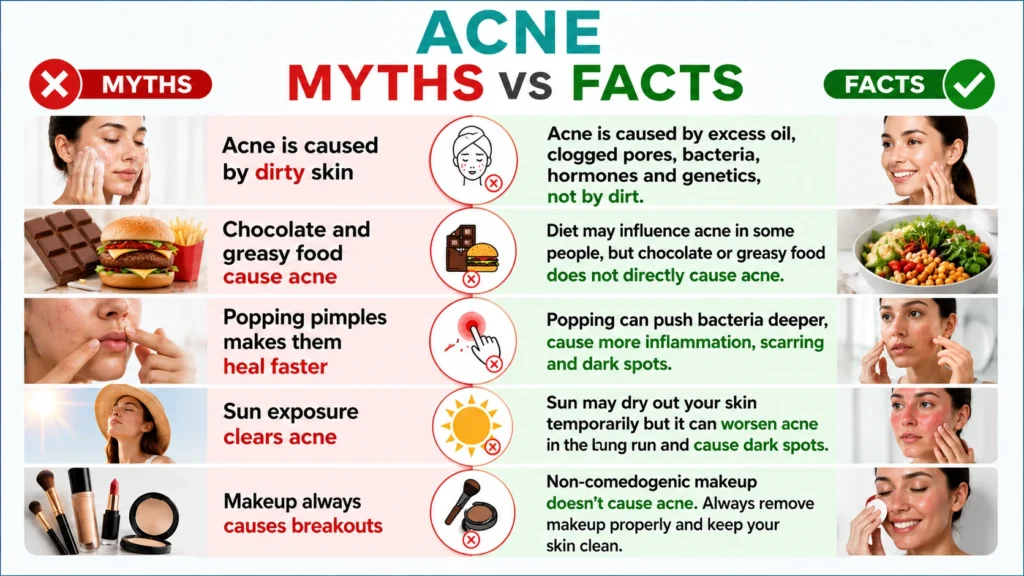
Myth: Makeup always causes breakouts.
Fact: Makeup gets blamed broadly, but the real issue is almost always the formula and the follow-through, not makeup itself. Non-comedogenic, oil-free products are specifically designed not to block pores, and many modern formulas even contain acne-friendly ingredients like salicylic acid. Breakouts tend to happen when heavy, pore-clogging formulas are used, when makeup is left on overnight, or when brushes and sponges aren’t cleaned regularly and reintroduce bacteria to the skin. Choosing the right formula and removing it thoroughly each night matters far more than avoiding makeup altogether. Understanding Acne Myths vs Facts helps people make informed skincare choices instead of avoiding makeup completely.
Myth: Toothpaste or home remedies can cure acne overnight.
Fact: Another misconception in Acne Myths vs Facts is using toothpaste, lemon juice, or baking soda. Toothpaste, baking soda, lemon juice, and similar kitchen-cabinet remedies are popular because they’re cheap and promise instant results, but none of them are formulated for skin. Toothpaste contains ingredients like menthol, baking soda, and hydrogen peroxide that can dry out and irritate a pimple’s surface, sometimes shrinking redness temporarily, but this comes at the cost of a damaged skin barrier, chemical burns, or dark marks that take far longer to fade than the original pimple would have. These remedies treat the symptom for a few hours at most while doing nothing about the clogged follicle underneath, which is why the same spot often returns days later, sometimes worse.
Learning the truth behind Acne Myths vs Facts allows you to adopt evidence-based skincare practices that actually improve acne.
Why Believing These Myths Can Worsen Acne?
Following acne myths instead of acne facts doesn’t just delay clear skin it can actively damage it. Over-scrubbing and popping pimples can cause post-inflammatory scarring that lasts far longer than the original breakout. Sun-tanning to “dry out” acne accelerates premature ageing and raises skin cancer risk. Skipping moisturiser because “oily skin doesn’t need it” can trigger the skin to produce even more oil, fueling further breakouts.
The deeper issue is time: chasing myths delays access to treatments that actually work, allowing mild acne to progress into more severe, harder-to-treat cystic acne with a higher risk of permanent scarring. This is exactly why getting your Acne Myth Vs Facts straight early on matters more than it seems.
Why Trust Dermatologists for Acne Treatment?
Dermatologists don’t rely on trends or anecdotal fixes, they diagnose acne based on its type, severity, and underlying trigger, whether hormonal, bacterial, or genetic. This matters because acne treatment isn’t one-size-fits-all. A treatment that works well for occasional whiteheads may do nothing for hormonal cystic acne, and using the wrong approach can prolong breakouts for months or years.
A dermatologist can also identify when acne is a symptom of something else entirely, such as polycystic ovary syndrome (PCOS) or a reaction to medication, and refer you for appropriate testing. At the best hospital for acne treatment, dermatologists customize these therapies to suit each patient’s skin condition, ensuring safe, effective, and long-term results.
Dermatologist-Backed Acne Treatments That Work
Dermatologists rely on science rather than Acne Myths vs Facts. Depending on the severity of acne, treatment may include:
Topical retinoids: Derived from vitamin A, retinoids like tretinoin, adapalene, and tazarotene work by speeding up skin cell turnover, which stops dead cells from piling up and clogging follicles in the first place. They also have a mild anti-inflammatory effect and help fade post-acne marks over time. Because they increase cell turnover, most people experience a short “purging” phase in the first few weeks, followed by steadily clearer skin with continued use, which is why dermatologists consider them a gold-standard acne treatment for nearly every acne type, from mild to moderate.
Topical or oral antibiotics: For moderate to severe inflammatory acne, where redness, swelling, and tenderness dominate, antibiotics such as clindamycin (topical) or doxycycline (oral) reduce the bacterial population and calm inflammation. They’re typically prescribed for a limited time, usually a few months, because prolonged use raises the risk of antibiotic resistance. Dermatologists almost always combine them with benzoyl peroxide or a retinoid rather than using them alone, both to boost effectiveness and to reduce resistance risk.
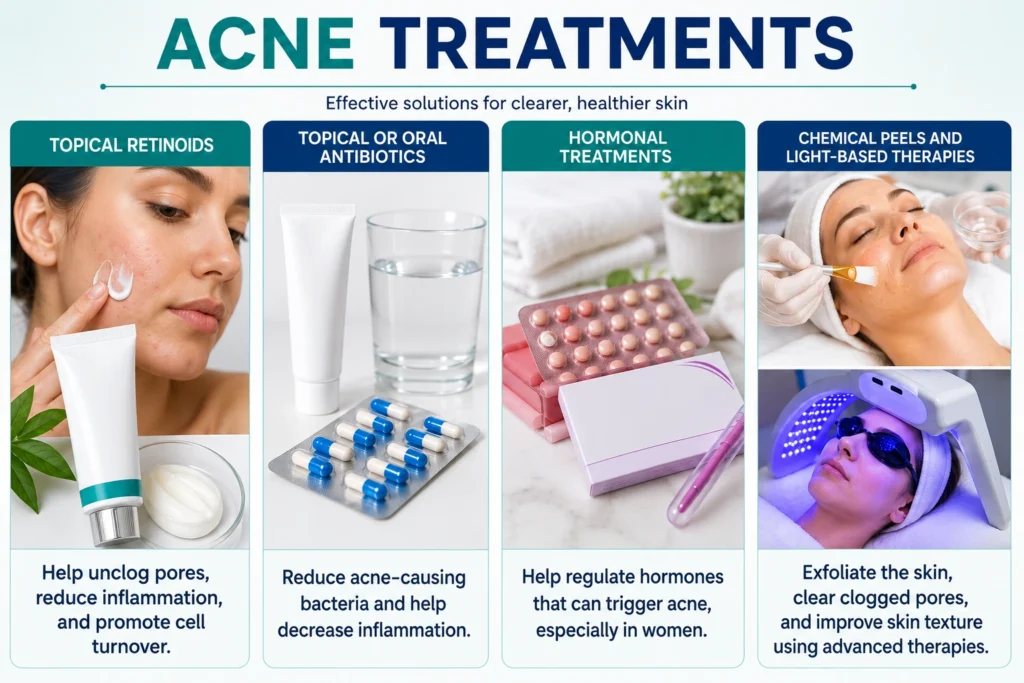
Hormonal treatments: For acne clearly linked to hormonal fluctuations, deep jawline breakouts, cycles tied to menstruation, or acne with signs of PCOS, treating the hormonal driver directly can be more effective than any topical product. Combined oral contraceptives regulate the estrogen-androgen balance that controls oil production, while anti-androgens like spironolactone block androgen receptors in the skin, reducing sebum output at the source. These are prescription treatments that require monitoring, but for hormonal acne, they often succeed where topical treatments alone have failed.
Chemical peels and light-based therapies: Chemical peels use acids (such as salicylic or glycolic acid) at higher, in-office strengths to exfoliate clogged pores more aggressively than at-home products can, while also improving texture and fading superficial dark marks. Light-based therapies, including blue light, which targets acne-causing bacteria, and certain laser treatments that shrink oil glands, offer a non-drug option for people who haven’t responded well to topical treatments or want to reduce active breakouts alongside marks left by past ones. These are typically used as an add-on to a core routine rather than a standalone fix.
Professional treatment targets the underlying causes rather than temporary solutions promoted through Acne Myths vs Facts.
How to Prevent Acne Breakouts
Acne prevention is about consistency, not intensity. Following dermatologist advice instead of Acne Myths vs Facts can significantly reduce breakouts.
| Acne Prevention Tip | Why It Matters |
| Cleanse your face twice daily with a gentle, non-stripping cleanser | Removes excess oil, dirt, sweat, and impurities without damaging the skin barrier. |
| Choose non-comedogenic moisturisers and sunscreens | Helps keep skin hydrated while preventing clogged pores that can lead to breakouts. |
| Avoid touching your face or picking at existing pimples | Reduces the spread of bacteria and lowers the risk of inflammation, scarring, and infection. |
| Change pillowcases and clean phone screens regularly | Prevents the buildup of oil, dirt, and bacteria that can transfer to your skin. |
| Wash makeup brushes and remove makeup completely before bed | Removes residue and bacteria that can clog pores and trigger acne. |
| Manage stress effectively | Helps reduce hormonal fluctuations that can contribute to acne flare-ups. |
If you’re wondering how to stop acne breakout cycles that keep recurring in the same areas, tracking your triggers, diet, stress, skincare products, or hormonal cycles, can help identify patterns a dermatologist can address directly.
For those asking how to reduce acne breakout severity once one has already started, avoid switching products frequently, as this irritates the skin further. Stick to a simple routine and give treatments 6 to 8 weeks to show results before changing course.
Self-Care: What Can I Do?
While professional acne treatment addresses the root cause, daily habits support faster healing and fewer flare-ups:
- Stick to a simple, consistent skincare routine, avoid layering too many active ingredients at once
- Use lukewarm water instead of hot water when washing your face
- Apply sunscreen daily, even on cloudy days
- Keep a food and lifestyle journal if you suspect specific triggers
- Get adequate sleep, as poor sleep is linked to increased inflammation
- Be patient; visible improvement usually takes 4 to 8 weeks of consistent care
Remember, Acne Myths vs Facts should always be evaluated using scientific evidence rather than social media trends.
Conclusion
Understanding Acne Myths vs Facts is the first step toward achieving clearer, healthier skin. Acne is not caused by dirt or poor hygiene alone it is a medical condition influenced by hormones, oil production, bacteria, and genetics. Instead of believing outdated Acne Myths vs Facts, seek professional guidance from a dermatologist for personalized treatment.
If your acne persists, consult the Best Skin Care Hospital for expert diagnosis and treatment. Choosing the Best Hospital for Acne ensures you receive evidence-based care that delivers lasting results while helping you move beyond misleading Acne Myths vs Facts.
FAQs
These lesser-known Acne Myths Vs Facts questions go beyond the basics covered above.
If I eat perfectly and follow a strict skincare routine, why am I still breaking out?
Because what causes acne often has nothing to do with diet or discipline. Genetics, hormone fluctuations, and how sensitive your skin’s oil glands are to normal hormone levels play a much bigger role than willpower. Some people can eat sugar and junk food daily with clear skin, while others break out from hormonal shifts alone—it’s biology, not effort. Understanding Acne Myths vs Facts helps explain why healthy habits alone cannot always prevent acne.
Does my acne actually get worse right before my period, or does it just feel that way?
It’s real. A drop in estrogen and a relative rise in androgens in the days before menstruation increases oil production, which is why breakouts often cluster along the jawline and chin in a monthly pattern. This is one of the clearest, most predictable acne breakout triggers. Learning Acne Myths vs Facts helps women recognize that hormonal acne is a medical condition, not simply a skincare issue.
Can “maskne” or sweat-triggered acne from workouts be treated differently than regular acne?
Somewhat. Friction, heat, and trapped sweat against the skin (from masks, helmets, or tight workout gear) cause a distinct type called acne mechanica. Acne prevention here is less about products and more about airflow, showering promptly after sweating, and avoiding tight fabric against breakout-prone areas. Knowing Acne Myths vs Facts can help you distinguish between regular acne and friction-related breakouts.
Is there ever a “safe” way to extract a pimple at home?
Only under very specific conditions: the pimple must have a visible whitehead, hands and tools must be sterile, and you should stop immediately if there’s resistance or pain. Anything deeper, such as cystic or nodular bumps, should never be touched at home. This is one of the few Acne Myths vs Facts grey areas where the “never pop a pimple” rule has a narrow, dermatologist-supervised exception.
Can acne be a warning sign of something happening elsewhere in the body?
Yes, in some cases. Sudden-onset adult acne along the jawline, combined with irregular periods or excess hair growth, can point to PCOS. Acne that appears alongside unusual bruising or rapid weight change can occasionally be linked to hormonal or medication-related causes. It’s not the norm, but persistent, unexplained acne breakout patterns are worth mentioning to a doctor. Understanding Acne Myths vs Facts can help you recognize when acne may require medical evaluation.
Why does acne sometimes get worse before it gets better with treatment?
Retinoids and some acne medications speed up cell turnover, which can bring existing clogged debris to the surface faster, causing a temporary “purge” of breakouts during the first 2 to 4 weeks. This is different from a product simply not working and is a normal part of many dermatologist-recommended treatment plans. Knowing the truth about Acne Myths vs Facts can help you stay consistent with treatment instead of giving up too early.
Does drinking more water clear up acne?
Hydration supports overall skin health, but no research shows that drinking more water alone reduces oil production or bacterial activity enough to clear acne. While staying hydrated benefits your skin, it is not a standalone treatment for active breakouts. Understanding Acne Myths vs Facts helps separate evidence-based skincare advice from common misconceptions.