You climb a few stairs and suddenly feel out of breath. Or perhaps you notice that walking the same distance that once felt easy now leaves you struggling to catch your breath.
The first question that often comes to mind is: “Is this a lung problem or a heart problem?”
It can be either.
Breathlessness, medically called dyspnea, is a symptom rather than a disease. It can happen when the lungs cannot move enough air, when the heart cannot circulate oxygen-rich blood efficiently, or when another condition affects the body’s oxygen supply or breathing pattern. Heart and lung conditions are among the most common causes of breathlessness.
Sometimes the cause is relatively simple, such as being out of shape or having a respiratory infection. At other times, persistent or unexplained breathlessness can be a sign of asthma, COPD, heart failure, coronary artery disease, an abnormal heart rhythm, pneumonia or another condition that needs medical attention.
The difficult part is that heart-related and lung-related causes can feel remarkably similar.
The answer is not to diagnose yourself based on one symptom. Instead, certain patterns and accompanying symptoms can provide clues, while medical evaluation and appropriate tests help identify the actual cause.
What Is Breathlessness?
This is the uncomfortable sensation of not getting enough air or having to work harder than usual to breathe.
People describe it in different ways:
- “I can’t take a deep breath.”
- “I feel like I’m running out of air.”
- “My chest feels tight.”
- “I get breathless just by walking.”
- “I have to stop after climbing a few stairs.”
- “I wake up at night feeling unable to breathe.”
Breathlessness can occur suddenly or develop gradually. It can happen during exercise, while resting, when lying down or even during sleep.
Occasional breathlessness after strenuous exercise can be normal. However, that is new, persistent, worsening or disproportionate to the activity deserves attention.
Is Breathlessness More Likely to Be a Lung Problem or a Heart Problem?
There is no single symptom that can reliably tell you whether this is coming from your heart or lungs.
Both organs work together to deliver oxygen throughout the body. Your lungs bring oxygen into the bloodstream, while your heart pumps oxygen-rich blood to your tissues.
A problem with either system can therefore make you feel short of breath.
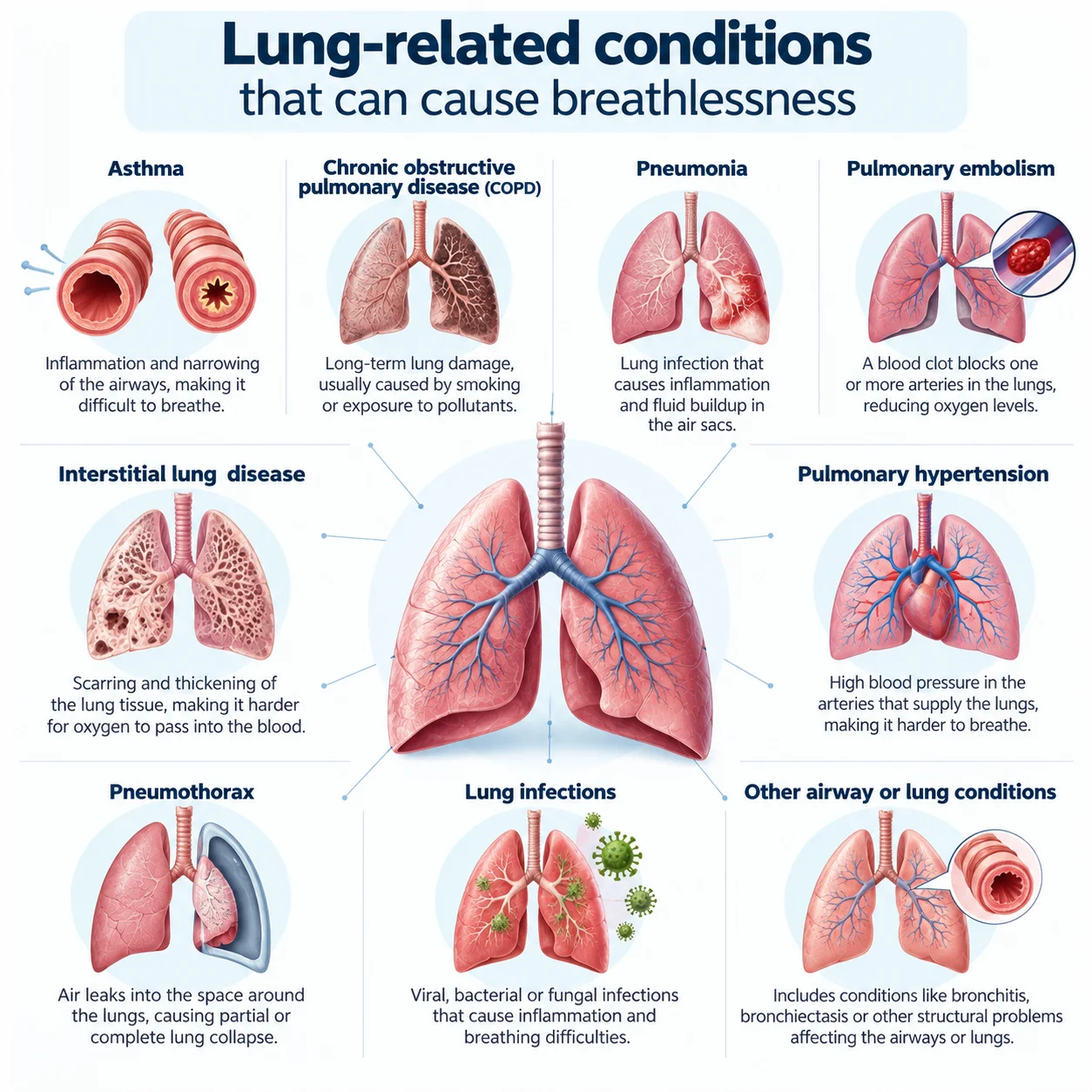
Lung-related conditions that can cause breathlessness include:
- Asthma
- Chronic obstructive pulmonary disease (COPD)
- Pneumonia
- Pulmonary embolism
- Interstitial lung disease
- Pulmonary hypertension
- Pneumothorax
- Lung infections
- Other airway or lung conditions
Heart-related conditions that can cause breathlessness include:
- Heart failure
- Coronary artery disease
- Heart attack
- Heart valve disease
- Cardiomyopathy
- Abnormal heart rhythms
- Other cardiovascular conditions
There can also be non-heart and non-lung causes, including anemia, anxiety or panic attacks, obesity, poor physical conditioning and certain other medical conditions.
That is why persistent breathlessness should not automatically be treated as “weak lungs” or “low stamina.”
Breathlessness From a Lung Problem: What Does It Usually Feel Like?
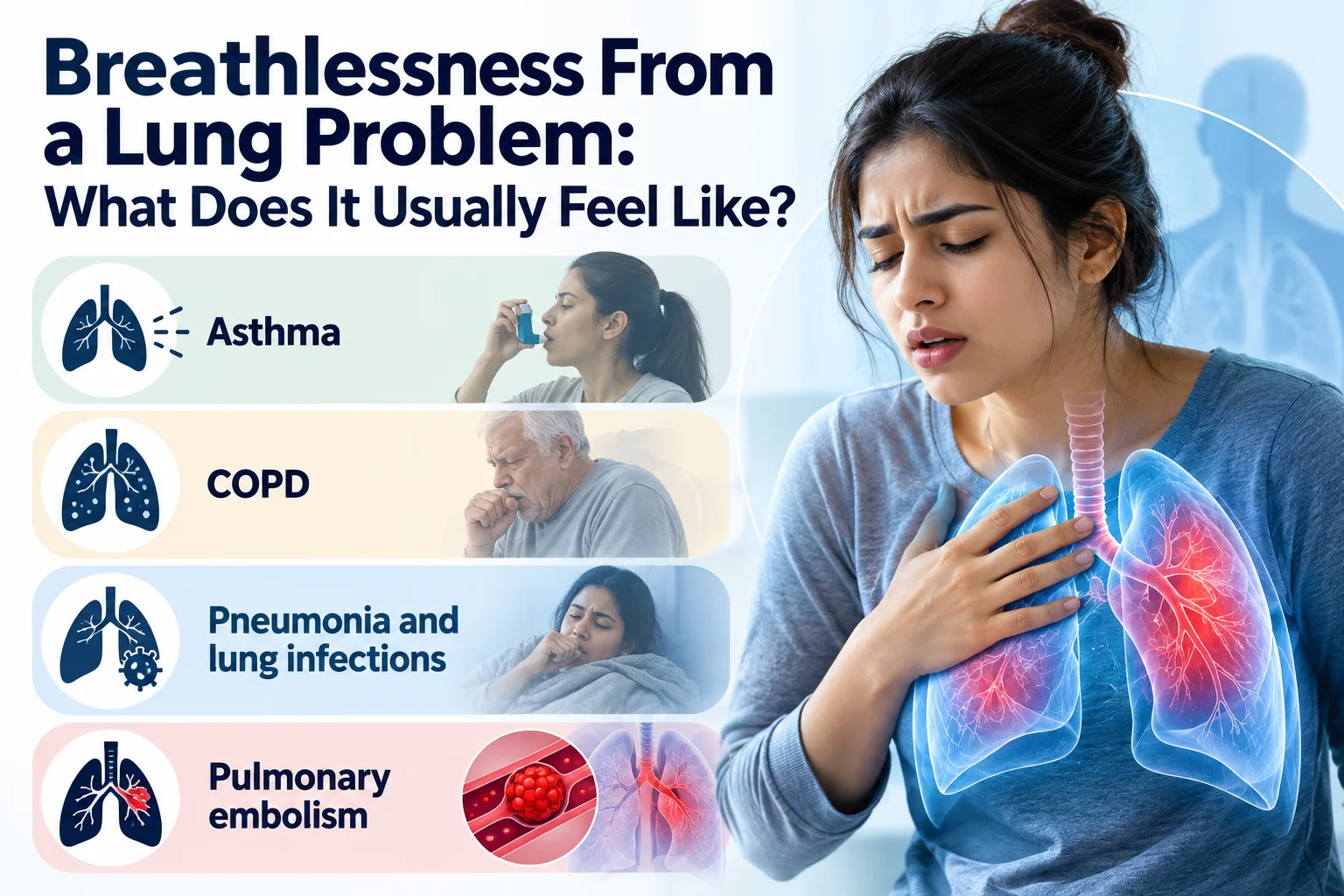
Lung-related causes often occurs when the airways are narrowed, the lungs are inflamed or damaged, or oxygen exchange is impaired.
The pattern can vary significantly depending on the underlying condition.
Asthma
Asthma can cause episodes of breathlessness along with:
- Wheezing
- Chest tightness
- Cough
- Difficulty breathing
Symptoms may be triggered by allergens, exercise, infections, cold air or other individual triggers.
COPD
People with COPD may gradually become more breathless during everyday activities.
For example, someone who previously walked comfortably may begin needing to stop frequently. Breathlessness may occur alongside a persistent cough, mucus production or wheezing.
Smoking is an important risk factor for COPD, although other exposures and factors can also contribute.
Pneumonia and lung infections
An infection affecting the lungs may cause dyspnea together with symptoms such as:
- Fever
- Cough
- Chest discomfort
- Weakness
- Rapid breathing
The combination and severity of symptoms vary depending on the infection and the person’s overall health.
Pulmonary embolism
A pulmonary embolism occurs when a blood clot blocks a blood vessel in the lungs.
It can cause sudden dyspnea, sometimes accompanied by chest pain, a rapid heartbeat or other symptoms. This can be a medical emergency and requires immediate evaluation.
Breathlessness From a Heart Problem: What Does It Usually Feel Like?
Heart-related breathlessness can happen when the heart is unable to pump blood efficiently or when another cardiovascular problem affects circulation.
One of the most important examples is heart failure.
Despite its name, heart failure does not mean that the heart has completely stopped working. It means the heart is not pumping or filling as effectively as the body requires.
When heart function is impaired, fluid can build up in or around the lungs, making breathing more difficult.
Common patterns of heart-related breathlessness include:
Breathlessness during activity
You may become unusually short of breath while walking, climbing stairs or performing activities that previously felt comfortable.
- Breathlessness when lying down: Some people with heart failure find it harder to breathe when lying flat and may need to sleep with their upper body elevated.
- Waking up breathless at night: Suddenly waking from sleep feeling unable to breathe can occur with certain heart and lung conditions. In heart failure, this can happen because lying down changes blood distribution and may contribute to fluid congestion in the lungs.
- Breathlessness with swelling: Swelling in the ankles, feet or legs, particularly when combined with breathlessness, can be an important clue that requires medical evaluation.
- Breathlessness with chest discomfort or palpitations: Chest pressure, pain, an unusually fast heartbeat or an irregular heartbeat can point toward a cardiovascular cause, although these symptoms can have other explanations too.
Heart vs Lung Breathlessness: What Clues Can Help?
While symptoms cannot provide a definite diagnosis, the following patterns can help doctors decide what to investigate.
| Symptom or pattern | May suggest a lung-related cause | May suggest a heart-related cause |
| Wheezing | Common in asthma/COPD | Can sometimes occur with heart failure |
| Persistent cough | Common with several lung conditions | Can occur with heart failure |
| Fever | May occur with lung infection | Less typical as a primary heart symptom |
| Chest pain | Can occur with lung conditions | Can occur with coronary heart disease |
| Swollen ankles/legs | Less typical | Can occur with heart failure |
| Breathlessness when lying flat | Can occur | Important clue in heart failure |
| Waking suddenly breathless | Can occur | Can occur in heart failure |
| Palpitations | May accompany dyspnea | Important clue for rhythm problems |
| Sudden severe breathlessness | Can occur in pulmonary embolism or pneumothorax | Can occur in heart attack or acute heart failure |
| Reduced exercise tolerance | Common | Common |
Important: These patterns overlap. For example, cough does not automatically mean a lung problem, and breathlessness when lying down does not automatically mean heart failure. A doctor needs to consider the full history, examination and test results.
Why Does Breathlessness Get Worse When You Exercise?
It is normal to breathe faster during strenuous exercise because your muscles need more oxygen.
The concern is when your level of dyspnea is out of proportion to the activity.
For example, you may previously have been able to walk for 30 minutes without difficulty but now become breathless after a few minutes.
This can happen for several reasons.
- Lung causes: Airway narrowing, reduced lung capacity, inflammation or impaired oxygen exchange can make physical activity more difficult.
- Heart causes: If the heart cannot increase blood flow adequately during activity, you may experience breathlessness, fatigue or reduced exercise capacity.
- Other causes: Anemia, obesity, deconditioning and other medical conditions can also contribute.
This is why unexplained shortness of breath on exertion should not simply be dismissed as getting older or being “out of practice.” Persistent or worsening breathlessness deserves evaluation.
How Do Doctors Find the Cause of Breathlessness?
There is no single test for every person with breathlessness.
Your doctor will first ask about:
- When the breathlessness started
- Whether it occurs at rest or during activity
- Whether it is getting worse
- Whether you have cough or wheezing
- Whether you experience chest pain
- Whether you have palpitations
- Whether symptoms occur at night
- Your smoking or exposure history
- Existing heart or lung conditions
- Your medications and other health conditions
A physical examination may include listening to your lungs and heart, checking blood pressure and measuring oxygen saturation.
Depending on your symptoms, different investigations may be recommended.
Tests for possible lung-related causes
- Chest X-ray: A chest X-ray can help identify certain lung abnormalities, infections or fluid-related changes.
- Pulmonary function tests: These tests assess how well your lungs move air and can help evaluate conditions such as asthma and COPD.
- CT scan: In selected patients, a CT scan may provide more detailed images of the lungs than a standard X-ray.
- Oxygen saturation: A pulse oximeter can provide an estimate of blood oxygen saturation.
Should You See a Cardiologist or a Pulmonologist for Breathlessness?
This is one of the most common questions patients ask.
The answer depends on your symptoms and medical history.
A cardiologist may be appropriate when breathlessness is accompanied by:
- Chest pressure or discomfort
- Palpitations
- Fainting or near-fainting
- Swelling of the feet or ankles
- Breathlessness when lying down
- Waking up breathless at night
- Known heart disease
- High blood pressure, diabetes or other cardiovascular risk factors
- Reduced exercise tolerance without an obvious explanation
A pulmonologist may be appropriate when breathlessness is accompanied by:
- Wheezing
- Persistent cough
- Excess mucus
- Recurrent chest infections
- A history of asthma
- COPD
- Smoking-related respiratory symptoms
- Known lung disease
- Abnormal lung imaging or pulmonary function tests
When Is Breathlessness an Emergency?
Not every episode of breathlessness is an emergency.
But sudden or severe dyspnea can sometimes signal a life-threatening condition.
Seek emergency medical care if you experience:
- Sudden severe difficulty breathing
- Breathlessness that makes it difficult to speak normally
- Breathlessness accompanied by chest pain or heavy pressure
- Fainting or severe dizziness
- Blue or gray lips, skin or nails
- A very fast or irregular heartbeat with significant symptoms
- Sudden dyspnea after prolonged immobility or other risk factors for blood clots
- Sudden dyspnea with severe weakness or confusion
Frequently Asked Questions (FAQs)
1. How can I tell if my breathlessness is from my heart or lungs?
You cannot reliably determine the cause from dyspnea alone. Wheezing, cough and respiratory symptoms may suggest a lung condition, while swelling, palpitations, chest discomfort or breathlessness when lying down may raise concern for a heart problem. However, symptoms overlap, so medical evaluation may be needed.
2. Can heart problems cause shortness of breath?
Yes. Heart failure, coronary artery disease, heart valve disease, cardiomyopathy and abnormal heart rhythms can cause breathlessness.
3. Can lung problems cause breathlessness?
Yes. Asthma, COPD, pneumonia, pulmonary embolism, interstitial lung disease and several other respiratory conditions can cause shortness of breath.
4. Why do I get breathless while walking?
Breathlessness while walking can have several causes, including heart or lung disease, anemia, obesity, poor physical conditioning and other medical conditions. If it is new, worsening or disproportionate to the activity, it should be evaluated.
5. Why do I feel breathless when lying down?
Breathlessness when lying down can occur with certain heart and lung conditions. In heart failure, lying down can contribute to fluid congestion in the lungs and make breathing more difficult.
6. Is breathlessness at night a sign of heart disease?
It can be. Some people with heart failure experience episodes of breathlessness that wake them from sleep. However, nighttime dyspnea can also occur with lung and sleep-related conditions, so it should not automatically be attributed to heart disease.
7. Which doctor should I see for breathlessness?
Depending on your symptoms, you may need a pulmonologist, cardiologist or internal medicine physician. If the dyspnea is sudden or severe, particularly with chest pain, fainting or confusion, seek emergency medical care rather than waiting for a specialist appointment.
8. Can anxiety cause shortness of breath?
Yes. Anxiety and panic attacks can cause dyspnea and other physical symptoms. However, new or unexplained breathlessness should not automatically be attributed to anxiety without considering possible heart, lung or other medical causes.
Conclusion
So, is dyspnea a lung problem or a heart problem?
It can be either, and sometimes both.
Breathlessness from asthma or COPD may be associated with wheezing and coughing. Breathlessness related to heart failure may occur with reduced exercise tolerance, swelling or difficulty breathing when lying down. But these patterns are not absolute, and symptoms often overlap.
The safest approach is to look at the whole picture.
If your dyspnea is new, unexplained, persistent or getting worse, consult a healthcare professional. Depending on your symptoms, you may need evaluation by a cardiologist in Noida, pulmonologist in Noida, internal medicine physician or emergency-care team.
At Rama Hospital, Noida, patients can access evaluation across relevant medical specialties, along with diagnostic investigations that may help identify whether breathing difficulty is related to the heart, lungs or another underlying condition.