Laparoscopic appendectomy is a common and well-established surgical procedure used to remove an inflamed or infected appendix. The appendix is a small, finger-like pouch attached to the large intestine in the lower right side of the abdomen. When it becomes blocked and infected, it can lead to a condition called appendicitis. If not treated on time, the appendix can burst, causing serious infection in the abdomen.
In the past, appendectomy was done through a larger open incision. Today, most cases are managed using a minimally invasive approach called laparoscopic appendectomy. This method uses small cuts, a camera, and specialized instruments to remove the appendix with less pain, smaller scars, and faster recovery. It has become the standard of care for most patients with appendicitis.
What is Laparoscopic Appendectomy?
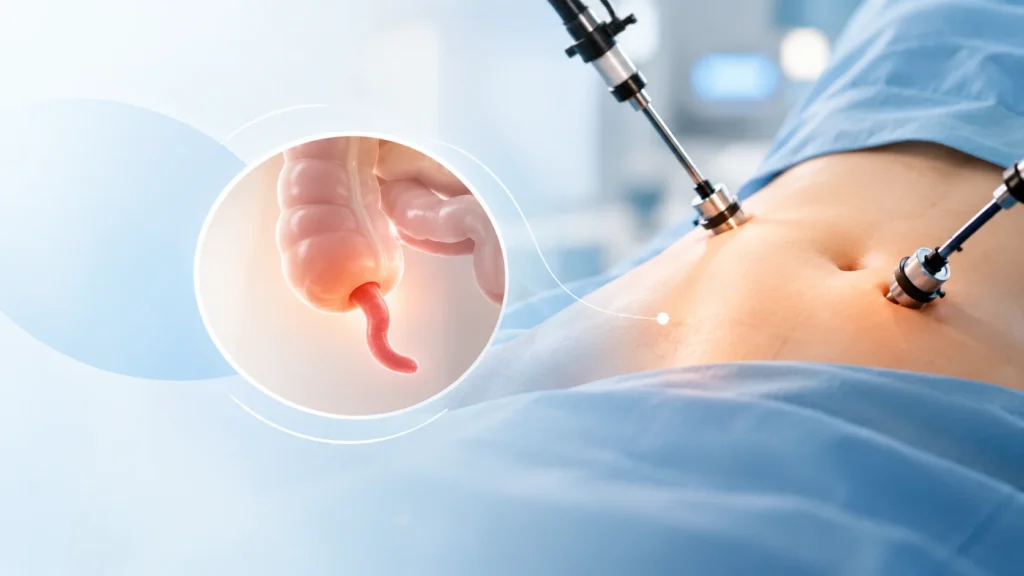
Laparoscopic appendectomy is a surgical procedure to remove the appendix using a laparoscope, which is a thin tube with a camera and light. The surgeon makes a few small incisions in the abdomen, inserts the camera and instruments, and removes the appendix while viewing the area on a monitor.
This approach is different from open appendectomy, which requires a larger cut in the lower right abdomen. Laparoscopic surgery allows the surgeon to see the inside of the abdomen more clearly, handle complications better, and reduce tissue damage. Most patients experience less pain, shorter hospital stays, and quicker return to normal activities.
The procedure is usually done under general anesthesia, meaning the patient is asleep and does not feel pain during the surgery. It is commonly performed for acute appendicitis, but may also be done for chronic or recurrent appendix-related symptoms in selected cases.
Why is Laparoscopic Appendectomy Done?
The main reason for laparoscopic appendectomy is to treat appendicitis and prevent complications.
Common reasons for the surgery
- Acute appendicitis with typical symptoms such as right lower abdominal pain, fever, nausea, and vomiting.
- Risk of appendix rupture or perforation.
- Recurrent episodes of appendix-like pain.
- Complicated appendicitis with abscess or localized infection.
- Cases where diagnosis is unclear but appendix inflammation is strongly suspected.
- Selected cases of appendix mass managed after initial conservative treatment.
Why surgery is important
If appendicitis is not treated, the appendix can burst and spread infection throughout the abdomen. This can lead to peritonitis, sepsis, and life-threatening complications. Removing the appendix early reduces these risks and allows faster recovery.
How is Laparoscopic Appendectomy Performed?
The procedure follows a standard sequence, although details may vary based on the patient and the surgeon.
Before the surgery
- The patient is evaluated by the surgical team.
- Blood tests, imaging, and other assessments are done as needed.
- The patient is kept fasting for several hours before surgery.
- Intravenous fluids and antibiotics may be started.
- Anesthesia evaluation is completed.
During the surgery
- The patient is given general anesthesia.
- The abdomen is cleaned and prepared for surgery.
- The surgeon makes three small incisions in the abdomen.
- A laparoscope is inserted to visualize the internal organs.
- Specialized instruments are used to separate and remove the appendix.
- The base of the appendix is sealed or stitched to prevent leakage.
- The area is checked for any bleeding or infection.
- The instruments are removed and the small cuts are closed with stitches or glue.
After the surgery
- The patient is moved to a recovery area.
- Vital signs, pain, and wound sites are monitored.
- Fluids and medicines are given through an IV line.
- The patient is encouraged to walk gently after a few hours.
- Diet is advanced slowly from liquids to soft food.
Preparation for Laparoscopic Appendectomy
Proper preparation helps ensure a smooth surgery and recovery.
Medical preparation
- Complete all advised blood tests and imaging.
- Inform the doctor about all medicines, allergies, and past surgeries.
- Follow fasting instructions strictly before surgery.
- Take prescribed antibiotics or other pre-operative medicines as advised.
- Arrange for a family member or friend to stay with you during hospital stay.
Personal preparation
- Wear comfortable, loose clothing to the hospital.
- Avoid applying lotions, perfumes, or nail polish on the day of surgery.
- Remove jewelry, contact lenses, and dentures before surgery.
- Keep all medical records and reports with you.
- Plan for help at home after discharge.
Anesthesia for Laparoscopic Appendectomy
Most laparoscopic appendectomies are done under general anesthesia.
What to expect with anesthesia
- You will be fully asleep during the procedure.
- A breathing tube may be used to support breathing.
- Pain relief medicines are given during and after surgery.
- The anesthesia team monitors your vital signs throughout.
- You will wake up in the recovery room after the procedure.
Common concerns
- Some patients feel sleepy or groggy for a few hours after anesthesia.
- Nausea or vomiting can occur but is usually manageable with medicines.
- Sore throat from the breathing tube may last a day or two.
- Serious anesthesia complications are rare in healthy patients.
Hospital Stay and Monitoring
The length of hospital stay depends on the severity of appendicitis and the patient’s recovery.
Typical hospital course
- Many patients stay in the hospital for one to two days after uncomplicated surgery.
- Patients with perforated appendix or infection may need a longer stay.
- Pain is managed with injections and oral medicines.
- IV fluids are given until the patient can drink and eat normally.
- Walking is encouraged early to prevent clots and speed recovery.
Monitoring after surgery
- Regular checks of temperature, pulse, and blood pressure.
- Observation of wound sites for bleeding or discharge.
- Assessment of pain, nausea, and bowel function.
- Urine output monitoring in some cases.
- Blood tests if infection or complications are suspected.
Recovery After Laparoscopic Appendectomy
Recovery is usually faster than with open surgery, but it still requires care and patience.
Early recovery phase
- Mild to moderate pain around the incision sites is common.
- Shoulder tip pain may occur due to gas used during surgery.
- Walking short distances is encouraged within hours after surgery.
- Liquids and soft foods are introduced gradually.
- Most patients can pass urine and have bowel movements within a day or two.
Intermediate recovery phase
- Stitches may be dissolvable or removed after a few days.
- Pain medicines are gradually reduced.
- Light daily activities can be resumed within a week.
- Driving is usually avoided for at least one to two weeks.
- Return to work depends on the nature of job and individual recovery.
Full recovery phase
- Most patients feel significantly better within two to three weeks.
- Heavy lifting and strenuous exercise should be avoided for four to six weeks.
- Scars fade over time and are usually small.
- Follow-up visit is important to confirm proper healing.
Diet After Laparoscopic Appendectomy
Diet plays an important role in recovery and comfort.
Early diet recommendations
- Start with clear liquids such as water, soups, and juices.
- Move to soft foods such as khichdi, curd rice, boiled vegetables, and toast.
- Eat small, frequent meals instead of large heavy meals.
- Avoid very spicy, oily, or fried foods initially.
- Drink enough water to prevent constipation.
Foods to include during recovery
- Protein-rich foods such as dal, eggs, paneer, chicken, or fish if non-vegetarian.
- Fruits and vegetables for fiber and vitamins.
- Whole grains for energy and digestion.
- Probiotic foods such as curd to support gut health.
- Warm fluids to ease digestion.
Foods to avoid initially
- Very heavy or greasy meals.
- Excess caffeine or carbonated drinks.
- Very spicy or acidic foods that may irritate the stomach.
- Alcohol until fully recovered and off pain medicines.
Activity and Lifestyle After Surgery
Gradual return to activity helps recovery and prevents complications.
Activity guidelines
- Walk gently several times a day starting from the first day after surgery.
- Avoid lifting heavy objects for at least four weeks.
- Do not do intense exercise, running, or gym workouts until cleared by the surgeon.
- Climbing stairs is usually allowed but should be done slowly.
- Listen to your body and rest when needed.
Lifestyle tips
- Maintain good hygiene around the incision sites.
- Keep the wound clean and dry as advised.
- Avoid smoking and alcohol during recovery.
- Take all prescribed medicines on time.
- Attend all follow-up appointments.
Possible Complications
Laparoscopic appendectomy is generally safe, but like any surgery, it carries some risks.
Common and mild complications
- Pain and discomfort around the incision sites.
- Bruising or swelling near the cuts.
- Nausea or vomiting after anesthesia.
- Temporary constipation or loose stools.
- Minor wound infection.
Less common but serious complications
- Bleeding inside the abdomen.
- Injury to nearby organs such as intestine or blood vessels.
- Infection inside the abdomen or abscess formation.
- Leak from the appendix stump.
- Blood clots in the legs or lungs.
- Hernia at the incision site.
- Need to convert to open surgery in difficult cases.
When to seek medical help
- High fever that does not improve.
- Increasing abdominal pain or swelling.
- Redness, pus, or foul smell from the wound.
- Persistent vomiting or inability to eat.
- No bowel movement for several days with discomfort.
- Shortness of breath, chest pain, or leg swelling.
- Bleeding from the wound or unusual discharge.
Care at Home After Discharge
Good home care supports healing and reduces the risk of problems.
Wound care
- Keep the incision area clean and dry.
- Follow instructions for dressing changes.
- Do not apply creams or powders unless advised.
- Watch for signs of infection such as redness, warmth, or discharge.
- Report any unusual changes to the doctor.
Pain management
- Take pain medicines as prescribed.
- Do not skip doses if pain is significant.
- Use a pillow to support the abdomen while coughing or moving.
- Avoid self-medicating with additional painkillers without advice.
Bowel care
- Drink plenty of fluids to prevent constipation.
- Eat fiber-rich foods as tolerated.
- Use stool softeners if prescribed.
- Do not ignore the urge to pass stool.
- Report severe constipation or diarrhea to the doctor.
Why Choose Rama Hospital for Laparoscopic Appendectomy?
Appendicitis is often an emergency condition that needs quick, safe, and expert surgical care. A hospital with experienced general surgeons, modern operation theaters, and good post-operative support can make a major difference in outcomes.
- Experienced general surgery team skilled in laparoscopic procedures.
- Modern operation theater with advanced laparoscopic equipment.
- Round-the-clock emergency and anesthesia support.
- Structured post-operative care and pain management.
- Clear guidance on diet, activity, and wound care.
- Follow-up support to monitor recovery and address concerns.
Frequently Asked Questions (FAQs)
How long does the surgery take?
The procedure usually takes about thirty to sixty minutes, depending on the severity of appendicitis and any complications. More complex cases may take longer. The total time in the operation theater includes anesthesia and preparation.
Will I feel pain after the surgery?
Some pain and discomfort around the incision sites is normal after surgery. Pain is usually mild to moderate and can be managed with prescribed medicines. Shoulder tip pain from the gas used during surgery may also occur for a day or two.
How many days do I need to stay in the hospital?
Many patients stay in the hospital for one to two days after uncomplicated laparoscopic appendectomy. Patients with perforated appendix or infection may need a longer stay for antibiotics and monitoring.
When can I return to work or normal activities?
Most people can return to light work within one to two weeks, depending on their job and recovery. Heavy physical work, lifting, and intense exercise should be avoided for at least four to six weeks or until cleared by the surgeon.
Will there be visible scars?
There will be small scars at the incision sites, usually three small marks on the abdomen. These scars tend to fade over time and are much smaller than the scar from open appendectomy.
Can appendicitis come back after surgery?
Once the appendix is removed, appendicitis cannot occur again. However, other abdominal conditions can sometimes cause similar pain, so any new or persistent symptoms should be evaluated by a doctor.
What should I do if I have fever or wound discharge after discharge?
Fever, increasing pain, redness, or discharge from the wound should not be ignored. Contact your surgeon or visit the hospital promptly for evaluation and treatment to prevent complications.
Conclusion
Laparoscopic appendectomy is a safe, effective, and widely used treatment for appendicitis. It offers the benefits of smaller incisions, less pain, shorter hospital stay, and faster return to normal life compared to open surgery. With proper preparation, skilled surgical care, and good post-operative management, most patients recover well without major problems.
The key to a smooth recovery is following medical advice on diet, activity, wound care, and medicines. Patients should also be aware of warning signs that need urgent attention. For anyone facing sudden right lower abdominal pain, fever, nausea, or vomiting, timely evaluation and treatment can prevent serious complications.
Rama Hospital can provide expert laparoscopic appendectomy care, from emergency diagnosis and surgery to recovery support and follow-up, ensuring safe and comfortable treatment for patients with appendicitis.