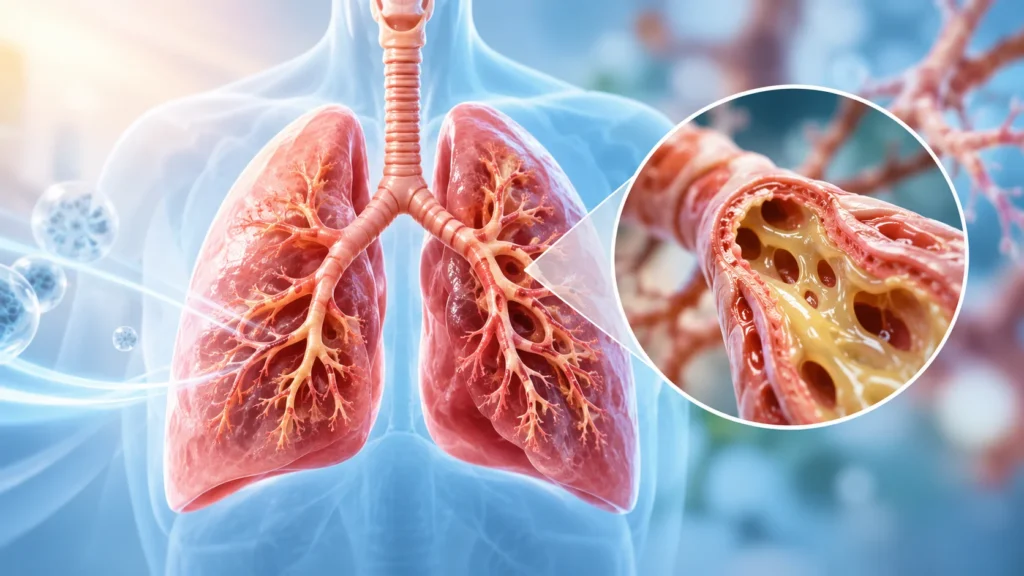
Bronchiectasis is a chronic lung condition in which the airways, called bronchi, become permanently widened, thickened, and damaged. This damage makes it difficult for the lungs to clear mucus properly. As a result, mucus builds up in the airways, leading to repeated chest infections, persistent cough, breathlessness, and reduced lung function over time.
Many people think of bronchiectasis as a condition that only affects older adults or smokers, but it can occur at any age and in non-smokers as well. It often develops after a severe lung infection, but it can also be linked to immune problems, genetic conditions, or long-standing inflammation in the airways. Once the airways are damaged, the changes are usually permanent, but with the right treatment and daily care, symptoms can be controlled and progression can be slowed.
What is Bronchiectasis?
Bronchiectasis is a long-term condition where the bronchial tubes in the lungs become abnormally widened and scarred. Normally, the airways are elastic and help move mucus out of the lungs. In bronchiectasis, the airway walls are damaged and lose their normal shape and function.
When the airways are damaged, mucus does not move out easily. It collects in the lungs and becomes a breeding ground for bacteria. This leads to repeated infections, more inflammation, and further damage to the airways. Over time, this cycle can cause increasing cough, large amounts of sputum, breathlessness, and reduced exercise capacity.
The condition can affect one part of the lung or multiple areas. In some people, it is mild and stable for years. In others, it can progress and cause frequent infections, hospital visits, and significant impact on daily life.
Types of Bronchiectasis
Bronchiectasis can be classified based on the pattern of airway damage, the cause, and the extent of involvement.
Based on pattern of airway damage
- Cylindrical bronchiectasis, where the airways are uniformly widened like a tube.
- Varicose bronchiectasis, where the airways have an irregular, beaded appearance.
- Cystic or saccular bronchiectasis, where the airways form large sac-like spaces.
Based on cause
- Post-infective bronchiectasis, which develops after severe lung infections such as pneumonia, tuberculosis, or whooping cough.
- Immune-related bronchiectasis, which occurs in people with weak immune systems.
- Genetic or inherited bronchiectasis, such as in cystic fibrosis or primary ciliary dyskinesia.
- Allergic or inflammatory bronchiectasis, linked to conditions like allergic bronchopulmonary aspergillosis.
- Obstructive bronchiectasis, which happens when something blocks the airway, such as a foreign body or tumor.
Based on extent
- Localized bronchiectasis, affecting one area or lobe of the lung.
- Diffuse bronchiectasis, affecting multiple areas or both lungs.
Understanding the type helps doctors decide on the best treatment plan and long-term care.
Causes of Bronchiectasis
Bronchiectasis can have many different causes. In some patients, a clear cause can be identified. In others, the exact reason may remain unknown.
Common causes include:
- Severe or repeated lung infections in childhood or adulthood.
- Tuberculosis, which is a major cause in many regions.
- Whooping cough or severe pneumonia in early life.
- Immune system disorders that make infections more likely.
- Genetic conditions such as cystic fibrosis.
- Problems with cilia, the tiny hair-like structures that help clear mucus.
- Allergic reactions to fungi in the airways.
- Long-standing asthma with poor control.
- Autoimmune diseases affecting the lungs.
- Blockage of an airway by a foreign object or growth.
- Inhalation of harmful substances over time.
- Chronic aspiration, where food or stomach contents enter the lungs.
Why the airways get damaged
Infections and inflammation injure the airway walls. The body tries to repair the damage, but repeated injury leads to scarring and widening of the airways. The damaged airways cannot clear mucus properly, which leads to more infection and more damage. This creates a cycle that, if not managed, can worsen over time.
Risk Factors for Bronchiectasis
Some people are more likely to develop bronchiectasis than others.
Higher-risk groups
- People with a history of severe lung infections.
- Patients with a history of tuberculosis.
- Children with recurrent chest infections.
- People with weak immune systems.
- Patients with cystic fibrosis or related genetic conditions.
- Individuals with long-standing asthma or allergic lung disease.
- People with autoimmune diseases.
- Older adults with chronic lung problems.
- Smokers or those exposed to smoke and pollution.
- People with swallowing problems or reflux that leads to aspiration.
Why risk increases in these groups
- Infections directly damage the airway walls.
- Immune problems make it harder to fight infections.
- Genetic conditions affect mucus quality or airway clearance.
- Chronic inflammation weakens airway structure.
- Smoke and pollution irritate and injure the lungs.
- Aspiration introduces bacteria and irritants into the lungs.
Symptoms of Bronchiectasis
Symptoms can vary from mild to severe and may change over time. Some people have long periods of stability with occasional flare-ups. Others have daily symptoms that affect their quality of life.
Common symptoms
- Persistent cough, often present for months or years.
- Daily production of sputum or mucus.
- Sputum that may be clear, yellow, green, or sometimes blood-stained.
- Breathlessness, especially on exertion.
- Chest tightness or discomfort.
- Wheezing or noisy breathing.
- Fatigue and low energy.
- Frequent chest infections requiring antibiotics.
- Fever during infection flare-ups.
- Weight loss in advanced cases.
- Poor appetite.
- Clubbing of fingers in some long-standing cases.
Symptoms during a flare-up
- Increase in amount of sputum.
- Change in color of sputum to darker yellow or green.
- More coughing and chest discomfort.
- Increased breathlessness.
- Fever and chills.
- Greater fatigue and weakness.
- Sometimes blood in sputum.
When symptoms need urgent attention
- Large amount of blood in sputum.
- Severe breathlessness at rest.
- High fever with confusion.
- Chest pain.
- Blue discoloration of lips or fingers.
- Sudden worsening of symptoms.
Bronchiectasis in Children
Bronchiectasis can occur in children, often after severe infections or due to underlying conditions.
Common features in children
- Persistent wet cough lasting more than eight weeks.
- Recurrent chest infections.
- Poor weight gain or growth issues.
- Breathlessness during play or activity.
- Wheezing or noisy breathing.
- Frequent need for antibiotics.
Why early diagnosis matters in children
Early treatment can help prevent further lung damage and improve long-term lung function. Children with persistent cough or recurrent infections should be evaluated by a specialist to rule out bronchiectasis and other chronic lung conditions.
Bronchiectasis in Adults
In adults, bronchiectasis is often diagnosed after years of cough and repeated infections.
Common features in adults
- Long-standing daily cough with sputum.
- Multiple courses of antibiotics over the years.
- Breathlessness on walking or climbing stairs.
- Reduced exercise tolerance.
- Frequent chest infections, especially in winter.
- Impact on work, sleep, and daily activities.
Why it is often underdiagnosed
Symptoms are often mistaken for smoking-related cough, asthma, or simple chronic bronchitis. Many people live with symptoms for years before proper testing is done. Increased awareness and early imaging can help diagnose the condition sooner.
How is Bronchiectasis Diagnosed?
Diagnosis is based on symptoms, examination, and imaging tests. Since symptoms can overlap with other lung diseases, proper testing is important.
Diagnostic steps
- Detailed history of cough, sputum, infections, and past lung illnesses.
- Review of smoking history, occupational exposures, and family history.
- Physical examination of the chest and breathing pattern.
- Listening for crackles or wheeze on auscultation.
- Assessment of oxygen levels and overall fitness.
Common tests that may be done
- Chest X-ray, which may suggest bronchiectasis but is not always definitive.
- High-resolution CT scan of the chest, which is the gold standard for diagnosis.
- Sputum tests to identify bacteria or other organisms.
- Blood tests to check for infection, inflammation, and immune function.
- Lung function tests to assess breathing capacity.
- Tests for underlying causes such as immune deficiency, cystic fibrosis, or allergic conditions.
- Bronchoscopy in selected cases to look inside the airways.
Why diagnosis matters
Confirming bronchiectasis helps guide the right treatment plan. It also helps identify any underlying cause that can be treated. Early diagnosis allows for better airway clearance, infection prevention, and long-term lung protection.
Treatment for Bronchiectasis
There is no cure for bronchiectasis, but treatment can control symptoms, reduce infections, and slow disease progression. The main goals are to clear mucus, treat infections, reduce inflammation, and maintain lung function.
1. Airway clearance techniques
Clearing mucus from the lungs is the cornerstone of treatment.
- Breathing exercises taught by a respiratory therapist.
- Active cycle of breathing techniques.
- Postural drainage, where specific positions help drain mucus.
- Use of devices that help loosen and move mucus.
- Regular chest physiotherapy sessions.
- Encouraging good hydration to thin mucus.
Daily airway clearance helps reduce cough, infections, and breathlessness over time.
2. Medicines
Medicines are used to treat infections, reduce inflammation, and improve breathing.
- Antibiotics for chest infections, based on sputum culture when possible.
- Long-term antibiotics in selected patients with frequent infections.
- Inhalers to open the airways if there is wheeze or asthma overlap.
- Mucus-thinning medicines in some cases.
- Anti-inflammatory medicines for specific types of bronchiectasis.
- Treatment of underlying conditions such as immune deficiency or allergic disease.
Medicines should always be taken under medical supervision to avoid resistance and side effects.
3. Treatment of flare-ups
Flare-ups need prompt attention to prevent worsening.
- Early use of antibiotics as advised by the doctor.
- Increased airway clearance during the episode.
- Rest and adequate fluid intake.
- Monitoring of fever, sputum, and breathlessness.
- Hospital care if symptoms are severe or oxygen levels drop.
4. Oxygen therapy
Some patients with advanced disease may need oxygen support.
- Oxygen may be prescribed if blood oxygen levels are low.
- It can improve energy, sleep, and exercise capacity.
- Regular follow-up is needed to adjust oxygen flow and duration.
5. Pulmonary rehabilitation
Rehabilitation programs help patients breathe better and stay active.
- Supervised exercise training.
- Breathing techniques.
- Education about the condition and self-care.
- Support for nutrition and mental well-being.
6. Surgery
Surgery is not common but may be considered in selected cases.
- If bronchiectasis is limited to one area and causing repeated infections.
- If there is severe bleeding from a specific part of the lung.
- When other treatments have not helped and the disease is localized.
Surgery is decided after careful evaluation by a chest specialist and surgeon.
Daily Care and Lifestyle Measures
Daily habits play a major role in managing bronchiectasis.
Helpful daily practices
- Perform airway clearance exercises every day.
- Drink enough water to keep mucus thin.
- Avoid smoking and secondhand smoke.
- Stay up to date with vaccinations such as flu and pneumonia vaccines.
- Wash hands regularly to reduce infection risk.
- Maintain good nutrition to support immunity.
- Keep a record of symptoms and sputum changes.
- Seek medical advice early during flare-ups.
Activity and exercise
- Gentle regular exercise improves breathing and fitness.
- Walking, cycling, or light strength training can be helpful.
- Stop and rest if breathlessness becomes severe.
- A pulmonary rehab program can guide safe exercise.
Environmental precautions
- Avoid dust, strong fumes, and pollution when possible.
- Use masks in dusty or smoky environments.
- Keep living spaces well ventilated and clean.
Preventing Infections
Infections are the main driver of worsening in bronchiectasis. Preventing them is a key part of care.
Infection prevention pointers
- Get recommended vaccines on time.
- Avoid close contact with people who have chest infections.
- Practice good hand hygiene.
- Do not share towels, cups, or utensils during illness.
- Clean respiratory devices regularly as instructed.
- Treat dental infections and maintain oral hygiene.
- Seek early treatment for colds and chest symptoms.
Why prevention matters
Each infection can cause more damage to the airways. Reducing the number of infections helps preserve lung function and improves quality of life.
Possible Complications
If not well managed, bronchiectasis can lead to complications over time.
Possible complications
- Frequent chest infections requiring hospital care.
- Worsening breathlessness and reduced exercise capacity.
- Low oxygen levels in the blood.
- Respiratory failure in advanced disease.
- Coughing up blood, sometimes in large amounts.
- Spread of infection to other parts of the lung.
- Weight loss and muscle wasting.
- Impact on mental health due to chronic symptoms.
- Reduced ability to work or perform daily activities.
Why complications happen
Repeated infection and inflammation gradually damage the lungs. Mucus buildup and poor clearance make it easier for bacteria to grow. Over time, this affects breathing, oxygen levels, and overall health.
When to See a Doctor
Regular follow-up is important for anyone diagnosed with bronchiectasis.
- Persistent cough with sputum for more than eight weeks.
- Recurrent chest infections.
- Increasing breathlessness.
- Blood in sputum.
- Unexplained weight loss.
- Fever with worsening cough.
- Reduced ability to do daily activities.
Why Choose Rama Hospital for Bronchiectasis Care?
Bronchiectasis needs long-term, specialized care. A hospital with experienced chest specialists, respiratory therapists, and access to advanced imaging and tests can provide comprehensive management.
- Accurate diagnosis with high-resolution CT and lung function tests.
- Identification of underlying causes such as immune or genetic conditions.
- Personalized airway clearance plans.
- Appropriate use of antibiotics and inhalers.
- Management of flare-ups and complications.
- Pulmonary rehabilitation and long-term follow-up.
Frequently Asked Questions (FAQs)
What causes bronchiectasis?
It is often caused by severe or repeated lung infections, tuberculosis, immune problems, genetic conditions, or long-standing inflammation. In some people, the exact cause is not identified. Identifying the cause helps guide treatment and prevention.
Is bronchiectasis curable?
The airway damage in bronchiectasis is usually permanent, so it is not fully curable. However, symptoms can be controlled, infections can be reduced, and disease progression can be slowed with daily airway clearance, medicines, and regular follow-up.
Can bronchiectasis lead to serious problems?
Yes, if not well managed, it can lead to frequent infections, breathlessness, low oxygen levels, coughing up blood, and reduced quality of life. Early diagnosis and consistent care help prevent many of these complications.
What is the main treatment for bronchiectasis?
The main treatment is daily airway clearance to remove mucus, along with appropriate use of antibiotics for infections. Inhalers, anti-inflammatory medicines, vaccines, and pulmonary rehabilitation also play important roles in long-term management.
Can children get bronchiectasis?
Yes, children can develop bronchiectasis, often after severe infections or due to underlying conditions. Persistent wet cough, recurrent chest infections, and poor growth in a child should be evaluated by a specialist.
Is surgery needed for bronchiectasis?
Surgery is not common and is only considered in selected cases where the disease is limited to one area and causing repeated problems. Most patients are managed with medicines, airway clearance, and lifestyle measures.
Can people with bronchiectasis live a normal life?
Many people with bronchiectasis live active lives with proper treatment and daily care. Regular follow-up, infection prevention, and adherence to airway clearance and medicines can significantly improve symptoms and quality of life.
Conclusion
Bronchiectasis is a chronic lung condition that causes persistent cough, mucus buildup, and repeated chest infections. While the airway damage is often permanent, the condition can be managed effectively with the right treatment and daily care. Early diagnosis, airway clearance, infection prevention, and regular follow-up are the keys to better outcomes.
For patients with long-standing cough, frequent chest infections, or breathlessness, a specialist evaluation can make a major difference. With a structured plan and consistent effort, patients can reduce symptoms, prevent complications, and maintain better lung health.
Rama Hospital can help evaluate bronchiectasis, identify underlying causes, and provide a clear treatment plan that supports airway clearance, infection control, and long-term respiratory care.