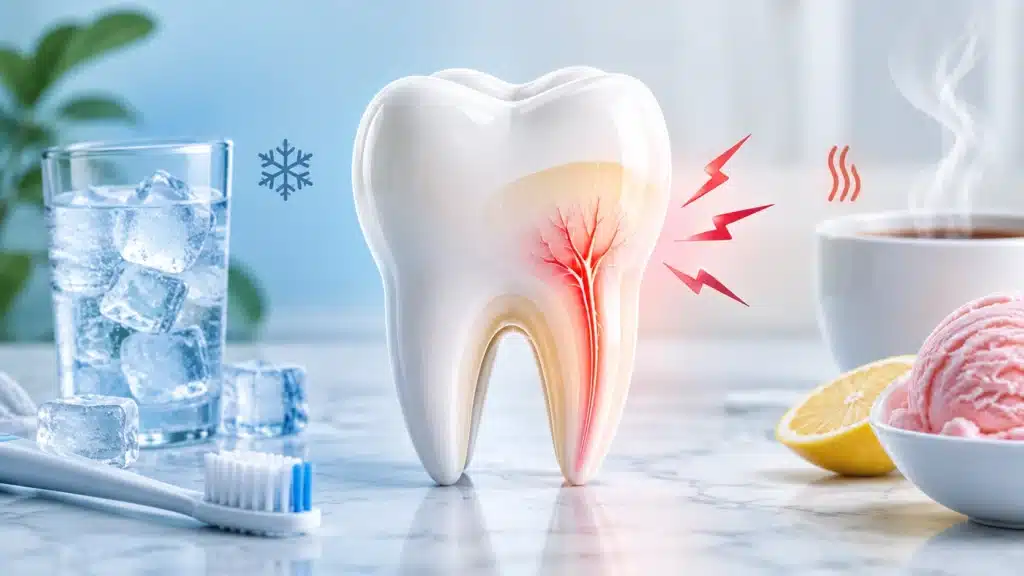
Tooth sensitivity is a common dental problem that affects people of all ages. It causes a sharp, sudden pain or discomfort when the teeth come into contact with hot, cold, sweet, sour, or even cold air. For some people, it is a mild inconvenience. For others, it can make eating, drinking, or even brushing very uncomfortable. Many patients ignore it for a long time, assuming it will go away on its own, but in many cases it points to an underlying dental issue that needs attention.
Tooth sensitivity happens when the inner layer of the tooth, called dentin, becomes exposed. Dentin contains tiny tubules that lead to the nerve inside the tooth. When these tubules are exposed due to enamel loss or gum recession, temperature changes or certain foods can trigger pain. The good news is that tooth sensitivity is usually treatable once the cause is identified.
What is Tooth Sensitivity?
Tooth sensitivity, also called dentin hypersensitivity, is a sharp pain or discomfort that occurs when the dentin layer of the tooth becomes exposed. The dentin lies beneath the hard outer enamel and contains microscopic tubules that connect to the nerve inside the tooth. When these tubules are exposed, stimuli such as hot, cold, sweet, or acidic foods can trigger pain signals.
The condition can affect one tooth or multiple teeth. It may come and go, or it may become persistent if the underlying cause is not treated. Some people feel sensitivity only occasionally, while others experience it daily with every meal or drink.
Tooth sensitivity is not a disease by itself. It is a symptom of an underlying problem such as enamel wear, gum recession, cavities, cracked teeth, or aggressive brushing. Identifying and treating the cause is the key to long-term relief.
Causes of Tooth Sensitivity
Tooth sensitivity has many possible causes. Understanding the cause helps guide the right treatment.
Common causes include:
- Enamel erosion due to acidic foods and drinks.
- Gum recession exposing the root surface.
- Aggressive brushing with a hard toothbrush.
- Teeth grinding or clenching, especially at night.
- Cavities or tooth decay.
- Cracked or chipped teeth.
- Recent dental procedures such as fillings, crowns, or whitening.
- Gum disease or periodontal problems.
- Acid reflux or frequent vomiting.
- Using whitening products too frequently.
- Poor oral hygiene leading to plaque buildup.
- Aging, which can naturally thin enamel over time.
Why enamel erosion happens
Enamel is the hardest substance in the body, but it can wear down over time. Acidic foods and drinks such as citrus fruits, sodas, sports drinks, and vinegar-based foods can soften enamel. Brushing immediately after consuming acidic items can wear it away faster. Over time, this exposes the dentin and leads to sensitivity.
Why gum recession causes sensitivity
Gums normally cover and protect the root surface of teeth. When gums recede due to gum disease, aggressive brushing, or aging, the root becomes exposed. The root does not have enamel protection, so it is much more sensitive to temperature and touch.
Symptoms of Tooth Sensitivity
Symptoms can vary from mild discomfort to sharp, shooting pain.
Common symptoms include:
- Sharp pain when drinking hot or cold beverages.
- Discomfort when eating sweet or sour foods.
- Pain when breathing in cold air.
- Sensitivity during brushing or flossing.
- Pain that lasts for a few seconds after the stimulus is removed.
- Sensitivity in one or multiple teeth.
- Discomfort that comes and goes.
Warning signs that need dental attention
- Pain that lasts longer than a few seconds.
- Sensitivity that is getting worse over time.
- Pain that occurs even without hot or cold triggers.
- Visible holes, cracks, or dark spots on teeth.
- Swollen, bleeding, or receding gums.
- Pain that interferes with eating or sleeping.
Tooth Sensitivity in Different Age Groups
Tooth sensitivity can affect people of all ages, but the causes may vary.
In children and teenagers
- May be due to thin enamel or developing teeth.
- Aggressive brushing or poor technique.
- High consumption of acidic drinks and candies.
- Early cavities or enamel defects.
In adults
- Enamel wear from diet and brushing habits.
- Gum recession due to gum disease or aging.
- Teeth grinding or clenching.
- Recent dental work or whitening treatments.
In older adults
- Natural thinning of enamel over time.
- More gum recession and root exposure.
- Higher risk of cavities near the gumline.
- Multiple dental restorations that may wear over time.
How is Tooth Sensitivity Diagnosed?
Diagnosis is based on symptoms, dental history, and clinical examination. A dentist will look for the underlying cause rather than just treating the symptom.
Diagnostic steps
- Detailed history of when sensitivity occurs.
- Questions about diet, brushing habits, and oral care products.
- History of dental procedures or teeth grinding.
- Clinical examination of teeth and gums.
- Checking for cavities, cracks, or worn enamel.
- Assessing gum health and recession.
- X-rays if needed to check for hidden decay or problems.
Tests that may be done
- Cold air or cold water test to identify sensitive teeth.
- Tapping or pressure test to check for cracks.
- Visual examination with dental instruments.
- X-rays to detect cavities or bone loss.
- Gum measurement to assess recession and periodontal health.
Why diagnosis matters
Sensitivity can be caused by many different problems. A cavity needs a filling. Gum recession needs gum treatment. Grinding needs a night guard. Treating the wrong cause will not give lasting relief.
Treatment for Tooth Sensitivity
Treatment depends on the cause and severity of sensitivity. In many cases, simple changes and dental treatments can provide significant relief.
1. Desensitizing toothpaste
Desensitizing toothpaste is often the first line of treatment. It contains ingredients that block the tubules in dentin and reduce pain signals.
- Use twice daily for best results.
- May take 2 to 4 weeks to show full effect.
- Continue using even after symptoms improve to maintain protection.
- Apply a small amount directly on sensitive areas before bed for extra benefit.
2. Fluoride treatment
Fluoride helps strengthen enamel and reduce sensitivity.
- In-office fluoride gel or varnish application.
- Prescription-strength fluoride toothpaste or mouthwash.
- Regular use helps rebuild weakened enamel.
- Especially useful for patients with enamel erosion.
3. Dental bonding or sealants
If sensitivity is due to exposed root surfaces or worn enamel, bonding can help.
- A tooth-colored resin is applied to cover exposed areas.
- Seals the dentin tubules and protects the tooth.
- Useful for gum recession or enamel loss near the gumline.
- Provides both cosmetic and functional benefit.
4. Fillings for cavities
If sensitivity is caused by tooth decay, a filling is needed.
- Removes the decayed portion of the tooth.
- Restores the tooth structure with filling material.
- Reduces sensitivity by sealing the area.
- Prevents further decay and pain.
5. Gum treatment
If gum disease or recession is the cause, gum treatment may be needed.
- Professional cleaning to remove plaque and tartar.
- Deep cleaning for periodontal disease.
- Gum grafting in severe recession cases.
- Improves gum health and covers exposed roots.
6. Night guard for teeth grinding
For patients who grind or clench their teeth, a night guard can help.
- Custom-made guard worn during sleep.
- Protects teeth from wear and reduces sensitivity.
- Prevents further enamel damage.
- Also helps with jaw pain and headaches related to grinding.
7. Root canal treatment
In severe cases where sensitivity is due to nerve inflammation or deep decay, root canal may be needed.
- Removes the inflamed or infected nerve.
- Seals the inside of the tooth.
- Provides permanent relief from sensitivity.
- Used only when other treatments are not sufficient.
8. Professional dental cleaning
Regular cleaning can reduce sensitivity caused by plaque and tartar buildup.
- Removes hardened deposits near the gumline.
- Improves gum health.
- Reduces inflammation and exposure.
- Recommended every 6 months for most patients.
Home Care for Tooth Sensitivity
Home care plays a major role in managing and preventing sensitivity.
Helpful home care steps
- Use a soft-bristled toothbrush.
- Brush gently with small circular motions.
- Avoid brushing immediately after acidic foods or drinks.
- Use desensitizing toothpaste regularly.
- Floss daily to remove plaque between teeth.
- Use a fluoride mouthwash if recommended.
- Rinse with water after consuming acidic items.
- Avoid very hot or very cold foods if they trigger pain.
- Limit acidic and sugary foods and drinks.
- Do not use whitening products excessively.
Foods and drinks to limit
- Citrus fruits and juices.
- Sodas and carbonated drinks.
- Sports drinks and energy drinks.
- Vinegar-based foods and pickles.
- Very hot tea or coffee.
- Ice-cold beverages.
- Sugary candies and sticky sweets.
Good oral hygiene habits
- Brush twice a day for 2 minutes each time.
- Use proper brushing technique, not harsh scrubbing.
- Replace toothbrush every 3 months.
- Visit the dentist regularly for check-ups and cleaning.
- Do not ignore persistent sensitivity.
Possible Complications
Untreated tooth sensitivity can lead to more serious dental problems.
Complications may include:
- Worsening enamel erosion.
- Progression of cavities.
- Gum disease and further recession.
- Cracked teeth due to weakened structure.
- Nerve inflammation requiring root canal.
- Tooth loss in severe cases.
- Difficulty eating and poor nutrition.
- Reduced quality of life due to pain.
Why complications happen
When the cause of sensitivity is not treated, the underlying problem continues to progress. Enamel keeps wearing down, gums keep receding, and decay keeps spreading. Early treatment prevents these complications.
When Should You See a Dentist?
Not every case of sensitivity needs emergency care, but some symptoms should never be ignored.
- Sensitivity lasts more than a few weeks.
- Pain is severe or worsening.
- Sensitivity occurs without hot or cold triggers.
- You notice visible holes, cracks, or dark spots.
- Gums are swollen, bleeding, or receding.
- Pain interferes with eating or sleeping.
- You have a history of grinding or clenching.
- Sensitivity started after a dental procedure and is not improving.
Prevention of Tooth Sensitivity
Preventing tooth sensitivity is possible with good oral care and healthy habits.
Prevention pointers
- Brush gently with a soft toothbrush.
- Use desensitizing or fluoride toothpaste.
- Limit acidic and sugary foods and drinks.
- Do not brush immediately after acidic meals.
- Wear a night guard if you grind your teeth.
- Visit the dentist every 6 months.
- Treat gum disease early.
- Avoid overusing whitening products.
- Rinse with water after consuming acidic items.
- Maintain good overall oral hygiene.
For children
- Teach proper brushing technique early.
- Limit sugary and acidic snacks.
- Use child-friendly fluoride toothpaste.
- Regular dental check-ups from an early age.
For adults
- Be mindful of diet and brushing habits.
- Address grinding or clenching early.
- Get professional cleaning regularly.
- Do not ignore early signs of sensitivity.
Why Choose Rama Hospital for Tooth Sensitivity Treatment?
Tooth sensitivity may seem minor, but it can significantly affect daily life. A proper dental evaluation helps identify the exact cause and provides targeted treatment. A hospital-based dental clinic offers comprehensive care under one roof.
- Expert evaluation by experienced dentists.
- Advanced diagnostic tools and X-rays.
- Wide range of treatment options available.
- Safe and sterile environment.
- Coordinated care for complex dental needs.
- Patient education and long-term follow-up.
Frequently Asked Questions (FAQs)
Can tooth sensitivity go away on its own?
Mild sensitivity may improve with better oral care and desensitizing toothpaste. However, if the cause is a cavity, gum disease, or cracked tooth, it will not go away without treatment. Persistent sensitivity should be evaluated by a dentist.
Is sensitivity a sign of a cavity?
It can be. Cavities often cause sensitivity to sweet, hot, or cold stimuli. However, sensitivity can also occur due to enamel wear or gum recession. A dental exam and X-rays can confirm whether a cavity is present.
Can whitening cause tooth sensitivity?
Yes, whitening treatments can temporarily increase sensitivity in some people. This is usually mild and goes away after stopping the treatment. Using desensitizing products and spacing out whitening sessions can help reduce this effect.
What is the best toothpaste for sensitive teeth?
Desensitizing toothpaste with ingredients like potassium nitrate or stannous fluoride is often recommended. These help block pain signals and strengthen enamel. It may take a few weeks of regular use to see full benefits.
Can gum recession cause sensitivity?
Yes, gum recession exposes the root surface, which does not have enamel protection. This makes the tooth more sensitive to temperature and touch. Gum treatment and bonding can help cover exposed roots and reduce sensitivity.
Is tooth sensitivity permanent?
Not always. Many cases can be improved or resolved with proper treatment and care. However, if the cause is not addressed, sensitivity may persist or worsen. Early dental evaluation gives the best chance of long-term relief.
Can children have tooth sensitivity?
Yes, children can also experience tooth sensitivity due to thin enamel, cavities, acidic diet, or brushing too hard. Early dental care and proper oral hygiene habits can help prevent and manage sensitivity in children.
Conclusion
Tooth sensitivity is a common but often overlooked dental problem that can significantly affect comfort and quality of life. It is not just a minor inconvenience. It can be a sign of enamel erosion, gum disease, cavities, or other dental issues that need attention. The good news is that most cases of tooth sensitivity can be managed effectively with the right diagnosis and treatment.
The most important steps are identifying the underlying cause, using the right oral care products, making dietary and brushing changes, and getting professional dental care when needed. For patients with persistent pain, worsening sensitivity, or visible dental problems, a dental evaluation can make a major difference. With proper care, patients can reduce pain, protect their teeth, and enjoy food and drinks without discomfort.
Rama Hospital can help evaluate tooth sensitivity, identify the exact cause, and provide a clear treatment plan that supports relief, prevention, and long-term dental health.