An arteriovenous fistula, commonly called an AV fistula, is a surgically created connection between an artery and a vein, usually in the arm. It is the preferred and most reliable access for long-term hemodialysis in patients with kidney failure. When the kidneys stop working properly, waste products and excess fluid build up in the body. Hemodialysis helps remove these by filtering the blood through a machine. For this to work efficiently and safely, a strong and durable access point is needed.
An arteriovenous fistula, is considered the gold standard for dialysis access because it uses the patient’s own blood vessels, has a lower risk of infection, lasts longer, and provides better blood flow compared to other options like grafts or catheters. However, it needs to be created in advance because it takes time to mature before it can be used for dialysis.
What is an arteriovenous fistula?
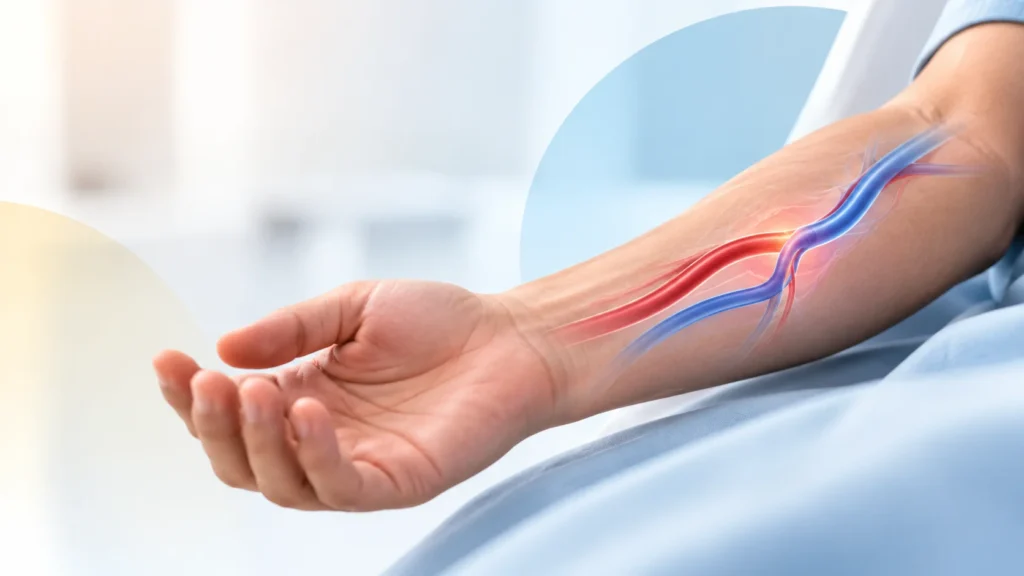
An arteriovenous fistula, is a connection made between an artery and a vein by a vascular surgeon. This connection allows high-pressure arterial blood to flow directly into the vein. Over time, the vein becomes thicker, stronger, and larger, making it suitable for repeated needle insertions during hemodialysis.
The fistula is usually created in the arm, most commonly at the wrist or elbow. The most common types are the radiocephalic fistula at the wrist and the brachiocephalic fistula at the elbow. In some cases, a fistula may be created in the leg if arm vessels are not suitable.
Once matured, the fistula allows high blood flow rates needed for effective dialysis. It is considered the safest and most durable option for long-term dialysis access.
Why is arteriovenous fistula needed?
Patients with advanced kidney disease often require hemodialysis to survive. For dialysis to work, blood must be removed from the body, passed through a dialysis machine, and returned back. This requires a vascular access that can handle high blood flow repeatedly.
Reasons arteriovenous fistula, is preferred
- It uses the patient’s own vessels, reducing infection risk.
- It has better long-term patency and durability.
- It provides adequate blood flow for efficient dialysis.
- It has lower risk of clotting compared to grafts or catheters.
- It is more comfortable and convenient for regular dialysis sessions.
- It reduces the need for temporary catheters, which carry higher infection risk.
Why it must be created early
An arteriovenous fistula, does not work immediately after surgery. It needs several weeks to mature and become strong enough for dialysis. Creating it early ensures that when dialysis is needed, a reliable access is already available. Delayed creation can force patients to use temporary catheters, which carry higher risks.
Types of AV Fistula
The type of arteriovenous fistula,depends on the location and the vessels used.
Common types based on location
- Radiocephalic fistula, created between the radial artery and cephalic vein at the wrist. This is often the first choice.
- Brachiocephalic fistula, created between the brachial artery and cephalic vein at the elbow. This is used when wrist vessels are not suitable.
- Brachiobasilic fistula, created between the brachial artery and basilic vein in the upper arm. This may require additional surgery to bring the vein to the surface.
- Leg fistula, created in the thigh if arm vessels are not usable. This is less common.
Factors that influence type selection
- Size and quality of arteries and veins.
- Previous surgeries or injuries to the arm.
- Presence of diabetes, vascular disease, or prior catheters.
- Surgeon’s assessment based on ultrasound mapping.
- Patient’s overall health and dialysis timeline.
Who Needs AV Fistula Creation?
AV fistula creation is recommended for patients who are likely to need long-term hemodialysis.
Patients who may need arteriovenous fistula,
- Those with chronic kidney disease stage 4 or 5.
- Patients approaching the need for dialysis within months.
- Individuals already on dialysis with a temporary catheter.
- Patients whose current access is failing or causing complications.
- People with no major contraindications to fistula surgery.
Timing of creation
- Ideally created several months before dialysis is expected to start.
- Early referral to a vascular surgeon allows proper planning and vessel mapping.
- Delayed creation can lead to reliance on catheters, which carry higher infection and complication risks.
Pre-Procedure Evaluation
Before creating an arteriovenous fistula,, a thorough evaluation is needed to ensure the best outcome.
Evaluation steps
- Detailed medical history including kidney disease, diabetes, blood pressure, and previous surgeries.
- Physical examination of both arms to assess vein and artery quality.
- Ultrasound mapping of arm vessels to determine suitability.
- Blood tests to check overall health and surgical risk.
- Assessment of heart and circulation status.
- Discussion of fistula type, location, and expected timeline.
Why evaluation matters
Proper vessel selection increases the chance of successful fistula maturation. It also reduces the risk of early failure or complications. Mapping helps the surgeon choose the best site for long-term function.
The Arteriovenous Fistula, Creation Procedure
The procedure is usually done under local or regional anesthesia, sometimes with sedation. It is a day-care or short-stay surgery in most cases.
Procedure steps
- The surgical site is cleaned and numbed with local anesthesia.
- A small incision is made over the selected artery and vein.
- The artery and vein are carefully exposed and prepared.
- A connection is surgically created between the artery and vein.
- Blood flow is checked to ensure the fistula is working.
- The incision is closed with sutures.
- A dressing is applied to protect the site.
Duration and recovery
- The surgery typically takes one to two hours.
- Most patients can go home the same day or within 24 hours.
- Mild pain, swelling, or bruising at the site is common initially.
- Full maturation takes several weeks before the fistula can be used for dialysis.
Benefits of arteriovenous fistula
Arteriovenous Fistula offers several advantages over other dialysis access options.
Key benefits
- Lower risk of infection compared to catheters or grafts.
- Better long-term durability and function.
- Adequate blood flow for efficient dialysis.
- Fewer complications and interventions over time.
- More comfortable for repeated needle insertions.
- Reduced hospitalization due to access-related problems.
- Better quality of life for dialysis patients.
Why it is the preferred choice
Major kidney and vascular guidelines recommend arteriovenous fistula as the first choice for hemodialysis access. It provides the best balance of safety, effectiveness, and longevity for long-term dialysis needs.
Post-Procedure Care
Proper care after surgery is essential for successful fistula maturation and long-term function.
Immediate post-procedure care
- Keep the dressing clean and dry as instructed.
- Avoid heavy lifting or pressure on the operated arm.
- Monitor for bleeding, excessive swelling, or severe pain.
- Take prescribed pain relief and antibiotics if given.
- Attend follow-up appointments for wound check and fistula assessment.
Long-term fistula care
- Check the fistula daily for a thrill or vibration, which indicates blood flow.
- Keep the skin over the fistula clean to prevent infection.
- Avoid tight clothing, jewelry, or blood pressure measurements on the fistula arm.
- Do not allow injections or blood draws from the fistula arm except for dialysis.
- Report any redness, warmth, swelling, or discharge immediately.
- Learn proper needle insertion care from the dialysis team.
Exercises to promote maturation
- Gentle hand squeezing exercises as advised by the doctor.
- Avoid strenuous activity until cleared by the surgeon.
- Regular follow-up ultrasound may be done to assess maturation.
Maturation and Use for Dialysis
An arteriovenous fistula does not work immediately. It needs time to mature before it can be used for dialysis.
Maturation timeline
- Typically takes 4 to 12 weeks to mature.
- Some fistulas may take longer depending on vessel quality and patient factors.
- Regular assessment by the dialysis and vascular team is important.
Signs of a mature fistula
- Visible enlarged vein under the skin.
- Strong thrill or vibration felt on touch.
- Adequate blood flow confirmed by ultrasound.
- Ability to tolerate dialysis needle insertion without complications.
What happens if maturation is delayed
- Additional exercises or interventions may be recommended.
- In some cases, a new fistula or alternative access may be needed.
- Temporary catheter may be used if dialysis is urgently required.
Possible Complications
Like any surgical procedure, arteriovenous fistula creation carries some risks. Most complications can be managed if detected early.
Early complications
- Bleeding or hematoma at the surgical site.
- Infection of the wound.
- Swelling or pain in the arm.
- Clotting of the fistula in the early period.
- Poor blood flow through the fistula.
Late complications
- Narrowing of the fistula over time, called stenosis.
- Clot formation leading to fistula failure.
- Aneurysm formation at the fistula site.
- Steal syndrome, where blood flow to the hand is reduced.
- High-output heart failure in rare cases with very high flow.
- Skin thinning or ulceration over the fistula.
When to seek urgent care
- Sudden loss of thrill or vibration in the fistula.
- Severe pain, swelling, or redness.
- Bleeding that does not stop with pressure.
- Cold, pale, or numb fingers on the fistula arm.
- Fever with signs of infection.
- Shortness of breath or chest pain.
Long-Term Management
An arteriovenous fistula requires lifelong care and monitoring to remain functional.
Long-term management pointers
- Regular dialysis sessions with proper needle technique.
- Routine assessment of fistula flow and function.
- Prompt treatment of any narrowing or clotting.
- Blood pressure and diabetes control to protect vessels.
- Avoiding trauma or injury to the fistula arm.
- Immediate reporting of any changes in fistula feel or appearance.
Role of the dialysis team
- Trained staff for safe needle insertion.
- Regular monitoring of fistula performance.
- Education on self-care and warning signs.
- Coordination with vascular surgeons for interventions if needed.
Why Choose Rama Hospital for AV Fistula Creation?
AV fistula creation requires skilled vascular surgery, proper vessel mapping, and coordinated care with nephrology and dialysis teams. A hospital with experienced specialists and comprehensive support can significantly improve outcomes.
- Expert vascular surgeons with experience in dialysis access.
- Pre-procedure ultrasound mapping for optimal site selection.
- Modern surgical facilities and infection control.
- Coordinated care with nephrology and dialysis teams.
- Post-procedure follow-up and long-term fistula management.
- Prompt management of complications if they arise.
Frequently Asked Questions (FAQs)
Why is AV fistula preferred over catheters?
AV fistula has lower infection risk, better durability, and provides more efficient dialysis compared to catheters. Catheters are temporary and carry higher risks of infection and clotting. Fistula is the recommended long-term access for most dialysis patients.
How long does it take for an AV fistula to mature?
Maturation typically takes 4 to 12 weeks, but it can vary depending on vessel quality and individual factors. Regular follow-up helps assess when the fistula is ready for dialysis use. Early creation ensures it is available when needed.
Is AV fistula surgery painful?
The procedure is done under local or regional anesthesia, so pain during surgery is minimal. Some discomfort, swelling, or bruising may occur after surgery but usually improves with time and medication. Most patients tolerate the procedure well.
Can an AV fistula fail?
Yes, an AV fistula can fail to mature or develop complications like narrowing or clotting over time. Regular monitoring and prompt treatment of issues can help maintain function. In some cases, a new fistula or alternative access may be needed.
How should I care for my AV fistula at home?
Keep the site clean, check for daily thrill or vibration, avoid pressure or injury to the arm, and report any redness, swelling, or loss of flow immediately. Follow all instructions from your dialysis and surgical team for best outcomes.
Can I use my fistula arm for other purposes?
No, the fistula arm should not be used for blood pressure measurements, injections, or blood draws except for dialysis. Protecting the fistula from trauma and unnecessary procedures helps prevent complications and prolongs its life.
What happens if my fistula stops working?
If the fistula loses its thrill or stops functioning, seek medical attention immediately. Early intervention can sometimes restore flow. If not, alternative access such as a new fistula, graft, or temporary catheter may be needed for dialysis.
Conclusion
AV fistula creation is a crucial procedure for patients requiring long-term hemodialysis. It provides the safest, most durable, and most efficient access for dialysis treatment. While it requires planning, surgery, and time to mature, the long-term benefits far outweigh other access options.
Proper pre-procedure evaluation, skilled surgical creation, and diligent post-procedure care are essential for successful outcomes. Patients who understand the importance of early fistula creation and follow care instructions can significantly reduce complications and improve their dialysis experience.
Rama Hospital offers comprehensive AV fistula creation services with experienced vascular surgeons, advanced vessel mapping, and coordinated nephrology care. From evaluation to long-term management, the hospital supports patients through every step of their dialysis journey.