A cracked or broken tooth is a common dental problem that can happen at any age. It may occur due to an injury, biting on something hard, long-term wear and tear, or weakened tooth structure from decay or previous dental work. Some people notice immediate pain or sensitivity, while others may only feel discomfort when chewing or when the tooth is exposed to hot or cold temperatures.
Even if a cracked tooth does not hurt much at first, it should not be ignored. A small crack can grow over time, allowing bacteria to enter the inner part of the tooth. This can lead to infection, severe pain, swelling, or even loss of the tooth. Early diagnosis and treatment can often save the tooth and prevent more complex procedures later.
What is a Cracked or Broken Tooth?
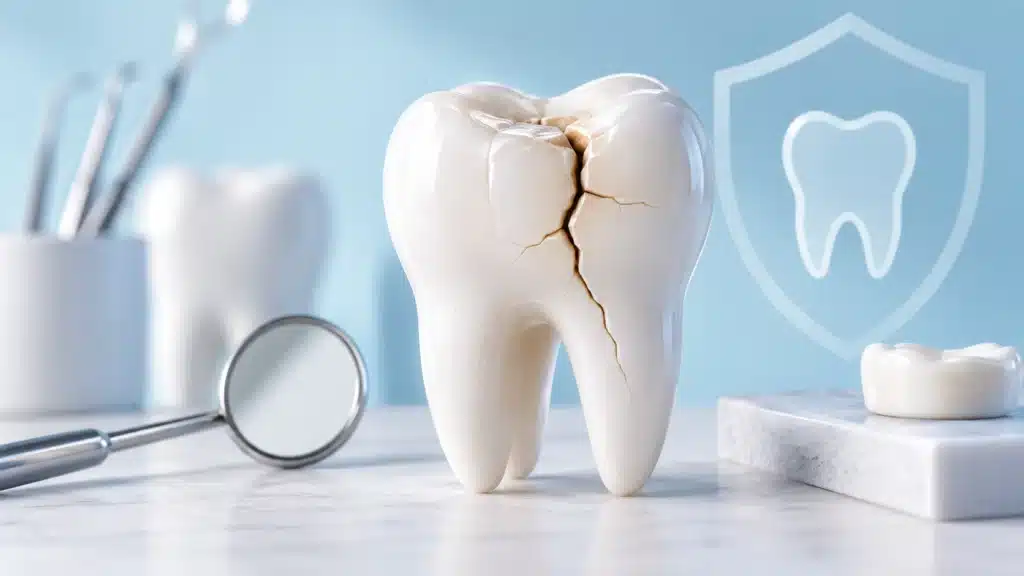
A cracked or broken tooth happens when part of the tooth structure is damaged or fractured. The tooth may have a small chip on the surface, a deeper crack running through it, or a major break that exposes the inner layers. The severity can range from a minor cosmetic issue to a serious dental emergency.
Teeth are made of several layers. The outer layer is enamel, which is hard and protective. Beneath that is dentin, which is softer and more sensitive. Inside the tooth is the pulp, which contains nerves and blood vessels. When a crack reaches the dentin or pulp, it can cause pain, sensitivity, or infection.
Not all cracks are visible to the naked eye. Some are very fine and can only be seen with special dental tools or imaging. Even small cracks can become a problem if they allow bacteria to enter the tooth.
Types of Tooth Cracks and Fractures
Tooth cracks can be classified based on their depth, direction, and location.
Based on depth and severity
- Minor chip or craze lines, which are tiny cracks on the surface of the enamel and often cause no pain.
- Fractured cusp, where a piece of the chewing surface breaks off, often around a filling.
- Cracked tooth, where a crack extends from the chewing surface toward the root but the tooth is not split into separate pieces.
- Split tooth, where the crack goes all the way through and the tooth separates into distinct segments.
- Vertical root fracture, where the crack starts in the root and moves upward, often not visible on the surface.
Based on location
- Cracks on the chewing surface.
- Cracks on the side of the tooth.
- Cracks near the gum line.
- Cracks involving the front teeth, which may affect appearance.
- Cracks involving the back teeth, which may affect chewing.
Based on cause
- Trauma-related fractures from injury or accident.
- Wear-related cracks from grinding or clenching.
- Decay-related fractures where the tooth is weakened by cavities.
- Restoration-related fractures around old fillings or crowns.
Causes of Cracked or Broken Teeth
Cracked or broken teeth can happen for many reasons. Sometimes it is a single event, and sometimes it is the result of long-term stress on the tooth.
Common causes include:
- Biting on hard objects such as ice, hard candy, nuts, or pens.
- Chewing on hard foods like bones or unpopped popcorn kernels.
- Dental trauma from falls, sports injuries, or accidents.
- Teeth grinding or clenching, especially at night.
- Large fillings that weaken the tooth structure over time.
- Tooth decay that makes the tooth more fragile.
- Age-related wear and tear on enamel.
- Sudden temperature changes, such as eating something very hot and then drinking something cold.
- Poor oral hygiene leading to weakened teeth.
- Previous root canal treatment, which can make a tooth more brittle if not protected with a crown.
Why teeth become more prone to cracking: Enamel can become thinner with age, acid exposure, or aggressive brushing. Teeth with large fillings have less natural structure left and are more likely to fracture under pressure. Grinding and clenching put repeated stress on teeth, making small cracks more likely to develop and spread.
Symptoms of Cracked or Broken Teeth
Symptoms depend on the size and location of the crack, and whether the inner layers of the tooth are involved.
Common symptoms include:
- Pain when chewing or biting.
- Sensitivity to hot or cold foods and drinks.
- Sensitivity to sweet foods.
- Intermittent pain that comes and goes.
- Sharp pain that is hard to locate.
- Swelling of the gum near the affected tooth.
- Visible chip or rough edge on the tooth.
- Discomfort that worsens when releasing bite pressure.
- Occasional bleeding from the gum around the tooth.
- Bad taste or bad breath if infection develops.
Signs that need urgent attention
- Severe, persistent tooth pain.
- Swelling of the face or jaw.
- Pus or discharge near the tooth.
- Fever along with tooth pain.
- Difficulty opening the mouth or swallowing.
- A tooth that is visibly split or loose.
Cracked or Broken Teeth in Different Age Groups
Tooth fractures can affect children, adults, and older people, but the pattern may vary.
In children
- Often caused by falls, sports injuries, or accidents while playing.
- Front teeth are commonly affected.
- May involve both baby teeth and permanent teeth.
- Early dental evaluation is important to protect developing teeth.
In adults
- Often related to biting hard objects, grinding, or old fillings.
- Back teeth are commonly affected due to chewing forces.
- May be associated with stress-related clenching.
- Cosmetic concerns are more prominent for front teeth.
In older adults
- Teeth may be more brittle due to age and previous dental work.
- Root fractures are more common.
- Healing and treatment options may be influenced by overall health.
- Dry mouth or gum recession can increase risk.
How is a Cracked or Broken Tooth Diagnosed?
Diagnosis is based on symptoms, dental examination, and imaging tests. Since some cracks are very fine, they may not be visible on routine X-rays.
Diagnostic steps
- Detailed history of how the injury or pain started.
- Review of symptoms such as pain pattern and sensitivity.
- Visual examination of the tooth and surrounding gum.
- Gentle tapping or biting tests to locate the painful area.
- Use of a dental explorer to feel for cracks.
- Dye or special light to highlight fine cracks.
- Dental X-rays to check for decay, root involvement, or bone changes.
- Additional imaging if root fracture is suspected.
Why diagnosis matters
A proper diagnosis helps determine whether the tooth can be saved and which treatment is best. Some cracks are minor and need only smoothing or a small filling. Others may need a crown, root canal, or extraction. Early detection can prevent the crack from spreading and reduce the risk of infection.
Treatment for Cracked or Broken Teeth
Treatment depends on the type of crack, its location, and how much of the tooth is affected.
Treatment for minor chips and craze lines
- Smoothing of rough edges.
- Dental bonding to restore shape and appearance.
- No treatment needed if the chip is very small and not causing symptoms.
Treatment for fractured cusp
- Removal of the broken piece.
- Placement of a filling or onlay.
- Crown placement if a large portion of the tooth is missing.
Treatment for cracked tooth
- Dental crown to hold the tooth together and prevent further cracking.
- Root canal treatment if the pulp is involved or infected.
- Extraction if the crack extends too deep and the tooth cannot be saved.
Treatment for split tooth
- Often requires extraction because the tooth is separated into parts.
- Replacement options such as implant, bridge, or partial denture may be discussed.
Treatment for vertical root fracture
- Usually requires extraction because the crack is in the root.
- Infection control and bone preservation may be needed.
- Replacement options planned after healing.
1. Dental bonding
This is a procedure where a tooth-colored material is applied to the chipped or cracked area and shaped to match the natural tooth.
- Suitable for small chips and minor cracks.
- Quick and often completed in one visit.
- Improves appearance and smoothness.
2. Dental crown
A crown is a cap that covers the entire visible part of the tooth. It protects the tooth from further damage and restores function.
- Used when a large portion of the tooth is broken.
- Protects teeth after root canal treatment.
- Made of ceramic, metal, or a combination.
3. Root canal treatment
If the crack reaches the pulp and causes infection or severe pain, the inner part of the tooth may need to be cleaned and sealed.
- Removes infected or damaged pulp.
- Relieves pain and prevents spread of infection.
- Usually followed by a crown for protection.
4. Tooth extraction
If the tooth is severely fractured and cannot be saved, it may need to be removed.
- Done under local anesthesia.
- Prevents infection and further complications.
- Replacement options discussed for function and appearance.
5. Temporary measures before treatment
Until you see a dentist, some steps can reduce discomfort and protect the tooth.
- Avoid chewing on the affected side.
- Rinse gently with warm salt water.
- Use a cold compress on the cheek if there is swelling.
- Take pain relief medicine as advised by a doctor.
- Cover any sharp edge with dental wax or sugar-free gum to protect the tongue and cheek.
Recovery After Treatment
Recovery depends on the type of treatment and the extent of the damage.
Recovery after bonding or small filling
- Minimal discomfort.
- Normal eating can usually resume quickly.
- Avoid very hard foods on that tooth for a short time.
Recovery after crown placement
- Some sensitivity for a few days is common.
- Avoid very hard or sticky foods initially.
- Regular brushing and flossing as advised.
Recovery after root canal
- Mild soreness for a few days.
- Pain medicine may be recommended.
- Crown placement usually follows to protect the tooth.
Recovery after extraction
- Bleeding for a short time is normal.
- Soft diet for a few days.
- Follow care instructions to prevent dry socket and infection.
- Healing usually takes one to two weeks.
Possible Complications
Untreated or poorly managed cracked teeth can lead to several problems.
Complications of untreated cracks
- Worsening of the crack over time.
- Increased pain and sensitivity.
- Infection of the pulp.
- Abscess formation with swelling and pus.
- Spread of infection to surrounding bone and tissues.
- Loss of the tooth.
- Difficulty chewing and nutritional impact.
- Cosmetic concerns, especially for front teeth.
Complications after treatment
- Temporary sensitivity after procedures.
- Need for further treatment if the crack progresses.
- Crown or filling may need replacement over time.
- In rare cases, persistent pain requiring re-evaluation.
When Should You See a Dentist?
Dental evaluation is important for any suspected crack or break, even if pain is mild.
- Pain when chewing or biting.
- Sensitivity to hot, cold, or sweet foods.
- A visible chip or rough edge on a tooth.
- Swelling of the gum near a tooth.
- A tooth that feels different when you bite.
- History of grinding or clenching with new tooth pain.
Prevention of Cracked or Broken Teeth
Not all tooth fractures can be prevented, but risk can be reduced.
- Avoid chewing on hard objects like ice, pens, or hard candy.
- Do not use teeth to open packages or bottles.
- Wear a mouthguard during sports or high-risk activities.
- Use a night guard if you grind or clench your teeth.
- Maintain good oral hygiene with regular brushing and flossing.
- Visit the dentist regularly for check-ups and early detection.
- Treat cavities and worn fillings promptly.
- Get a crown for teeth that are weak after large fillings or root canal.
- Manage acid reflux or frequent vomiting that can weaken enamel.
For people who grind their teeth
- Stress management and relaxation techniques.
- Evaluation for sleep-related grinding.
- Custom night guard to protect teeth during sleep.
- Regular dental monitoring for early signs of wear.
Why Choose Rama Hospital for Cracked or Broken Tooth Treatment?
Cracked or broken teeth need timely and expert dental care. A hospital-based dental service can provide comprehensive evaluation, advanced imaging, and a full range of restorative options under one roof.
- Expert evaluation by experienced dentists and specialists.
- Access to advanced imaging and diagnostic tools.
- Full range of treatments from bonding to crowns, root canal, and surgery.
- Emergency dental care for severe pain or trauma.
- Coordinated care for patients with other health conditions.
- Safe and sterile environment for all procedures.
Frequently Asked Questions (FAQs)
Can a cracked tooth heal on its own?
No, a cracked tooth cannot heal on its own like a broken bone. Enamel does not regenerate. Treatment is needed to protect the tooth, relieve symptoms, and prevent infection or further damage.
Is a chipped tooth an emergency?
A small chip with no pain may not be an emergency, but it should still be checked. If there is severe pain, swelling, bleeding, or a large break, it should be treated as a dental emergency.
Does a cracked tooth always need a root canal?
No, not every cracked tooth needs a root canal. Minor cracks may only need bonding or a crown. Root canal is needed only if the pulp is damaged or infected.
Can I eat normally with a cracked tooth?
It is best to avoid chewing on the affected tooth until it is treated. Hard or sticky foods can worsen the crack. Soft foods and gentle chewing are safer until you see a dentist.
How long can I wait before treating a cracked tooth?
It is better not to wait. A small crack can grow and lead to infection or tooth loss. Early treatment improves the chances of saving the tooth and reduces pain and cost in the long run.
Can a crown fix a cracked tooth?
Yes, a crown can often protect a cracked tooth by holding it together and preventing the crack from spreading. It is commonly used when a large portion of the tooth is damaged or after root canal treatment.
What happens if a cracked tooth is left untreated?
If left untreated, a cracked tooth can lead to worsening pain, infection, abscess, and eventual tooth loss. The crack may spread deeper, making the tooth impossible to save.
Conclusion
Cracked or broken teeth are common but should never be ignored. Even a small chip can become a bigger problem if bacteria enter the tooth or if the crack spreads. Pain, sensitivity, swelling, or visible damage are all signs that dental evaluation is needed.
The most important steps are early diagnosis, appropriate dental treatment, and protection of the tooth from further damage. For patients with tooth pain, sensitivity, or a history of trauma or grinding, a dental check-up can make a major difference in saving the tooth and preventing complications. With timely care, most cracked or broken teeth can be treated effectively and function well for many years.
Rama Hospital can help evaluate cracked or broken teeth, provide the right dental treatment, and offer guidance on prevention and long-term oral health.