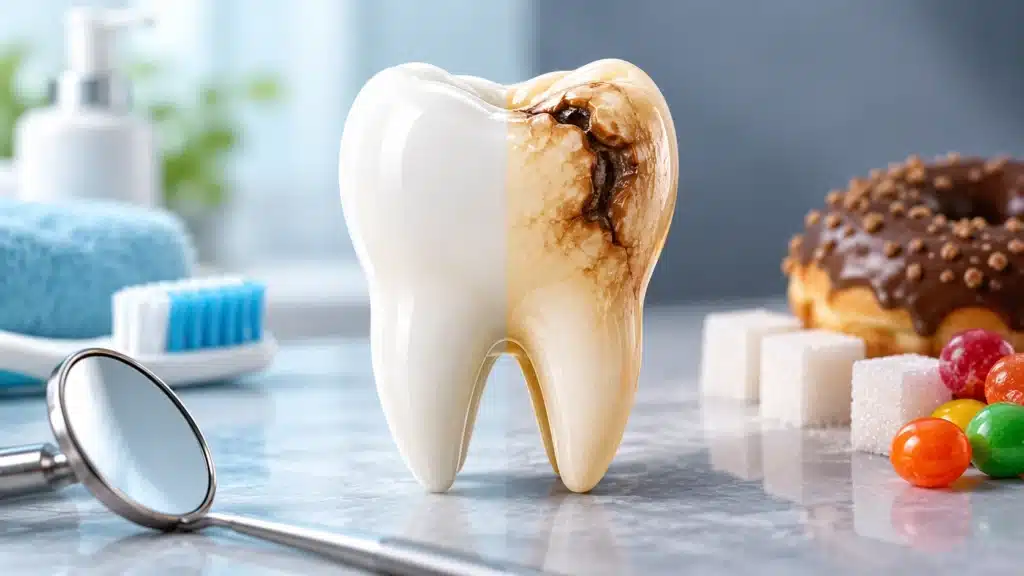
Tooth decay, also known as dental caries or cavities, is one of the most common dental problems affecting people of all ages. It happens when the hard outer layer of the tooth, called enamel, is damaged by acids produced by bacteria in the mouth. Over time, this acid erosion creates holes or cavities in the tooth. If left untreated, tooth decay can progress deeper into the tooth, causing pain, infection, and even tooth loss.
Many people think tooth decay only affects children or happens due to eating too many sweets. In reality, it is influenced by multiple factors including oral hygiene, diet, saliva quality, fluoride exposure, and overall health. Early decay may not cause any pain, which is why regular dental check-ups are important. Once decay reaches the inner layers of the tooth, it can lead to severe toothache, sensitivity, swelling, and the need for more complex treatment.
What is Tooth Decay?
Tooth decay is the progressive damage and destruction of tooth structure caused by acid-producing bacteria in the mouth. The mouth naturally contains many types of bacteria. Some of these bacteria feed on sugars and starches from food and drinks. When they break down these carbohydrates, they produce acids as a byproduct.
These acids attack the tooth enamel, which is the hard, protective outer layer of the tooth. Over time, repeated acid attacks weaken the enamel and cause minerals to be lost from the tooth surface. This process is called demineralization. If the damage continues without repair, a cavity forms. Once a cavity develops, it cannot heal on its own and requires dental treatment.
Tooth decay can affect any tooth, but it is most common in the back teeth (molars and premolars) because they have deep grooves where food and bacteria can get trapped. It can also occur between teeth, near the gum line, or around old fillings and dental work.
How Tooth Decay Develops?
Understanding how tooth decay develops helps explain why prevention and early treatment are so important.
The decay process
- Bacteria in the mouth form a sticky film called plaque on the teeth.
- When you eat sugary or starchy foods, the bacteria in plaque produce acids.
- These acids dissolve minerals from the tooth enamel.
- Saliva helps neutralize acids and remineralize the tooth, but repeated acid attacks overwhelm this natural repair.
- Over time, the enamel weakens and a cavity forms.
- If untreated, decay spreads into the dentin (the softer layer under enamel) and eventually reaches the pulp (the inner part containing nerves and blood vessels).
- This can cause pain, infection, and abscess formation.
Why some people get more cavities
- Poor oral hygiene allows plaque to build up.
- Frequent snacking or sipping sugary drinks keeps acid levels high.
- Low fluoride exposure reduces enamel strength.
- Dry mouth reduces the protective effect of saliva.
- Deep grooves in teeth trap food and bacteria.
- Existing dental work can develop gaps where decay starts.
Causes of Tooth Decay
Tooth decay is caused by a combination of bacteria, diet, and oral hygiene habits.
Primary causes
- Bacterial plaque buildup on teeth.
- Frequent consumption of sugary foods and drinks.
- Poor brushing and flossing habits.
- Inadequate fluoride exposure.
- Dry mouth or reduced saliva flow.
- Frequent snacking between meals.
- Sticky foods that cling to teeth.
- Night-time feeding in infants without cleaning teeth afterward.
Contributing factors
- Deep pits and fissures in molars.
- Crooked or crowded teeth that are hard to clean.
- Old or leaking fillings.
- Gum recession exposing tooth roots.
- Certain medications that reduce saliva.
- Medical conditions affecting saliva production.
- Acidic foods and drinks that weaken enamel.
- Lack of regular dental check-ups.
Risk Factors for Tooth Decay
Some people are more likely to develop tooth decay than others.
Higher-risk groups
- Children and teenagers with developing teeth.
- Older adults with gum recession or dry mouth.
- People who consume sugary or acidic foods frequently.
- Individuals with poor oral hygiene.
- People with dry mouth due to medications or medical conditions.
- Those with limited access to dental care.
- Individuals with deep grooves in their teeth.
- People with existing dental work or crowns.
- Patients with braces or orthodontic appliances.
- Individuals who skip regular dental check-ups.
Why risk increases in these groups
- Children may not brush effectively or consume more sugary snacks.
- Older adults may have receding gums exposing softer tooth roots.
- Frequent sugar intake provides constant fuel for acid-producing bacteria.
- Dry mouth reduces the natural cleansing and buffering effect of saliva.
- Orthodontic appliances make cleaning more difficult.
- Existing dental work can develop gaps where bacteria accumulate.
Symptoms of Tooth Decay
Early tooth decay may not cause any symptoms. This is why regular dental check-ups are important for early detection.
Early symptoms
- White spots on the tooth surface indicating mineral loss.
- Mild sensitivity to sweet, hot, or cold foods.
- No pain in the initial stages.
- Visible discoloration or dark spots on the tooth.
Advanced symptoms
- Toothache or spontaneous pain.
- Sensitivity to hot, cold, or sweet foods and drinks.
- Pain when biting or chewing.
- Visible holes or pits in the teeth.
- Dark or brown staining on the tooth surface.
- Bad breath or unpleasant taste in the mouth.
- Swelling or pus around the tooth in severe cases.
- Broken or chipped tooth due to weakened structure.
Warning signs that need dental attention
- Persistent toothache.
- Sensitivity that does not go away.
- Visible cavity or hole in the tooth.
- Swelling in the gum or face.
- Pain that wakes you up at night.
- Difficulty eating due to tooth pain.
Stages of Tooth Decay
Tooth decay progresses through different stages, and treatment depends on how far it has advanced.
Stage 1: Enamel demineralization
- Early mineral loss from the enamel surface.
- May appear as white spots on the tooth.
- No cavity yet, and the process can sometimes be reversed with fluoride and improved hygiene.
- No pain at this stage.
Stage 2: Enamel decay
- The enamel begins to break down and a cavity forms.
- The damage is permanent and requires dental treatment.
- May cause mild sensitivity.
- Still often painless, which is why many people do not seek care at this stage.
Stage 3: Dentin decay
- Decay spreads into the dentin, which is softer than enamel.
- Sensitivity to hot, cold, or sweet foods increases.
- Cavity grows faster because dentin is less resistant to acid.
- Dental filling is usually needed at this stage.
Stage 4: Pulp involvement
- Decay reaches the pulp, which contains nerves and blood vessels.
- Severe toothache develops.
- Pain may be constant or triggered by temperature changes.
- Root canal treatment is often required to save the tooth.
Stage 5: Abscess formation
- Infection spreads beyond the tooth into the surrounding bone and gum.
- Swelling, pus, and severe pain occur.
- Fever and general discomfort may develop.
- Urgent dental treatment is needed to prevent spread of infection.
How is Tooth Decay Diagnosed?
Diagnosis is based on dental examination, patient history, and sometimes X-rays.
Diagnostic steps
- Detailed history of symptoms and dental habits.
- Visual examination of all teeth using dental instruments.
- Checking for soft spots, discoloration, or visible cavities.
- Probing between teeth to detect hidden decay.
- Dental X-rays to see decay between teeth or under fillings.
- Assessment of gum health and overall oral condition.
Common tests that may be done
- Bitewing X-rays to detect decay between back teeth.
- Periapical X-rays to examine the tooth root and surrounding bone.
- Panoramic X-ray for a full view of all teeth and jaws.
- Special dyes or lights to highlight early decay in some cases.
Why diagnosis matters
Early detection allows for simpler, less invasive treatment. Small cavities can be treated with fillings, while advanced decay may require root canal or extraction. Regular check-ups help catch problems before they become painful or expensive to treat.
Treatment for Tooth Decay
Treatment depends on the stage of decay, the size of the cavity, and the overall health of the tooth.
1. Fluoride treatment for early decay
- Used when decay is in the very early enamel stage.
- Fluoride helps remineralize the tooth and stop further damage.
- Applied as a gel, foam, or varnish by the dentist.
- May be combined with improved home care and diet changes.
2. Dental fillings
- The most common treatment for cavities.
- The dentist removes the decayed portion of the tooth.
- The cavity is cleaned and filled with a suitable material.
- Common filling materials include composite resin, amalgam, or ceramic.
- Restores tooth function and prevents further decay.
3. Dental crowns
- Used when a large portion of the tooth is damaged.
- A crown covers and protects the remaining tooth structure.
- Provides strength and restores appearance.
- Often placed after root canal treatment.
4. Root canal treatment
- Needed when decay reaches the pulp and causes infection.
- The infected pulp is removed from inside the tooth.
- The canal is cleaned, shaped, and sealed.
- A crown is usually placed afterward to protect the tooth.
- Saves the natural tooth from extraction.
5. Tooth extraction
- Required when the tooth is too damaged to be saved.
- Done under local anesthesia.
- May be followed by replacement options such as implant, bridge, or denture.
- Prevents spread of infection to other teeth.
6. Treatment for children
- Fillings or crowns for baby teeth when needed.
- Fluoride varnish for early decay.
- Pulp treatment for baby teeth with deep decay.
- Extraction only when necessary to protect permanent teeth.
Prevention of Tooth Decay
Prevention is the best approach to avoid cavities and maintain healthy teeth for life.
Daily oral hygiene
- Brush teeth at least twice a day with fluoride toothpaste.
- Floss daily to clean between teeth where brushing cannot reach.
- Use a soft-bristled toothbrush and gentle technique.
- Replace toothbrush every three to four months.
- Consider using an antimicrobial mouthwash if recommended.
Diet and lifestyle
- Limit sugary foods and drinks, especially between meals.
- Avoid frequent snacking on sticky or sugary items.
- Drink water instead of sugary beverages.
- Eat a balanced diet rich in fruits, vegetables, and dairy.
- Chew sugar-free gum to stimulate saliva after meals.
Professional care
- Visit the dentist regularly for check-ups and cleaning.
- Get fluoride treatments if you are at high risk.
- Consider dental sealants for children’s molars.
- Address dry mouth or medical conditions affecting oral health.
- Follow dentist’s advice on brushing technique and products.
Special prevention for children
- Start cleaning gums even before teeth appear.
- Brush children’s teeth as soon as they erupt.
- Avoid putting babies to bed with bottles containing milk or juice.
- Limit sugary snacks and drinks for children.
- Take children for regular dental visits from an early age.
Complications of Untreated Tooth Decay
Ignoring tooth decay can lead to serious problems beyond just a cavity.
Possible complications
- Severe toothache and pain.
- Dental abscess or infection.
- Spread of infection to jaw, face, or other parts of the body.
- Tooth loss.
- Difficulty eating and speaking.
- Poor nutrition due to pain while eating.
- Damage to surrounding teeth.
- Gum disease and bone loss.
- Impact on self-confidence and social interactions.
- Higher treatment cost and complexity over time.
Why complications happen
When decay is left untreated, bacteria continue to destroy tooth structure. Once the pulp is infected, the body’s immune response causes inflammation and pain. If the infection spreads beyond the tooth, it can affect surrounding tissues and even enter the bloodstream in severe cases.
When Should You See a Dentist?
Regular dental visits are important, but some symptoms require immediate attention.
- Tooth sensitivity to hot, cold, or sweet foods.
- Visible holes or dark spots on teeth.
- Mild to moderate toothache.
- Bad breath that does not improve.
- Bleeding gums or gum swelling.
- Chipped or broken tooth.
- Lost or damaged filling.
Why Choose Rama Hospital for Tooth Decay Treatment?
Tooth decay may seem like a simple problem, but proper diagnosis and treatment require skilled dental professionals and modern equipment. A hospital-based dental department can provide comprehensive care from prevention to advanced treatment.
- Expert dentists with experience in all types of dental procedures.
- Modern equipment for accurate diagnosis and comfortable treatment.
- Full range of services from fillings to root canal and crowns.
- Emergency dental care for severe pain or infection.
- Coordinated care for patients with other medical conditions.
- Focus on both treatment and long-term prevention.
Frequently Asked Questions (FAQs)
Can tooth decay heal on its own?
Very early enamel demineralization can sometimes be reversed with fluoride and improved hygiene. Once a cavity forms, it cannot heal on its own and requires dental treatment.
Does tooth decay always cause pain?
No, early decay often causes no pain. Pain usually starts when decay reaches the inner layers of the tooth. This is why regular check-ups are important for early detection.
How can I prevent tooth decay?
Prevention includes brushing twice daily with fluoride toothpaste, flossing, limiting sugary foods, drinking water, and visiting the dentist regularly. Good oral hygiene is the most effective prevention.
Are fillings safe?
Yes, dental fillings are safe and commonly used to treat cavities. Materials like composite resin and amalgam have been used for many years and are well-tested for safety and effectiveness.
What happens if I ignore a cavity?
Ignoring a cavity allows decay to spread deeper into the tooth. This can lead to severe pain, infection, root canal treatment, or even tooth extraction. Early treatment is simpler and less costly.
Can children get tooth decay?
Yes, children can get tooth decay as soon as their first teeth appear. Baby teeth are important for chewing, speech, and guiding permanent teeth. Early dental care is essential for children.
How often should I visit the dentist?
Most people should visit the dentist every six months for check-ups and cleaning. Those at higher risk may need more frequent visits as advised by their dentist.
Conclusion
Tooth decay is a common but preventable condition that affects people of all ages. It starts silently, often without pain, and can progress to cause severe discomfort, infection, and tooth loss if ignored. The good news is that with proper oral hygiene, healthy diet habits, and regular dental care, most cavities can be prevented or treated early.
The most important steps are daily brushing and flossing, limiting sugary foods, using fluoride, and visiting the dentist regularly. For patients with tooth sensitivity, visible cavities, or dental pain, early evaluation can prevent complications and save the natural tooth. With the right care, patients can maintain healthy teeth and a confident smile for life.
Rama Hospital can help diagnose and treat tooth decay, provide fillings, root canal, and other dental services, and guide patients on long-term prevention and oral health maintenance.