Navratri is a time of devotion, celebration and fasting for many families. From early-morning prayers to evening aarti, people adjust their routines and food choices to observe the nine-day festival. Some eat fruits and dairy products, others prepare meals with kuttu or singhara flour, while some avoid food and water for extended periods.
But what happens when you begin feeling dizziness, unusually weak or uncomfortable with acidity halfway through the day?
You might assume it is simply hunger or tell yourself that you can manage until the evening. However, dizziness, weakness and persistent acidity during Navratri fasting should not automatically be dismissed as normal effects of fasting. They can sometimes signal dehydration, low blood pressure, low blood sugar or a digestive problem that needs attention.
The risk can be higher for people with diabetes, those taking certain medicines, pregnant women and individuals with existing medical conditions.
So, should you continue your fast, change what you eat or seek medical help?
This guide explains the common causes of dizziness during Navratri fasting, what you can do when symptoms begin, which warning signs you should never ignore, and how to observe the festival more safely.
Is Dizziness During Navratri Fasting Normal?
Feeling slightly hungry after several hours without food may be expected. However, dizziness, persistent weakness, faintness or significant stomach discomfort should not be treated as something you simply have to tolerate.
When your eating pattern changes during Navratri, your body may receive less energy or fluid than usual. If you also have a long gap between meals, spend time outdoors in warm weather or continue your regular physical activities, symptoms may become more noticeable.
Dizziness can occur for several reasons, including dehydration, low blood pressure, low blood sugar in susceptible individuals, anaemia or an unrelated medical condition.
The first step is to pay attention to what you are experiencing rather than assuming every symptom is caused by hunger.
| Symptom | What it may indicate |
| Light-headedness, especially when standing | Dehydration or a drop in blood pressure |
| Shaking, sweating, hunger and weakness | Possible low blood sugar, particularly if you have diabetes and take glucose-lowering medicines |
| Dry mouth, dark urine and reduced urination | Possible dehydration |
| Burning in the upper abdomen or behind the breastbone | Acidity, indigestion or acid reflux |
| Persistent fatigue or unusual breathlessness | Anaemia or another underlying condition may need evaluation |
| Fainting, confusion or sudden severe symptoms | A potentially serious problem requiring urgent medical assessment |
These symptoms can overlap, so this table is a guide, not a way to diagnose yourself.
If you feel faint, confused or severely weak, stop your activities and end the fast if necessary. Do not force yourself to continue for religious reasons. Seek urgent medical assistance if symptoms are severe or do not improve.
Why Do You Feel Dizziness or Weak During Navratri Fasting?
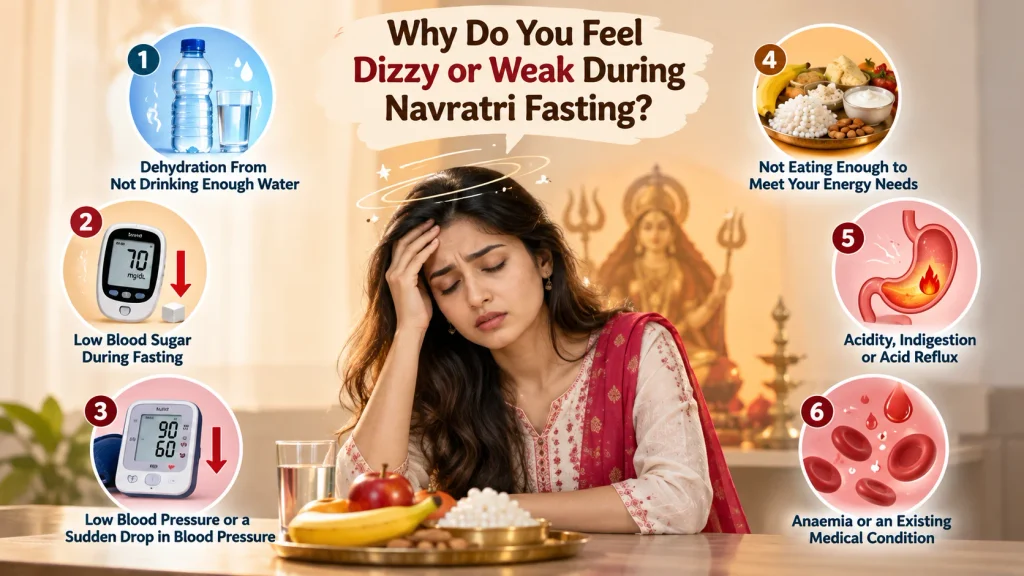
Understanding the possible cause helps you respond appropriately. Several factors may contribute to weakness during fasting, and more than one can occur at the same time.
1. Dehydration From Not Drinking Enough Water
Dehydration is one of the concerns during fasting, particularly when water intake is restricted or forgotten during busy festival activities.
Your body needs water to regulate temperature, maintain circulation and support normal organ function. When fluid intake is inadequate, you may lose more fluid than you replace, especially in hot weather or after physical activity.
Possible symptoms include:
- Thirst and dry mouth.
- Headache or light-headedness.
- Darker urine or urinating less often.
- Tiredness and reduced concentration.
- Feeling dizzy when standing up.
Dehydration can also contribute to a drop in blood pressure, which may make you feel faint.
What should you do?
If your fasting rules permit fluids, drink water regularly during the permitted hours rather than waiting until you feel very thirsty. If you develop significant dizziness or signs of dehydration, stop fasting and rehydrate safely.
2. Low Blood Sugar During Fasting
Low blood sugar, also called hypoglycaemia, occurs when glucose levels fall below the safe range.
It is particularly important for people with diabetes who use insulin or certain glucose-lowering medicines. Skipping meals or changing meal timing without adjusting a prescribed treatment plan can increase the risk.
Warning signs can include:
- Shaking or trembling.
- Sweating.
- Sudden hunger.
- Dizziness or weakness.
- A racing heartbeat.
- Irritability or confusion.
- Blurred vision.
Low blood sugar is less common in people without diabetes, but dizziness can have other causes and should not be ignored.
If you are conscious and able to swallow safely, follow your prescribed plan, which commonly involves 15 grams of fast-acting carbohydrate followed by a glucose recheck after 15 minutes. Repeat as directed if the level remains low.
If the person is unconscious, having a seizure or unable to swallow safely, do not give food or drink by mouth. Seek emergency help immediately.
Never change or skip prescribed diabetes medication on your own to accommodate a fast. Discuss a safe plan with your doctor before fasting.
3. Low Blood Pressure or a Sudden Drop in Blood Pressure
Have you ever stood up after sitting for a long time and suddenly felt light-headed?
This may happen when blood pressure drops on standing, a condition known as orthostatic hypotension. Dehydration, certain medicines and underlying health conditions can contribute to it.
During Navratri, reduced fluid intake and changes in eating habits may make some people more vulnerable to dizziness, particularly if they already have low blood pressure or take blood pressure medicines.
You may notice:
- Light-headedness after standing.
- Blurred vision.
- A feeling that you might faint.
- General weakness.
- Unsteadiness while walking.
If this happens, sit or lie down immediately to reduce the risk of falling. Avoid driving, climbing stairs alone or continuing strenuous activities while dizzy.
4. Not Eating Enough to Meet Your Energy Needs
Navratri fasting diets vary widely. Some people eat balanced meals containing fruit, dairy, nuts and suitable grains, while others rely mainly on tea, potatoes, fried snacks or small portions of food.
If you consume much less food than your body needs, you may experience hunger, fatigue, headaches or reduced concentration. Repeatedly skipping meals can also make it harder to meet your nutritional requirements over the nine-day period.
This is especially relevant if you are working long hours, travelling, exercising or caring for family members while fasting.
A fasting diet should not leave you persistently weak or unable to carry out normal activities.
5. Acidity, Indigestion or Acid Reflux
Acidity during Navratri fasting is another common concern. You may experience a burning sensation in the upper abdomen or chest, a sour taste in your mouth, bloating or discomfort after eating.
Indigestion and acid reflux can be associated with certain foods, large meals, fatty or spicy preparations, pregnancy, stress and some medicines.
Fasting itself does not cause acidity in every person. However, a change in meal timing followed by a large, heavy meal can trigger or worsen digestive symptoms in susceptible individuals.
For example, someone may skip food for most of the day and then eat a large portion of fried kuttu puri, potatoes and sweets at the evening meal. The combination of a large meal and high-fat foods may worsen indigestion or reflux.
To reduce discomfort:
- Eat smaller, balanced meals during permitted eating hours.
- Avoid eating very large portions immediately after a prolonged fast.
- Identify foods that trigger your symptoms.
- Avoid lying down immediately after eating.
- Limit tea or coffee if they worsen your acidity.
6. Anaemia or an Existing Medical Condition
Sometimes, fasting brings attention to a health problem that was already present.
Anaemia, for example, can cause tiredness, weakness, headaches, dizziness and breathlessness. If you have low iron levels or another underlying condition, reducing your food intake may make it harder to meet your nutritional needs.
Other conditions involving the heart, kidneys or digestive system may also affect how safely you can fast.
If you frequently feel exhausted, become breathless during routine activities or experience dizziness even when you are eating and drinking normally, do not assume Navratri fasting is the only explanation.
When Should You Stop Your Navratri Fast?
One of the most important questions is not what you should eat during Navratri, but when you should stop fasting to protect your health.
Your decision should depend on the symptoms you experience, your medical history and whether you can safely eat or drink.
Stop fasting if you experience these symptoms
Consider ending your fast and seeking medical advice if you develop:
- Persistent dizziness or light-headedness.
- Unusual or worsening weakness.
- Symptoms suggesting low blood sugar.
- Signs of dehydration, such as very dark urine or reduced urination.
- Repeated vomiting or difficulty keeping fluids down.
- Significant or persistent acidity or abdominal discomfort.
- A severe headache or difficulty carrying out normal activities.
These symptoms do not all have the same cause or urgency. Some require prompt assessment, while others may need emergency treatment depending on their severity and accompanying signs.
If you feel dizzy, sit or lie down somewhere safe. Do not continue walking around, cooking over a hot stove or travelling alone while you feel faint.
If your symptoms are significant, do not delay treatment to complete the fast.
Who Should Be Extra Careful About Navratri Fasting?

Fasting does not affect everyone in the same way. A routine that feels comfortable for one person may be unsafe for another.
Certain groups should speak to a healthcare professional before beginning a strict or prolonged fast.
1. People with diabetes
Fasting can affect blood glucose levels, particularly in people using insulin or certain diabetes medicines. Both low and high blood sugar can cause complications.
People with poorly controlled diabetes, recurrent hypoglycaemia, previous severe episodes or diabetes-related complications may face additional risks.
If you have diabetes:
- Discuss your fasting plans with your treating doctor beforehand.
- Follow an agreed blood glucose monitoring schedule.
- Do not independently alter medication doses or timing.
- Know when your doctor has advised you to end the fast.
- Seek help if your glucose readings or symptoms are outside your agreed safety plan.
2. Pregnant or breastfeeding women
Pregnancy increases nutritional and fluid requirements. Fasting may make it harder to meet these needs, particularly when food choices are restricted or nausea and vomiting are already present.
Pregnant women should discuss fasting with their obstetrician before beginning. Those with gestational diabetes, anaemia, high blood pressure or other complications require particular care.
If you experience dizziness, faintness, significant weakness, persistent vomiting or other concerning symptoms during pregnancy, stop fasting and contact your healthcare professional promptly.
3. People with kidney or heart disease
People with chronic kidney disease, heart disease or certain fluid and electrolyte disorders may need an individualised plan for food and fluid intake.
For example, someone with kidney disease may have specific fluid or potassium restrictions. Drinking large amounts of water or coconut water without considering these restrictions may not be appropriate.
Speak to your treating specialist before changing your usual eating or drinking routine. Do not assume that general fasting advice applies to every medical condition.
4. Older adults
Older adults may be more susceptible to dehydration, medication-related blood pressure changes and falls.
If an older family member becomes dizzy, unusually sleepy, confused or unsteady during fasting, take the symptoms seriously. Help them sit or lie down safely and seek medical advice according to the severity of the symptoms.
5. People taking regular medicines
Some medicines need to be taken with food, while others can affect blood pressure, fluid balance or blood glucose.
Changing meal times may therefore affect how safely a medicine can be used.
Before fasting, ask your doctor or pharmacist whether your medicines require any adjustments. Never change a prescribed dose or stop treatment simply to maintain a fasting schedule.
What Should You Eat During Navratri to Avoid Weakness?
If you are medically fit to fast and your chosen fasting routine allows food and fluids, thoughtful meal planning can help you maintain your energy.
The goal is not to eat excessively before or after fasting. It is to make the permitted meals more balanced.
Choose a balanced combination of foods
Depending on your fasting rules, dietary preferences and medical needs, suitable choices may include:
- Fruit: Apples, pears, oranges and other whole fruits provide carbohydrates, fibre and fluids.
- Dairy foods: Milk, curd and paneer can provide protein and other nutrients.
- Fasting-permitted grains: Kuttu and singhara flour can contribute carbohydrates.
- Nuts and seeds: Peanuts, almonds and other permitted nuts provide fats, energy and some protein.
- Vegetables: Suitable vegetables can add fibre, vitamins and minerals.
- Fluids: Water, where permitted, should be consumed regularly.
The right combination depends on your individual requirements. A person with diabetes, kidney disease or another chronic condition may need different food choices from someone without these conditions.
Don’t rely only on fried fasting foods
Pakoras, puris, chips and other fried preparations are common during Navratri. However, relying on them for most of your meals may make it harder to maintain a balanced diet and can worsen indigestion or acid reflux in some people.
You do not necessarily need to avoid every traditional dish. Instead, pay attention to portions, preparation methods and how your body responds.
Try combining a suitable source of carbohydrates with protein-containing foods and other permitted options rather than eating a large amount of one food at a time.
Avoid overeating when breaking the fast
After several hours without food, it may be tempting to eat a large meal immediately.
However, a very heavy meal can trigger bloating, discomfort or reflux, particularly in people who are prone to acidity.
Break your fast with a moderate portion, eat slowly and allow yourself time to recognise when you are comfortably full.
If you have been experiencing dizziness, weakness or other concerning symptoms, do not rely on food alone to resolve them. Seek medical advice when needed.
How to Stay Hydrated During Navratri
Adequate hydration is an important part of fasting safely, especially if your routine permits water.
Here are some practical steps:
Drink regularly during permitted hours. Spread fluid intake throughout the day rather than trying to compensate by drinking a large amount at once.
Pay attention to urine output. Dark urine and urinating less frequently than usual can be signs that you may not be getting enough fluid, although other factors can affect urine colour.
Limit drinks that worsen your symptoms. If tea or coffee aggravates your acidity or makes you feel uncomfortable, reduce your intake.
Adjust your activity. Avoid strenuous exercise or prolonged exposure to heat if you are fasting and feeling unwell.
Follow medical fluid restrictions. If you have kidney disease, heart failure or another condition requiring fluid restriction, ask your doctor how to manage hydration safely.
Do not wait for severe thirst, dizziness or weakness before taking hydration seriously.
When Should You Consult a Doctor?
Not every episode of mild hunger requires a hospital visit. However, persistent or recurring dizziness, unexplained weakness, repeated digestive discomfort or changes in your usual health deserve attention.
A general physician in Noida can help assess symptoms, review your medical history and determine whether you need further investigation.
Depending on your symptoms, an evaluation may include:
- Blood pressure measurement.
- Blood glucose testing.
- A review of your medicines and fasting routine.
- Blood tests if anaemia or another underlying condition is suspected.
- Further assessment if your symptoms suggest a heart, digestive or other medical problem.
Not everyone will need every test. The doctor will decide what is appropriate based on your symptoms and examination.
At Rama Hospital, Noida, patients can seek medical guidance for health concerns that arise during fasting. If symptoms are severe or suggest an emergency, seek immediate emergency care rather than waiting for a routine appointment.
Your health matters throughout the festival, not just after the fast is over.
Frequently Asked Questions (FAQs)
1. Why do I feel dizzy during Navratri fasting?
Dizziness during Navratri fasting may be related to dehydration, low blood pressure, insufficient food intake or low blood sugar, particularly in people taking certain diabetes medicines. Other medical conditions can also cause dizziness. If symptoms persist, recur or become severe, stop fasting and seek medical advice.
2. Should I break my Navratri fast if I feel weak?
Yes, you should end your fast if you experience significant or worsening weakness, persistent dizziness or symptoms suggesting low blood sugar or dehydration. Do not force yourself to continue. Seek medical help if symptoms are severe, persist or are accompanied by other warning signs.
3. Can an empty stomach cause acidity during fasting?
Some people experience digestive discomfort when their eating routine changes, while others develop symptoms after eating large or fatty meals to break their fast. Acidity has several possible causes, so recurring symptoms should be evaluated rather than automatically attributed to an empty stomach.
4. What should I eat if I feel weak during Navratri fasting?
If you are fully conscious and able to swallow safely, you can eat an appropriate meal or snack and drink fluids if permitted. However, if you suspect low blood sugar, particularly if you have diabetes, follow your prescribed treatment plan rather than relying on an ordinary meal. Severe weakness, fainting or confusion requires urgent medical attention.
5. Is Navratri fasting safe for people with diabetes?
It depends on the individual’s blood glucose control, medicines, medical history and diabetes-related complications. Some people may face significant risks from fasting. Speak to your treating doctor before beginning a fast, and never change your medicines independently.
6. Can I drink coconut water during Navratri fasting?
Coconut water may be permitted under some fasting practices and can provide fluid and electrolytes. However, it also contains carbohydrates and potassium, so it may not be suitable in unlimited quantities for people with diabetes or certain kidney conditions. Follow your clinician’s dietary advice if you have an underlying medical condition.
7. When should I see a doctor for dizziness during fasting?
Seek medical advice if dizziness is persistent, keeps returning or affects your ability to carry out normal activities. Fainting, confusion, chest pain, severe breathlessness or sudden neurological symptoms require emergency assessment.
8. Can I continue fasting if I have acidity but no dizziness?
It depends on the severity and cause of your symptoms. Mild, occasional indigestion may improve with smaller meals and avoiding personal food triggers. However, significant or persistent pain, repeated vomiting, difficulty swallowing or chest pain requires medical evaluation. Do not assume chest pain is acidity.
Conclusion
Navratri is a time of faith, reflection and celebration. But observing a fast should not mean ignoring your body’s warning signs.
Dizziness, weakness and acidity can have different causes, ranging from dehydration and digestive discomfort to low blood sugar or an underlying medical condition. Understanding the symptoms and responding promptly can help prevent avoidable complications.
If you plan to fast, eat balanced meals during permitted hours, maintain adequate hydration where allowed, and consult your doctor if you have an existing medical condition or take regular medication.
Most importantly, if you feel persistently dizzy, unusually weak or seriously unwell, stop fasting and seek medical advice. If symptoms suggest an emergency, get immediate help.