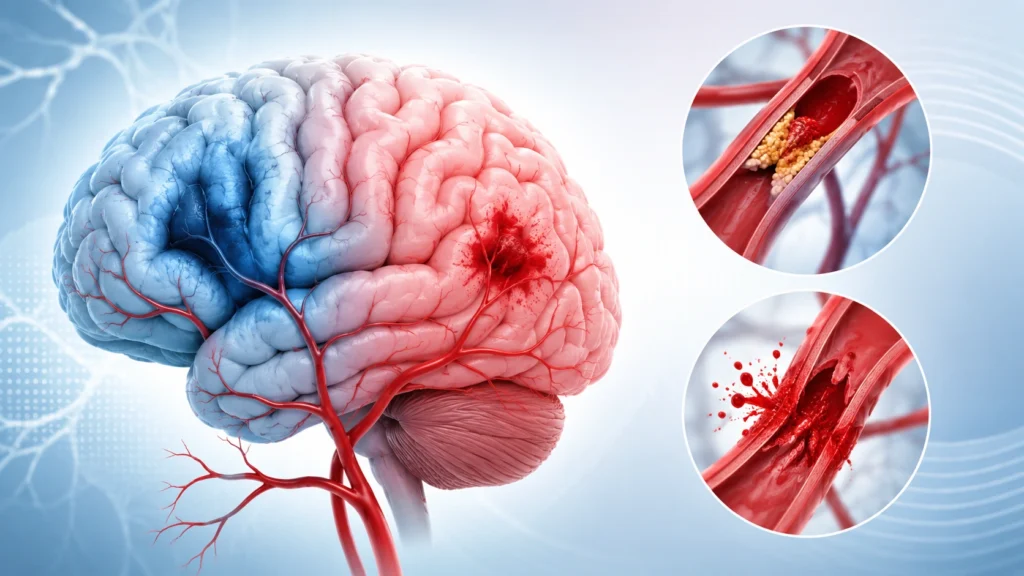
Stroke is one of the most serious medical emergencies that can affect the brain. It happens when blood flow to a part of the brain is suddenly blocked or when a blood vessel in the brain bursts. In both situations, brain cells begin to die because they are not getting enough oxygen and nutrients. This can lead to sudden weakness, difficulty speaking, facial drooping, vision problems, severe headache, loss of balance, or even loss of consciousness.
Many people think stroke only affects older adults, but it can happen at any age, especially in people with high blood pressure, diabetes, heart disease, smoking history, or high cholesterol. Stroke is a leading cause of disability and death worldwide. However, many stroke-related complications can be prevented or reduced if the patient receives immediate medical care. The faster the treatment, the better the chances of survival and recovery.
What is Stroke?
Stroke, often called a brain attack, happens when the blood supply to part of the brain is interrupted or reduced. This prevents brain tissue from getting oxygen and nutrients. Within minutes, brain cells begin to die, and the functions controlled by that area of the brain start to fail.
Stroke is a medical emergency. Every minute counts. Quick treatment can save brain cells, reduce disability, and improve the chances of recovery. Delayed treatment can lead to permanent damage or even death.
Stroke can affect different parts of the brain, and the symptoms depend on which area is involved. Some people may have weakness on one side of the body. Others may have trouble speaking, understanding, seeing, walking, or maintaining balance. Some may experience a sudden severe headache, confusion, or loss of consciousness.
Types of Stroke
Not all strokes are the same. The type of stroke depends on what interrupts the blood supply to the brain, and identifying it quickly is essential for starting the right treatment. While both types can be life-threatening, their causes and management differ.
Ischemic Stroke
- This is the most common type of stroke.
- It happens when a blood vessel supplying the brain becomes blocked.
- The blockage is usually caused by a blood clot or fatty deposits in the artery.
- The brain area supplied by that vessel does not get enough blood.
- Brain cells in that area begin to die due to lack of oxygen.
- This type accounts for the majority of all strokes.
Hemorrhagic Stroke
- This type happens when a blood vessel in the brain bursts or leaks.
- Blood spills into or around the brain tissue.
- This causes pressure on the brain and damages brain cells.
- It is often more severe than ischemic stroke.
- It can be caused by high blood pressure, weakened blood vessels, head injury, or certain medical conditions.
- This type requires urgent specialist care and often surgical intervention.
Transient Ischemic Attack or Mini-Stroke
- Sometimes people experience temporary stroke-like symptoms that go away within minutes or hours.
- This is called a transient ischemic attack or TIA.
- It is a warning sign that a major stroke may happen soon.
- It should never be ignored, even if symptoms disappear.
- Immediate medical evaluation is essential to prevent a full stroke.
Causes of Stroke
A stroke occurs when the blood supply to the brain is interrupted or when a blood vessel in the brain ruptures. Without enough oxygen and nutrients, brain cells begin to die within minutes, making immediate medical attention critical. Understanding the causes and risk factors can help reduce the risk of stroke and support early prevention.
Causes of Ischemic Stroke
- Blood clots forming in brain arteries.
- Clots traveling from the heart to the brain.
- Narrowing of arteries due to cholesterol buildup.
- Atrial fibrillation or irregular heart rhythm.
- Heart valve problems.
- Severe carotid artery disease.
- Blood clotting disorders.
- Inflammation of blood vessels.
- Infection-related clot formation.
- Dehydration leading to thicker blood.
Causes of Hemorrhagic Stroke
- Long-standing uncontrolled high blood pressure.
- Weakened blood vessel walls.
- Aneurysm rupture.
- Abnormal blood vessel formations.
- Head injury.
- Use of blood thinning medicines without proper monitoring.
- Bleeding disorders.
- Drug abuse affecting blood vessels.
- Severe liver disease affecting clotting.
- Tumors causing bleeding in the brain.
Risk Factors for Stroke
A stroke can happen to anyone, but some people are at a higher risk due to certain health conditions and lifestyle habits. Knowing these risk factors can help you take early steps to protect your brain and reduce your chances of having a stroke.
Medical risk factors
- High blood pressure.
- Diabetes.
- High cholesterol.
- Heart disease.
- Atrial fibrillation.
- Previous stroke or TIA.
- Obesity.
- Sleep apnea.
- Chronic kidney disease.
- Blood clotting disorders.
Lifestyle risk factors
- Smoking.
- Excessive alcohol use.
- Physical inactivity.
- Unhealthy diet.
- Drug abuse.
- Chronic stress.
- Poor sleep habits.
Other risk factors
- Age, with risk increasing as people get older.
- Family history of stroke.
- Gender, with some differences in risk patterns.
- Pregnancy and postpartum period in some women.
- Use of certain hormonal medicines.
- Ethnic and genetic factors.
Warning Signs and Symptoms
Stroke symptoms usually appear suddenly and should never be ignored. Acting quickly can reduce the risk of permanent brain damage and improve the chances of recovery. If you notice any warning signs, seek emergency medical care immediately.
Common stroke symptoms
- Sudden weakness or numbness on one side of the body.
- Facial drooping or uneven smile.
- Difficulty speaking or slurred speech.
- Trouble understanding what others are saying.
- Sudden vision problems in one or both eyes.
- Sudden severe headache with no known cause.
- Loss of balance or coordination.
- Dizziness or difficulty walking.
- Confusion or altered consciousness.
- Difficulty swallowing.
How to check for stroke quickly
- Ask the person to smile and check if one side of the face droops.
- Ask them to raise both arms and see if one arm drifts down.
- Ask them to repeat a simple sentence and listen for slurred or strange speech.
- If any of these are abnormal, call emergency services immediately.
- Note the time when symptoms started.
- Do not wait to see if symptoms improve.
Symptoms that need emergency care
- Sudden severe headache.
- Loss of consciousness.
- Severe weakness.
- Inability to speak.
- Sudden vision loss.
- Difficulty breathing.
- Severe confusion.
- Seizure during stroke symptoms.
Stroke in Different Age Groups
Although stroke is more common in older adults, it can happen at any age. The symptoms are often similar, but the causes and risk factors may differ in children, young adults, and older people. Recognizing the warning signs early is important for timely treatment and better recovery.
Stroke in older adults
- More common due to long-standing medical conditions.
- Often associated with high blood pressure, diabetes, or heart disease.
- Recovery may take longer due to other health issues.
- Higher risk of complications.
- Rehabilitation needs may be more complex.
Stroke in younger adults
- May happen due to heart problems, clotting disorders, or lifestyle factors.
- Often surprising because people do not expect stroke at a young age.
- May be linked to smoking, drug use, or untreated medical conditions.
- Early recognition is still critical.
- Long-term recovery and lifestyle changes are important.
Stroke in children
- Less common but can occur.
- May be related to heart defects, infection, or blood disorders.
- Symptoms may be subtle or mistaken for other problems.
- Requires specialized pediatric care.
- Early rehabilitation can help with development.
How is Stroke Diagnosed?
A stroke is a medical emergency, so early diagnosis is critical. Doctors use your symptoms, physical examination, and imaging tests to identify the type of stroke and begin treatment as quickly as possible.
Initial assessment
- Rapid evaluation of symptoms.
- Checking blood pressure, pulse, and oxygen levels.
- Neurological examination.
- Determining the time symptoms started.
- Assessing airway, breathing, and circulation.
Imaging tests
- CT scan of the brain to check for bleeding or stroke changes.
- MRI scan for detailed brain imaging.
- Blood vessel imaging to look for blockages or weak vessels.
- Sometimes repeat imaging to monitor changes.
Other tests
- Blood tests to check sugar, clotting, and organ function.
- ECG to check heart rhythm.
- Echocardiogram to look for heart clots.
- Carotid ultrasound to check neck arteries.
- Additional tests based on patient history and findings.
Why fast diagnosis matters
- Ischemic stroke treatment works best when given early.
- Hemorrhagic stroke needs quick identification to prevent worsening bleeding.
- Delayed diagnosis can lead to permanent brain damage.
- Early treatment improves recovery chances.
- Time from symptom onset to treatment is a key factor in outcome.
Emergency Treatment for Stroke
A stroke is a medical emergency where every minute matters. Getting immediate treatment can help restore blood flow to the brain, reduce brain damage, and improve the chances of recovery. The sooner treatment begins, the better the outcome.
Treatment for Ischemic Stroke
- Immediate evaluation to confirm the type of stroke.
- Thrombolytic medicine may be given to dissolve the clot if within the treatment window.
- This treatment is time-sensitive and works best when given early.
- Blood thinners may be used in some cases.
- Blood pressure, sugar, and oxygen levels are carefully managed.
- Some patients may need procedures to remove the clot mechanically.
- Hospital monitoring is essential in the first hours and days.
Treatment for Hemorrhagic Stroke
- Immediate control of blood pressure.
- Stopping or reversing blood thinners if the patient is on them.
- Careful monitoring in a specialized unit.
- Management of brain swelling and pressure.
- Surgical intervention may be needed to remove blood or repair the vessel.
- Some patients may need procedures to drain fluid or reduce pressure.
- Intensive care support may be required.
Supportive care in the emergency phase
- Airway and breathing support if needed.
- Fluid and electrolyte management.
- Prevention of complications such as infection or clots.
- Early assessment for rehabilitation needs.
- Family communication and support.
Hospital Management After Stroke
Recovery doesn’t end after emergency treatment. Once the patient is stable, hospital care focuses on preventing complications, monitoring recovery, and helping the brain and body heal.
Monitoring and stabilization
- Continuous monitoring of vital signs.
- Neurological checks to detect changes.
- Blood sugar and blood pressure control.
- Prevention of complications like pneumonia or bed sores.
- Early mobilization when safe.
Medication management
- Blood thinners or antiplatelet medicines for ischemic stroke.
- Blood pressure medicines.
- Cholesterol-lowering medicines.
- Diabetes management.
- Medicines to prevent seizures if needed.
- Pain and symptom control.
Prevention of complications
- Early movement to prevent clots.
- Swallowing assessment to prevent aspiration.
- Skin care to prevent pressure injuries.
- Infection prevention measures.
- Bowel and bladder care.
- Nutrition support.
Rehabilitation After Stroke
Recovery doesn’t end when you leave the hospital. Stroke rehabilitation helps you regain strength, improve movement, and become more independent in your daily life. Starting rehabilitation early and staying consistent can make a significant difference in recovery.
Goals of rehabilitation
- Regain strength and movement.
- Improve balance and walking.
- Restore speech and communication.
- Improve swallowing function.
- Enhance daily living skills.
- Support emotional and cognitive recovery.
- Help the patient return to normal life as much as possible.
Types of rehabilitation
- Physical therapy for movement and strength.
- Occupational therapy for daily activities.
- Speech and language therapy for communication and swallowing.
- Cognitive therapy for memory and thinking.
- Psychological support for mood and adjustment.
- Social support for family and caregivers.
Recovery timeline
- Recovery varies from person to person.
- Some improvement may happen in weeks.
- Continued progress can occur over months.
- Some patients need long-term support.
- Early and consistent rehabilitation gives the best results.
Long-Term Care and Support
Long-term care focuses on helping stroke survivors recover safely and live independently. Regular rehabilitation, medical monitoring, and emotional support are key to achieving the best possible recovery.
Long-term care needs
- Continued medication for blood pressure, cholesterol, and clot prevention.
- Regular follow-up with doctors.
- Ongoing rehabilitation if needed.
- Home modifications for safety.
- Caregiver support and training.
- Emotional and mental health support.
Lifestyle changes after stroke
- Healthy diet with less salt and fat.
- Regular physical activity as advised.
- Stopping smoking completely.
- Limiting or avoiding alcohol.
- Weight management.
- Stress management.
- Good sleep habits.
Support for caregivers
- Education about stroke and recovery.
- Training on how to assist safely.
- Emotional support for caregiver stress.
- Guidance on when to seek medical help.
- Connection to support groups if available.
Complications of Stroke
Stroke can lead to various complications, especially if treatment is delayed or recovery is incomplete.
Physical complications
- Permanent weakness or paralysis.
- Difficulty walking.
- Muscle stiffness or spasticity.
- Joint problems.
- Chronic pain.
- Fatigue.
- Swallowing problems.
Communication and cognitive complications
- Speech difficulties.
- Language problems.
- Memory issues.
- Concentration problems.
- Difficulty planning or organizing.
- Emotional changes.
Other complications
- Depression or anxiety.
- Seizures.
- Infections such as pneumonia.
- Blood clots in legs or lungs.
- Bladder and bowel problems.
- Skin breakdown.
- Increased risk of another stroke.
Prevention of Stroke
While not every stroke can be prevented, many can be avoided by making healthy lifestyle choices and managing medical conditions early. Small changes today can go a long way in protecting your brain and reducing the risk of stroke in the future.
Medical prevention
- Control high blood pressure.
- Manage diabetes effectively.
- Treat high cholesterol.
- Take prescribed medicines regularly.
- Manage heart conditions such as atrial fibrillation.
- Regular health check-ups.
- Follow-up after TIA or previous stroke.
Lifestyle prevention
- Eat a balanced diet rich in fruits, vegetables, and whole grains.
- Reduce salt and saturated fat intake.
- Exercise regularly as advised by a doctor.
- Maintain a healthy weight.
- Stop smoking.
- Limit alcohol consumption.
- Manage stress effectively.
- Get adequate sleep.
Special prevention advice
- People with previous stroke need strict risk factor control.
- TIA patients should be evaluated urgently.
- Young stroke patients need thorough investigation.
- Women with specific risk factors need tailored advice.
- Family history should prompt early screening.
When to Seek Emergency Help?
Time is critical in stroke. Do not wait to see if symptoms improve.
- Sudden weakness or numbness occurs on one side.
- Facial drooping appears suddenly.
- Speech becomes slurred or difficult.
- Sudden vision loss or double vision happens.
- A severe headache occurs without known cause.
- Balance is lost suddenly.
- Confusion or altered consciousness develops.
- Symptoms appear even if they seem mild.
Why Choose Rama Hospital for Stroke Care?
Stroke requires fast, expert, and coordinated care. A hospital with experienced specialists, advanced imaging, and emergency treatment capability can make a significant difference in outcomes.
- Immediate access to emergency evaluation.
- Rapid imaging and diagnosis.
- Availability of time-sensitive treatments.
- Specialist neurological and critical care support.
- Rehabilitation services for recovery.
- Long-term follow-up and prevention planning.
Frequently Asked Questions (FAQs)
1. What are the early signs of a stroke?
Common early signs include sudden weakness or numbness on one side of the body, difficulty speaking, blurred vision, dizziness, or a severe headache. Seek emergency medical care immediately if these symptoms appear.
2. Can a stroke be prevented?
Yes, many strokes can be prevented by controlling blood pressure, managing diabetes, quitting smoking, exercising regularly, and eating a healthy diet.
3. Is a stroke a medical emergency?
Yes. A stroke requires immediate treatment. Getting medical help within the first few hours can significantly improve recovery and reduce the risk of permanent brain damage.
4. Who is at higher risk of having a stroke?
People with high blood pressure, diabetes, high cholesterol, heart disease, obesity, or a family history of stroke are at a higher risk. Smoking and excessive alcohol consumption also increase the risk.
5. Can young adults have a stroke?
Yes. Although strokes are more common in older adults, they can also occur in younger people due to conditions such as heart disorders, uncontrolled hypertension, or certain lifestyle factors.
6. How is a stroke diagnosed?
Doctors usually diagnose a stroke using a physical examination, brain imaging tests like a CT scan or MRI, and blood tests to determine the type and severity of the stroke.
7. Can a person recover completely after a stroke?
Recovery varies from person to person. With early treatment, rehabilitation, and ongoing therapy, many people regain their independence and improve their quality of life.
8. When should I see a doctor for stroke symptoms?
Don’t wait to see if symptoms improve. If you notice sudden weakness, difficulty speaking, facial drooping, or vision changes, call emergency medical services immediately. Early treatment can save brain function and lives.
Conclusion
The most important thing to remember is that every minute counts. Recognizing the warning signs early and seeking immediate medical attention can significantly improve the chances of recovery and reduce the risk of permanent disability. Delaying treatment can lead to long-term complications that affect mobility, speech, memory, and independence.
While not every stroke can be prevented, many risk factors, such as high blood pressure, diabetes, high cholesterol, smoking, obesity, and an inactive lifestyle, can be managed through healthy habits and regular medical check-ups. Staying physically active, eating a balanced diet, controlling chronic health conditions, and avoiding tobacco can greatly reduce your risk.
If you or someone around you experiences symptoms of a stroke, do not wait for them to improve on their own. Call emergency medical services immediately. Early diagnosis and prompt treatment can save brain function, improve recovery, and, most importantly, save lives.