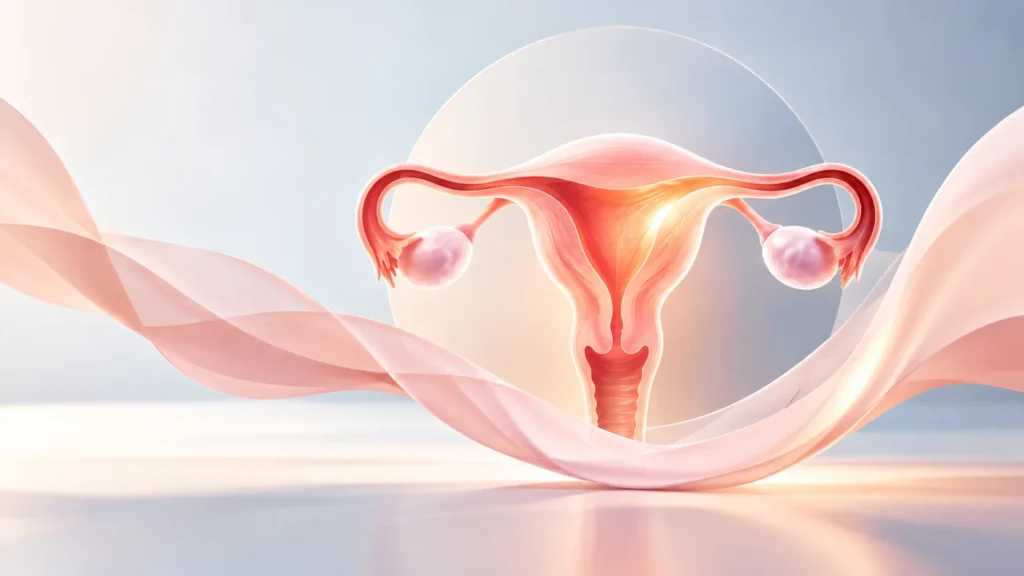
Uterine cancer, also called endometrial cancer, is a type of cancer that starts in the lining of the uterus, known as the endometrium. It is one of the most common cancers of the female reproductive system. It usually affects women after menopause, but it can also occur in younger women, especially those with hormonal imbalance, obesity, or certain genetic conditions.
The most common early sign of uterine cancer is abnormal bleeding. This may appear as bleeding after menopause, very heavy periods, bleeding between periods, or watery discharge. Many women ignore these symptoms, thinking they are due to hormonal changes, stress, or approaching menopause. However, any abnormal bleeding after menopause should never be ignored and must be evaluated by a doctor.
What is Uterine (Endometrial) Cancer?
Uterine cancer is a disease in which abnormal cells in the uterus grow uncontrollably and can form a tumor. Most uterine cancers start in the endometrium, which is the inner lining of the uterus that thickens and sheds each month during the menstrual cycle. When the cells in this lining grow abnormally, they can become cancerous.
The uterus is a pear-shaped organ in the lower abdomen where a baby grows during pregnancy. It has thick muscular walls and an inner lining that responds to hormones such as estrogen and progesterone. When these hormones are not balanced for a long time, the lining can become too thick and increase the risk of cancer.
Uterine cancer is different from cervical cancer, which starts in the lower part of the uterus near the vagina. Uterine cancer usually grows slowly and is often found at an early stage because it causes bleeding symptoms early. This makes treatment more effective in many cases.
Types of Uterine Cancer
Uterine cancer is not a single disease. There are different types based on the cells involved and how the cancer behaves.
Main types include:
- Endometrioid adenocarcinoma, which is the most common type and usually grows slowly.
- Serous carcinoma, which is less common and tends to be more aggressive.
- Clear cell carcinoma, which is rare and may behave more aggressively.
- Carcinosarcoma, which has features of both cancer and sarcoma and is more serious.
- Squamous cell carcinoma of the uterus, which is rare.
- Mixed or undifferentiated types, which may need more detailed evaluation.
Based on grade and spread
- Low-grade tumors, which grow slowly and are less likely to spread quickly.
- High-grade tumors, which grow faster and may spread earlier.
- Localized cancer, which is limited to the uterus.
- Regional cancer, which has spread to nearby lymph nodes or tissues.
- Distant spread, which has reached other organs such as lungs, liver, or bones.
Understanding the type and grade helps doctors decide the best treatment plan and predict outcomes.
Causes of Uterine Cancer
The exact cause of uterine cancer is not always clear, but it is strongly linked to hormonal imbalance, especially excess estrogen without enough progesterone. When the endometrium is exposed to high estrogen for a long time, the cells can grow abnormally and become cancerous.
Common causes and contributing factors
- Long-term exposure to estrogen without progesterone.
- Obesity, which increases estrogen production in fat tissue.
- Hormone therapy with estrogen alone after menopause.
- Irregular or absent ovulation, as seen in polycystic ovary syndrome.
- Late menopause or early first period.
- Never having been pregnant.
- Diabetes and insulin resistance.
- Certain genetic conditions such as Lynch syndrome.
- Tamoxifen use for breast cancer treatment.
- Age, with most cases occurring after menopause.
Why hormonal balance matters
Estrogen makes the endometrial lining grow, while progesterone helps stabilize and shed it. When estrogen is high and progesterone is low, the lining can become too thick. Over time, this can lead to abnormal cell growth and increase cancer risk.
Risk Factors for Uterine Cancer
Some women are more likely to develop uterine cancer than others.
Higher-risk groups
- Women over fifty, especially after menopause.
- Women who are overweight or obese.
- Women with irregular periods or no ovulation.
- Women with polycystic ovary syndrome.
- Women who have never been pregnant.
- Women with diabetes or insulin resistance.
- Women on estrogen-only hormone therapy.
- Women with a family history of uterine, ovarian, or colon cancer.
- Women with Lynch syndrome or other genetic conditions.
- Women who started periods early or reached menopause late.
Why risk increases in these groups
- More menstrual cycles mean more exposure to estrogen.
- Obesity increases estrogen production in the body.
- Lack of ovulation reduces progesterone exposure.
- Genetic conditions can affect cell repair and growth control.
- Hormone therapy without progesterone can overstimulate the lining.
Symptoms of Uterine Cancer
Symptoms can vary, but abnormal bleeding is the most common and important sign.
Common symptoms include:
- Bleeding after menopause.
- Very heavy or prolonged periods.
- Bleeding between periods.
- Watery or blood-stained vaginal discharge.
- Pelvic pain or pressure.
- Pain during intercourse.
- Unexplained weight loss in advanced cases.
- Fatigue or weakness due to anemia.
- Lower abdominal discomfort.
- Difficulty passing urine in advanced cases.
Warning signs that need medical attention
- Any bleeding after menopause.
- Sudden change in menstrual pattern.
- Bleeding between periods for more than one cycle.
- Persistent pelvic pain or pressure.
- Unexplained weight loss with pelvic symptoms.
- Postmenopausal spotting, even if light.
Uterine Cancer in Different Age Groups
Uterine cancer can affect women of different ages, but the pattern and risk may vary.
In premenopausal women
- May be linked to obesity, PCOS, or hormonal imbalance.
- Symptoms may be mistaken for irregular periods.
- Fertility-sparing treatment may be considered in selected cases.
In perimenopausal women
- Bleeding changes may be ignored as normal transition.
- Risk increases with age and weight gain.
- Early evaluation is important to avoid delay.
In postmenopausal women
- Most common age group for uterine cancer.
- Any bleeding is abnormal and must be checked.
- Treatment is usually more straightforward as childbearing is complete.
How is Uterine Cancer Diagnosed?
Diagnosis is based on symptoms, pelvic examination, imaging, and tissue testing.
Diagnostic steps
- Detailed history of bleeding pattern and menstrual history.
- Review of risk factors such as obesity, diabetes, and family history.
- Pelvic examination to check uterus size and tenderness.
- Transvaginal ultrasound to measure endometrial thickness.
- Endometrial biopsy to take a small sample of the lining.
- Hysteroscopy and dilation and curettage if more tissue is needed.
- Imaging such as CT or MRI to check spread in selected cases.
- Blood tests to assess overall health and anemia.
Why diagnosis matters
Early diagnosis allows treatment at an earlier stage, which improves outcomes. Abnormal bleeding should never be ignored, especially after menopause. Tissue diagnosis is essential to confirm cancer and plan treatment.
Treatment for Uterine Cancer
Treatment depends on the type, stage, grade, and the patient’s age and overall health.
Main treatment options
- Surgery to remove the uterus and sometimes nearby tissues.
- Radiation therapy to kill cancer cells in the pelvic area.
- Chemotherapy for more advanced or high-risk cancers.
- Hormonal therapy for selected cases.
- Targeted therapy in certain situations.
- Supportive care for symptoms and recovery.
1. Surgery
Surgery is the main treatment for most uterine cancers.
- Hysterectomy, which is removal of the uterus.
- Removal of fallopian tubes and ovaries in many cases.
- Removal of nearby lymph nodes if needed.
- Minimally invasive or open surgery depending on the case.
2. Radiation therapy
Radiation may be used after surgery or in selected cases instead of surgery.
- External beam radiation to the pelvic area.
- Internal radiation or brachytherapy in some cases.
- Helps reduce the risk of cancer coming back.
3. Chemotherapy
Chemotherapy uses medicines to kill cancer cells.
- Used for advanced or high-risk cancers.
- Given in cycles with rest periods.
- May be combined with radiation in some cases.
4. Hormonal therapy
Hormonal therapy may be used in selected patients.
- Progestin therapy for early, low-grade cancer in young women who wish to preserve fertility.
- Hormone-blocking medicines in advanced cases.
- Requires close monitoring and follow-up.
5. Supportive care
Supportive care helps manage symptoms and side effects.
- Pain control.
- Treatment for anemia.
- Nutrition support.
- Emotional and psychological support.
- Rehabilitation after surgery.
Recovery After Treatment
Recovery depends on the stage of cancer, type of treatment, and overall health.
Recovery after surgery
- Hospital stay of a few days in many cases.
- Gradual return to normal activity over weeks.
- Avoid heavy lifting and strenuous activity initially.
- Follow-up visits to monitor healing.
Recovery after radiation or chemotherapy
- Fatigue is common but improves over time.
- Skin changes or bowel changes may occur with radiation.
- Nausea or hair changes may occur with chemotherapy.
- Regular blood tests to monitor recovery.
Long-term follow-up
- Regular check-ups to monitor for recurrence.
- Pelvic examination and imaging as advised.
- Management of menopause symptoms if ovaries are removed.
- Bone health and heart health monitoring.
- Emotional support and counseling if needed.
Possible Complications
Uterine cancer and its treatment can lead to complications, especially if diagnosed late.
Complications of untreated cancer
- Spread to nearby organs such as bladder or bowel.
- Spread to lymph nodes, lungs, liver, or bones.
- Severe anemia due to bleeding.
- Pain and discomfort.
- Reduced quality of life.
Complications of treatment
- Surgical risks such as infection or bleeding.
- Early menopause if ovaries are removed.
- Bone thinning over time.
- Bowel or bladder changes with radiation.
- Fatigue and weakness with chemotherapy.
Why early treatment matters
Early-stage cancer is easier to treat and has better outcomes. Delaying evaluation for abnormal bleeding can allow the cancer to grow and spread, making treatment more complex.
When to See a Doctor?
Medical evaluation is important for women with abnormal bleeding or pelvic symptoms.
- Bleeding after menopause.
- Very heavy or prolonged periods.
- Bleeding between periods.
- Watery or blood-stained discharge.
- Pelvic pain or pressure.
- Unexplained weight loss.
- Family history of uterine or related cancers.
- Long-standing irregular periods with obesity or PCOS.
Prevention of Uterine Cancer
Not all cases can be prevented, but risk can be reduced.
Prevention pointers
- Maintain a healthy weight.
- Exercise regularly.
- Manage diabetes and insulin resistance.
- Use hormone therapy only under medical supervision.
- Treat irregular periods and PCOS early.
- Consider combined hormonal pills if suitable.
- Get evaluated for abnormal bleeding early.
- Discuss genetic testing if there is strong family history.
For women with high risk
- Regular gynecologic check-ups.
- Early evaluation of any bleeding change.
- Discussion of risk-reducing options with a specialist.
Why Choose Rama Hospital for Uterine Cancer Treatment?
Uterine cancer requires expert gynecologic oncology care, advanced surgery, and supportive treatment. A hospital with experienced specialists can make a major difference in outcomes.
- Expert evaluation by gynecologic oncology specialists.
- Advanced imaging and pathology support.
- Minimally invasive and open surgical options.
- Radiation and chemotherapy support when needed.
- Long-term follow-up and survivorship care.
- Coordinated care for complications and recovery.
Frequently Asked Questions (FAQs)
Is uterine cancer the same as cervical cancer?
No, uterine cancer starts in the lining of the uterus, while cervical cancer starts in the lower part of the uterus near the vagina. Symptoms, screening, and treatment are different for each condition.
Can uterine cancer be cured?
Many cases of uterine cancer are curable, especially when found early. Treatment usually involves surgery, and sometimes radiation, chemotherapy, or hormonal therapy. Early diagnosis improves the chances of successful treatment.
What is the first sign of uterine cancer?
The first sign is often abnormal bleeding, such as bleeding after menopause, very heavy periods, or bleeding between periods. Any postmenopausal bleeding should be evaluated by a doctor without delay.
Who is at highest risk for uterine cancer?
Women who are overweight, have irregular periods, PCOS, diabetes, or long-term estrogen exposure are at higher risk. Women after menopause and those with certain genetic conditions also have increased risk.
Can young women get uterine cancer?
Yes, although it is more common after menopause, younger women can also develop uterine cancer, especially if they have obesity, PCOS, or hormonal imbalance. Early evaluation of abnormal bleeding is important at any age.
Is surgery always needed for uterine cancer?
Surgery is the main treatment for most cases, but not all. In selected young women with early, low-grade cancer who wish to preserve fertility, hormonal therapy may be considered under close supervision.
Can uterine cancer come back after treatment?
Yes, there is a risk of recurrence, especially in high-grade or advanced cases. Regular follow-up visits, imaging, and exams help detect any recurrence early and guide further treatment.
Conclusion
Uterine or endometrial cancer is a common but often treatable cancer of the female reproductive system. The most important warning sign is abnormal bleeding, especially after menopause. Many women ignore these symptoms, but early evaluation can lead to diagnosis at an early stage and better treatment outcomes.
The most important steps are prompt medical evaluation for abnormal bleeding, accurate diagnosis, appropriate treatment, and long-term follow-up. For women with increasing age, weight gain, irregular periods, or family history of cancer, awareness and early action can make a major difference. With the right care, many women recover well and return to normal life.
Rama Hospital can help evaluate uterine cancer symptoms, provide expert gynecologic oncology care, and offer a clear treatment plan that supports safe surgery, effective therapy, and long-term health.