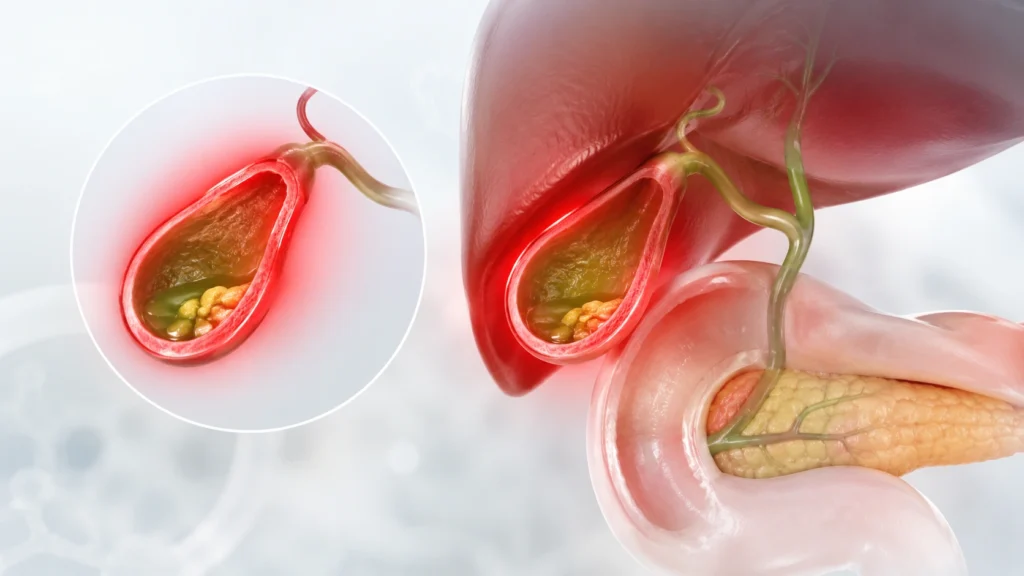
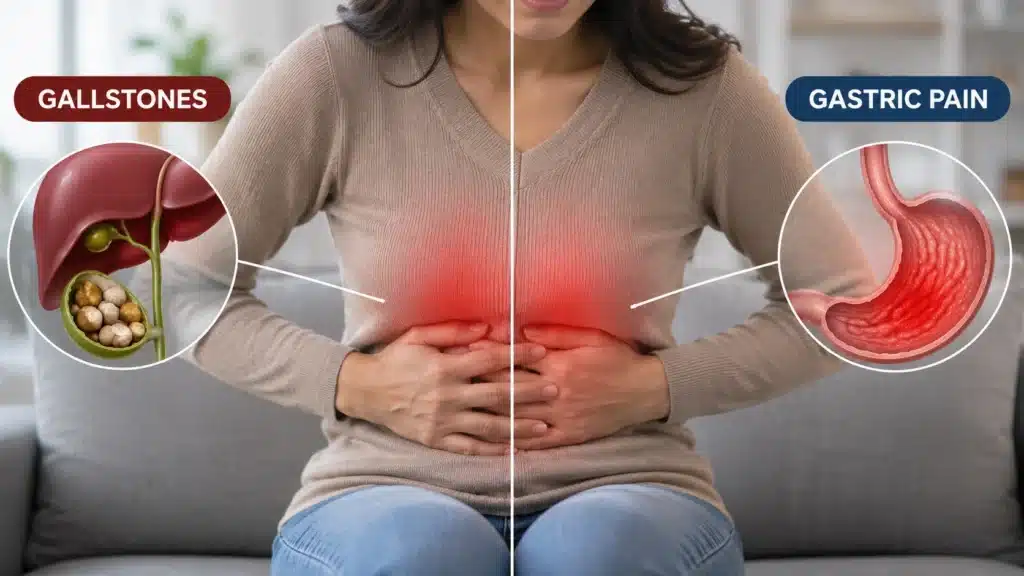
Gallbladder inflammation, also known as cholecystitis, is a painful condition that occurs when the gallbladder becomes inflamed. The gallbladder is a small organ located under the liver on the right side of the upper abdomen. Its main function is to store and release bile, a fluid that helps digest fats. When the flow of bile is blocked, usually by gallstones, the gallbladder can become swollen, irritated, and infected.
Cholecystitis can develop suddenly as acute cholecystitis or over a longer period as chronic cholecystitis. Acute cholecystitis often causes severe pain in the upper right abdomen, fever, nausea, and vomiting. Chronic cholecystitis may cause repeated episodes of milder pain, bloating, and digestive discomfort after fatty meals. If left untreated, gallbladder inflammation can lead to serious complications such as infection, perforation, or damage to nearby organs.
What is Gallbladder Inflammation (Cholecystitis)?
Gallbladder inflammation, or cholecystitis, happens when the gallbladder becomes irritated and swollen due to blockage, infection, or other causes. In most cases, the problem begins when a gallstone blocks the tube that carries bile out of the gallbladder. Bile builds up inside the organ, causing pressure, pain, and inflammation.
The gallbladder is not essential for life, but it plays an important role in digestion. When it becomes inflamed, a person may experience severe pain, fever, nausea, and difficulty digesting fatty foods. Acute cholecystitis is a medical emergency that often requires hospital care and sometimes surgery. Chronic cholecystitis may cause repeated discomfort and long-term digestive issues.
Types of Gallbladder Inflammation
Cholecystitis can be classified based on how quickly it develops, how long it lasts, and what causes it.
Based on onset and duration
- Acute cholecystitis, which develops suddenly and causes severe symptoms over hours to days.
- Chronic cholecystitis, which develops over time with repeated episodes of inflammation and milder symptoms.
- Recurrent cholecystitis, where acute episodes happen multiple times.
Based on cause
- Calculous cholecystitis, caused by gallstones blocking bile flow.
- Acalculous cholecystitis, which occurs without gallstones, often in critically ill patients.
- Infectious cholecystitis, caused by bacterial infection.
- Chemical cholecystitis, caused by irritation from concentrated bile.
Based on severity
- Mild cholecystitis, with localized pain and minimal systemic symptoms.
- Moderate cholecystitis, with more intense pain, fever, and elevated inflammatory markers.
- Severe cholecystitis, with complications such as infection, perforation, or organ dysfunction.
Causes of Gallbladder Inflammation
The most common cause of cholecystitis is gallstones, but other factors can also contribute.
Common causes include:
- Gallstones blocking the cystic duct or common bile duct.
- Bile buildup due to obstruction.
- Bacterial infection of the gallbladder.
- Reduced blood flow to the gallbladder in critically ill patients.
- Tumors or growths pressing on bile ducts.
- Sludge or thickened bile causing blockage.
- Prolonged fasting or rapid weight loss.
- Certain medications affecting bile composition.
- Diabetes and metabolic conditions.
- Pregnancy-related changes in bile flow.
Why gallstones form: Gallstones develop when substances in bile, such as cholesterol or bilirubin, become too concentrated and form solid particles. These stones can remain in the gallbladder or move into the bile ducts. When a stone blocks the duct, bile cannot flow out, leading to pressure, pain, and inflammation.
Risk Factors for Gallbladder Inflammation
Some people are more likely to develop gallbladder inflammation than others.
Higher-risk groups
- Women, especially those who are pregnant or have had multiple pregnancies.
- People over the age of forty.
- Individuals with obesity or rapid weight loss.
- People with a family history of gallstones.
- Patients with diabetes or metabolic syndrome.
- Those with high cholesterol or triglycerides.
- People on certain medications such as hormone therapy.
- Individuals with liver disease or blood disorders.
- Patients who are critically ill or on prolonged intravenous nutrition.
- People with sedentary lifestyle and poor diet.
Why risk increases in these groups
- Hormonal changes can increase cholesterol in bile.
- Obesity increases cholesterol secretion into bile.
- Rapid weight loss can cause bile to become concentrated.
- Age-related changes affect gallbladder function.
- Diabetes and metabolic issues alter bile composition.
- Critical illness reduces gallbladder emptying and blood flow.
Symptoms of Gallbladder Inflammation
Symptoms can vary depending on whether the condition is acute or chronic.
Symptoms of acute cholecystitis
- Severe pain in the upper right abdomen.
- Pain that may spread to the right shoulder or back.
- Fever and chills.
- Nausea and vomiting.
- Loss of appetite.
- Tenderness when touching the upper right abdomen.
- Pain that worsens after eating, especially fatty foods.
- Bloating and indigestion.
- General weakness and fatigue.
Symptoms of chronic cholecystitis
- Recurrent episodes of upper abdominal discomfort.
- Bloating after meals.
- Nausea without severe vomiting.
- Intolerance to fatty or oily foods.
- Mild pain that comes and goes.
- Digestive upset and gas.
- Occasional heartburn or acid reflux.
Emergency warning signs
- Severe, unrelenting abdominal pain.
- High fever with chills.
- Persistent vomiting.
- Yellowing of the skin or eyes (jaundice).
- Dark urine and pale stools.
- Confusion or extreme weakness.
- Signs of infection spreading to the bloodstream.
Gallbladder Inflammation in Different Groups
Cholecystitis can affect people of different ages and health conditions, but the pattern may vary.
In women
- More common due to hormonal factors.
- Pregnancy can increase risk due to changes in bile flow.
- Hormone therapy or birth control pills may contribute.
In men
- Often associated with obesity, diabetes, or alcohol use.
- May present with more severe complications if diagnosis is delayed.
In older adults
- Symptoms may be less typical or more subtle.
- Higher risk of complications such as infection or perforation.
- May have other health conditions that complicate treatment.
In children
- Less common but can occur with certain blood disorders or congenital issues.
- May present with abdominal pain, fever, and vomiting.
- Requires careful evaluation to rule out other causes.
How is Gallbladder Inflammation Diagnosed?
Diagnosis is based on symptoms, physical examination, blood tests, and imaging studies.
Diagnostic steps
- Detailed history of pain pattern and digestive symptoms.
- Physical examination to check for tenderness in the upper right abdomen.
- Assessment of fever, pulse, and blood pressure.
- Blood tests to check for infection and liver function.
- Imaging tests to visualize the gallbladder and bile ducts.
Common tests that may be done
- Complete blood count to check for elevated white blood cells.
- Liver function tests to assess bile duct involvement.
- Pancreatic enzymes to rule out pancreatitis.
- Ultrasound of the abdomen to look for gallstones and gallbladder wall thickening.
- CT scan for complicated cases or to assess surrounding organs.
- HIDA scan to evaluate gallbladder function.
- MRCP or ERCP if bile duct stones are suspected.
Why diagnosis matters: Early diagnosis helps prevent complications such as infection, perforation, or spread of inflammation. It also guides whether medical management or surgery is needed.
Treatment for Gallbladder Inflammation
Treatment depends on the severity of symptoms, the presence of complications, and the patient’s overall health.
Treatment for acute cholecystitis
- Hospital admission for monitoring and pain control.
- Intravenous fluids to maintain hydration.
- Antibiotics to treat or prevent infection.
- Pain relief medicines.
- Fasting initially to rest the gallbladder.
- Gradual introduction of liquids and soft foods.
- Surgery to remove the gallbladder in most cases.
Treatment for chronic cholecystitis
- Dietary modification to reduce fatty foods.
- Medicines for pain and digestive symptoms.
- Evaluation for elective gallbladder removal.
- Management of underlying risk factors such as obesity or diabetes.
1. Medical management
In mild cases or when surgery is not immediately possible, medical treatment may be used.
- Antibiotics to control infection.
- Pain relievers and anti-inflammatory medicines.
- Anti-nausea medicines if vomiting is present.
- Intravenous fluids for dehydration.
- Close monitoring for signs of improvement or worsening.
2. Surgical treatment (Cholecystectomy)
Surgery to remove the gallbladder is the most common and effective treatment for cholecystitis.
- Laparoscopic cholecystectomy, which is minimally invasive with small incisions.
- Open cholecystectomy, which may be needed in complicated cases.
- Timing may be urgent for acute cases or elective for chronic cases.
- Most patients recover well and can digest normally without a gallbladder.
3. Supportive care
For patients who are not surgical candidates, supportive care may be provided.
- Long-term antibiotics if infection is recurrent.
- Drainage procedures in selected cases.
- Careful monitoring for complications.
- Dietary and lifestyle management.
Recovery After Treatment
Recovery depends on the type of treatment and the patient’s overall health.
Recovery after medical management
- Symptoms may improve within days.
- Risk of recurrence remains if gallstones are still present.
- Regular follow-up is important to monitor for future episodes.
Recovery after gallbladder surgery
- Most patients go home within one to two days after laparoscopic surgery.
- Mild pain at incision sites for a few days.
- Gradual return to normal diet over one to two weeks.
- Avoid heavy lifting for a few weeks as advised.
- Full recovery usually within two to four weeks.
Dietary adjustments after surgery
- Start with light, easily digestible foods.
- Gradually reintroduce normal diet.
- Some people may need to limit very fatty or fried foods initially.
- Most patients adapt well without long-term restrictions.
Possible Complications
Untreated or severe gallbladder inflammation can lead to serious complications.
Complications of acute cholecystitis
- Infection spreading to the bloodstream.
- Perforation or rupture of the gallbladder.
- Abscess formation around the gallbladder.
- Gangrene of the gallbladder wall.
- Bile duct obstruction and jaundice.
- Pancreatitis due to stone migration.
- Sepsis and organ failure in severe cases.
Complications of chronic cholecystitis
- Recurrent pain and digestive discomfort.
- Formation of larger or multiple gallstones.
- Increased risk of acute episodes.
- Long-term impact on quality of life.
Why complications happen: When bile flow is blocked, pressure builds up inside the gallbladder. This can damage the wall, allow bacteria to grow, and cause infection. If the inflammation spreads, it can affect nearby organs and the entire body.
When Should You See a Doctor?
Medical evaluation is important for people with symptoms suggestive of gallbladder problems.
- Recurrent pain in the upper right abdomen.
- Pain after eating fatty or oily foods.
- Nausea and vomiting with abdominal discomfort.
- Bloating and indigestion that does not improve.
- Fever with abdominal pain.
- Yellowing of the skin or eyes.
- Dark urine or pale stools.
Prevention of Gallbladder Inflammation
Not all cases can be prevented, but risk can be reduced.
- Maintain a healthy weight.
- Avoid rapid weight loss.
- Eat a balanced diet with adequate fiber.
- Limit fatty, fried, and processed foods.
- Stay hydrated with adequate water intake.
- Exercise regularly.
- Manage diabetes and cholesterol levels.
- Avoid prolonged fasting.
- Seek early care for digestive symptoms.
Dietary tips for gallbladder health
- Include more fruits, vegetables, and whole grains.
- Choose lean proteins such as fish, chicken, and legumes.
- Use healthy fats in moderation.
- Avoid large, heavy meals late at night.
- Eat regular meals instead of skipping.
Why Choose Rama Hospital for Gallbladder Inflammation Treatment?
Gallbladder inflammation can range from mild discomfort to a life-threatening emergency. A hospital with experienced gastroenterologists, surgeons, and critical care teams can make a major difference in outcomes.
- Expert evaluation by gastroenterology and surgical specialists.
- Advanced imaging for accurate diagnosis.
- Minimally invasive and open surgical options.
- Intensive care support for severe cases.
- Comprehensive post-operative care and follow-up.
- Coordinated management of complications.
Frequently Asked Questions (FAQs)
Is gallbladder inflammation serious?
Yes, it can be serious, especially if it becomes acute or infected. Without treatment, it can lead to complications such as perforation, abscess, or spread of infection. Early diagnosis and treatment are important.
Can cholecystitis be treated without surgery?
Mild cases may improve with antibiotics and supportive care, but gallstones often cause recurrence. Surgery to remove the gallbladder is the most effective long-term treatment for most patients.
What foods should be avoided with gallbladder problems?
Fatty, fried, oily, and processed foods should be limited. Large meals and heavy dinners may also trigger symptoms. A balanced diet with fiber and lean proteins is generally better tolerated.
Can gallbladder inflammation come back?
Yes, if gallstones remain and the gallbladder is not removed, inflammation can recur. This is why surgery is often recommended after an acute episode to prevent future problems.
How long does recovery take after gallbladder surgery?
Most patients recover within two to four weeks after laparoscopic surgery. Pain and discomfort usually improve within the first week. Full return to normal activities depends on individual healing.
Can you live without a gallbladder?
Yes, people can live normally without a gallbladder. Bile flows directly from the liver to the intestine. Most patients adapt well and digest food normally after recovery.
What are the warning signs of complications?
Warning signs include severe pain, high fever, jaundice, persistent vomiting, confusion, or rapid heartbeat. These require immediate medical attention to prevent serious outcomes.
Conclusion
Gallbladder inflammation, or cholecystitis, is a common and potentially serious condition that affects digestion and overall health. It often begins with gallstones blocking bile flow, leading to pain, fever, nausea, and digestive discomfort. While mild cases may improve with medical treatment, many patients benefit from gallbladder removal to prevent recurrence and complications.
The most important steps are proper diagnosis, timely treatment, and dietary and lifestyle support. For patients with recurrent abdominal pain, fever, or digestive issues, a medical evaluation can make a major difference. With the right care, most people recover well and return to normal life.
Rama Hospital can help evaluate gallbladder inflammation, identify the underlying cause, and provide a clear treatment plan that supports safe recovery and long-term digestive health.