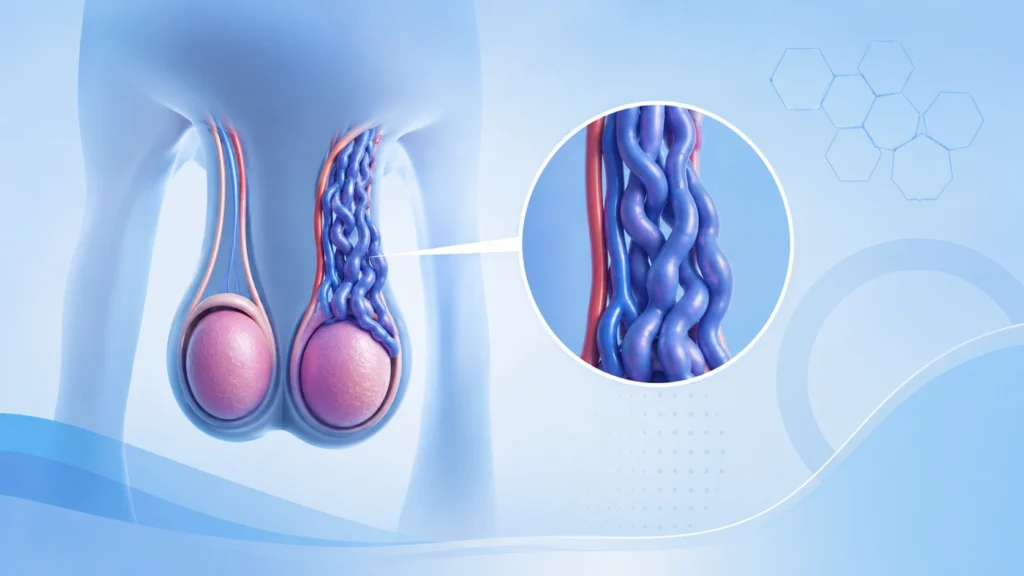
Varicocele is a common condition in men where the veins inside the scrotum become enlarged and swollen. These veins are similar to varicose veins that can appear in the legs. In this, the veins that drain blood from the testicles do not work properly, causing blood to pool and the veins to widen. This can lead to a heavy or dragging feeling in the scrotum, visible swelling, discomfort, and in some cases, effects on fertility.
Many men with varicocele have no symptoms and may only discover it during a routine check-up or fertility evaluation. Others may notice a lump, swelling, or discomfort that worsens after standing for long periods, physical activity, or during hot weather. Because this can affect sperm quality and testicular function in some men, it is an important condition to understand, especially for those planning a family.
What is Varicocele?
Varicocele is the enlargement of veins within the scrotum, specifically the pampiniform plexus, which is a network of veins that drain blood from the testicles. These veins normally help regulate testicular temperature and carry blood away from the testicles. When the valves inside these veins do not work properly, blood can flow backward and collect, causing the veins to widen and become twisted.
Varicocele is more common on the left side, but it can occur on both sides or, less commonly, only on the right. It often develops during adolescence and may become more noticeable over time. In many cases, it is harmless and does not need treatment. In others, it can cause pain, testicular shrinkage, or fertility problems.
The condition is usually not dangerous, but it can affect quality of life and reproductive health in some men. Understanding when this needs attention and when it can be safely observed is an important part of care.
Types of Varicocele
Varicocele can be classified in different ways based on how it is detected, its location, and whether it is primary or secondary.
Based on detection
- Clinical varicocele, which can be felt during physical examination.
- Subclinical varicocele, which cannot be felt but is seen on ultrasound.
- Grade one, which is small and only felt with special maneuvers.
- Grade two, which is moderate and easily felt on examination.
- Grade three, which is large and may be visible through the skin.
Based on location
- Left-sided varicocele, which is the most common type.
- Right-sided varicocele, which is less common and may need further evaluation.
- Bilateral varicocele, which affects both sides of the scrotum.
Based on cause
- Primary varicocele, which happens due to natural weakness in vein valves and anatomy.
- Secondary varicocele, which is caused by another problem such as a mass or blockage pressing on veins.
Causes of Varicocele
The exact cause of this is not always clear, but it is related to problems with blood flow and vein structure in the scrotum.
Common causes and contributing factors
- Weak or faulty valves inside the scrotal veins.
- Abnormal vein anatomy that makes blood flow less efficient.
- Increased pressure in the veins draining the testicles.
- Natural tendency for veins to widen over time.
- Genetic or family predisposition in some cases.
- Growth during adolescence that changes blood flow patterns.
- Rarely, a mass or swelling in the abdomen pressing on veins.
Why the left side is more common: The left testicular vein drains into the left kidney vein at a different angle and pressure compared to the right side. This makes the left side more prone to backflow and vein enlargement. That is why most varicoceles are left-sided or more prominent on the left.
Risk Factors for Varicocele
Some men are more likely to develop than others.
Higher-risk groups
- Adolescents and young adults, especially between ages fifteen and thirty.
- Men with a family history of varicocele.
- Men who stand for long periods regularly.
- Men with heavy physical work or weightlifting.
- Men with connective tissue weakness.
- Men being evaluated for infertility.
- Men with unexplained testicular pain or swelling.
Why risk increases in these groups
- Growth and hormonal changes during adolescence can affect vein development.
- Family history may suggest a genetic tendency for weaker vein valves.
- Prolonged standing increases pressure in scrotal veins.
- Heavy lifting can raise abdominal pressure and affect blood flow.
- Infertility evaluation often detects varicocele that was previously unnoticed.
Symptoms of Varicocele
Many men with varicocele have no symptoms at all. When symptoms do occur, they can range from mild discomfort to more noticeable pain or swelling.
Common symptoms
- A feeling of heaviness or dragging in the scrotum.
- Dull ache or pain in the scrotum or testicle.
- Swelling or enlarged veins that feel like a bag of worms.
- Discomfort that worsens after standing for long periods.
- Pain that increases during physical activity or hot weather.
- Relief of pain when lying down.
- Visible swelling in the scrotum in more severe cases.
- One testicle appearing smaller than the other.
- Fertility problems discovered during evaluation.
When symptoms are more noticeable
- After prolonged standing or walking.
- During or after exercise.
- In hot weather or after a hot bath.
- At the end of the day when fatigue sets in.
- During fertility assessment or routine check-up.
Varicocele and Fertility
Varicocele is one of the most common correctable causes of male infertility. Not all men with this have fertility problems, but the condition can affect sperm production and quality in some cases.
How varicocele may affect fertility
- Increased temperature in the scrotum due to pooled blood.
- Reduced oxygen supply to the testicles.
- Build-up of toxins or waste products in the veins.
- Hormonal changes affecting testicular function.
- Damage to sperm-producing cells over time.
Possible effects on sperm
- Lower sperm count.
- Reduced sperm movement or motility.
- Abnormal sperm shape or morphology.
- Increased sperm DNA damage.
- Overall reduced sperm quality.
Who should be evaluated?
- Men with known varicocele and difficulty conceiving.
- Men with abnormal semen analysis.
- Men with testicular pain and planning a family.
- Adolescents with varicocele and testicular size difference.
- Men with recurrent fertility issues despite normal female evaluation.
How is Varicocele Diagnosed?
Diagnosis is based on symptoms, physical examination, and imaging tests. Many cases are found during evaluation for infertility or scrotal discomfort.
Diagnostic steps
- Detailed history of symptoms and duration.
- Physical examination of the scrotum in standing and lying positions.
- Assessment of vein size and tenderness.
- Evaluation of testicular size and consistency.
- Semen analysis if fertility is a concern.
- Hormone tests if testicular function needs assessment.
- Ultrasound of the scrotum to confirm diagnosis and measure vein size.
Common tests that may be done
- Scrotal ultrasound with Doppler to assess blood flow.
- Semen analysis to evaluate sperm count, motility, and morphology.
- Hormone tests such as testosterone, FSH, and LH if needed.
- Additional imaging if a secondary cause is suspected.
Why diagnosis matters: Accurate diagnosis helps determine whether this is likely to cause problems. It also helps decide whether observation, medical management, or surgery is the best option. For men concerned about fertility, early evaluation can guide timely treatment.
Treatment for Varicocele
Treatment depends on symptoms, fertility goals, testicular size, and the grade of varicocele. Not all them need surgery.
Treatment for asymptomatic varicocele
- Observation and regular follow-up.
- Avoidance of prolonged standing when possible.
- Supportive underwear for comfort.
- Monitoring for any change in size or symptoms.
- Fertility evaluation if planning a family.
Treatment for symptomatic varicocele
- Pain management with supportive measures.
- Lifestyle changes to reduce discomfort.
- Consideration of surgery if pain is persistent.
- Evaluation of testicular size and function.
- Fertility assessment if relevant.
1. Conservative management
Many men with mild varicocele do not need surgery.
- Wearing supportive underwear or a scrotal support.
- Avoiding heavy lifting or straining.
- Taking breaks from prolonged standing.
- Using cold packs for temporary relief.
- Pain relief medicines if needed and advised.
2. Surgical treatment
Surgery is considered when there is significant pain, testicular shrinkage, or fertility problems.
- Open surgical ligation, where the enlarged veins are tied off through a small incision.
- Laparoscopic surgery, which uses small keyhole incisions and a camera.
- Microsurgical varicocelectomy, which uses a microscope for precise vein identification.
- Choice of technique depends on surgeon expertise and patient factors.
3. Endovascular treatment
This is a minimally invasive option where a specialist blocks the enlarged veins from inside using a catheter.
- A thin tube is passed through a vein in the groin or neck.
- Coils or special material are used to block the abnormal veins.
- No scrotal incision is needed.
- Suitable for selected patients based on anatomy and preference.
4. Fertility-focused management
For men with fertility concerns, treatment aims to improve sperm quality.
- Semen analysis before and after treatment.
- Hormone evaluation if needed.
- Discussion of expected improvement in sperm parameters.
- Coordination with fertility specialists if assisted reproduction is planned.
Recovery After Treatment
Recovery depends on the type of treatment, the patient’s overall health, and the reason for treatment.
Recovery after conservative management
- No downtime or restriction.
- Continued use of supportive measures.
- Regular follow-up to monitor symptoms.
- Fertility monitoring if relevant.
Recovery after surgical treatment
- Short hospital stay or day care procedure in many cases.
- Mild pain or swelling for a few days.
- Avoidance of heavy lifting for a few weeks.
- Gradual return to normal activity.
- Follow-up to check healing and symptom relief.
Recovery after endovascular treatment
- Usually quicker recovery compared to open surgery.
- Small puncture site care at the groin or neck.
- Early return to routine activity in many cases.
- Follow-up imaging or semen analysis as advised.
Fertility improvement timeline
- Sperm parameters may take time to improve.
- Changes are often seen over three to six months.
- Repeat semen analysis is done to assess progress.
- Some men may still need fertility support or procedures.
Possible Complications
Varicocele itself is not dangerous, but it can lead to certain problems if left untreated in selected cases.
Complications of untreated varicocele
- Persistent scrotal pain or discomfort.
- Testicular shrinkage or reduced size.
- Reduced sperm quality in some men.
- Fertility problems or delayed conception.
- Psychological stress related to pain or fertility.
Complications after treatment
- Mild swelling or bruising at the treatment site.
- Temporary discomfort in the scrotum.
- Rare risk of infection or bleeding.
- Rare risk of fluid collection around the testicle.
- Rare risk of recurrence or persistence of veins.
Why complications happen: Surgery and procedures involve manipulation of veins and surrounding tissues. Most complications are minor and temporary. Serious complications are uncommon when the procedure is done by an experienced urologist.
When Should You See a Doctor?
Medical evaluation is important for men with scrotal symptoms or fertility concerns.
- A lump or swelling in the scrotum.
- Heaviness or dragging sensation in the scrotum.
- Dull ache or pain in the testicle.
- Pain that worsens after standing or exercise.
- One testicle appearing smaller than the other.
- Difficulty conceiving after one year of trying.
- Abnormal semen analysis report.
- Anxiety about scrotal changes or fertility.
Prevention of Varicocele Complications
Varicocele itself cannot always be prevented, but its impact can be reduced.
- Regular self-examination of the scrotum.
- Early evaluation of scrotal pain or swelling.
- Timely fertility assessment if conception is delayed.
- Avoidance of prolonged standing when possible.
- Use of supportive underwear during activity.
- Healthy lifestyle to support overall reproductive health.
- Regular follow-up if this is already diagnosed.
For adolescents
- Parental awareness of scrotal changes during growth.
- Early urology evaluation if asymmetry is noticed.
- Monitoring of testicular size and development.
- Guidance on activity and support during sports.
Why Choose Rama Hospital for Varicocele Treatment?
Varicocele care requires accurate diagnosis, clear counseling, and appropriate treatment selection. A hospital with experienced urologists, fertility specialists, and modern imaging can provide comprehensive care.
- Expert evaluation by urology and fertility specialists.
- Advanced ultrasound and semen analysis facilities.
- Microsurgical and minimally invasive options.
- Personalized treatment based on symptoms and fertility goals.
- Coordinated care for pain, fertility, and long-term follow-up.
Frequently Asked Questions (FAQs)
Is varicocele common?
Yes, varicocele is quite common, especially in adolescents and young men. It is found in a significant percentage of men and is one of the most common causes of male infertility. Many men do not have symptoms and are diagnosed during routine check-ups.
Can varicocele cause infertility?
This can affect sperm quality and fertility in some men, but not all. It may reduce sperm count, motility, or shape. Treatment can improve sperm parameters in selected cases, especially when varicocele is clinically significant.
Does varicocele always need surgery?
No, this does not always need surgery. Many cases are managed with observation and supportive measures. Surgery is considered when there is significant pain, testicular shrinkage, or fertility problems.
Can varicocele come back after treatment?
Recurrence is possible but not common, especially with modern microsurgical techniques. Some men may have persistent or recurrent veins that need further evaluation. Follow-up helps detect any recurrence early.
How long does recovery take after varicocele surgery?
Most men can return to light activity within a few days and normal activity within a couple of weeks. Full recovery and sperm improvement may take several months. Follow-up is important to monitor healing and outcomes.
Can varicocele affect testosterone levels?
In some cases, this can affect testicular function and hormone production. Not all men have hormonal changes. Hormone tests may be done if there are signs of low testosterone or testicular dysfunction.
Is varicocele dangerous?
This is usually not dangerous, but it can cause discomfort or fertility issues in some men. Rarely, it may be associated with other conditions. Proper evaluation helps rule out serious causes and guide appropriate care.
Conclusion
Varicocele is a common condition that affects the veins in the scrotum and can cause discomfort, swelling, or fertility problems in some men. Many cases are mild and do not need treatment, but others may benefit from medical or surgical management. The most important steps are proper diagnosis, clear understanding of symptoms and fertility goals, and personalized treatment.
For men with scrotal pain, swelling, or difficulty conceiving, a urology evaluation can make a major difference. With the right care, most men can manage symptoms, protect testicular function, and improve their chances of fertility.
Rama Hospital can help evaluate varicocele, assess fertility impact, and provide a clear treatment plan that supports pain relief, testicular health, and reproductive goals.