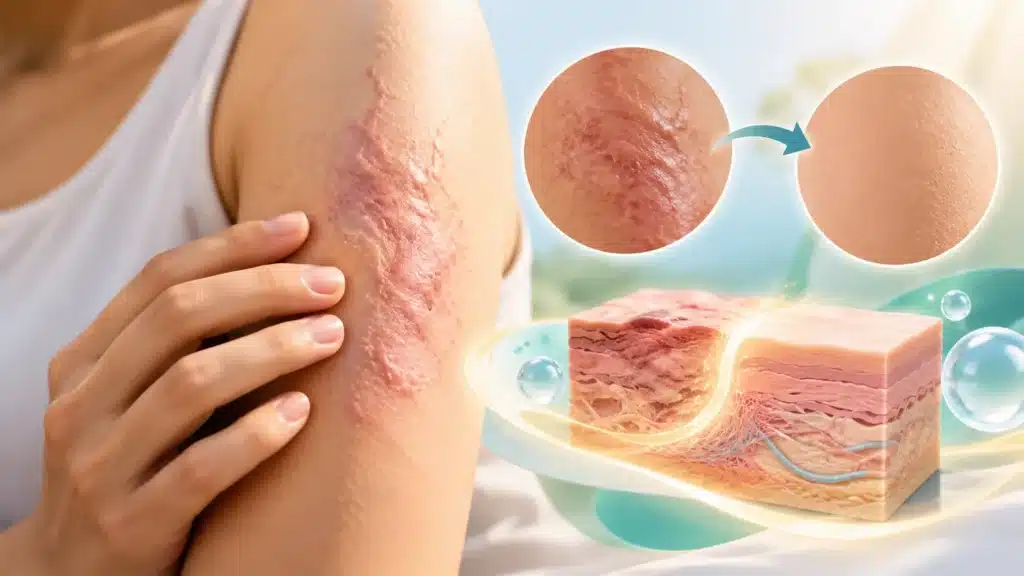
Post-burn scarring is one of the most common and challenging consequences of burn injuries. After a burn heals, the skin often does not return to its normal texture, color, or flexibility. Instead, it may become thick, tight, raised, discolored, or irregular. These changes are called post-burn scars. They can affect appearance, movement, comfort, and confidence. In severe cases, they can limit joint movement, cause chronic pain or itching, and interfere with daily activities.
Burn scars are different from ordinary scars because they often cover larger areas, involve deeper layers of skin, and may continue to change for months or years. The way a scar forms depends on the depth of the burn, the area of the body involved, the treatment received, and the person’s age, skin type, and healing capacity. Some scars fade and soften over time. Others become thick, raised, or tight and may need medical or surgical treatment.
What is Post-Burn Scarring?
Post-burn scarring refers to the changes that occur in the skin after a burn injury has healed. When the skin is damaged by heat, chemicals, electricity, or radiation, the body tries to repair it by producing new tissue. This new tissue is often different from normal skin. It may be thicker, less flexible, more sensitive, or differently colored.
Scarring is a normal part of healing after deeper burns. However, in some cases, the scar tissue becomes excessive, tight, or problematic. This can lead to functional problems such as limited movement, pain, itching, or cosmetic concerns. The scar may continue to mature and change for up to one to two years or sometimes longer.
The goal of post-burn scar care is not only to improve appearance but also to restore function, reduce symptoms, and help the patient return to normal daily life with confidence.
Types of Post-Burn Scars
Burn scars can take different forms depending on how the burn healed and how the body responded.
Hypertrophic scars
- Raised, thick, and often red or pink scars.
- Usually stay within the boundaries of the original burn.
- May be itchy, tender, or painful.
- Often improve slowly over months to years.
- Common after deeper partial-thickness burns.
Keloid scars
- Overgrown scars that extend beyond the original burn area.
- More common in certain skin types and body areas.
- Can be firm, raised, and sometimes painful or itchy.
- More likely to recur after treatment if not managed carefully.
Contracture scars
- Tight scars that pull the skin and underlying tissue.
- Often occur over joints such as elbows, knees, shoulders, or neck.
- Can limit movement and cause deformity if not treated.
- May need surgical release and rehabilitation.
Atrophic or thin scars
- Depressed or thin areas of skin after healing.
- May appear shiny, fragile, or wrinkled.
- Common after certain types of burns or skin grafts.
- Can be sensitive to sun and friction.
Mixed or complex scars
- Many patients have a combination of scar types.
- Some areas may be thick while others are thin or tight.
- Treatment often needs to be customized for each area.
Causes of Post-Burn Scarring
Scarring is a natural response to deep skin injury, but certain factors make it more likely or more severe.
Main causes and contributing factors
- Depth of the burn, with deeper burns causing more scarring.
- Delayed healing or infection during the initial burn treatment.
- Large surface area of burn injury.
- Burns over joints or high-tension areas of the body.
- Skin grafting, which can leave visible edges or texture changes.
- Genetic tendency to form thick or keloid scars.
- Poor nutrition during healing.
- Smoking, which reduces blood flow and delays healing.
- Inadequate scar care during the recovery period.
- Repeated friction or trauma to the healing area.
Why scarring happens
When the deeper layers of skin are damaged, the body produces collagen to close the wound. In burn injuries, this process can be excessive or disorganized. The new tissue may be thicker, less elastic, and more prone to tightening. Over time, the scar may remodel, but without proper care, it can remain problematic.
Risk Factors for Severe Scarring
Some people are more likely to develop significant post-burn scarring than others.
Higher-risk groups
- Patients with deep partial-thickness or full-thickness burns.
- Children and young adults, who may form thicker scars.
- People with darker skin tones, who are more prone to keloids.
- Patients with burns over joints, hands, face, or neck.
- Individuals with delayed wound healing or infection.
- People with poor nutrition or chronic illness.
- Smokers and those with vascular disease.
- Patients who do not follow scar care advice.
- Individuals with a personal or family history of keloids.
- Those with limited access to early burn care and rehabilitation.
Why risk increases in these groups
- Younger skin may produce more collagen during healing.
- Darker skin has a higher tendency for keloid formation.
- Joints and mobile areas are more prone to contractures.
- Infection and delayed healing increase scar thickness.
- Poor nutrition reduces the quality of tissue repair.
- Smoking reduces oxygen supply to healing skin.
Symptoms and Problems Caused by Burn Scars
Burn scars can cause both physical and emotional symptoms.
Physical symptoms
- Thick, raised, or hard skin.
- Red, pink, or dark discoloration.
- Itching, often intense and persistent.
- Pain or tenderness in the scar area.
- Tightness or pulling sensation.
- Limited movement of nearby joints.
- Dryness or cracking of the scar skin.
- Sensitivity to heat, cold, or touch.
- Numbness or altered sensation.
- Ulceration or breakdown in severe cases.
Functional problems
- Difficulty bending or straightening joints.
- Trouble using hands or fingers normally.
- Limited neck movement affecting vision or posture.
- Problems with walking if scars are around knees or ankles.
- Difficulty with mouth opening if scars are around the lips.
- Challenges with daily activities such as dressing or bathing.
Emotional and social impact
- Self-consciousness about appearance.
- Avoidance of social situations.
- Anxiety or depression related to scarring.
- Impact on school, work, or relationships.
- Reduced confidence and quality of life.
How Post-Burn Scarring is Diagnosed
Diagnosis is based on the history of the burn, examination of the scar, and assessment of function.
Diagnostic steps
- Detailed history of the burn injury and treatment.
- Time since the burn occurred and healing pattern.
- Current symptoms such as pain, itching, or tightness.
- Examination of scar color, thickness, texture, and size.
- Assessment of nearby joint movement and function.
- Evaluation of impact on daily activities.
- Photographs for documentation and follow-up.
- Referral to specialists if complex reconstruction is needed.
When additional evaluation is needed
- If the scar is causing severe contracture.
- If there is suspicion of underlying tissue damage.
- If the scar is breaking down or ulcerating.
- If there is significant functional limitation.
- If previous treatments have not helped.
Treatment for Post-Burn Scarring
Treatment depends on the type of scar, its location, severity, and the time since the burn. Many patients benefit from a combination of non-surgical and surgical approaches.
Non-surgical treatments
- Pressure garments to flatten and soften scars.
- Silicone gel or sheets to reduce thickness and redness.
- Moisturizers and emollients to reduce dryness and itching.
- Scar massage to improve flexibility and reduce tightness.
- Sun protection to prevent darkening of scars.
- Steroid injections for thick or keloid scars.
- Laser therapy to reduce redness, thickness, and texture irregularity.
- Physiotherapy and occupational therapy for movement.
- Splinting to prevent or treat contractures.
- Counseling or psychological support for emotional impact.
Surgical treatments
- Scar revision to improve appearance and texture.
- Release of contracture to restore movement.
- Skin grafting to cover areas after scar release.
- Flap surgery to bring healthy tissue to the scar area.
- Z-plasty or other techniques to lengthen tight scars.
- Tissue expansion to grow extra skin for reconstruction.
- Fat grafting to improve contour and softness.
- Laser resurfacing for texture and color improvement.
Timing of treatment
- Early scar care begins as soon as the wound has closed.
- Non-surgical treatments are often used for months.
- Surgical treatment is considered when scars have matured or when function is severely affected.
- Some procedures may need to be staged over time.
Management of Specific Scar Problems
Different scar problems need different approaches.
Management of thick or raised scars
- Silicone gel or sheets applied daily.
- Pressure garments worn for several months.
- Steroid injections to reduce thickness and symptoms.
- Laser treatment to reduce redness and bulk.
- Scar massage to soften tissue.
Management of contracture scars
- Physiotherapy to maintain joint movement.
- Splinting to hold the joint in a corrected position.
- Surgical release if movement is significantly limited.
- Skin graft or flap to cover the area after release.
- Long-term rehabilitation to prevent recurrence.
Management of itchy or painful scars
- Regular moisturizing to reduce dryness.
- Antihistamines or other medicines for itching.
- Nerve-modulating medicines for neuropathic pain.
- Laser therapy to reduce nerve sensitivity in some cases.
- Counseling and coping strategies for chronic symptoms.
Management of discolored scars
- Sun protection to prevent further darkening.
- Topical agents to lighten hyperpigmentation.
- Laser therapy to reduce redness or uneven color.
- Camouflage makeup if desired for special occasions.
- Realistic expectations about color improvement.
Rehabilitation After Burn Scarring
Rehabilitation is a key part of recovery and long-term function.
Physiotherapy and occupational therapy
- Exercises to maintain or improve joint movement.
- Strengthening of muscles around scarred areas.
- Training for daily activities with limited movement.
- Custom splints to prevent contractures.
- Home exercise programs for long-term maintenance.
Psychological and social support
- Counseling for anxiety, depression, or body image concerns.
- Support groups for burn survivors.
- Family education on how to support recovery.
- Guidance on returning to school or work.
- Strategies to handle social questions or attention.
Long-term follow-up
- Regular check-ups to monitor scar changes.
- Adjustment of garments, splints, or therapy as needed.
- Planning for additional procedures if required.
- Ongoing skin care and sun protection advice.
- Monitoring for late complications such as ulceration or deformity.
Prevention of Severe Post-Burn Scarring
Not all scarring can be prevented, but early and proper care can reduce severity.
Prevention pointers
- Prompt and appropriate burn treatment from the beginning.
- Prevention of infection during wound healing.
- Early use of silicone, pressure, and moisturizers once the wound closes.
- Regular scar massage as advised by the care team.
- Strict sun protection for at least one to two years.
- Adequate nutrition with enough protein and vitamins.
- Avoiding smoking during healing.
- Early physiotherapy to maintain movement.
- Use of splints when recommended.
- Regular follow-up with burn or plastic surgery specialists.
For high-risk patients
- Closer monitoring if there is a history of keloids.
- Early referral to a specialist burn center for deep burns.
- More aggressive scar prevention in children and young adults.
- Extra attention to scars over joints and visible areas.
When to See a Doctor?
Medical evaluation is important for anyone with significant burn scarring or functional problems.
- Thick, raised, or growing scars.
- Scars that are very itchy or painful.
- Tightness limiting movement of joints.
- Scars that are breaking down or ulcerating.
- Difficulty using hands, fingers, or limbs normally.
- Significant cosmetic concern affecting confidence.
- History of keloids and new scar formation.
- Scars that are not improving with basic care.
Why Choose Rama Hospital for Post-Burn Scarring Care?
Post-burn scarring needs long-term, multidisciplinary care. A hospital with experienced burn specialists, plastic surgeons, dermatologists, therapists, and counselors can provide comprehensive support.
- Expert assessment by burn and plastic surgery specialists.
- Access to advanced scar treatments such as laser and surgery.
- Coordinated care with physiotherapy and occupational therapy.
- Psychological support for patients and families.
- Long-term follow-up to monitor and adjust treatment.
- Individualized plans based on scar type and patient goals.
Frequently Asked Questions (FAQs)
Can burn scars be completely removed?
Complete removal is usually not possible, but scars can often be improved significantly. Treatment can reduce thickness, color, itching, and tightness, and improve function. Realistic goals focus on improvement rather than perfection.
How long does it take for a burn scar to mature?
Burn scars can take one to two years or more to fully mature. During this time, they may change in color, thickness, and texture. Early and consistent scar care can influence the final outcome.
Are burn scars permanent?
Many burn scars are long-lasting, but they often improve over time with proper care. Some scars may need medical or surgical treatment to reduce symptoms and improve function. Ongoing management can make a major difference.
Can children develop severe burn scars?
Yes, children can develop thick or tight scars, especially after deep burns. They may also be more prone to contractures affecting growth and movement. Early specialist care and rehabilitation are very important in children.
What is the best home care for burn scars?
Good home care includes regular moisturizing, gentle scar massage, sun protection, and use of silicone or pressure garments if advised. Following the care team’s instructions and attending therapy sessions are also key.
When is surgery needed for burn scars?
Surgery is considered when scars cause severe tightness, limit movement, or do not respond to non-surgical treatment. It may also be done to improve appearance in selected cases. Timing depends on scar maturity and functional need.
Can old burn scars be treated after many years?
Yes, even old burn scars can often be improved. Laser therapy, scar revision, contracture release, fat grafting, and other procedures can help. The goals may shift more toward function and comfort in long-standing scars.
Conclusion
Post-burn scarring is a common and often challenging consequence of burn injuries. It can affect skin appearance, joint movement, comfort, and emotional well-being. The severity of scarring depends on the depth of the burn, the area involved, the healing process, and the care received. While scars cannot always be erased, they can often be significantly improved with the right treatment.
The most important steps are early scar care, consistent use of recommended therapies, timely specialist evaluation, and long-term follow-up. For patients with thick, tight, painful, or function-limiting scars, a structured plan involving medical, surgical, and rehabilitative care can make a major difference. With expert support, patients can regain movement, reduce symptoms, and improve confidence and quality of life.
Rama Hospital can help evaluate post-burn scarring, identify the best treatment options, and provide comprehensive care from initial assessment to long-term rehabilitation and reconstruction.