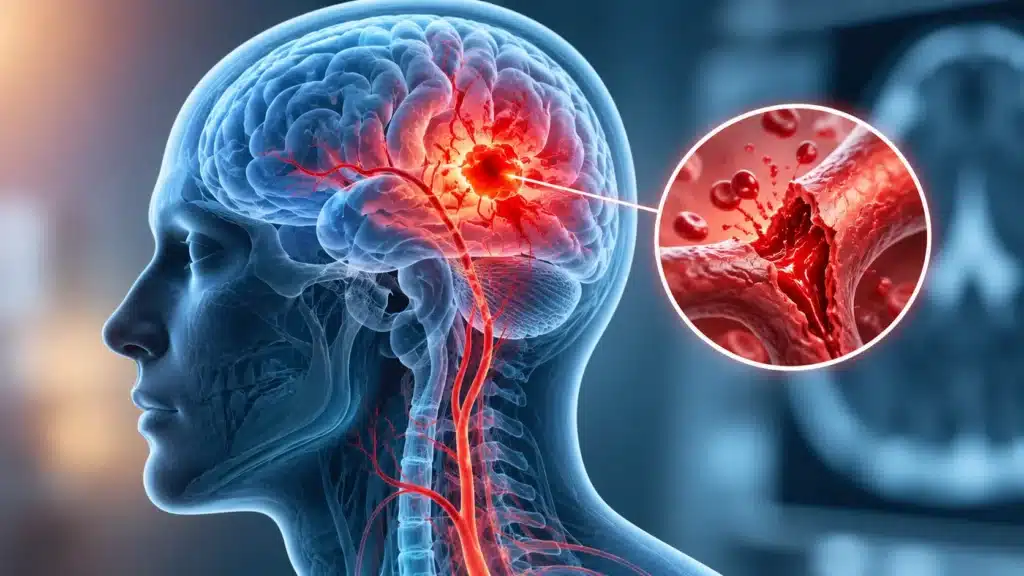
Intracranial hemorrhage is a serious medical emergency that happens when there is bleeding inside the skull or brain. The term “intracranial” means inside the skull, and “hemorrhage” means bleeding. This condition can occur due to injury, high blood pressure, ruptured blood vessels, aneurysms, or other medical problems. When bleeding occurs inside the brain or around it, pressure builds up quickly, which can damage brain tissue and affect vital functions.
This condition is often called a type of hemorrhagic stroke. It is different from a stroke caused by a blood clot. In intracranial hemorrhage, the problem is bleeding, not blockage. The symptoms often come on suddenly and can include severe headache, weakness, confusion, vomiting, seizures, or loss of consciousness. Immediate medical care is essential to reduce brain damage and save life.
What is Intracranial Hemorrhage?
Intracranial hemorrhage means bleeding that occurs inside the skull. This bleeding can happen within the brain tissue itself or in the spaces around the brain. When blood leaks into these areas, it increases pressure inside the skull and can compress or damage delicate brain structures.
The brain is protected by the skull and layers of tissue called meninges. Between these layers and inside the brain are blood vessels that supply oxygen and nutrients. If any of these vessels rupture, blood can collect in spaces where it should not be. This leads to swelling, increased pressure, and reduced oxygen supply to brain cells.
Intracranial hemorrhage is a life-threatening condition. Even a small amount of bleeding can cause serious problems because the skull is a closed space. The pressure from the bleeding can push on the brain and affect breathing, consciousness, movement, and speech.
Types of Intracranial Hemorrhage
Intracranial hemorrhage can be classified based on where the bleeding occurs in relation to the brain and its protective layers.
Based on location
- Intracerebral hemorrhage, which is bleeding directly into the brain tissue.
- Subarachnoid hemorrhage, which is bleeding in the space between the brain and the thin layer of tissue covering it.
- Subdural hemorrhage, which is bleeding between the brain and the outer protective layer, often due to head injury.
- Epidural hemorrhage, which is bleeding between the skull and the outer layer of the meninges, usually after trauma.
- Intraventricular hemorrhage, which is bleeding into the fluid-filled spaces inside the brain.
Based on cause
- Traumatic hemorrhage, which happens after a head injury, fall, accident, or blow to the head.
- Non-traumatic or spontaneous hemorrhage, which happens without injury, often due to high blood pressure, aneurysm, or blood vessel abnormalities.
- Hemorrhage due to blood thinning medicines or bleeding disorders.
- Hemorrhage related to tumors or abnormal blood vessel growth.
Based on timing
- Acute hemorrhage, which develops suddenly and causes immediate symptoms.
- Subacute hemorrhage, which develops over hours to days.
- Chronic hemorrhage, which may develop slowly, especially in subdural cases in older adults.
Causes of Intracranial Hemorrhage
Intracranial hemorrhage can happen for many reasons. The cause often determines the type of bleeding and the treatment approach.
Common causes include:
- High blood pressure, which is one of the most common causes of spontaneous brain bleed.
- Head injury from accidents, falls, sports injuries, or violence.
- Ruptured brain aneurysm.
- Abnormal blood vessels such as arteriovenous malformation.
- Use of blood thinning medicines or antiplatelet drugs.
- Bleeding disorders or low platelet count.
- Brain tumors that bleed.
- Drug abuse, especially cocaine or stimulants.
- Severe liver disease affecting blood clotting.
- Infection or inflammation of blood vessels.
- Complications after brain surgery or procedures.
Why bleeding happens
Blood vessels can rupture when they are weak, under high pressure, or damaged. High blood pressure over time can make small vessels in the brain fragile. Head injury can tear vessels suddenly. Aneurysms are weak spots that can burst without warning. Blood thinners reduce the body’s ability to stop bleeding once it starts.
Risk Factors for Intracranial Hemorrhage
Some people are more likely to develop intracranial hemorrhage than others.
Higher-risk groups
- People with uncontrolled high blood pressure.
- Older adults, especially those with fragile blood vessels.
- People with a history of head injury.
- Patients on blood thinning medicines.
- People with bleeding disorders.
- Those with a family history of aneurysm or brain hemorrhage.
- Individuals who abuse alcohol or drugs.
- People with liver disease or kidney disease.
- Patients with brain tumors or vascular malformations.
- Smokers.
Why risk increases in these groups
- High blood pressure puts constant stress on vessel walls.
- Aging reduces vessel elasticity and strength.
- Blood thinners make it harder to stop bleeding.
- Head injury directly damages blood vessels.
- Liver disease affects clotting factors needed to control bleeding.
- Drug abuse can cause sudden spikes in blood pressure.
Symptoms of Intracranial Hemorrhage
Symptoms depend on the location and amount of bleeding, and whether the cause is trauma or spontaneous.
Common symptoms
- Sudden, severe headache, often described as the worst headache of life.
- Nausea and vomiting.
- Weakness or numbness on one side of the body.
- Difficulty speaking or understanding speech.
- Blurred or double vision.
- Loss of balance or coordination.
- Confusion or altered consciousness.
- Seizures.
- Stiff neck.
- Sensitivity to light.
- Drooping eyelid or unequal pupils.
- Loss of consciousness or coma in severe cases.
Symptoms after head injury
- Headache that worsens over time.
- Repeated vomiting.
- Drowsiness or difficulty waking up.
- Confusion or memory problems.
- Seizures.
- Weakness or numbness.
- Unequal pupil size.
- Clear fluid or blood from nose or ears.
Emergency warning signs
- Sudden severe headache with no warning.
- Fainting or loss of consciousness.
- Severe vomiting.
- Seizure.
- Sudden weakness on one side of the body.
- Trouble speaking or understanding speech.
- Sudden vision changes.
- Severe confusion or inability to stay awake.
Intracranial Hemorrhage in Different Age Groups
Intracranial hemorrhage can affect people of different ages, but the pattern and risk may vary.
In infants and children
- May occur after birth trauma or in premature babies.
- Head injury from falls or accidents is a common cause.
- Symptoms may include irritability, vomiting, seizures, or bulging fontanelle in infants.
In young and middle-aged adults
- Often related to head injury, aneurysm, or drug use.
- High blood pressure may contribute in some cases.
- Symptoms may be sudden and severe.
In older adults
- More likely to be associated with high blood pressure, falls, or blood thinners.
- Subdural hemorrhage is more common after minor head injury.
- Recovery may be slower due to other health conditions.
How is Intracranial Hemorrhage Diagnosed?
Diagnosis is based on symptoms, neurological examination, and urgent imaging tests. Time is critical because early diagnosis improves outcomes.
Diagnostic steps
- Detailed history of symptoms and events leading to the problem.
- History of head injury, high blood pressure, or medicine use.
- Risk factor assessment such as blood pressure, smoking, and drug use.
- Neurological examination to check consciousness, strength, reflexes, pupils, and coordination.
- Urgent imaging tests to visualize bleeding in the brain.
Common tests that may be done
- CT scan of the head, which is the first and fastest test to detect bleeding.
- MRI of the brain for more detailed images in selected cases.
- CT angiography to look for aneurysm or abnormal blood vessels.
- MR angiography for vessel evaluation.
- Blood tests to check clotting, platelets, and other factors.
- Lumbar puncture in selected cases if subarachnoid hemorrhage is suspected but not seen on CT.
Why diagnosis matters
Early diagnosis allows quick treatment to stop bleeding, reduce pressure, and prevent further brain damage. Delay in diagnosis can lead to worsening symptoms, permanent disability, or death.
Treatment for Intracranial Hemorrhage
Treatment depends on the type, location, and cause of bleeding, as well as the patient’s condition.
Emergency care
- Stabilization of breathing and circulation.
- Control of blood pressure.
- Prevention of seizures.
- Management of brain swelling.
- Reversal of blood thinners if needed.
- Urgent neurosurgical consultation.
1. Medical management
Not all cases require surgery. Some patients are managed with intensive medical care.
- Medicines to control blood pressure.
- Medicines to reduce brain swelling.
- Seizure prevention medicines.
- Pain and nausea control.
- Careful monitoring in intensive care unit.
- Correction of clotting problems.
2. Surgical treatment
Surgery may be needed to remove blood, relieve pressure, or repair the source of bleeding.
- Craniotomy to open the skull and remove blood clot.
- Evacuation of hematoma to reduce pressure on the brain.
- Clipping of aneurysm to prevent re-bleeding.
- Endovascular coiling for certain aneurysms.
- Drain placement to remove excess fluid or blood.
- Decompressive surgery to relieve severe brain swelling.
3. Endovascular procedures
Some cases can be treated using minimally invasive techniques through blood vessels.
- Coiling of aneurysm to block blood flow into it.
- Embolization of abnormal blood vessels.
- Stent placement in selected cases.
4. Supportive care
For patients with severe hemorrhage, intensive supportive care is essential.
- Ventilator support if breathing is affected.
- Fluid and electrolyte management.
- Infection prevention.
- Nutrition support.
- Prevention of complications such as bedsores, clots, or pneumonia.
- Rehabilitation planning for recovery phase.
Recovery After Treatment
Recovery depends on the severity of bleeding, the area of brain affected, the speed of treatment, and the patient’s overall health.
Recovery after mild hemorrhage
- Shorter hospital stay.
- Gradual return to normal activities.
- Follow-up imaging to ensure stability.
- Control of risk factors such as blood pressure.
Recovery after severe hemorrhage
- Longer hospital stay, often in intensive care.
- Gradual improvement in neurological function.
- Rehabilitation for weakness, speech, or balance issues.
- Emotional and cognitive support if needed.
- Monitoring for complications such as hydrocephalus, seizures, or infection.
Rehabilitation support
- Physical therapy for strength and mobility.
- Occupational therapy for daily activities.
- Speech therapy if speech or swallowing is affected.
- Psychological support for anxiety, depression, or memory issues.
- Family education and support.
Possible Complications
Intracranial hemorrhage can lead to serious short-term and long-term complications.
Short-term complications
- Increased pressure inside the skull.
- Brain swelling.
- Seizures.
- Hydrocephalus.
- Infection.
- Blood vessel spasm reducing blood flow.
- Re-bleeding in some cases.
Long-term complications
- Weakness or paralysis on one side.
- Speech and language problems.
- Memory and thinking difficulties.
- Vision problems.
- Balance and coordination issues.
- Emotional or mood changes.
- Chronic headache.
- Epilepsy or recurrent seizures.
- Dependence on others for daily care in severe cases.
Why complications happen
When bleeding occurs, brain tissue is damaged by both the blood and the pressure it creates. Some brain cells die, and others may be temporarily affected. The brain’s ability to recover depends on the extent of damage and the effectiveness of rehabilitation.
When to See a Doctor
Medical evaluation is important for people with risk factors or symptoms that suggest a brain bleed.
- Persistent severe headache with no clear cause.
- Repeated vomiting with headache.
- Weakness or numbness on one side.
- Difficulty speaking or understanding speech.
- Vision changes.
- Seizures.
- History of head injury with worsening symptoms.
- High blood pressure with new neurological symptoms.
Prevention of Intracranial Hemorrhage
Not all cases can be prevented, but risk can be reduced.
Prevention pointers
- Control blood pressure regularly.
- Take medicines as prescribed for high blood pressure.
- Stop smoking completely.
- Limit alcohol intake.
- Avoid drug abuse, especially stimulants.
- Use protective gear during sports or high-risk activities.
- Prevent falls, especially in older adults.
- Manage blood thinners carefully under medical supervision.
- Get regular health check-ups.
- Seek evaluation if there is a family history of aneurysm or brain hemorrhage.
For people with high blood pressure
- Monitor blood pressure at home.
- Follow a low-salt diet.
- Maintain a healthy weight.
- Exercise regularly.
- Take medicines consistently.
- Avoid missing doses.
Why Choose Rama Hospital for Intracranial Hemorrhage Treatment?
Intracranial hemorrhage is a complex emergency that requires expert neurosurgical care, advanced imaging, and intensive support. A hospital with experienced neurosurgeons, neurologists, and critical care teams can make a major difference in outcomes.
- Expert evaluation by neurosurgery and neurology specialists.
- Advanced imaging for accurate and fast diagnosis.
- Emergency surgery and endovascular options.
- Intensive care support for severe cases.
- Rehabilitation and long-term follow-up.
- Coordinated care for complications and recovery.
Frequently Asked Questions (FAQs)
Is intracranial hemorrhage the same as stroke?
Intracranial hemorrhage is a type of hemorrhagic stroke caused by bleeding. Other strokes are caused by blood clots blocking vessels. Both are emergencies but have different causes and treatments.
Can intracranial hemorrhage be cured?
Many cases can be treated effectively with medical and surgical care. Recovery depends on the size, location, and speed of treatment. Some patients recover well, while others may have lasting effects.
What are the warning signs of brain hemorrhage?
Warning signs include sudden severe headache, weakness, vomiting, confusion, seizures, or loss of consciousness. After head injury, worsening headache and repeated vomiting are red flags.
How is intracranial hemorrhage diagnosed?
Diagnosis is done using CT scan, MRI, and sometimes angiography. These tests help visualize the bleeding, its location, and the underlying cause such as aneurysm or vessel abnormality.
Can high blood pressure cause brain hemorrhage?
Yes, uncontrolled high blood pressure is one of the most common causes of spontaneous brain hemorrhage. It weakens small blood vessels over time, making them more likely to rupture.
What is the treatment for intracranial hemorrhage?
Treatment may include blood pressure control, medicines to reduce swelling, seizure prevention, and surgery to remove blood or repair the bleeding vessel. Intensive care support is often needed.
Can a person live a normal life after brain hemorrhage?
Many people recover and return to normal life, especially with mild hemorrhage and early treatment. Recovery after severe hemorrhage depends on brain damage and rehabilitation.
Conclusion
Intracranial hemorrhage is a serious, life-threatening condition that requires immediate medical attention. It can happen due to head injury, high blood pressure, aneurysm rupture, or other medical problems. The symptoms often come on suddenly and can include severe headache, weakness, confusion, vomiting, seizures, or loss of consciousness.
The most important steps are rapid recognition, urgent imaging, and timely treatment to stop bleeding, reduce pressure, and protect the brain. For patients with sudden neurological symptoms or head injury with worsening signs, emergency care can make a major difference in survival and recovery. With expert neurosurgical care, intensive support, and rehabilitation, many patients can regain function and improve their quality of life.
Rama Hospital can provide emergency evaluation, advanced imaging, neurosurgical treatment, intensive care, and rehabilitation for intracranial hemorrhage, along with guidance on prevention and long-term management.